Big Movement Exercises LSVT Style
Introduction
Lee Silverman Voice Treatment (LSVT) A unique treatment called BIG exercise was created to help Parkinson’s patients move more freely. In order to address the difficulties with motor function associated with the condition, this workout regimen focuses on increasing the magnitude and force of movements. This post will discuss the definition, operation, and advantages of the LSVT BIG exercise.
LSVT BIG is a customized exercise program designed to improve mobility and motor function in people with Parkinson’s disease. It focuses on increasing the magnitude and force of movements.
In order to help patients incorporate greater movements into their daily lives and ultimately improve their quality of life, the program is customized to each patient’s needs and relies on intense training and feedback. LSVT BIG is a useful treatment option for people with Parkinson’s disease at any stage, as evidenced by research demonstrating improvements in motor abilities and general function.
LSVT BIG increases awareness of how well it works to improve everyday activities and mobility for those with Parkinson’s disease. The program is tailored to each person, addressing particular requirements and objectives to enhance mobility and general well-being.
Parkinson’s disease is a degenerative neurological condition that affects movement, causing bradykinesia (slowness of movement), rigidity, and tremors. Patients with Parkinson’s disease may experience significant difficulties with everyday activities as the condition worsens, which will lower their quality of life. By addressing these motor symptoms, LSVT BIG offers an organized training program that improves walking, balance, and general mobility. Early intervention is critical since neurological problems can have a substantial impact on individuals.
The program’s methods are supported by a wealth of clinical knowledge and research, guaranteeing that patients receive excellent care that has the potential to significantly improve their lives. By taking part in LSVT BIG, people with Parkinson’s disease can enhance their motor function and restore their independence and self-assurance in day-to-day activities.
LSVT BIG Exercise: Transforming Movement in Parkinson’s Disease
In order to help Parkinson’s patients with their mobility issues, LSVT BIG was created in the late 1980s. In contrast to conventional physical therapy, LSVT BIG aims to improve movement force and size to combat the reduced motor function that is a hallmark of Parkinson’s disease. The program promotes expansive motions to enhance functional mobility, operating under the tenet of “use it or lose it.”
To ensure that treatments are customized to the unique requirements of people with Parkinson’s disease and other neurological diseases, a physical therapist is essential to the administration of the LSVT BIG program.
“Movement-As-Medicine” is the guiding concept of LSVT BIG. By training patients to distinguish between how they truly move and how they feel, this method assists them in recalibrating their perceptions of movement. Long-lasting gains in motor skills are fostered by LSVT BIG, which helps patients incorporate these changes into their everyday life by emphasizing larger and more forceful motions.
To help families and care teams comprehend and support LSVT treatment, educational resources are provided, such as webinars and films. LSVT BIG is a holistic strategy for controlling Parkinson’s disease rather than just a therapy because of these resources, which are crucial in guaranteeing that patients receive the best care possible.
Understanding LSVT BIG
Lee Silverman Voice Treatment (LSVT) BIG was created in the late 1980s to help Parkinson’s sufferers with their movement issues. By increasing mobility through broad, exaggerated motions and counteracting stiffness and slowness, it seeks to alleviate symptoms.
The “use it or lose it” concept, which encourages broad motions for improved functional mobility, is the foundation of this novel therapy. LSVT BIG helps patients overcome the reduced motor function that frequently accompanies Parkinson’s disease by pushing them to generate larger and more forceful motions. The program places a strong emphasis on the “Movement-As-Medicine” concept, assisting patients in recalibrating their perceptions of movement and identifying the distinction between their actual and perceived movements.
Unlike regular physical therapy, LSVT BIG consists of planned sessions aimed at boosting movement amplitude. Patients’ motor abilities develop with time as they incorporate bigger motions into their regular activities. This method aids people with Parkinson’s disease in regaining their typical movement patterns, which are frequently compromised by the illness.
The goal of LSVT BIG is to help people with Parkinson’s disease enhance their movement patterns by making their movements larger and faster. In addition to treating physical symptoms, this method gives patients the power to manage their illness and improve their quality of life.
Big Movement Exercises
Sit-to-Stand

- Hold your hands together in front of your chest while sitting in a chair with your feet apart. (Verify that it is a sturdy chair without wheels.)
- To stand and maintain this stance, push through your feet without using your hands.
- To sit comfortably in the chair, bend your knees.
Tree Pose

- Place your hands together in front of your chest and stand with your feet hip-width apart. Lift your right foot off the ground and shift your weight to your left foot.
- Put your right foot on your left inner thigh and bend your right knee outward. Or put it on your inner calf on your left.
- For ten to twenty seconds, or as long as you can, maintain this posture. Next, flip sides.
Side-to-Side Step

- The hip, quadriceps, and calf muscles are worked during the side step exercise. By strengthening the hips and legs and enhancing lateral ankle stability, this exercise relieves ankle pain. You can do this workout on a level, sturdy surface at home.
- Step sideways in one direction while in a slight crouch. Sidestep back in the opposite direction once you’ve reached the end of the space.
- Go at a pace that allows you to maintain your equilibrium. If this exercise makes you feel unsteady, stand close to a long object you can grab onto.
- For additional advice on preventing, treating, and exercising for injuries, visit our YouTube channel.
Forward Step
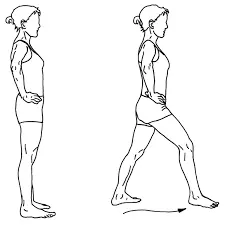
- Place your right foot in the center of the step, lift your left knee to hip height, push through the right foot to step up, stand tall on your right leg, and then slowly descend back down.
- If it feels more comfortable, just place the left foot on the step as you step up instead of lifting it to hip height. Repeat 10 times on the right leg, then repeat on the left leg.
Backward Step

- Start by using your core and standing tall with your feet hip-width apart. Move: Step your right leg straight back after shifting your weight onto your left leg.
- Position: With the majority of your weight in your front (left) leg, lightly tap your right toes on the ground.
- Lower: To feel gluteal engagement, slightly bend the front knee. Return: To get back to standing, push through your front heel.
- Repeat: After 10 to 15 repetitions, swap legs.
How LSVT BIG Works
In order to combat rigidity and slowness, LSVT BIG focuses on increasing mobility through huge, exaggerated motions. In order to enhance motor functioning and enable patients to move more freely and confidently in their everyday lives, the program places a strong emphasis on large, whole-body motions. LSVT BIG effectively and uniquely treats the fundamental symptoms of Parkinson’s disease by focusing on movement amplitude rather than speed.
In order to optimize neuroplastic changes in motor function, LSVT BIG entails intense training that emphasizes repetition and high effort. This improves overall mobility by retraining the body and brain to perform movements consistent with normal function. Patients can learn that their “big” motions are actually within typical bounds by using sensory recalibration approaches.
In order to ensure that patients do the LSVT BIG exercises correctly and efficiently, a physical therapist is essential.
The goal of LSVT BIG exercises is to improve motor function in daily tasks by increasing the range of motion and engaging all muscles. Patients’ capacity to carry out daily activities, such as walking, getting out of bed, and even writing, can significantly improve with repeated practice of these actions.
In conclusion, LSVT BIG uses intense, repetitive training to encourage huge, exaggerated movements. This method helps patients reset their perceptions of movement in addition to treating the physical symptoms of Parkinson’s disease, which results in long-lasting improvements in motor function.
The Benefits of LSVT BIG Exercises
The capacity of LSVT BIG to enhance balance, speed, and promote bigger motions—all of which are crucial for Parkinson’s disease patients—is one of its most important advantages. According to research, LSVT BIG can greatly improve patients’ mobility and general quality of life. Patients can improve their walking and posture by practicing bigger movement patterns, which are crucial for preserving independence and lowering the risk of falls.
Patients receive feedback during LSVT BIG sessions to address problems with motor performance caused by poor sensorimotor processing. Patients can distinguish between perceived and actual movements because of this input, which improves motor function. Frequent LSVT BIG practice makes it easier to carry out daily tasks like writing and dressing.
According to research, LSVT BIG can improve patients’ overall confidence by reducing the discrepancy between perceived and actual movement. The patient’s quality of life may be further improved by their increased participation in social and physical activities as a result of their enhanced confidence.
In conclusion, the advantages of LSVT BIG exercises are extensive, providing gains in mobility, speed, and balance. LSVT BIG assists patients in regaining their independence and self-assurance in their everyday life by treating the primary symptoms of Parkinson’s disease and offering insightful feedback.
Who Can Benefit from LSVT BIG?
Regardless of the degree of their symptoms, anyone with Parkinson’s disease can take part in LSVT BIG therapy. LSVT BIG is a flexible therapy option since, although it is more effective when started in the early to middle stages, it is still beneficial regardless of severity.
LSVT BIG is a specialized therapeutic strategy designed to address the particular requirements and objectives of every Parkinson’s patient. Therapists can ensure the best possible treatment by tailoring the curriculum to each patient’s unique circumstances. In order to tailor the LSVT BIG program to each patient’s demands and increase the treatment’s overall efficacy, a physical therapist is essential. Participating in the LSVT BIG program can greatly benefit those who are still able to walk with some help.
Candidates with strong cognitive abilities perform better and adjust to LSVT BIG training more easily. This emphasizes how crucial early intervention and frequent cognitive evaluations are to ensuring patients receive the best possible care.
In conclusion, regardless of the severity of their symptoms, anyone with Parkinson’s disease can benefit from LSVT BIG. LSVT BIG is a useful therapeutic option for raising Parkinson’s patients’ quality of life by customizing the program to each patient’s demands and emphasizing the improvement of mobility and motor function.
FAQs
What are LSVT big exercises?
LSVT BIG exercises are high-amplitude, vigorous movements that work against small, slow movement (bradykinesia) in Parkinson’s disease. They aim to teach the body to use larger movements in daily tasks, usually over 16 one-hour sessions in 4 weeks. Core exercises include “floor to ceiling” reaches, “side to side” stretches, and “big steps”.
Basic LSVT BIG Exercises
These exercises are performed at maximal effort (10/10):
Floor to Ceiling: Standing or Sitting, reach down to the floor, then straight up to the ceiling, extending fully.
Side-to-Side Reach: Sit or stand, reach across the body with the large arm/hand to each side, and stretch the trunk.
Big Steps (forward, backward, side): Stand. Take large, deliberate steps, emphasizing high-amplitude stepping and a broad posture.
Rocking Exercise:e One foot forward, one foot back, rocking back and forth with large swinging arm movements.
Sit-to-stand: With wide stances and a large effort to improve functional transfers.
Key Principles
Amplitude – Focus on “bigness” not speed
Intensity: 16 sessions (4 days per week for 4 weeks) + daily homework.
Calibration: Teaching the patient that big movements are normal movements.
Carryover: The use of functional tasks such as buttoning a shirt or walking into real-world situations.
What is the 5:2:1 rule in Parkinson’s?
The 5-2-1 rule is a screening tool to identify advanced Parkinson’s disease (PD) patients who may benefit from specialized, device-aided therapies. It suggests that oral medication in the traditional way is no longer enough to give optimum control. The rule recommends seeing a neurologist if a patient has at least one of these criteria:
5: Five or more doses of levodopa per day.
2: Two or more hours per day of “OFF” time (when medication wears off & symptoms return).
1: Trouble with dyskinesia (involuntary movements) for at least 1 hour per day.
The 5-2-1 Rule Explained.
Purpose: The criteria serve as a simple “conversation starter” for patients and caregivers to discuss with specialists about medication changes or advanced treatment options (i.e., deep brain stimulation or infusion therapies).
What It Means: When these criteria are met, it often means the disease has progressed, and the “therapeutic window” for the medication has narrowed so that the person with PD is both under-medicated (“off” time) and over-medicated (dyskinesia) throughout the day.
Actionable Advice: If you or someone you know meets these criteria, it is recommended to discuss these findings with a movement disorder specialist to review treatment options. Dyskinesia and Time: The time when the effects of medication wear off,f and motor symptoms such as tremors, stiffness, or slow movement reappear.
Troublesome dyskinesia: Involuntary, jerky, or dancing movements which are often a side effect of long-term, high-dose levodopa use.
Is LSVT only for Parkinson’s?
Patients with Parkinson’s disease and other neurological disorders can benefit from the intense Lee Silverman Voice Treatment (LSVT) BIG, which uses exercise to improve strength and motor learning.
What are the 4 S’s of Parkinson’s disease?
Use the four S’s: Stop, Sigh, Shift, Step. Try to STOP your actions, SIGH, and take a loud breath, SHIFT your weight back and forth, and then take an exaggerated first step to start walking again when you experience a freezing start episode.
Can you live with Parkinson’s without medication?
The best exercises for Parkinson’s disease (PD) aim to improve mobility, balance, strength, and coordination to help manage symptoms, and include aerobic, resistance, and flexibility training. Top exercises include boxing, cycling, Tai Chi, dance, walking, yoga, Pilates, strength training, flexibility routines, and gait training.
Best 10 Exercises for Parkinson’s Disease:
Boxing, non-contact. Improves agility, hand-eye coordination, and balance, often improving gait and stability.
Cycling (Stationary/Regular): An aerobic activity that raises heart rate and helps cardiovascular health, helping manage symptoms of Parkinson’s.
Tai Chi Slow, controlled movements build muscle strength and improve balance, which is key to reducing the risk of falls.
Dance (e.g., Tango): Improves coordination, balance, and rhythm and is especially helpful in improving walking ability.
Walking/Brisk Walking:g An aerobic activity that is very accessible and that improves functional mobility and cardiovascular health.
Yoga: Enhances flexibility and balance, releases rigidity through targeted stretching.
Pilates: Focuses on core strength and stability for better posture and control of movement.
Strength Training (Resistance Training): Building muscle with weights, bands, ds, or machines helps combat stiffness and improve movement efficiency.
Flexibility/Stretching Routines: Targeted stretching (like chest-opening moves) can help to fight muscle stiffness and increase range of motion.
Gait Training/Walking Programs: Walking-specific exercises such as marching in place or high-stepping aimed at freezing of gait.
Summary of recommendations:
Consistency is crucial: The best exercise is the one you do regularly — at least 3-4 times per week.
Intensity Counts: The best activities are the ones that challenge your balance and elevate your heart rate.
Balance training. There are certain exercises, such as multidirectional stepping, that are very. Safety First: Exercises should be adjusted to your ability level. If you need support, use a chair or wall.
What foods stop tremors?
You may be able to lessen some of the neurological deterioration that causes tremors by consuming foods high in omega-3 fatty acids, such as walnuts, flaxseeds, and fatty fish like salmon and mackerel.
What is the most common cause of death in Parkinson’s patients?
Pneumonia is universally recognized as the most common cause of death in patients with Parkinson’s disease (PD), often caused by dysphagia (swallowing difficulties) leading to aspiration. Other common causes are cardiovascular disease, infection (e.g., sepsis from falls/pressure ulcers), and nervous system complications.
Major Causes of Death in Parkinson’s Patients:
Pneumonia/Respiratory Infections: A common cause of death, often due to aspiration pneumonia secondary to dysphagia, or difficulty clearing airways, with some studies reporting it accounts for up to 45–54% of deaths.
Cardiovascular Diseases: es Stroke, Heart Disease, Sudden Cardiac Death
Infections and Complications: Sepsis is a common complication of severe skin pressure ulcers due to immobility.
Falls/Accidents: Loss of balance, gait disturbance.
Sudden Unexpected Death in Parkinson’s Disease (SUDPAR): An under-recognised phenomenon similar to sudden death in epilepsy, likely due to cardiac or autonomic dysfunction.
Reasons: Synonyms and Related Words
Aspiration pneumonia. Inhalation of saliva/food into the lungs.
Dysphagia pneumonia: Difficulty swallowing.
Sepsis: Infection arising from pressure ulcers.
SUDPAR: Sudden Unexpected Death in Parkinson’s Disease
Cardiovascular collapse/stroke: Cerebral or cardiac.
What are the final stages of Parkinson’s?
The later stages of Parkinson’s (usually Stage 4 or 5) involve severe mobility problems, requiring a wheelchair or becoming bedridden. Patients have advanced cognitive decline (dementia), hallucinations, and severe swallowing problems. Full-time, 24/7 care is needed to manage complications such as infections, falls, and comfort.
Key Symptoms in the Final Stages
Mobility: Bedridden, unable to stand or walk on one’s own.
Cognitive/Mental: Profound dementia with hallucinations, delusions, and confusion.
Swallowing/Feeding: Severe dysphagia (choking risk) and eventually complete inability to eat.
Communication: Speech is very slurred, whispered, or non-verbal.
Physical Decline: Severe rigidity, bradykinesia (slow movement), and high fall risk.
Incontinence: Complete loss of bladder and bowel control.
Common Complications
Aspiration Pneumonia: Deaths from food or saliva going into the lungs due to a swallowing problem.
Infections: Immobility can cause pressure ulcers/bedsore,s which may result in serious infections or sepsis.
Medication Failure: Dopaminergic medications may become less effective and have more side effects (psychosis).
Care and Support
Hospice Care: Emphasis on comfort, quality of life, and spiritual/emotional support for patient and family.
Palliative care: addresses pain control and non-motor symptoms such as constipation, anxiety, ty, and depression.
Support: Frequent repositioning, special diet for dysphagia, and medication management to minimize pain.
References
- BIG for LIFE Standing Adapted Exercises Only – LSVT for LIFE. (n.d.). https://lsvtforlife.com/big-for-life-standing-adapted-exercises-only/
- Checking your browser – reCAPTCHA. (n.d.). https://pmc.ncbi.nlm.nih.gov/articles/PMC10918598/
- Doctormmdev, & Doctormmdev. (2025, December 11). LSVT BIG: A COMPLETE GUIDE FOR PATIENTS WITH PARKINSON’S DISEASE & MOVEMENT DISORDERS. ProActive Physical Therapy & Sports Rehabilitation. https://proactiveptsr.com/lsvt-big-a-complete-guide-for-patients-with-parkinsons-disease-movement-disorders/
- Oaklawn Hospital. (2026, February 12). Parkinson’s Disease – LSVT BIG and PWR! Moves Programs – Oaklawn Hospital. https://oaklawnhospital.org/services/physical-therapy/parkinsons-disease-big-and-loud-program/
- Physical therapy for Parkinson’s | LSVT BIG. (n.d.). https://www.lsvtglobal.com/LSVTBIG
- Side Step Exercise : Ankle Pain Series – The Center for Total Back Care | The Center for Total Back Care. (n.d.). https://totalback.com/blog/side-step-exercise/
- How to do Forward Step Ups. (n.d.). https://www.getwellen.com/exercises/forward-step-ups
- Sit to stand. (n.d.). [Video]. Hingehealth. https://www.hingehealth.com/gb/en/resources/articles/sit-to-stand/
- The Healthline Editorial Team. (2025, February 26). Try these 10 proprioception exercises to help with balance, control, and coordination. Healthline. https://www.healthline.com/health/fitness/proprioception-exercises#exercises