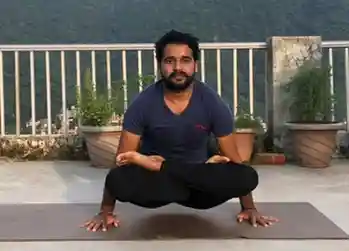
20 Minutes Full Body Yoga Workout
Introduction:
Many people don’t realise how powerful yoga is for working out your entire body, but this full-body yoga workout will change your mind!
Although yoga is well-renowned for its capacity to reduce stress and promote relaxation, you can develop a potent routine that tones and strengthens your entire body by combining the proper poses into a fluid sequence.
In addition to strengthening your body, practicing fluid sequences like the one we’re about to demonstrate can test your endurance and help you lose weight.
There are eleven positions in all in this full-body yoga workout that produce a “flow,” which means that each pose flows into the next to produce fluid movement throughout the entire sequence.
Benefits:
Flexibility Increases Organically:
To relieve tense muscles, frequently perform simple yoga poses. Your lower back ache completely disappears. The hamstrings quit pulling when you bend. Lower your hunched shoulders. The slow but steady modifications have made daily work simpler and more pleasurable.
Gaining Strength Without Using Heavy Weights:
In yoga, body weight is used to build muscle. Warrior poses, planks, and downward dogs will help your arms, legs, and core. Functional strength is useful when doing garden labour, shopping, and playing with kids. Unlike lifting weights at the gym, yoga builds small stabiliser muscles to reduce injury.
Every Day, Balance Improves:
Standing on one leg requires practice. Daily practice greatly improves balance. As you age, maintaining your mobility and independence may be made easier by improving your balance. Simple postures provide stability, which you use in whatever you do.
There’s Less Pain in Your Body:
Yoga can help with discomfort from injuries or desk use. Stretch the affected area gently to reduce pain. Strengthening may be beneficial for weak joints. After practicing basic yoga for a few weeks, many people can quit taking opioids.
Why Should a Beginner Practice Full Body Yoga?
Help tone your entire body without putting too much strain on it. One of the greatest methods for weight loss is yoga, and you’ll start to feel less stressed after doing this practice.
This impact is fantastic since it will inspire you to keep up your weekly practice. How many times have you begun an exercise program just to give up after two weeks because you’re worn out and unmotivated?
The key to maintaining focus on your program is to work out just enough and progressively increase to more difficult poses and longer sequences. Exercise just enough to motivate you to do more in the future.
We want you to feel like you have more energy when you first start. You won’t want to attend your next practice if you push yourself to muscular failure right away.
Yoga Poses:
Plank Pose:

Planking is a terrific way to increase endurance and improve your upper body and core. This is an excellent stance to start with if you’re also aiming to build up to push-ups.
- With your legs parallel to one another and your hands just beneath your shoulders, begin on all fours.
- One by one, extend your legs straight out behind you.
- To maximise the advantages of the pose, make sure your back is straight and not rounded or arched.
- Throughout the pose, keep your arms, legs, and core active while looking slightly ahead and between your hands.
- For thirty seconds, maintain this position.
Three-Legged Dog Pose:
- Push back into your Downward Dog from the plank while simultaneously raising your right leg high into the air.
- In order to prevent all of the weight from falling onto your arms, be sure to engage your core throughout this pose.
- As you grind your foot on the mat, really raise the leg in the air.
- This pose will give your hamstrings and glutes a significant stretch.
- Do not forget to hold a three-legged puppy for thirty seconds.
High Lunge Pose:

- Place your foot between both hands after bending and curling your right knee against your chest.
- As you ascend into the High Lunge, ground your right foot while bending your front knee.
- Deepen into your front knee by pushing through your back heel and extending into your arms.
- For thirty seconds, maintain the high lunge position.
Warrior Pose 2:

- As you extend your body to the left side of the room and sweep your arms from above your head to straight out and shoulder height, ground your rear foot at an angle.
- Look at your right fingertips.
- Keep the bend in your front leg! With each inhalation, try to sink deeper and ground with both feet.
Peaceful Warrior Pose:
- As your front arm rises upward, your back arm descends your leg.
- Bend backward, flip your front palm, arch your back, put your left hand on your left back thigh, and raise your right arm overhead.
- Remember to keep your front leg bent.
- This will give you a pleasant, deep side stretch.
Warrior 3 Pose:

Warrior 3 is an excellent pose to test balance and strength simultaneously.
- As you transition from your calm warrior to Warrior II, lean your torso forward and raise your left leg off the ground by shifting your weight into your right leg.
- Your back foot should be flexed. Keep it at hip height if possible.
Chair Pose:

- Start to glide down from Warrior III by slightly bending your right knee.
- Bend at the knees and raise through your chest after bringing your left foot to your right.
- As you raise your fingertips toward the ceiling, lower your seat as close to the floor as you can.
- Keep your core active and adjust your legs so that one is not further forward than the other.
Chaturanga Pose:
- Return to Plank Pose from Standing Forward Fold. Make sure your wrists are just beneath your shoulders.
- Tightly embrace your body with your elbows. Make sure your back is straight, and your core is active.
- Take a little step forward and then start to descend while keeping your elbows in.
- Hold this position for the duration of the posture till your arms reach a 90-degree angle.
Upward-Facing Dog Pose:

- In Upward Dog, only your hands and the tops of your feet should come into contact with the mat.
- By flipping the tops of your feet, straightening your arms, and raising through your chest, you can enter Upward Facing Dog straight from Chaturanga.
- To keep your legs raised, you should press against the tops of your feet.
Downward-facing dog Pose:

All things considered, the downward dog is an excellent position for toning, strengthening, and stretching. In Vinyasa Yoga, the “flow” from Chaturanga to Upward-Facing Dog to Downward-Facing Dog is frequently utilised before entering your resting pose.
- It is an excellent method to increase your heart rate and develop strength and stamina.
- Flip the tops of your feet back so you are on your toes to transition from Upward Facing Dog to Downward Facing Dog.
- To enter Downward Dog, raise your hips back into the air.
FAQs
Does 20 minutes of yoga make a difference?
Indeed, practicing yoga for even 20 minutes a day can improve your health and well-being. Stress levels, flexibility, muscle tone, and mental focus can all be enhanced with regular brief sessions.
Can yoga be a full-body workout?
Yoga balances and tones all of your body’s muscles. One muscle or set of muscles is usually isolated and flexed during weight training exercises.
Does yoga affect body shape?
Yoga is much more than just a potent method to unwind; it’s an all-encompassing physical and mental exercise that may boost fat reduction, improve muscle tone, and increase flexibility, all of which can result in a more toned, lean-looking body.
How to improve fitness with just yoga?
Although yoga is frequently thought of as a more relaxing type of exercise, you may use it as a workout by concentrating on faster flows and other sequences. Your muscles will be engaged and strengthened in a totally different way when you incorporate higher-intensity components.
Can you do full-body yoga every day?
Having said that, you can practise yoga every day or even twice a day if you feel like it. Just be careful not to go overboard; otherwise, what ought to be a serene journey could begin to feel like a taxing chore to you.
References:
- 20-minute full-body yoga workout for beginners (+ Free PDF) – 2022 – Foote/yogarove.com/full-body-yoga-workout
- 20-Minute morning yoga for the Full-Body stretch you need – 2025 – Kassandra/www.yogajournal.com/practice/20-minute-morning-yoga-for-the-full-body-stretch-you-need