Best Psoas Stretch Exercises for Hip & Lower Back Relief
Introduction
Psoas Stretch helps release tight hip flexor muscles, improving posture, reducing lower back discomfort, and enhancing overall flexibility. It is a simple and effective stretch for daily mobility.
It is crucial to back health because of its close proximity to the lumbar vertebrae. Additionally, it helps with hip flexion and external rotation as well as lateral lumbar spine flexion. It is necessary for proper lumbar posture when standing or sitting, hip joint stability, and running and walking. One of the core muscles is the psoas muscle.
The psoas muscle is actually a hip flexor muscle that attaches to both sides of the spine and extends from the pelvis to the thigh bone. It is the muscle that enables you to raise your knee to your chest, and it can reach a length of up to 16 inches. This muscle is used in all leg-lifting activities, including running, kicking, and walking upstairs.
Anatomy of the Psoas Muscle
The Psoas major, minor, and iliacus muscles make up the iliopsoas unit. The main hip flexor of the thigh is the iliopsoas muscle unit. Tightness and dysfunctions may result from its excessive activity. This complex muscle group looks like this:
- The Psoas major muscle participates in nearly every activity, including walking, running, sitting, and jumping, and it stabilises the pelvis. It is a component of the iliopsoas muscle, which is made up of the Psoas and the iliacus.
- The front or anterior part of the psoas major muscle is home to the thinner psoas minor muscle.
- The PSOAS muscle is inserted into the lesser trochanter. The trochanter is where muscles attach to the femur bone.
- An increase in lumbar lordosis posture may be observed when the psoas is persistently stiff.
- Because the psoas originates from the transverse and lateral surfaces of the final thoracic vertebrae and intervertebral discs, it pulls on your lower back and pelvis when it tightens.
Psoas Muscle Pain Symptoms
Psoas muscle tension or spasms are frequently the cause of psoas muscle pain. Psoas syndrome is the term used to describe this. Psoas syndrome causes a number of symptoms, such as:
- Sciatica
- Lower back pain
- When seated, the area hurts
- Pain when standing up straight or rising from a seated posture
- Pain that spreads to the legs, buttocks, pelvis, or groin
- Mobility problems, including shuffling when walking
Psoas Muscle Pain: What Causes It?
Psoas muscle pain can be caused by a variety of factors,
- Overuse: Psoas muscle discomfort is more common in athletes and people who lead active lifestyles. It is particularly high for runners and dancers.
- Sedentary lifestyle: Conversely, those who don’t exercise enough may experience tightness and soreness in their psoas muscles.
- Weak core muscles: Psoas muscle pain is more likely to occur when the core is weak, since the psoas muscle cannot function properly.
Exercises
Bridging

- Position: Supine lying position.
- Maintain an active core and glutes as you enter the bridge position.
- To perform the bridge exercise, push through your feet and bring your heels closer together.
- Push your hips up slowly. Your hip flexors and thighs will feel incredibly stretched.
- Move your feet slightly forward to lessen the stretch’s intensity.
Half kneeling

- Position: Kneeling position.
- On both knees, kneel on the ground. Lift your ass off your feet.
- With both knees bent, plant your left foot in front of you.
- Lean into your left leg while maintaining a straight spine and firm butt muscles. The front portion of your right hip should feel deeply stretched.
- Put your right foot in front of you and repeat.
Standing Psoas stretch

- Position: Standing position.
- Place your feet across your hips while standing.
- Step one foot back, bend both knees, and drop yourself into a lunge position until the front of your back leg’s hip starts to stretch. To prevent overhanging your lower back, maintain an erect torso and a tucked pelvis.
- For 20 to 30 seconds, hold the stretch.
Prone psoas stretch

- Position: Prone lying position.
- Pull your heel toward your butt while bending one knee and reaching back to grip your ankle (or, if you can’t reach, wrap a strap around your ankle and grab the strap). The front of your thigh, or your quadriceps, should feel stretched. Tuck your tailbone down toward the floor if you don’t feel like stretching.
- You can push the foot toward the floor and bring the heel to the outside of your hip if you are extremely flexible and your heel can easily contact your butt, even when your tailbone is tucked.
Single knee to chest
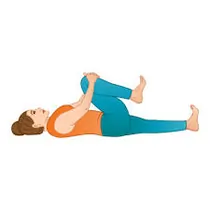
- Position: Supine lying position.
- To begin, lie on your back with your feet flat on the ground and your knees bent. Next, put your hands over one knee and raise it to your chest.
- For 15 to 30 seconds, keep your lower back flattened against the floor while holding that knee to your chest.
- Now, let go and return your knee to its initial position.
- Perform this exercise on each leg two to four times.
Psoas Release with Foam Roller
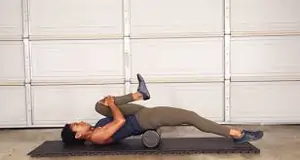
- Position: Supine lying position.
- Place a foam roller horizontally beneath your pelvis while lying face down on the ground. Use your elbows and forearms to support your upper body.
- Targeting the psoas, slowly roll from the base of your rib cage to the top of your hip bone. Focus on any tight or uncomfortable places while applying light pressure.
- After one to two minutes, stop and take a break.
Side-lying psoas stretch
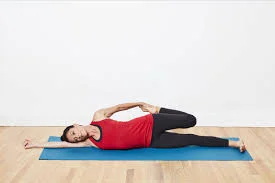
- Position: Side-lying position.
- With your legs straight out from your torso, lie on your right side on a mat or the floor. With your left hand, grasp the top of your left foot while bending your left knee and pulling your left heel up into your left glute muscle (buttock).
- For support, bend your right (lower) arm and place it beneath your head. Your shoulders and hips should line up vertically with the floor. Your head and spine should line up.
- After holding this position for 30 to 45 seconds, straighten the leg and squeeze the quadriceps (thigh) muscles. Do these two to five times, switching sides and repeating with the right leg.
Function of the Psoas Stretch
- The psoas major connects the back to the front, the inside to the outside, the axial to the appendicular skeleton, and the upper and lower bodies. The psoas major, a component of the iliopsoas, aids in hip flexion. Unilateral contraction of the lumbar spine causes the trunk to bend laterally, whereas bilateral contraction causes the trunk to rise from its supine position. Furthermore, attachment to the lesser trochanter, which is situated on the posteromedial part of the femur, results in poor hip adduction and lateral rotation.
- It is a component of the hip flexors, a group of muscles whose main function is to pull the body toward the leg when the leg is fixed or to raise the upper leg toward the body when the body is fixed.
- For instance, the hip flexors, including the iliopsoas, flex the spine upon the pelvis during a sit-up that moves the torso, including the lower back, away from the floor and toward the front of the leg.
- The psoas will stretch when the spine rotates because of the frontal attachment on the vertebrae.
Benefits of Stretching Your Psoas Muscle
In addition to being uncomfortable, a tight psoas muscle can lead to further issues, such as:
Low back discomfort. “A tight psoas muscle can pull your pelvis forward, putting tension on your lower back and causing back pain.”
Osteoarthritis. Your hip joint may be under more strain from tight hip flexor muscles, which could worsen the symptoms of arthritis. Additionally, studies indicate that decreased psoas muscle strength and flexibility may be linked to hip osteoarthritis.
Maintaining a flexible psoas muscle is the greatest method to help prevent these compounded problems. In addition to lowering your chance of getting lower back pain, it can ease other joint discomfort, such as knee pain, and improve your mobility, which will enhance your exercise and sports performance.
Related Conditions
Psoas muscle pain can result from conditions that impact the hip’s health as well as the surrounding muscles and joints. The following are a few potential related conditions:
- Bursitis
- Hip Osteoarthritis
- Hip rheumatoid arthritis
- Hip replacement surgery
- Musculoskeletal conditions
Physiotherapy relevance
Sitting for extended periods of time can shorten the psoas muscle, which can result in myofascial discomfort, low back pain, and trouble standing. Additionally, it may result in lumbar hyperlordosis, a backward arch of the lumbar spine. Low back discomfort and impairment are worsened by loss of hip motion. Breathing difficulties or thoracic diaphragm movement might result from psoas weakness or spasm.
A weak psoas makes it hard to flex the hip joint, which makes it hard to walk uphill, climb stairs, move from a supine to a sitting position, and get up from a sitting position. Acute groin injuries, which are common in sports, may involve the psoas major muscle.
Low back discomfort and impairment can be reduced by stretching the psoas major muscle. Patients’ functional results are improved, and overall unpleasant symptoms are reduced when hip extension loss (caused by a tight psoas major muscle) is treated. Because of where the psoas major muscle is located, pelvic pain may result from a spasm or stiffness in this muscle. Stretching and psoas major release can help people with pelvic pain.
FAQs
What advantages do psoas stretches contain?
Exercises called psoas stretches are intended to improve the flexibility and release tension in the psoas muscle, which is essential for lower back health and hip mobility. These stretches are crucial for preserving proper posture, reducing lower back pain, and enhancing general mobility.
What is a pregnancy-related psoas spasm?
The pelvis tilts forward during pregnancy, and the muscles in the abdomen expand to support the developing baby’s weight. The result is a tensed and shortened psoas muscle. Pelvic misalignments may result from persistent psoas stiffness and spasm.
What signs indicate a tight psoas?
Anatomy, Symptoms, and Treatments of Iliopsoas Dysfunction
Lower back pain, stiffness, hip and groin pain, and trouble standing up straight are all signs of a tight psoas muscle. Additional symptoms may include fatigue, a snapping or catching sensation in the hip, and discomfort that travels down the leg to the knee.
Can a tight psoas be caused by stress?
Lower Back: However, when we are subjected to mild, persistent stress—also referred to as chronic stress—from relationships, employment, or disease, the body may react by tightening and contracting the psoas muscle for days or weeks at a time.
How is the psoas muscle released?
Why stretching won’t help you release your tense psoas muscle.
A deep kneeling lunge, reclining on your back with one knee to your chest, or applying light pressure to the muscle with a tennis ball are just a few of the stretching, strengthening, and physical methods that can be used to release the psoas muscle. Deep tissue massage and customised workouts that target the muscle and surrounding tissues are further techniques. Exercises for balance should be done on both sides. If you’re utilising manual approaches, start slowly, pay attention to your body, and stop if you experience severe pain.
Can the psoas be released with massage?
In particular, manual therapy may be required to treat persistent psoas muscle tightness. In addition to the other hip flexors, massage therapy given directly to the psoas major attachments at the lesser trochanter may assist in further relaxing the psoas muscle and relieve pain.
References
- Sofia, C. (2024, December 9). 9 BEST PSOAs Stretches to Release Tightness (PDF included!). Coach Sofia Fitness. https://www.coachsofiafitness.com/psoas-release-stretches/
- Clinic, C. (2024, April 10). 5 Psoas stretches and exercises. Cleveland Clinic. https://health.clevelandclinic.org/psoas-stretch-guide-for-psoas-release
- Wikipedia contributors. (2025, September 2). Psoas major muscle. Wikipedia. https://en.wikipedia.org/wiki/Psoas_major_muscle
- Hip flexor stretch. (n.d.-b). [Video]. Hingehealth. https://www.hingehealth.com/resources/articles/psoas-muscle-stretches/
- Ross, M. (1970, January 1). 11 PSOas stretches to alleviate tightness and improve your mobility. The Output by Peloton. https://www.onepeloton.com/blog/psoas-stretch
- Bottaro, A. (2025, November 4). Treating tight or weak PSOas muscle pain. Verywell Health. https://www.verywellhealth.com/psoas-muscle-7967409
- How to do the single Knee-to-Chest exercise | NYP. (n.d.). NewYork-Presbyterian. https://www.nyp.org/healthlibrary/multimedia/how-to-do-the-single-knee-to-chest-exercise
- Enos, D. (2022, December 15). Prone Quad Stretch — Dani Winks flexibility. Dani Winks Flexibility. https://www.daniwinksflexibility.com/flexopedia/prone-quad-stretch
- Ross, M. (1970b, January 1). 11 PSOas stretches to alleviate tightness and improve your mobility. The Output by Peloton. https://www.onepeloton.com/blog/psoas-stretch
- Upper leg exercises | Side lying quadriceps stretch. (n.d.). https://www.acefitness.org/resources/everyone/exercise-library/149/side-lying-quadriceps-stretch/?srsltid=AfmBOorrb3Veu7JCvAbrwbTXW4ms3fHvp7rhfLTcYJUqncSFwJAfJe8-