
19 Best Back Extensor Muscle Exercises
Introduction
Back extensor muscle exercises are designed to strengthen the muscles along the spine, primarily the erector spinae group. These exercises help improve posture, enhance spinal stability, and reduce the risk of back pain or injury.
Strengthening the back extensors is essential for maintaining a healthy, functional spine and supporting daily activities that involve lifting, bending, or standing.
Lower Back:
The spinal column in the lumbar region and low back is are extraordinarily well-designed system made up of interconnected bones, nerves, joints, ligaments, and muscles that provide stability, strength, and flexibility.
This complicated anatomy also makes the lower back prone to damage and pain.
What kinds of lower back pain are there?
Lower back discomfort can be either chronic or acute.
- Acute muscle discomfort occurs quickly and can remain for up to 6 weeks.
- Chronic and long-term pain is muscle pain that persists for over three months and causes continuous issues.
Back extensor muscle exercises:
When you feel too comfortable and relieved of your back pain, the physiotherapist will recommend exercise treatment to reduce muscular weakness and tightness.
Stretching and strengthening exercises are part of exercise therapy for muscle discomfort.
Stretching exercises help ease muscle tightness while also strengthening. Exercise can assist you in overcoming muscle weakness.
Stretching Exercise:
After the physiotherapist has administered electrotherapy for 2-3 days to relieve muscle discomfort, the therapist is instructed to stretch to relieve muscle tightness.
This stretching is done after your discomfort has been relieved and you are comfortable.
Piriformis stretches:
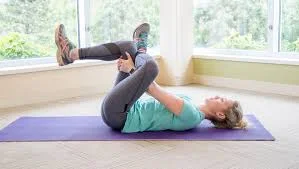
- This stretch is combined with a hard stretch for the backside.
- Stretching begins in a supine position.
- Then, to make a figure four, cross the leg across to the other thigh.
- For 30 seconds, maintain this stretching position.
- Do it 3 times.
Knee-to-chest stretch:

- Start with supine lying.
- Try to bring your right knee joint into your chest.
- Then, with your hands behind your leg, position them at the top of your shinbone.
- Consciously elevate your hip, lengthen your spine down to your tailbone.
- For 30 to 60 seconds, hold this stretch.
Seated spinal twist stretch:

- The beginning posture for this stretching is sitting.
- Both legs are straight on the floor.
- The foot should be outside the right thigh, and the left knee should be bent.
- The n position of the right arm on the outside of the left thigh.
- A support area on the left-hand side.
- Do it 3 times.
Sphinx stretch:

- The starting posture for this stretching is prone.
- You are resting on your stomach, elbows beneath the shoulder joint, hands extended in front, palms facing down.
- To elevate the head and chest, softly engage the lower back, buttocks, and thighs.
- Push the pelvis into the floor.
- Then look straight ahead or gently near the eyes.
- Hold this stretch position for 30 seconds.
- Do it 3 times.
Kneeling back stretch:

- Begin this exercise on your hands and knees, with the knees hip-width apart or the shoulder immediately above the hands.
- In order to round your back or move your belly button up towards your spine, tilt your lower back towards the floor.
- Hold this stretching stance for five seconds.
- Then progressively rock backward, lowering the buttocks as close to the heels as possible.
- Ensure that the arms are spread out in front.
- Hold this stretching stance for five seconds.
- Then slowly return to the beginning position.
- Do it 3 times.
Lower Back Rotation Stretch:

- Start with supine lying
- Knee bend, feet flat on the floor.
- Whenever you roll to the right side of your body, maintain your knees tight and your shoulders level on the floor.
- Hold for five seconds.
- After that, return to the normal position.
- Then, carefully roll your knee joint to the left side of your body.
- Hold for 10 seconds before returning to the starting position.
- Do it 3 times.
Strengthening Exercises:
After the physiotherapist has performed electrotherapy and massage for 2 -3 days to relieve muscle pain, the therapist will recommend strengthening exercises to help ease muscle weakness.
This strengthening activity is usually recommended when you want to relieve pain and feel comfortable.
This all-around strengthening exercise helps you with muscle weakness and soreness.
Pelvic Tilts:
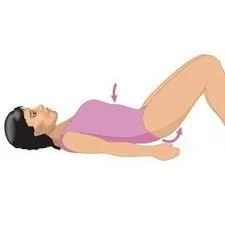
- The starting posture for this exercise is supine.
- You are lying on your lower back.
- Try arching the lower back and flattening it to the ground.
- Do it ten times in one session and three times a day.
Cat/cow:

- Start in a kneeling position.
- Begin with this exercise on all fours.
- Elevate your abdomen and lift your head.
- Generate an arch in your lower back.
- Hold the exercise for 30 seconds.
- Repeat this with the opposite leg.
- Do it ten times in one session and three times a day.
Bridges:

- Start with supine lying.
- After that, feet flat and hip-width apart.
- Your hands at your sides.
- Then, press your feet to the floor while slowly lifting your buttocks off the ground until your body forms a straight line.
- You must keep your shoulder joint on the floor.
- Hold for 10 to 15 seconds.
- Repeat the workout 15 times.
- Do it ten times in one session and three times a day.
Lying lateral leg raises:

- You’re lying on one side.
- The lower leg should be bending position.
- Raise your upper leg without causing any other movement in your body.
- Hold it for 10 seconds.
- Do it ten times in one session and three times a day.
Superman

- You’re lying on your stomach.
- Lift your hands and feet above the ground.
- Make an effort to put your hands and feet apart.
- To avoid neck pain, make sure to look at the floor while performing this exercise.
- Hold for 10 seconds.
- Do it ten times in one session and three times a day.
Bird-dog:

- Begin the exercise by putting the shoulder directly over the hands.
- Hip squarely over the knees.
- Straight out in front of the body is the ideal position for the right arm.
- Hold this exercise position while remaining balanced.
- Then, cautiously lift your left leg and extend it directly behind your upper body.
- Hold this exercise position for ten seconds.
- After that, return to the normal position.
- Repeat on the opposite side.
- Do it ten times in one session and three times a day.
Plank:

- You are resting on your stomach, forearms against the floor, elbow joint directly in line with shoulder joint.
- First, strengthen the abdominal and gluteal muscles.
- Try to lift the hip and both knee joints off the floor.
- Hold this training stance for 10-30 seconds without letting the pelvis sink to the floor.
- Then slowly return to the starting position.
- Do it ten times in one session and three times a day.
Side plank:

- Your left leg is straight, and your foot is on the floor, while your right leg is slightly bowed as you lie on your right side.
- Ensure that the right arm is precisely beneath the right shoulder joint, with the forearm extended out front.
- Raising the right hip off the floor and contracting the abdominal muscles comes first.
- Next, try straightening the right leg by raising the right knee joint off the ground, then stacking the feet on top of one another.
- Must keep the body straight.
- Hold this workout position for 30 seconds.
- Then, carefully return to the starting position and repeat on the opposing side.
- Do it ten times in one session and three times a day.
- When you find this exercise too challenging, keep your lower knee slightly bent and on the ground.
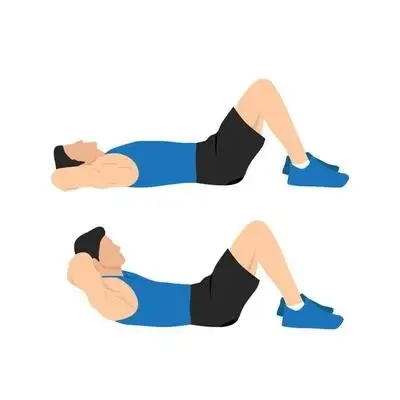
Abdominal crunches:

- Start with supine lying.
- Knees bent, and feet hip-width apart.
- Cross your hands across your chest.
- After that, reach down the sides of the body to your feet.
- As you inhale, tighten your core muscles and raise your head and shoulder blades off the floor.
- Then, return to the starting location.
- Do it ten times in one session and three times a day.
Prone Hip Extension

- Start with prone lying.
- You have the option of keeping your arms at your sides or resting your forehead on your hands.
- To increase comfort, position a pillow under your chest and stomach.
- Lift one leg straight up towards the ceiling while the other remains on the ground.
- Make sure you lift from the hips.
- Slowly return to the starting position.
- Repeat.
Prone Thoracic Extension
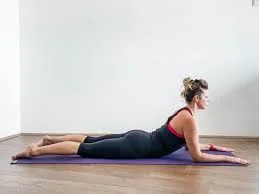
- Begin by reclining on your mat, face down.
- If this position causes discomfort in your lower back, you can place a pillow beneath your hips.
- Bend your elbows to a 90-degree angle.
- Gently elevate your collarbone off the floor.
- Hold this position for five seconds.
- As you improve at this activity, you may raise the time to 10 seconds.
- Lower yourself back to the starting position.
Once you’ve been approved to exercise, try the following exercises to strengthen your muscles and prevent back pain.
Walking
Walking is one of the most beneficial activities for the entire body, especially the back. The American Academy of Orthopaedic Surgeons advocates walking as part of a back surgery recovery regimen. The lumbar, core, and trunk muscles that support your spine are strengthened by walking.
- Improves stability.
- Condition the muscles.
- Helps fight the various detrimental impacts of a sedentary lifestyle.
- Promotes total wellness.
Walking not only strengthens your muscles, but it has also been shown in tests to help relieve chronic back pain.
Swimming
Swimming is often recommended as a low-impact exercise. It is beneficial for persons with joint pain, but it also helps to strengthen the muscles in your back. Your spine will experience less compressive pressure since the buoyancy of the pool water helps to defy gravity.
Yoga
Many people think of yoga asanas (poses) as stretches, however, some of them also gradually strengthen the muscles. Your core muscles, which comprise your back and abdominal muscles, are worked by some asanas.
Shoulder squeeze
Shoulder squeezes are a simple workout that can be done at work, even while sitting at your desk. While seated, bring your shoulder blades together, keep them there for five seconds, and then release the tension. You can repeat this three to five times per day.
FAQs
How can you strengthen your extensor muscles?
Cat Cow. Strength. Warm Up. Posture. Flexibility.
Cow Stretch (Modified Cat-Cow) Flexibility. Posture. Warm Up.
Double Knee to Chest Stretch. Flexibility.
Knee Plank. Strength.
Lateral Lunges with Weight. Balance.
Plank. Strength.
Plank with Shoulder Taps. Strength.
Prone Hip Extension. Flexibility. Posture. Strength
How can I assess my back extensor strength?
The Biering-Sorensen test, isolated lumbar extension test, standing isometric trunk extension force against a load cell or transducer, isokinetic dynamometry, and isometric lifting from a semi-crouched position using a dynamometer are all current methods for assessing back extensor muscle performance.
Can I apply back extensions every day?
Engage in three to four sets of ten to fifteen repetitions of unweighted back extensions each training day.
Referances
- Cadman, B. (2025, April 14). How to strengthen the lower back. https://www.medicalnewstoday.com/articles/323204#strengthening-exercises
- 5 Exercises to strengthen your back: John Regan, MD: orthopedic spine surgeon. (n.d.). https://www.spinegroupbeverlyhills.com/blog/5-exercises-to-strengthen-your-back
- Exercises to strengthen your back extensors. (n.d.). https://www.getwellen.com/muscles/back-extensors
- Ladva, V. (2023, February 22). Lower back pain: Cause, symptoms, treatment, exercise. Samarpan Physiotherapy Clinic. https://samarpanphysioclinic.com/lower-back-pain-treatment-exercise/