
Bharadvajasana (Bharadvaja’s Twist)
What is Bharadvajasana?
The seated spinal twist known as Bharadvajasana is well-known for its ability to relieve and revitalize the back. Squeezing the spine allows you to accomplish the combination pose known as Bharadvajasana in two different ways.
To accomplish this, bring the feet to the right hip and fold the legs at the knee. Stretching the right arm allows the palm to touch the floor and the hand to be placed beneath the left knee. To grasp the right upper arm with the left hand, the right arm is looped over the back.
When done integrating with the half lotus posture and hero pose, like in Bharadvajasana II, the twisting and bending become a little more difficult. Because of this, the position falls under the beginner to intermediate category. It is also known as Bharadvaja’s Twist, Torso Stretch Pose, or seated spinal twist. Because it strengthens the spine, hips, knees, and other joints, the position has a wonderful effect on people with arthritis.
Muscle Work During Bharadvajasana:
- Arms and Shoulders Muscles
- Neck Muscles
- Lower Back Muscles
- Hip and Knee Muscles
- Gluteus Muscle
- Psoas Muscle
How to Perform?
- Sit in dandasana to start.
- With the knees on the floor, bend them to bring the leg back.
- Place your feet next to your right hip and place your buttocks on the ground. The legs are positioned so that the arch of the left foot rests on the right inner ankle.
- Stretch your right arm outside your left leg, close to your left knee, while bending your torso 45 degrees to the left.
- With the palm on the floor and the fingers pointing to the right, place the right hand beneath the left knee.
- Swivel your left shoulder and pull your left arm behind your back as you exhale.
- Clasp the right upper arm across the back with the left hand while bending the left elbow.
- Look over the right shoulder and turn the neck to the right.
- For half an hour, hold the twisted stance while taking deep breaths.
- Return to the center after releasing the handgrip. To repeat the pose, straighten your legs and switch up your arms, legs, and sides.
Benefits:
Strengthens the hips and shoulders: The mild spinal twist of Bharadvajasana expands the hips and shoulders. It increases the size of these muscles and supplies them with new blood. increases the strength and flexibility of the hips and shoulders.
Enhances spinal flexibility: We typically spend the majority of our working hours sitting down due to modern lifestyles. The natural structure and shape of the spine are weakened as a result. Therefore, it is essential to perform a lateral stretch of Bharadvaja’s twist to improve flexibility and revitalize the back muscles.
Stretches the muscles of the leg: In this posture, keeping the legs folded improves blood flow by stretching the knees, calves, and hamstrings. As a result, it strengthens the leg muscles and increases their size.
Abdominal muscles are stimulated: The pose’s lateral twisting helps to build stronger core muscles. It tones and stretches the muscles of the abdomen. The oblique muscles grow larger and more powerful. Additionally, it aids digestion by massaging the interior organs.
Boosts metabolism: Bharadvajasana includes neck twisting in addition to spine twisting. The thyroid gland, which regulates the body’s metabolism, is stimulated by it.
Enhances reproductive organ efficiency: This pose requires the lower abdomen to be twisted. It increases blood flow and compresses the reproductive organs. It maximizes the release of hormones.
Benefits for the respiratory system: Bharadvajasana opens the shoulders and chest. It increases the capacity of the lung and improves oxygen uptake. This enhances the respiratory system by increasing breathing capacity.
Therapeutic Benefits:
- Because it stretches the thighs and hips, Bharadvajasana helps treat sciatica.
- Patients with arthritis benefit from the position since it strengthens the knees, hips, elbows, and other joints.
- It has a calming effect on shoulder, back, and neck discomfort or stiffness.
- The cervical spine is strengthened when the neck muscles are stretched. For this reason, it is a useful stretch for cervical pain relief.
- Additionally, it helps alleviate carpal tunnel syndrome.
- Stress is reduced by this spinal twist because it is also calming to the nervous system.
- Women with PCOS or hormonal imbalances discover that Bharadvaja’s twist helps them.
Preparatory Pose:
Seated Windshield Wipers (Dynamic Stretch):
Sit down, plant both feet on the floor, bend your legs, and keep your legs shoulder-width apart. Start swaying your bent legs from side to side while placing your hands on the mat behind your glutes.
As you swing your legs to each side, make sure your knees are in contact with the floor. Feel the activation of your glutes, hip-flexors, knees, low back, shoulders, and obliques as you do this action for one to five minutes.
Mermaid Side Stretch Pose:
Before performing Bharadvajasana, warm up with the Mermaid side stretch posture to increase your side body and spine flexibility if you have tight obliques and a weak spine.
To begin, sit on your mat with both legs folded onto your right side, placing your right foot behind you and your left foot against your right hip. Maintain an elongated and straight spine.
After inhaling deeply, raise your right arm above your head and contract your core.
Allow your side body to become more flexible by slowly bending your torso to the side while maintaining the same posture. For full torso activation, hold each side of this stance for two to three minutes.
Modifications:
Block and folded blanket: After bending the knees, move the feet to the right hip. To align the pelvis, place a folded blanket beneath the left buttock. Additionally, position a block towards the right hip behind the back. Place the right hand beneath the left knee while twisting the torso to the left. The left arm should now be brought to the back and rest on the block.
Yoga strap: Fasten a yoga belt loop around your right upper arm. Place your feet at your right hip and flex your knee. Place the right hand behind the left knee to stretch the right arm. After that, grasp the other end of the belt with the left hand and wrap the hand around the back.
Hand on the wall: To do this, sit on the floor with your knee bent, as shown above. Draw the right arm across the chest, place the hand on a wall, and twist the torso to the left. Place the left arm on the sacrum after dragging it behind the back. To gaze over the right shoulder, turn the neck to the right.
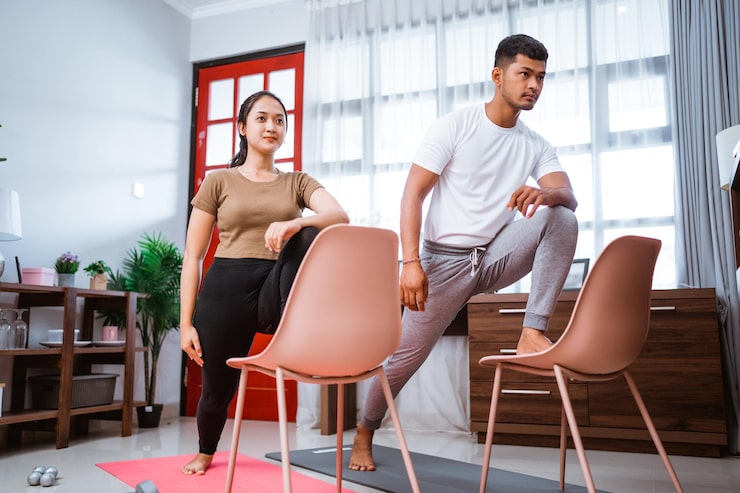
Chair: Take a seat sideways with the chair’s back to your left. Put your feet firmly on the ground. With your hands gripping the chair’s top, turn your upper body towards the back. Extend your elbows wide. With your right hand, slide it to the left. To pull the arm to the rear that holds the seat’s edge, raise your left hand. You can lower your right hand to the back of the seat while maintaining an elevated chest.
Variations:
Bharadvajasana II
- Start with the pose of dandasana.
- To position the foot on the root of the right thigh, flex the left knee.
- To position the right foot next to the right hip, bend your right knee.
- To grasp the left foot with the left hand, pull the left arm to the rear.
- To place the right hand beneath the left knee, extend the right arm straight.
- Hold the left foot firmly while twisting the torso to the left.
- Look past the shoulder and turn the neck to the left or right as you see fit.
Bharadvajasana I (Bharadvaja’s Twist A):
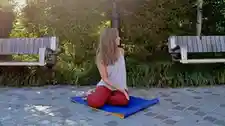
Place your body weight on your right leg and begin in the Thunderbolt position. Take a deep breath and turn your torso slightly to the right. Then put your right arm behind you and your left palm on your right knee.
Keep in mind that this is a simple version of Bharadvajasana, so you don’t need to twist your torso too much. For a gentle opening of the muscles throughout your body, hold the pose for two to three minutes on each side.
Marichyasana C (Marichyasana III):
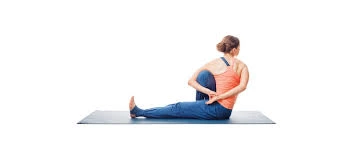
After mastering Bharadvajasana, it’s time to challenge yourself by attempting the third-level side stretch in Marichyasana. Bend your left leg and position your left foot near the thigh of your right leg to begin in staff posture.
To begin, put your right arm over your left leg and extend it upwards.
As your torso bends to the left, push your left leg just enough to allow your right palm to grab your left wrist behind you. For three to five rounds, repeat this on the opposite side.
Precautions:
- The buttocks must make contact with the ground. When practicing the seated twist, sit on a blanket to prevent any hip lift.
- Bring the hand beneath the alternate knee, keeping the heart open.
- Remember to maintain an extended spine and raise your ribs.
Contraindications:
- If you have diarrhea, stay out of this stance.
- Avoid doing the position while you have a headache.
- It must be avoided by those with abnormal blood pressure.
- Do not perform the posture if you suffer from sleeplessness.
- The posture is not appropriate for women who are menstruating.
FAQs
What is Bharadvajasana good for?
The center of the nerve system, the navel, aids in the regulation of numerous bodily functions, according to Vedic medical research. Your abdominal muscles are activated by the mild twist that Bharadvajasana delivers at the lower abdomen, primarily around the navel. This can improve digestion and increase the amount of energy that moves through your body.
Can beginners perform Bharadvajasana?
Yoga poses that twist the spine at an intermediate to advanced level include Bharadvajasana. For a beginner, it’s not the ideal twisting pose. Try these preparatory or modified positions for Bharadvajasan if you’re new to the practice. As you start to feel stronger, you can go to the main pose.
What are the different preparatory poses in Bharadvajasana?
Combine static obliques with dynamic hip mobility exercises like Seated Windscreen Wipers and spine stretches like Cat-Cow Stretch and Mermaid Side Stretch. This will improve blood flow to your spine, legs, and glutes, facilitating easy and fluid practice of Bharadvajasana.
What are the benefits of Bharadvajasana?
Bharadvajasana has the following advantages:
Increases mobility.
Increases the flexibility of the spine.
The knee joints’ strengths.
Extends the calves and ankles.
Stimulates the organs of the abdomen.
The reproductive organs are stimulated.
What is Supta Bharadvajasana?
A stance for relaxation is Supta Bharadvajasana, also known as Reclining Bharadvaja’s Twist stance. You can do this variant by lying on your side on the mat with your legs in Bharadvajasana. You can also do this position by placing a bolster pillow between you and the floor if side bending hurts.
What are the different variations in the Bharadvajasana pose?
Beginners can practice Bharadvajasana with a simpler version, while intermediate to experienced yogis can test their spine flexibility with the Marichyasana C variation.
References:
- Bharadvajasana (Bharadvaja’s twist): Meaning, Steps, Benefits – Fitsri Yoga. https://www.fitsri.com/poses/bharadvajasana
- Bharadvaja’s Twist Pose Yoga Pose (Bharadvajasana). Tummee. https://www.tummee.com/yoga-poses/Bharadvajasana