Best Home Workout Routine for Pain-Free Living
Introduction
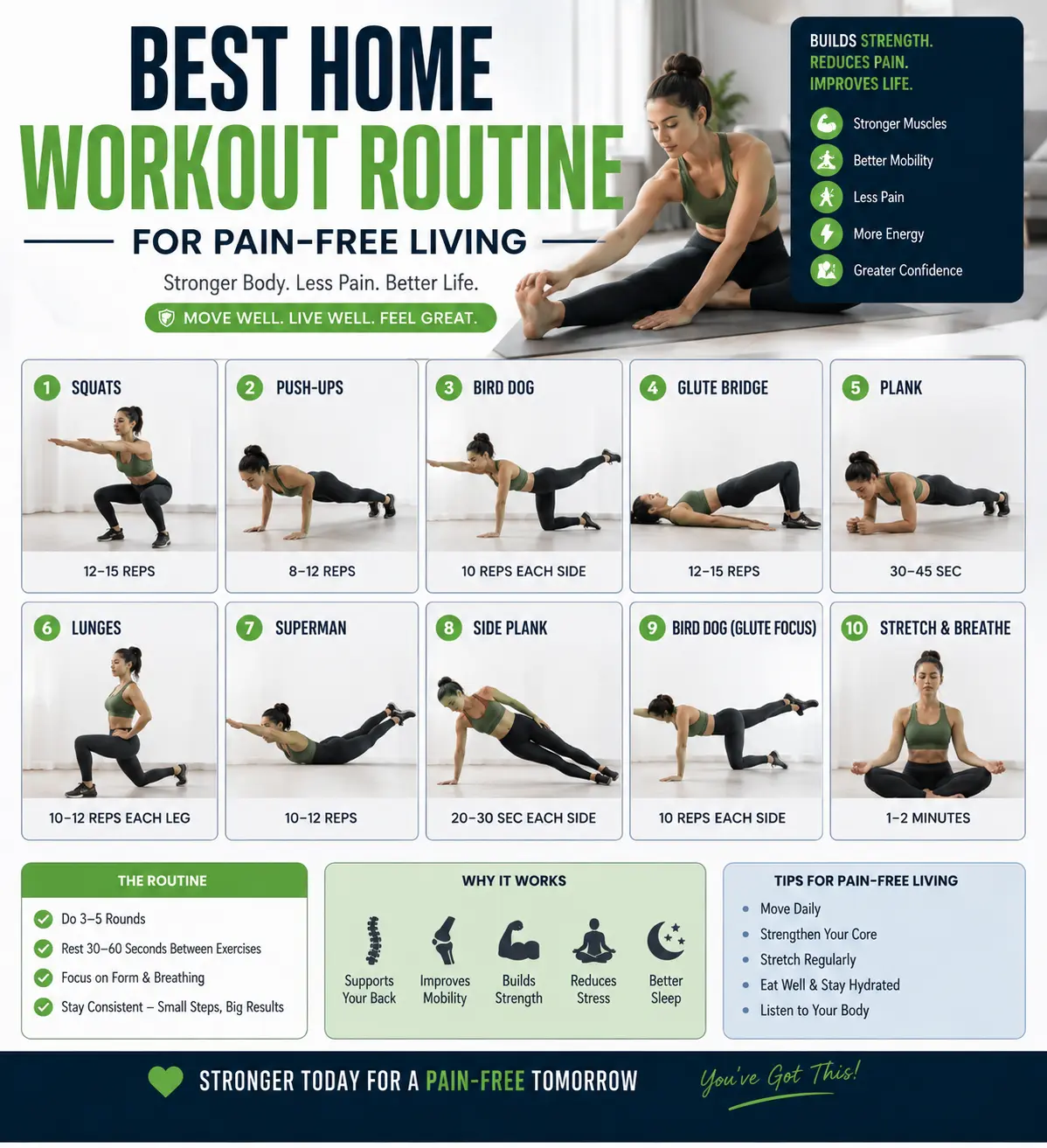
Living a pain-free and active life starts with regular movement. A well-designed home workout routine can help improve muscle strength, flexibility, balance, and posture while reducing the risk of common aches and pains. Whether you spend long hours sitting at a desk, work from home, or simply want to stay fit without going to a gym, exercising at home is a convenient and effective solution.
This home workout routine combines strengthening, stretching, and mobility exercises to support healthy joints and muscles. It targets major muscle groups, including the core, legs, back, shoulders, and hips, helping improve stability and body mechanics. Regular exercise can also enhance blood circulation, increase energy levels, reduce stiffness, and promote better movement throughout the day.
One of the greatest advantages of home workouts is that they require little or no equipment and can be performed by people of different fitness levels. The key to success is maintaining proper exercise technique, breathing normally, and performing the routine consistently.
In addition to reducing everyday discomfort, a balanced workout routine supports long-term musculoskeletal health. Strong muscles provide better support to the spine and joints, lowering the risk of injuries caused by poor posture or muscle weakness. Combining these exercises with healthy habits such as staying hydrated, eating a balanced diet, and getting adequate sleep can further improve your overall well-being.
Remember that pain should never be ignored during exercise. Mild muscle fatigue is normal, but sharp or severe pain is a sign to stop and seek professional advice. If you have a chronic medical condition, recent surgery, or a serious injury, consult a physiotherapist or healthcare provider before beginning a new exercise program.
Cat-Cow Stretch, Spinal Flexibility Booster

Cat-Cow Stretch, Spinal Flexibility Booster
How to do it:
- On your hands and knees, begin.
- Inhale deeply as you tilt your pelvis so your tailbone sticks up. Drop your stomach toward the floor, lift your chest, and gently look forward or up toward the ceiling. [1, 2]
- Breathe out, tuck your chin in, and circle your back (Cat).
- Ten or twelve times, repeat.
- How is it beneficial
- Helps keep the spine flexible
- Ideal for a regular mobility regimen
- A fantastic, easy stretch for physical therapy
Child’s Pose, Relax & Lengthen

Child’s Pose, Relax & Lengthen
The child’s pose is a traditional flexibility exercise that relieves tension and gently stretches your back muscles.
How to do it:
- Sit back on your heels while on your hands and knees.
- For thirty seconds, extend your arms forward and hold them there.
- Take a deep breath.
- How it is beneficial
- Great for relieving back discomfort
- The ideal beginning to a pain-relieving at-home workout
Hip Bridges, Core & Glute Strengthening

Hip Bridges, Core & Glute Strengthening
Stronger hips are essential for reducing chronic pain because they support your back and enhance posture.
How to do it:
- Bend your knees and lie on your back.
- Raise your hips till a straight line is formed by your body.
- Hold for two seconds, then let go.
- Perform ten repetitions.
- How is it beneficial
- Important core stability strengthening exercises
Wall Angels, Shoulder Mobility Enhancer
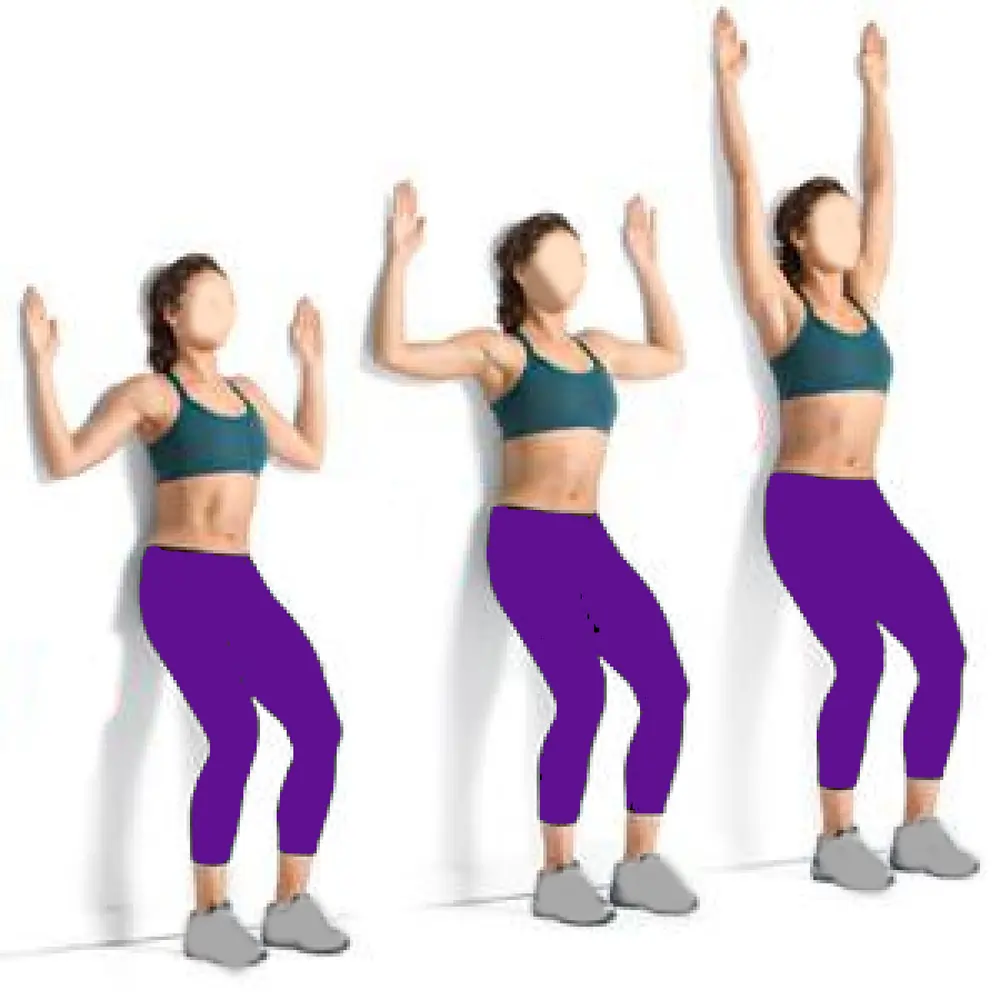
Wall Angels, Shoulder Mobility Enhancer
Upper back and neck pain might result from stiff shoulders. Wall angels improve posture and shoulder flexibility.
How to do it:
- Place your back up against a wall.
- Make snow angels by sliding your arms up and down.
- Gradually elbows up against the wall.
- How is it beneficial
- Excellent basic stretch for physical treatment
- aids in preserving posture and shoulder mobility
Ankle Pumps, Lower Limb Circulation

Ankle Pumps, Lower Limb Circulation
How to do it:
- When sitting or lying down, point your toes up and down.
- Perform 20 repetitions per foot.
- How it is beneficial
- Perfect for your everyday mobility regimen
Knee to Chest Stretch, Lower Back Relief
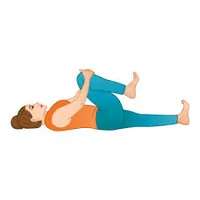
Knee to Chest Stretch, Lower Back Relief
Back muscles and tight hips are frequent causes of discomfort. Tension is softly released by this motion.
How to do it:
- You should be in a supine position and grasp your knee with both hands, fingers.
- Hold for 20 to 30 seconds.
- Change sides.
- How it is beneficial
- Fantastic workout for flexibility
- Lessens the tension on the lower back
Standing Calf Stretch, Prevents Tightness

Standing Calf Stretch, Prevents Tightness
Your movement mechanics may be impacted by tense calf muscles, which may also cause pain in other areas.
How to do it:
- Take a position facing a wall.
- With your heel down, take a step back.
- Slightly bend forward.
- Hold each side for 20 to 30 seconds.
- How is it beneficial
- Easy yet powerful at-home exercise for pain management
How to live a pain-free life?
Daily gentle movement such as walking or yoga, Restorative sleep(7- 99 hours, an anti-inflammatory diet, and use of mind-body techniques to manage stress can drastically decrease your overall pain perception.
Move on purpose: Exercise regularly to strengthen muscles that support your joints and release natural endorphins that block pain signals. A physical therapist can help you develop a safe, personalized exercise program.
Focus on deep rest. Sleep deprivation decreases your pain threshold and increases inflammation. Maintain a consistent sleep schedule by going to bed at the same time and staying away from screens before bed.
Lower everyday stress. Chronic stress causes muscle tension that heightens discomfort. Try mind-body exercises like deep breathing, meditation, or guided imagery to help ease tension in your nervous system.
Reduce inflammation: A diet rich in vegetables and whole grains and low in added sugars and alcohol helps your body better handle systemic inflammation.
How to distract from pain?
If you want to distract your brain from pain, you have to get busy with your cognitive switchboard and do things that require all of your attention. The more absorbed the task, the less mental bandwidth your brain has to process pain signals. Here are hyper-specific, actionable ways to.
Cognitive Puzzles – Mental Math: Put your brain to work by solving difficult logic problems
Immersive Media: Enjoy an exciting video game, an engaging audiobook, or an action-packed film to proactively divert your attention from physical or emotional discomfort.
Sensory Grounding: Concentrate on your current environment. You can try to ground yourself. Hold an ice cube. Taste something very sour.
Active Breathing & Relaxation: Tap into your body’s natural pain-relieving mechanisms by focusing on your inhales and exhales, or use guided meditation to reframe your body’s stress response.
You can trick your brain into reducing pain with cognitive distraction (like counting or doing a task), activate the “gate control” system by applying competing sensations (like cold or pressure), and use deep breathing and visualization to send signals of safety to your central nervous system.
Pain is so much about the brain’s perception of threat and focus that you can change the way you experience it, both physically and mentally. Try these very effective techniques:
Cognitive Distraction: If you think about your pain, your pain perception increases. You can cut down your brain’s pain processing by half by engaging your mind in a difficult task, such as counting backwards by sevens, solving a complex puzzle, or finding every letter with a hole in it on a page.
The Gate Control Method: The nervous system can only handle so much sensory information at a time. Tricking the “gate” is accomplished by flooding the nervous system with non-painful sensations. For example, rubbing the hurting area, applying an ice pack, or using a TENS unit can interrupt pain signals going to your brain.
Deep Relaxation: When you are in pain, your body tenses up,p and this amplifies the threat signal. Try diaphragmatic breathing (inhale deeply for 4 seconds, hold for 4, exhale for 6) to actively activate your parasympathetic nervous system and tell your brain it is safe.
Visualization and Reframing: For chronic problems, visualize the painful area or movement. Mentally break down the tensionassociated withh it d and actively imagine a smooth, pain-free movement to bypass the brain’s learned fear avoidance pathways.
FAQs
How to work out without pain?
Warm-up activities and dynamic stretching, which call for movement, before working out. It’s crucial, particularly if you’ve never worked out before. Static stretches, such as standing and stretching down to touch your toes, can help ease muscle soreness after exercise.
Can I do a 7-minute workout every day?
It is highly unlikely that your body needs a full rest day after 7 minutes of activity, regardless of the intensity, unless there is a problem that cannot be resolved by exercise alone. If you’re eating a healthy diet, getting adequate sleep, aren’t extremely old or fat, etc. It should be manageable for your body.
What are common home workout mistakes?
Warming Up: Skipping This Crucial Step.
Appropriate Cooldown: Ignoring Recuperation After Exercise.
Levels of Intensity: Working Out Too Hard or Not Enough.
Exercise Variety: Maintaining the Same Schedule.
Should I work out if I’m in pain?
As a general rule, never work out through sharp, acute, or intense pain. This can turn a small strain into a serious long-term injury.
Can I work out in the morning and at night?
This manual will help you tell the difference between what you can push through safely and what you need to stop for.
1. What You Can Work Through: Muscle Burn: It’s totally normal to feel a localized burning sensation for a brief period of time when you’re working out hard. This is caused by metabolic byproducts such as lactic acid and indicates that your muscles are being effectively challenged.
General Soreness (DOMS): Delayed Onset Muscle Soreness reaches its peak 24 to 72 hours after a hard workout. Typically, you will experience a dull ache or stiffness.
2. When to Stop Right Now
Sharp, Stabbing Pain: If you experience a sudden, localized, or sharp pinch, stop the exercise immediately.
Change the movement or stop the exercise completely to prevent damage to the connective tissue.
Numbness, tingling, or swelling: If you experience shooting sensations, numbness, swelling, ng or see visible bruising, stop the activity.
Can you safely work out twice a day?
Yes, you can train twice a day, but it’s very important to program it correctly so as not to overtrain, fatigue, or get injured. Balance out various goals so that your total daily volume is achievable.
Cardio + Strength: Do a short cardio session in the morning (maybe a 20-minute jog or indoor cycling), then do your strength training (weights or resistance) in the evening.
Light Movement + High Intensity: In the morning, go on a light walk, do some yoga or stretching, and save your high-intensity interval training (HIIT) or heavy lifting for later.
Active Recovery: Do some low-intensity recovery activities (e.g., light swimming, walking) in the morning and work out hard in the evening.
Split Sessions: If you’re short on time, you can split one long workout into two shorter 20- to 30-minute sessions.
Two-a-Days: Best Practices
Get Sufficient Rest: Have a minimum of 6 to 8 hours of rest between the two workouts.
Fuel and Hydrate: Make sure you’re getting enough calories and protein in between sessions. Before workouts, concentrate on electrolytes and simple carbohydrates.
Watch Your Body: Monitor your sleep and fatigue levels. If you begin to feel unusually sore, unmotivated, or sluggish, back off to one daily session to allow your muscles and central nervous system time to recover.
References
- At-home Exercises for Chronic Pain – Northern Pain Centre. (n.d.). https://www.northernpaincentre.com.au/wellness/chronic-pain-movement/at-home-exercises-for-chronic-pain/
- Freutel, N. (2017, May 31). 7 exercises for reducing chronic pain. Healthline. https://www.healthline.com/health/exercises-to-reduce-chronic-pain
- Full Body, At-Home workout. (2021, April 14). https://www.arthritis.org/health-wellness/healthy-living/physical-activity/other-activities/park-bench-power-moves
- Physiotherapy, D. A. (2026, April 16). Top 10 home physiotherapy exercises | Dr. Vigils Physio. Dr Vigil’s Physiotherapy. https://drvigilsadvancephysio.com/top-10-physiotherapy-exercises-at-home/
- Pt, S. (2024, November 12). Top 10 exercises to improve mobility and reduce pain at home – Springfield Physical Therapy & Wellness. Springfield Physical Therapy & Wellness – Springfield Physical Therapy & Wellness. https://springfieldptwellness.com/top-10-exercises-to-improve-mobility-and-reduce-pain-at-home/
- Specialist, A. S. C. R. (2026, July 9). Exercises for lower back pain. British Heart Foundation. https://www.bhf.org.uk/informationsupport/heart-matters-magazine/activity/exercises-for-lower-back-pain