Pincha Mayurasana (Feathered Peacock Pose)
What is Pincha Mayurasana?
The advanced practice of Pincha Mayurasana, also known as Feathered Peacock Pose, is intended to test strength, stability, and structural integrity as well as to master the aspects of Sthiram and Sukham (calmness and steadiness).
The Sanskrit terms “Pincha,” which means “Feathered,” “Mayur,” which means “Peacock,” and “Asana,” which means “Posture,” are the source of the pose’s name. The body exhibits beauty and strength in the last position, much like a peacock raising its tail to reveal its vibrant feathers. Thus, Pincha Mayurasana, also known as Feathered Peacock Pose.
Pincha Mayurasana is a high-level balancing position where the forearms support the entire body weight. In this posture, balance enhances focus and concentration, which is essential for maintaining the stance. In addition, it tones the core muscles and strengthens the forearms.
Muscle Work During Pincha Mayurasana:
- Biceps and Triceps Muscles
- Middle Back Muscle
- Core Muscle
- Gluteal Muscle
How to Perform?
- Enter Adho Mukha Svanasana. Now put your forearms on the floor and rest your elbows. Your forearms should line up and be beneath your shoulders.
- From here, lift your head and walk your legs towards your head until your forearms and upper arm form a straight angle.
- To create a launchpad for the inversion, now tighten your shoulder blades inside the rear of your body.
- Then, while keeping your left heel on the ground and extending through it, bend your right knee and attempt to leap up your right leg. While keeping synchronization with the left leg, make a couple of efforts with the right leg to achieve balance.
- To create lower body activity, pull in your navel and contract your inner thigh and abdominal muscles. Here, you should look forward with your head raised above the ground.
- Maintain the stance for 15 to 20 seconds after you’re in it, or you can expand it with experience. Next, exhale and lower your left leg, then your right leg while maintaining your balance.
- Now straighten your elbows and take a step back with your feet. Lastly, go back to the Adha Mukha Svanasana and unwind.
Benefits:
Beneficial for Persistent Pain: Regular practice of this pose relieves joint and muscular pain, surgical complications, and chronic pain resulting from previous illness. In order to combat chronic pain over time, one should incorporate this asana into their daily routine.
Calms the Nervous System: Pincha Mayurasana’s upside-down posture enhances blood flow to the brain and spinal cord. The cranial and spinal nerves that run throughout the body are nourished by this. Therefore, it also improves functioning and calms the nervous system.
Enhances Flexibility and Agility: It is a great asana that improves body control and ease of movement by working at the fundamental level of an individual’s anatomy.
Strengthens the Torso: The entire weight of the body is supported by the palms, forearms, upper arms, and other parts of the torso in Pincha Mayurasana. This level of strain on the bones increases muscle strength and calcification.
Overcomes Anxiety and Stress: By maintaining the stance for extended periods of time, the practitioner gains a sense of equilibrium as they grow proficient in it. The body and mind become calmer as a result, bringing awareness inward. overcomes anxiety and stress as a result.
Beginner’s Advice:
- Pincha Mayurasana is a vigorous pose that calls for firm, powerful shoulders and forearms. Beginners typically do not have access to these features. Therefore, before doing this asana, beginners should think about doing a hard practice of the Plank posture to gain the requisite strength.
- It may be challenging for beginners to straighten their legs in the air. They should make several attempts to kick up one leg while engaging another to get into the posture to solve this issue.
- When jumping into the pose, one should be patient. It takes a good practitioner to raise legs all at once. Therefore, individuals who have executed it as beginners should take their time getting into and out of the pose.
Preparatory Pose:
- Gomukhasana (Cow Face Pose)
- Adho Mukha Vrksasana (Handstand Pose)
- Uttanasana (Standing Forward Bend)
Props and Modifications:
- The palms, forearms, and elbows support the full weight of the torso and lower body. Therefore, practitioners might use a soft blanket beneath their elbows if they are in pain.
- At first, performing Pincha Mayurasana in a single attempt or without falling backward was an enormous undertaking. Therefore, it is recommended that practitioners who lack that level of knowledge work against the wall. This will lessen the possibility of a fall-related harm.
- It is necessary to firmly set the grasping elbows above the floor. Therefore, a strap should be wrapped over the forearms of practitioners with weaker elbows. But this will also keep the elbows from swinging on either side.
Variations:
Ardha Mayurasana:
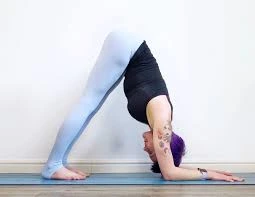
In Pincha Mayurasana, the torso and lower body are raised while being supported solely by the palms, forearms, and elbows. Ardha Pincha Mayurasana, on the other hand, calls for the front foot’s portion of the lower body and the clasped hand, forearms, and elbow of the torso or upper body.
- Put yourself in the table posture to start the pose. Your hands are positioned directly beneath your shoulder, with your fingers extended wide and your palms buried deep in the ground. Your toes are pointing towards the ground, and your knees are directly beneath your hips.
- Now, lower your torso and clasp your hands together in front of you, placing your elbows where the palms should be.
- Next, carefully elevate your pelvis off your knees to straighten your legs. To solidify your front foot on the ground, extend your calf and the back of your thigh.
- Now extend your entire back to open up your chest. To further expand your chest, use your shoulder blades. Here, try not to squeeze your shoulder. Look down at the ground.
- After staying in this position for a while, raise your knees. Now let go of your hand, press the floor down through your palm to raise your torso as well, and then let go.
Mayurasana:
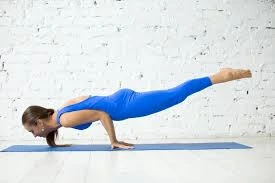
The body is slanted in this pose such that it is nearly perpendicular to the floor. However, they have an exact foundation of palms, forearms, and elbows in both stances. However, in Pincha Mayurasana, the vertically oriented body weight is supported by the same foundational support.
- Assume the position of the tabletop. With your toes tucked in, place your hands directly beneath your shoulders and your legs parallel to one another.
- Now, pull your hand closer and roll it inside so that the back of your elbow faces forward and the fingers face your foot. From here, raise your knees to straighten your legs and position your core on the lower portion of your upper arm.
- Try lifting your toes and balancing your complete body on the portion of your upper arm created by the merging of your elbows as you gradually reach the spot to firm your core.
- After holding this posture for as long as you can, carefully place the front portion of your foot on the ground, rest your knees, and then twist your hands outward and separate them to reach the tabletop position. Finally, relax.
Precautions:
- When performing Pincha Mayurasana, practitioners should avoid lowering their heads because this would disperse their focus. Instead, they should hang their heads between their shoulders and look directly in front of the asana.
- A deep arch in the lower back may be an issue for practitioners who have rigid inner thighs and armpits, which could cause them to fall backward. Therefore, one should straighten their heels up in the air and bring their front ribs in to avoid this.
- Maintain an elevated shoulder while balancing the stance, and make sure your forearms are parallel. To strengthen the foundation, spread your fingers; to support the posture, press your palms deeper into the ground.
Contraindications:
- Because of the inversion, which may put additional strain on the heart to pump blood, practitioners with high blood pressure should refrain from performing this pose.
- Pincha Mayurasana should not be performed by women who are pregnant or who are menstruating. In both cases, this would not be appropriate.
- This asana may not be recommended after any type of abdominal or waist surgery because of the active participation of the core region, which could be detrimental.
- Pincha Mayurasana should be strictly avoided by those who have shoulder, wrist, neck, or back injuries. The inversion places a great deal of weight on the affected areas, which could exacerbate the preexisting problem.
Conclusion:
Finding balance in such a hectic and hectic existence can be accomplished with Pincha Mayurasana. It strengthens the physical bodily framework and works on the body’s subtleties.
Which, when combined, develops a person in all three dimensions—mental, emotional, and psychological.
FAQs
What advantages does the feathered peacock pose offer?
Feathered Peacock enhances your posture, lymphatic and venous circulation, and body awareness. It can increase vitality, combat exhaustion, and foster self-assurance and empowerment. Your core, back, chest, arms, shoulders, thighs, and buttocks (glutes) are the key areas that Feathered Peacock strengthens.
Is Pincha Mayurasana safe for beginners?
The dynamic pose of Pincha Mayurasana requires strong forearms and shoulders. Beginners frequently lack access to these qualities. However, in order to develop the necessary strength before doing this asana, beginners may need to practice the Plank posture vigorously.
What are the common mistakes in Pincha Mayurasana?
At Yogi Flight School, I frequently observe Pincha pitfalls in my pupils, such as the chest moving forward and downward instead of remaining stacked over the shoulders. As a result, the hips and legs become misaligned, the shoulders close, and bang! You’ve fallen back onto your feet, or worse, your face.
Does Pincha Mayurasana help with blood flow?
Excellent Stretch: Pincha Mayurasana improves blood flow and increases energy by stretching the shoulders, thorax, neck, chest, and abdomen. Additionally, it increases general flexibility by stretching the thighs, hips, and chest.
What is the pincha mayurasana pose?
Pincha Mayurasana, sometimes referred to as Feathered Peacock or Forearm Balance Pose, enhances mental clarity, circulation, and digestion. In order to create a solid, supportive platform, press your forearms, wrists, and palms into the ground while keeping your shoulder blades raised and wide.
References:
- Pincha Mayurasana (Feathered Peacock Pose): Steps, Benefits, Variations – Fitsri Yoga. https://www.fitsri.com/poses/pincha-mayurasana
- Feathered Peacock Pose Yoga Pose (Pincha Mayurasana). Tummee. https://www.tummee.com/yoga-poses/Pincha Mayurasana