Best Exercises for Knee Pain in Overweight People
Introduction
Best Exercises for Knee Pain in Overweight People focus on gentle, low-impact movements that reduce stress on the joints while improving strength, mobility, and stability. These exercises help ease pain, support weight loss, and enhance daily function safely.
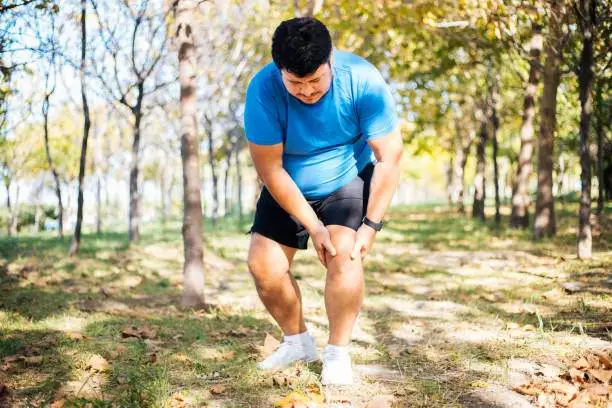
Given that two-thirds of Americans are overweight or obese, it seems natural that 20% of adult Americans experience knee pain. The increased weight puts more strain on your knees, which can lead to long-term discomfort and other knee-related issues, such as osteoarthritis. However, physiotherapy exercises may help you strengthen your knees and reduce weight and fat!
You’re probably thinking, “Exercise? Really? Will exercising merely exacerbate my knee pain?
In fact, knee pain, stiffness, and edema associated with being overweight or obese can be reduced and alleviated with regular activity. Strengthening the muscles surrounding your knee is essential for both preventing and treating knee pain. Strong muscles help absorb shock, reducing additional strain and discomfort in your knee joint.
It should come as no surprise that our knees experience some wear and tear over time because we utilize them for almost all of our everyday activities. Years of standing, bending, walking, climbing, and crouching may put a lot of strain on the knees, making them vulnerable to pain, stiffness, and swelling.
All ages can have knee pain, although older persons are more likely to experience it. According to Everyday Health, 16.5 percent of American males and 25 percent of American women over 70 report having knee pain. Exercise and maintaining a healthy weight are two crucial actions that can help avoid and manage knee pain, regardless of age.
The force applied to your knees when walking is approximately 1.5 times your whole body weight, according to Harvard Medical experts. When you climb stairs, that force grows to two to three times your body weight; when you squat, it increases to an astounding four to five times your body weight. Your knees are under a lot of strain every day if you are currently overweight. Even a small weight loss can relieve a lot of strain on your knees and potentially ease your symptoms.
Additionally, low-impact workouts are crucial for knee strength and joint lubrication. To manage knee pain, try including these exercises in your routine:
Simple Exercises for People with Knee Pain Who Are Overweight
- Maintaining your mobility and muscle strength can be achieved through regular exercise. For the treatment of OA and other causes of knee pain, it is a vital instrument.
- While restricting activity or resting the leg may help you avoid discomfort, it can also harden the joint and impede healing. In the case of OA, inadequate exercise may accelerate joint deterioration.
- Experts have shown that training alongside someone else might be particularly helpful for those with OA. This might be a workout partner or personal trainer. Additionally, experts suggest that people select an activity they enjoy.
Activities with little impact are an excellent choice, like:
- Walking,
- cycling,
- swimming, or water sports
- Tai chi or yoga
However, you might need to avoid exercising if you have:
- Significant knee pain caused by an injury, such as a sprain or strain, or a symptom flare-up. When you continue your activities following an accident, you may need to utilize something softer than usual.
- Ask your physician or a physical therapist to help you create a regimen that works for you and modify it if your symptoms change.
- Exercise might occasionally seem overwhelming, regardless of your level of experience, especially if you have a weak knee. Thankfully, exercise doesn’t have to be difficult or painful to be useful! Actually, the greatest exercises for your knees are mild, low-impact ones. These seven exercises improve your strength and flexibility while reducing strain on your knee joints.
Up and Downs (Take a seat)
- Take a firm, armless seat with your feet level on the floor and your arms either crossed or loose at your sides, depending on what feels most balanced.
- Using deliberate motions, slowly rise to your maximum height.
- After holding for a few moments, carefully return to your seat. For a minute or so, repeat.
Hamstring Stretch
- With your toes pointing toward the sky and your heel on the ground, extend one leg straight out in front of you while seated at the edge of your chair.
- Next, without bending your body’s trunk forward, try moving your navel toward your thigh while sitting upright.
- Do this three times for each leg.
Calf Raises
- Put your back against the chair in this posture.
- Raise your heels as high as you can, slowly, then bring them down.
- Perform three sets of ten to fifteen repetitions.
Calf Stretch
- With one leg straight behind you and the other slightly bent in front of you, face the back of your chair.
- Gently place your hands over the top of your chair.
- Lean your body toward the top of your chair while maintaining a straight back leg and both heels on the ground. This should be felt in your rear leg’s calf.
- After a few seconds of holding, switch legs. For approximately a minute, repeat.
Straight Leg Raises

- With one leg bent at a 90-degree angle and your foot flat on the ground, lie down. Your other leg should be completely extended.
- Raise your leg to a 45-degree angle by tightening your quadriceps, or thigh muscles.
- After holding your leg up for one or two seconds, carefully bring it down to the floor.
- Perform 8–12 repetitions in 3 sets.
Hamstring Curls
- On your stomach, lie flat.
- Maintain that position while progressively bringing your heels as close to your butt as you can.
- Perform three sets of fifteen reps.
- Advice: You may also perform this exercise while standing, lifting one leg at a time while holding onto the back of your chair.
Knee Rolls
- Bend your knees so that your feet are flat on the ground while lying on your back.
- Keep your gaze on the ceiling and your arms by your sides.
- Look to the left at the same time as you slowly lower both knees to the right, keeping them together, until your lower back and thighs start to gently stretch.
- After five seconds of holding this stretch, carefully bring your knees back to the center. Take brief breaks in between each of the ten repetitions on either side.
Wall sits
- Wall sits can assist in maintaining strong and healthy knees by strengthening the muscles that support the knee joint.
- Place your feet hip-distance apart and lean back against the wall.
- Lower your body gradually until you are sitting, then maintain the posture for 30 seconds.
Low-Impact Cardio Workouts for Knee Pain
Swimming
One of the greatest aerobic activities for your knees is swimming. It increases your flexibility and strengthens weak muscles and bones. In addition, it’s enjoyable, so jump in your neighborhood pool! Your body is buoyant in water, which reduces the impact and pressure on your knee joints compared to weight-bearing activities that put strain on your knees as your feet strike a hard surface. Additionally, most people can work out in the water for longer periods of time without experiencing joint pain or intense effort!
Elliptical Exercise
You might want to try an elliptical trainer if you don’t enjoy swimming. When utilizing an elliptical trainer, you will burn around the same number of calories as when using a treadmill. Additionally, there is less possibility of knee injury because your feet are always on the pedals. Consider this workout to be running without the impact!
Walking
Walking is a fantastic low-impact aerobic exercise that offers several health advantages, including the potential to reduce knee pain.
Avoiding Certain Exercises If You Have Knee Pain
If you are overweight, obese, or at a healthy weight, stay away from the following workouts if your knees hurt:
- Running,
- Lunges, and
- Deep Squats
We are aware that exercising might be challenging if you have knee pain. That being said, this knee brace is a pleasant solution to lessen knee pain, stiffness, and tension if you are overweight and want to start exercising but might use some extra support.
FAQs
How to relieve knee pain from being overweight?
Use rest, ice, compression, and elevation (R.I.C.E.) to treat acute pain, and concentrate on losing weight through diet and exercise to alleviate knee pain caused by being overweight. Low-impact activities like cycling, supportive shoes, over-the-counter painkillers like ibuprofen, and possibly physical therapy are further alternatives.
What exercises are good for obese people with bad knees?
Walking, cycling, aquatic exercises, and particular quad and hamstring strengthening exercises, including quad sets, straight leg raises, and bridges, are good low-impact workouts for overweight people with knee pain. To increase range of motion and flexibility, stretching is also essential.
Does knee pain go away with weight loss?
Will arthritis and knee pain be cured by decreasing weight? Losing weight won’t treat severe arthritis. However, exercise and weight loss limit the pace of cartilage deterioration. It may seem paradoxical, yet it has been demonstrated that loading a joint with exercise protects joint cartilage!
What happens to your knees when you are overweight?
Osteoarthritis, a gradual joint wear-and-tear condition, and soft tissue damage are often exacerbated by obesity. Osteoarthritis of the hip and knee joints is particularly affected by obesity. Each knee joint experiences four to six pounds of pressure for every pound of body weight.
What vitamin deficiency causes knee pain?
A lack of vitamin D can weaken bones, increase inflammation, and impair muscle function, all of which can lead to knee pain. By affecting bone health and muscle function, other possible deficiencies like magnesium and potassium may also be involved. Both vitamin and mineral supplementation should be monitored to prevent potential injury, so if you have knee pain, a doctor can take blood tests to check for deficiencies and suggest suitable supplements or dietary adjustments.
References:
- (n.d.). exercises-for-knee-pain-in-overweight. samarpanweightlossclinic.com. https://samarpanweightlossclinic.com/exercises-for-knee-pain-in-overweight/
- (2026). exercises-for-overweight-knee-pain. braceability.com. https://www.braceability.com/blogs/articles/exercises-for-overweight-knee-pain
- ReLiva Physiotherapy & Rehab. (2025). Obesity and Knee Pain | ReLiva Physiotherapy & Rehab. ReLiva Physiotherapy & Rehab | The Physiotherapy Specialist. https://reliva.in/obesity-knee-pain/