How to do Dragon Flag Exercise?
Introduction
The Dragon Flag is an advanced core exercise popularized by Bruce Lee that strengthens the entire abdominal wall, hip flexors, and lower back while improving overall body control and stability.
Fitness pop culture now includes the Bruce Lee dragon workout. Bruce Lee dragon workouts have grown in popularity over time among bodybuilders and fitness enthusiasts who wish to learn difficult moves.
An advanced bodyweight core exercise is Bruce Lee’s dragon flags. Only more experienced exercisers and athletes with high levels of overall body strength should attempt the dragon flag exercise.
Dragon flag is a power move that can significantly improve your strength if you’re trying to strengthen your abs. Dragon flags are a fantastic exercise to incorporate into your training for strength, power, and weight loss. If you work out at home, you can easily perform the move because it requires little equipment. We will cover every aspect of dragon flag, including the benefits and variations, in this article.
Purpose
The goal of the dragon flag, which can be compared to a more complex variation of the plank, is to be able to stabilize the pelvis and spine against unwanted lower back extension in the face of significant resistance.
Programming
A good strategy is to perform 3–4 sets of maximum reps; scale the motion on at least some of your reps to aim for at least 5 per set.
What is a Dragon Flag?
The dragon flag is a bodyweight exercise in intermediate aerobics that is essential for improving your pulling strength and core stability. The dragon flag core exercise’s primary goal is to raise the body off the ground with the hands holding a bar, the upper body, and a point of support. Dragon flag, which is comparable to a hum flag or bar hold.
The following are the primary muscle groups used in the dragon flag core exercise:
- Rectus Abdominus
- Lower Back
- Obliques
- Glutes
- Biceps
How to do a Dragon Flag?
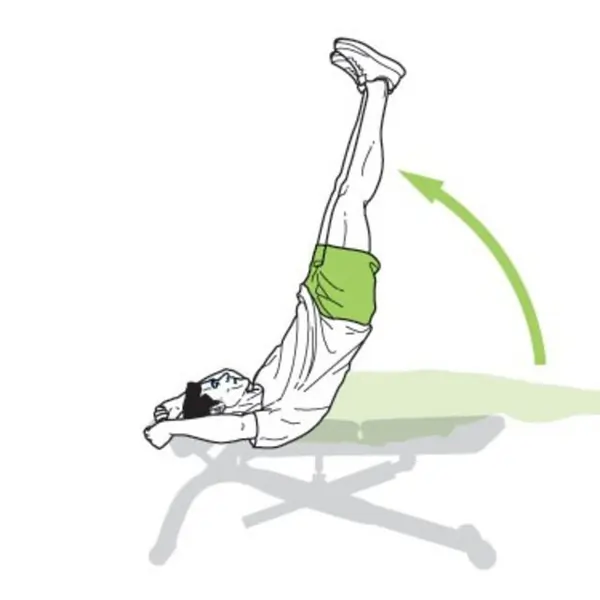
The Dragon Flag Steps are as follows:
- To begin, lie on your back and grasp a sturdy pole, column, or bench with your arms behind you.
- Raise your torso, legs, and feet to form a single, straight line.
- Align your knees, hips, and shoulders by bringing your entire body into a single, straight line. Avoid placing your entire body weight on your neck. Maintain the weight on your upper back and shoulders.
- Your upper back is the only part of your body that should come into contact with the floor.
- For up to ten seconds, hold this position.
- Now slowly return your body to the floor until it is parallel to the floor while maintaining a tight core and buttocks.
- Throughout, be sure to keep your legs straight and together.
- You can raise yourself back up after holding your body slightly above the ground for an additional challenge.
You can work the abs dragon flag in 5 sets of five repetitions.
Dragon flag variations
This advanced exercise can be performed in a variety of ways to advance or build up to the entire exercise.
Do You Need a Modification?
Make sure you have advanced to advanced core training before attempting the dragon flag. It should be possible for you to finish the core strength and stability test. Test of Core Muscle Stability and Strength.
Additionally, you should have little trouble performing V-sits, hip lifts, and reverse crunches.
If you are unable to perform the dragon flag, you can practice it by performing a dragonfly with your torso only rigid from the shoulders to the knees, your knees bent at a 90-degree angle, and your feet hanging down to lessen the amount of weight you are lifting. Here’s how to perform the dragonfly:
Place yourself on a bench and grasp the bench’s edges with your hands next to your head.
Pull your torso up toward the ceiling with a single, powerful effort after bending your knees and bringing your thighs to a 90-degree angle. With your knees bent at a 90-degree angle, you should have a partial dragon flag.
After a few seconds of holding the position, gradually lower your torso until it is slightly above the bench.
After completing this exercise, you can progressively extend your legs until you can perform the dragon flag with your legs perfectly straight.
If you can’t complete the exercise without sagging or arching your back, use a spotter.
Hollow Body Hold
- To begin, lie down on the floor with your arms by your sides and your legs outstretched.
- Contract your core and push your lower back into the floor to practice contracting your abs.
- To start the exercise, squeeze your inner thighs together. The lower back and the floor shouldn’t be pushed apart.
- Raise your legs two to three inches off the ground while keeping your abs contracted.
- Maintain your lower back on the ground.
- Lift your head one to two inches off the ground while extending your arms behind and above you.
- Make sure your lower back is firmly planted on the ground.
- Lower the shoulders and legs to the floor after holding for 30 seconds, or as long as you can.
Alternatively, you can try the dragon flag variations listed below if you want something more difficult.
- Increase your sets and repetitions.
- Practice pointing your toes.
- Put on heavy shoes or ankle weights.
- Make use of a decline bench. This will result in increased muscle engagement and a greater range of motion.
Dragon flag mistakes to avoid
The most common error made when performing the dragon flag is bending at the hips. The full-body tension that the exercise is designed to develop goes away as soon as you hinge.
Arching the lower back, which shifts “the pressure from your core into your spine” and increases the risk of strain, is another common mistake. Additionally, a lot of people attempt to create momentum by swinging their legs, which is totally unhelpful. “Control, not speed, is the key to this exercise.”
It is not recommended to skip progressions. The dragon flag is a powerful move that requires strong core training and a slow build-up. You shouldn’t try this exercise right away just because it’s “underrated.”
Arching Back
With a chance of strain, arching your lower back shifts the focus from your abs to your lower back.
Poor Warmup and Rest Between Sets
Before performing the dragon flag, make sure you are warmed up. In between sets, take a full minute or three to rest.
Inadequate Rest Between Sets
It’s critical to take enough breaks in between sets when applying powerful moves. Make sure to fully rest for one to three minutes in between sets of your dragon flag workout.
Safety and Precautions
If you have any injuries to your shoulders, neck, or back, stay away from this exercise. Make sure you fulfill every requirement. If you experience any pain, stop. After the first trimester of pregnancy, avoid doing this exercise.
What Are the Benefits Of Dragon Flag?
- The benefits from dragon flags are equal to the difficulty of the move. Dragon exercise is a professional exercise that targets every part of the torso, from the head to the toes. One of the few exercises that can work so many muscles at once is the dragon exercise.
- All of the core stabilizers are worked during a dragon flag ab exercise. The dragon flag ab workout increases strength faster than isolated core exercises because it calls for a controlled eccentric movement.
- To perform a dragon flag workout, one must be in perfect physical condition.
- The dragon flag abs exercise calls for significant levels of full-body strength in addition to abdominal and core strength. The longer you hold the dragon flag exercise, the longer it takes you to finish each repetition. The more you use this extremely powerful move.
- The development of shoulder strength and muscle mass is one of the main advantages of the dragon flag.
This advanced exercise works every part of the torso, from head to toe. Finding a single exercise that works so many muscles simultaneously is challenging. This exercise targets all of the core stabilizers and develops strength faster than isolated core exercises because it calls for a controlled eccentric movement. You gain more from the exercise the longer you hold the dragon flag and the longer you take to finish each repetition.
Better posture and strength in lifts like squats and pull-ups result from the slow eccentric (lowering) phase, which builds stability through your pelvis and spine. Additionally, it’s an excellent method to strengthen the midsection’s mind-muscle connection.
FAQs
Are dragon flags a good exercise?
Planches, handstand push-ups, front levers, human flags, and general athleticism can all be strengthened with the dragon flag, a great aerobic core exercise.
Are dragon flags harder than planks?
The goal of the dragon flag, which can be compared to a more complex variation of the plank, is to be able to stabilize the pelvis and spine against unwanted lower back extension in the face of significant resistance.
Does dragon flag help reduce belly fat?
High-intensity exercises like the dragon flag help create an energy deficit more quickly, which is the goal of burning fat. This exercise requires a high energy output and burns more calories because it works the muscles in the glutes, shoulders, lower back, and abs.
Are dragon flags a good ab exercise?
The benefits of dragon flags for your abs
Full-body engagement: To keep the body stable, dragon flags engage the shoulders, lats, and quadriceps in addition to the entire core, which includes the transverse abdominis and obliques.
Develops functional strength: Compared to isolated ab exercises, the exercise increases deep, functional core strength and stability, which is more advantageous for activities.
Enhances the alignment of the body: Building muscle memory for other cardio techniques is facilitated by practicing the straight-body alignment needed for the dragon flag.
Extremely difficult: For those who can execute it correctly, it’s a very difficult exercise that puts the abdominal muscles through a great deal of strain.
What are the benefits of the dragon method exercise?
Strength in the core and entire body
Develops a powerful, rounded core: The exercise works your lower back, obliques, and abdominal muscles.
Full-body engagement: To achieve full-body tension from head to toe, you must use the strength of your entire body, including your shoulders, lats, triceps, glutes, and quadriceps.
Increases shoulder strength: This exercise is excellent for increasing shoulder muscle mass and strength.
Can beginners do dragon flags?
Use one of the above modifications to perform full reps of the dragon flag. For beginners, this might involve performing leg raises or the closed tuck. Lift in an easier progression after descending in a more difficult one. For instance, tuck up, single-leg down.
References
- Bradfield, H. (2025, October 21). The dragon flag is the ultimate core-strengthening move – here’s how to master it. Women’s Health. https://www.womenshealthmag.com/uk/fitness/strength-training/a69107310/dragon-flag-exercise-core-strength/
- Dragon Flag Exercise Demo video & info. (n.d.). https://www.catalystathletics.com/exercise/564/Dragon-Flag/
- Fit, C. (2022, July 5). How to Do a Dragon Flag: Its Benefits, Variations & Safety. blog.cult.fit. https://blog.cult.fit/articles/how-to-do-a-dragon-flag-techniques-benefits-variations
- How to Dragon Flag – even as a beginner. (2024, June 4). Summerfunfitness | Quickly and Effectively Fit Calisthenics and Handstand Training Into Your Busy Schedule. https://summerfunfitness.com/how-to-do-dragon-flags-progressions/
- Ms, E. Q. (2019, March 22). How to do a dragon flag. Verywell Fit. https://www.verywellfit.com/dragon-flag-advanced-core-exercise-3120045
- Harvey, A., & Harvey, A. (2014, April 22). Developing Powerful Abs with the Dragon Flag | PCC Blog. PCC Blog | Progressive Calisthenics – the Official Blog for the PCC Community. https://pccblog.dragondoor.com/developing-powerful-abs-with-the-dragon-flag/
- Nash, S. L. (2022, January 31). How to train your dragon Flag: tips, benefits, and alternative AB exercises. Greatist. https://greatist.com/fitness/dragon-flag#benefits


