17 Top Home Exercises for Shoulder Strengthening
A strong and stable shoulder helps with everyday movements such as lifting, reaching, and carrying. Home exercises for shoulder strengthening can help improve muscle strength, joint stability, flexibility, and overall shoulder function.
For athletes, fitness enthusiasts, and anybody who wishes to remain active and injury-free, maintaining a strong and flexible shoulder joint is crucial. You may increase performance, improve joint stability, and lower your risk of conditions like rotator cuff tears by including targeted workouts in your program.
I’ve listed safe and efficient at-home workouts that require little equipment below. With consistent practice and proper technique, simple exercises can be performed at home to support healthy shoulder movement.
Why Strengthen the Shoulder
As a shoulder expert, I advise everyone to strive for stronger shoulders and elbows for their long-term well-being. Better yet, you can accomplish this from the convenience of your own home. Sports and daily activities put a lot of strain on the elbow and shoulder joints. Building up the muscles surrounding these joints offers vital stability and support, which can:
- Boost flexibility and range of motion
- Boost your athletic performance
- Avoid overuse injuries
- Encourage healing from previous injuries
Warm-Up: Preparing Your Joints
Warming up your muscles and joints is crucial before beginning any training regimen. For five to ten minutes, do dynamic stretches for your arms and shoulders and light aerobic exercises like cycling or brisk walking. Here are a few examples:
Arm Circles: Make tiny, progressively larger circles by extending your arms to the sides.
Wall Angels: Bend your arms into a “goalpost” posture while standing with your back to a wall. Keeping your arms in touch with the wall, slowly raise and lower them.
Why Shoulder Workouts Matter
- Boost your strength
- Shoulders: Having strong shoulders makes it easier for you to reach for, hoist, and carry objects in daily life. Do muscle-strengthening exercises that target all major muscle groups, including the shoulders, at least twice a week.
- Encourage good posture
- Shoulder and upper back exercises seek to correct a rounded posture by pulling the upper body into better alignment.
- Enhance mobility
- Particularly after stiffness or extended periods of inactivity, mild shoulder workouts might assist in preserving or restoring range of motion. For shoulder mobility, use wall-walk or pendulum-style motions.
- Aid with rotator cuff protection
- Overall strength might result in safer movement because the rotator cuff is the main stabilizer of the shoulder. To help prevent frozen shoulders, increase the strength and flexibility of the muscles surrounding the shoulder joint.
Strengthening Exercises for the Shoulder
- Open Book Rotation
- Arm circles
- Arm raises
- Hand slides
- Shoulder blade squeeze
- Horizontal abduction
- Resisted Upright Row
- Pendulum Swings
- Doorway Stretch
- Towel stretch
- Prone Y-T-W Raises
- Chest punches
- Cross punches
- Biceps curl
- Triceps pull
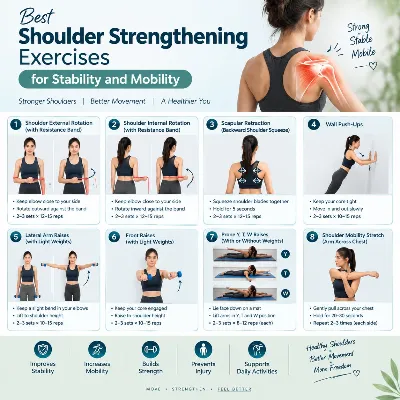
- Resistance Shoulder External Rotations
- Resisted Shoulder Internal Rotation
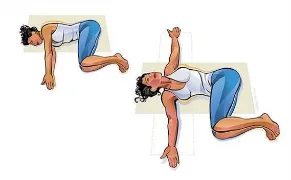
Open Book Rotation
This exercise is crucial for a full range of motion in your shoulders since it improves mobility in your thoracic spine, mid-back, and pecs.
How to do
- With your head supported by a pillow, lie on your side.
- Your legs should be stacked together with your knees bent up toward your chest, and your arms should be straight out and resting on the floor in front of your chest.
- As you turn to face the other side, reach your upper arm up and behind you.
- As your legs and other arm stay in the initial posture, keep this arm straight.
- As you turn, your chest will expand toward the ceiling.
- Stretch into this position, keeping your arm and shoulder extended toward the floor behind you.
- Return your upper body and upper arm to the initial posture.
- On the opposite side, repeat.
Arm circles
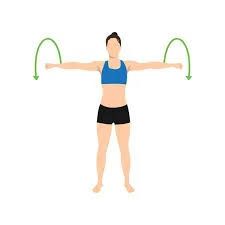
How to do
- Make little circles with your arms extended to the sides, progressively enlarging them.
Arm raises
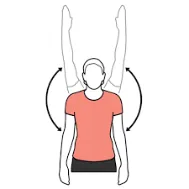
How to do
- Stand with your back to the wall and bend your arms into a “goalpost” position. Keeping your arms in touch with the wall, slowly raise and lower them.
Hand slides
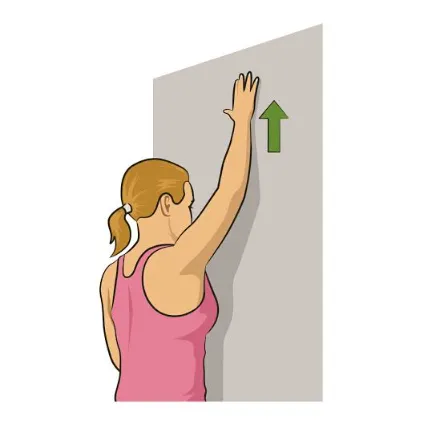
How to do
- Your shoulders are stretched by these.
- Place your palms on an ottoman or desk in front of you.
- Keeping your arms straight, slide your hands as far forward as you can while lowering your chin to your chest.
- Reverse the motion until you are sitting up after holding the stretch.
Shoulder blade squeeze
Despite its apparent simplicity, this exercise is crucial for correcting your posture and treating upper back pain.
Long-term laptop use can encourage rounded shoulder posture while weakening your upper back muscles. Squeezing the shoulder blades supports stabilizing muscles and aids in the restoration of activation.
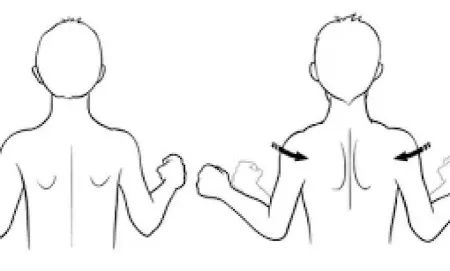
Shoulder-blade-squeeze
How to do
- Sit or stand upright with your shoulders relaxed.
- Squeeze your shoulder blades back and slightly down at a slow pace.
- Hold it for three to five seconds, then gradually let go.
- Repeat in two to three sets for ten to fifteen repetitions.
- Instead of squeezing hard, concentrate on moving smoothly. You could do this exercise for five minutes while setting a timer for thirty minutes.
Horizontal abduction
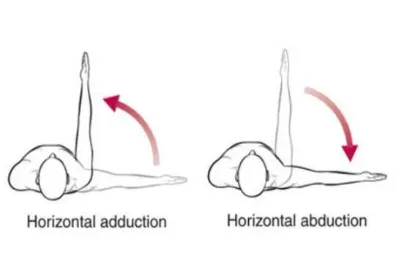
How to do
- The rhomboid muscles in the upper back, which support the shoulders, are worked by this.
- Reach straight ahead with your arms parallel to the floor while holding an end of the band in each hand.
- Stretch the band between your arms as you slowly extend them to your sides, trying to form a T shape with your body.
- Hold, then go back to where you were before. Repeat ten times.
Resisted Upright Row
This exercise enhances posture and develops the upper back muscles. By strengthening your upper back, you can avoid muscular imbalances that could adversely affect your shoulder position.
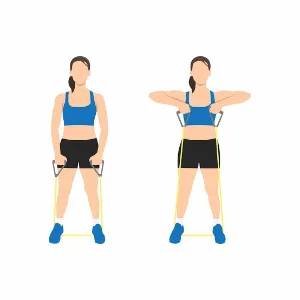
How to do
- Holding the ends of a resistance band in each hand, stand tall with the middle of the band beneath your feet.
- Your hands should be by your sides.
- To stretch the band, raise your hands near the bottom of your chin while bending your elbows out to your sides.
- Try to maintain a relaxed posture. Avoid rounding or shrugging.
- Bring your hands down to the beginning position.
Pendulum Swings
Because it softly increases movement without putting undue strain on the shoulder, this is one of the first exercises taught during rehabilitation immediately following surgery. If you have a tight, sensitive, or irritable shoulder, this exercise can assist. It works well for frozen shoulders and aims to increase shoulder joint mobility.
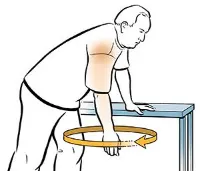
How to do
- For support, place your unaffected hand on the chair.
- Move the hurting hand forward, backward, side to side, and in gentle circles while leaning forward and letting it droop toward the floor.
- Repeat two to three times a day for 30 to 60 seconds.
- Let your body naturally produce the motion instead of constantly swinging your arm. Maintaining a relaxed shoulder during the exercise is the main goal.
- If bending forward makes you feel lightheaded,
- it’s crucial to halt the workout and perform this by leaning over a table.
Doorway Stretch
It is excellent for shoulder impingement and focuses on the anterior deltoid and pectoral muscles. If you’ve been sitting at your desk for a long time and your shoulder feels stiff, this stretch is extremely beneficial. This stretch helps to improve posture and increase chest mobility. A lot of shoulder pain is caused by tight chest muscles that pull the shoulders forward.
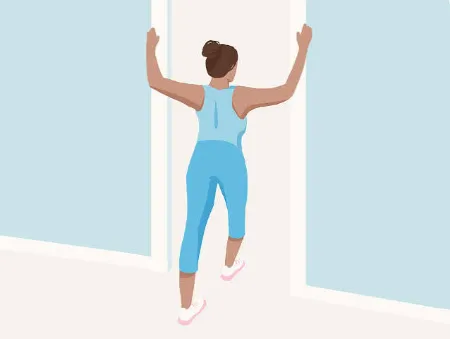
How to do
- Raise your arms at a 90-degree angle with your elbows bent while standing in a doorway.
- Step one foot forward slowly while pressing your forearms against the doorframe.
- There will be a stretch in front of your shoulders and around your chest.
- Repeat three times a day, holding it for 20 to 30 seconds.
- Keep your neck relaxed and refrain from arching your lower back. Don’t push yourself into the stretch; instead, go slowly. For a more thorough stretch, raise your arms higher.
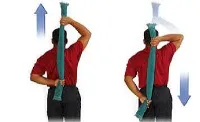
Towel stretch
Because it enhances internal shoulder rotation and is a crucial shoulder rehabilitation exercise that mainly restores range, this movement is utilized in frozen shoulder workouts.
How to do
- With the afflicted arm at the bottom and the good arm at the top, hold a towel behind your back.
- Using the upper hand, gently pull upward.
- Let the sore shoulder stretch.
- Repeat two to three times after holding for 20 to 30 seconds.
- Don’t push the stretch too hard; instead, go slowly.
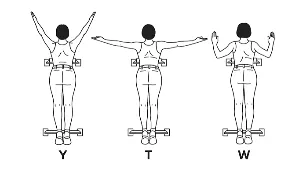
Prone Y-T-W Raises
This is frequently a part of the advanced shoulder strengthening exercises that enhance stability and endurance in the shoulder and upper back muscles. The rotator cuff heads are frequently the target.
How to do
- On a mat, lie face down.
- Raise your arms into a “Y” shape while keeping a towel under your face, then lower it.
- Next, raise and lower your arms in a T shape.
- Squeeze your shoulder blades as you raise, bending your elbows into a W shape.
- Perform 8–10 reps in 3 sets.
- When the bodyweight is ready, add two to three pounds of dumbbells and concentrate on good movement rather than lifting.
- To increase shoulder stability without causing severe symptoms, rotator cuff strengthening is usually increased gradually.
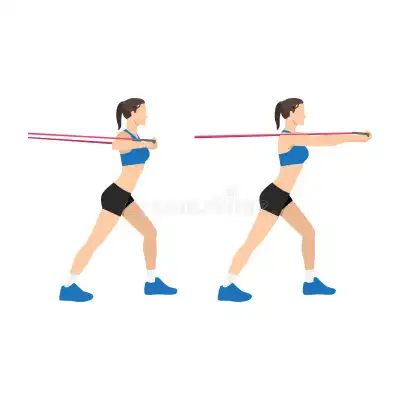
Chest punches
How to do
- The serratus anterior muscles, which support the shoulder blades, are strengthened as a result.
- Put the resistance band under your armpits and around your back.
- The band should be held in each hand.
- Use one hand to punch forward, then return it to your chest and use the other.
- Or simultaneously punch with both hands.
- Ten times over, repeat.
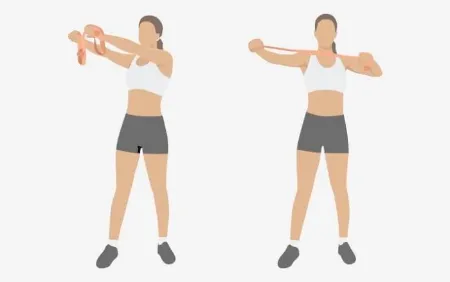
Cross punches
How to do
- Put a resistance band under your armpits and around your back.
- With each hand, keep one end at your chest.
- Slowly return one arm to your chest after punching it out on a little diagonal across your torso.
- Continue with the opposite arm.
- Repeat this ten times.
Biceps curl
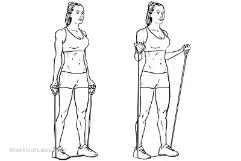
How to do
- One foot should be placed beneath the center of a resistance band, with the other foot positioned slightly behind it.
- With your arms by your sides and your palms facing forward, hold one end of the band in each hand.
- Raise your hands to your shoulders while bending your elbows, then return your arms to their starting position.
- Repeat this ten times.
Triceps pull
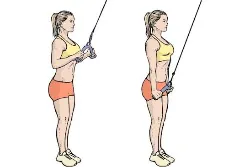
How to do
- Grasp a resistance band with both hands, keeping your elbows out to the sides, while your arms are bent 90 degrees and parallel to the floor.
- Straighten your arms without moving your upper arms, then gradually return them to their initial posture.
- Repeat this ten times.
Resistance Shoulder External Rotations
The exercise fortifies and stabilizes the tiny muscles that guard your shoulder joint while you lift, reach, and move overhead. It works the infraspinatus muscles and is one of the most popular rotator cuff rehabilitation exercises in physical therapy.
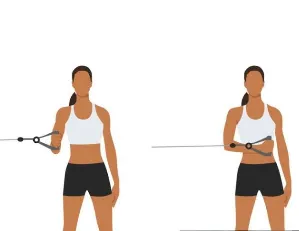
Resistance-Shoulder-External-Rotations
How to do
- Place your hands farthest from the anchor point while standing sideways with a resistance band fastened to the door handle.
- Once your elbows are bent to a 90-degree angle, slowly rotate your forearm outward.
- Return slowly after pausing for two to three seconds
- Perform 12–15 repetitions in two or three sets.
- Controlled muscular activation, not intense resistance, is the aim. Thus, a light band is more than sufficient.
Resisted Shoulder Internal Rotation
The rotator cuff, a set of four muscles that start from the shoulder blade and link to the head of the upper arm bone to form a “cuff” around it, is the focus of this strength training.
To secure a resistance band, first open a door, wrap the band around the handle on the opposite side, and then shut the door.
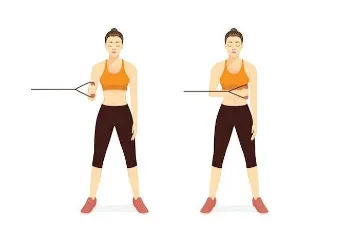
How to do
- Wrap the other end of the band around the hand nearest to the door while the door is at your side. With your forearm facing the door, bend your elbow to a 90-degree angle.
- There is some strain in the band, so take a few side steps away from the door.
- The band can be stretched by rotating your arm and moving your hand to the far side of your body.
- Your elbow remains bent at a 90-degree angle and tucked to your side.
- Return your hand to its initial position by relaxing it.
Beginner Shoulder Workout Routine
Warm-up
- Circles of the shoulders
- Swings of the arms
- Squeezes of the shoulder blade
- Gentle pendulum swings
These exercises warm up the shoulder joint and provide comfort before starting strengthening workouts.
Main workout
- Shoulder press for 10 reps
- Lateral raise for 10 reps
- Front raise for 10 reps
- External rotation for 12 reps
- Shoulder blade squeeze for 15 reps
This exercise blends control, strength, and stability. The literature on physical therapy suggests that consistency in moving well also highlights the necessity of guidelines supporting exercise-based forms of management for various shoulder disorders.
Cool down
- Cross-body shoulder stretch
- Gentle pendulum swings
- Deep breathing
- Wrist Flexor Stretch:
- Overhead Triceps Stretch
Tips for Safe Shoulder Training
- If you experience any pain, stop.
- While performing these stretches or exercises, it’s natural to experience some discomfort, but you shouldn’t be in agonising pain.
- If you feel pain, stop immediately.
- Don’t forget to breathe. Breathing can help relieve tension and stress in your shoulders, back, and other body areas.
- You may be able to stretch or perform a workout for a longer duration if you continue to breathe appropriately.
- Take it gradually at first.
- If shoulder workouts are new to you, don’t try to work out too much too quickly. As your strength grows, gradually increase the number of stretches and exercises you perform.
- Consult your physician or physical therapist.
- If you’ve had shoulder surgery, been in an accident, or have severe shoulder pain, it’s important to visit your doctor or physical therapist before beginning shoulder mobility exercises and stretches.
FAQs
Discover the negative aspects of shoulder exercises for novices.
As a result, folks can start with a simple shoulder workout that involves pressing, raising, and squeezing their shoulder blades.
Do shoulder exercises improve posture?
You are correct that shoulder and upper back workouts can help prevent rounded shoulders and enhance posture.
Can range of motion be increased with shoulder exercises?
Yes, shoulder range of motion can be increased with low-impact exercises like wall walks and mild pendulum swings.
Should I practice shoulder frequency?
Two to three lift days per week, with enough recovery time in between sessions, is a smart foundation for most people
Is there a shoulder resistance band or something lightweight?
No, some shoulder exercises can be performed with bands, body weight, or very little resistance.
References
- Nandini Rampersaud, PT, DPT, and Christynne Helfrich, PT, DPT. (2024). 10 Shoulder Stability Exercises for Strength and Mobility. Hinge Health. https://www.hingehealth.com/gb/en/resources/articles/shoulder-stability-exercises/
- Heidi Godman. (2023). 3 easy ways to strengthen your shoulders – Harvard Health. Harvard Health. https://www.health.harvard.edu/exercise-and-fitness/3-easy-ways-to-strengthen-your-shoulders
- Jason S. Klein, M.D. (2025). Home Exercises to Strengthen Your Shoulder & Elbow | Jason S. Klein, M.D. Jason S. Klein, M.D. https://www.jasonskleinmd.com/blog/home-exercises-strengthen-your-shoulder-elbow
- (n.d.). 10 Best Shoulder Physical Therapy Exercises for Fast Recovery. Resolve360 No.1 Online Physiotherapy Clinic. https://resolve360.app/usa/10-best-shoulder-physical-therapy-exercises-for-fast-recovery/