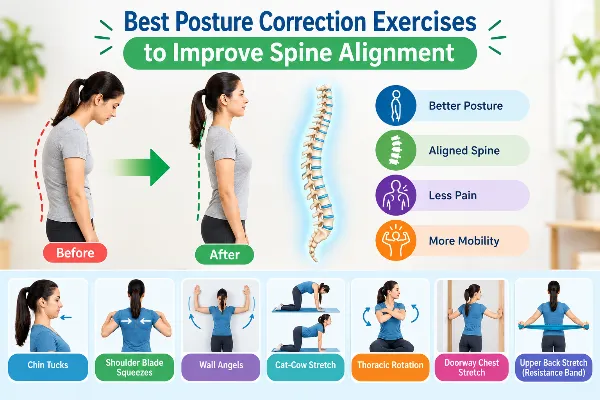
17 Best Posture Correction Exercises to Improve Spine Alignment
How can you determine whether your spine is out of alignment?
Poor posture, accidents sustained during physical activity or sports, or even psychological discomfort can cause spinal misalignment. You may have headaches, back pain, and discomfort when exercising, sitting, or even sleeping if your spine is misaligned.
If you think your spine is misaligned, you can check yourself or get help. Here are two methods for checking at home:
When you’re lying down, make sure your hips are positioned evenly. Is one leg shorter than the other? Do you find resting on your back uncomfortable?
Check to determine if your head is tilted to one side as you stand up. Is one shoulder more elevated than the other? Is one hip more elevated than the other? Here, a mirror is useful.
Your spine might be misaligned if you said “yes.”
Recall that there are different kinds of spinal misalignments. For instance, kyphosis, or rounding of the upper back, and lordosis, or excessive arching of the lower back,
How can I straighten my spine naturally?
Check your posture
- You can attempt this additional test. With your back to the wall, take a tall stance.
- Next, raise your chin back (consider creating a double chin on purpose).
- Can you simultaneously touch your head, shoulders, hips, and heels to the wall in this position? Do you have to exert yourself to keep it there?
- If this position is challenging or impossible, your spine may be misaligned.
Extend tense muscles
- Stretching improves your spine’s flexibility and range of motion. Stretching and yoga have been shown in numerous studies to increase spinal mobility, particularly in elderly adults.
- It makes sense that if the muscles supporting or interacting with your spine are tight, you may have back discomfort.
Develop the muscles necessary for proper posture.
- Our body’s main supporting structure is the spine. Your body can move in all directions thanks to your spine, which also supports your arms and torso and bears the weight of your head.
- Maintaining the strength of your postural muscles—such as those covered in the previous section—helps shield your spine from harm.
In fact, a 2016 study published in the Journal of Exercise Rehabilitation discovered that walking and strength training helped people with chronic back pain feel less pain and regain lumbar (lower back) function.
How do you keep your spine aligned?
By adopting healthy behaviours and gradually improving.
- Maintaining an aligned spine can be achieved by good posture, frequent exercise, and stress reduction.
- There are also a few ways you may work on improving your posture every day as you go about your everyday activities.
Here are some essentials for proper posture:
- Pull your shoulders back and use your core while standing.
- Raise the computer screen when seated at a desk to prevent you from glancing down.
- Stretch and move on a regular basis.
Easier Movement Starts With Better Posture
Maintaining proper posture has a subtle but significant impact on how your body moves throughout the day. Simple actions may begin to feel constrained or painful when alignment is incorrect. These patterns have the potential to weaken and decrease overall effectiveness over time.
Your body can move more easily and controllably when you have better posture. Additionally, it strengthens the basis for any kind of training you decide to pursue. You can noticeably alter your mood throughout everyday activities by making minor alignment tweaks.
18 Best Exercises For Posture Correction
- Chest opener
- Standing Forward Bend
- High plank
- Side plank
- Kneeling Hip Flexor Stretch
- Thoracic spine rotation
- Glute bridge
- Child’s Pose
- Cat-Cow
- Standing Cat-Cow
- Downward-Facing Dog
- Pigeon Pose
- Isometric pulls
- Bird Dog
- Chin Tucks
- Cobra Pose
- Doorway Stretch
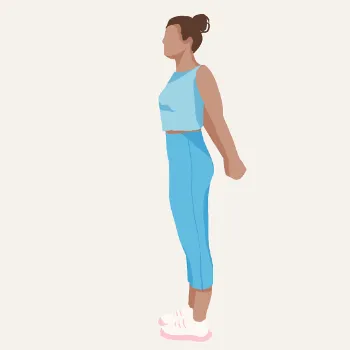
Chest opener
Your posture may be improved by opening and expanding your chest, particularly if you spend a lot of time sitting down, which causes your chest to move inward.
How to do
- Place your feet hip-width apart.
- Put your arms behind you and squeeze your palms together while interlacing your fingers. Grab a towel if your hands can’t touch.
- Draw your shoulders back and down while keeping your head, neck, and spine in a neutral alignment. Look directly forward.
- Breathe as you lower your hands toward the floor and elevate your chest toward the ceiling.
- Hold this stance for five deep breaths.
- Take a few deep breaths of relaxation and release.
- Do this at least five times.
Standing Forward Bend
After performing this standing stretch, your spine, hamstrings, and glutes may all feel less stiff. It also stretches your hips and legs.

How to do
- When standing, place your big toes together or your feet hip-width apart.
- Bring your hands to your hips and fold them forward.
- Place your hands on a block or allow them to drop to the floor. Don’t worry about keeping your hands off the ground; just go as far as you can.
- Stretch your back, let your hips drop, and gently bend your knees.
- Allow your neck and head to unwind.
- For no more than a minute, maintain this posture.
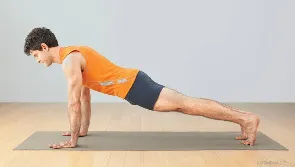
High plank
Draw your shoulders back and down while keeping your head, neck, and spine in a neutral alignment. The strength and balance of your back and core, which are essential for good posture, may be enhanced by high planks.
How to do
- Lift your heels, straighten your legs, raise your hips, and get on all fours.
- Contract the muscles in your arms, legs, and belly while straightening your back.
- Stretch the back of your neck, soften your throat, and look down at the ground.
- If required, execute a regular plank by lowering your elbows.
- Hold this position for no more than a minute at a time while you repeat five times.
Side plank
Your posture will be better, and your back will be supported if you strengthen and align these muscles.

How to do
- Start with a high plank. Move your right hand slightly toward the centre of the mat.
- Stack your feet, elevate your hips, and shift your weight onto your right hand as you tilt your body to the side.
- You can also place your right forearm on the ground and your elbow under your shoulder.
- Reach up to the ceiling or place your left hand on your hip.
- You might lower your lower knee to the floor for additional support.
- Use your abdominal muscles, side body, and glutes while you hold the stance.
- Using your body, draw a straight line from your heels to the top of your head.
- Examine your hand or the area directly in front of you.
- For a maximum of 30 seconds, maintain this stance.
- On the other side, repeat. Perform two to three sets in total.
Kneeling Hip Flexor Stretch
Hip flexors are often tight in people with anterior pelvic tilt, and this exercise helps to stretch them. This stretch begins with kneeling on a soft surface.

How to do
- Bring your right leg forward and place your foot flat on the floor to position your knee over your ankle.
- Your left knee should be bent at a 90-degree angle while staying in contact with the soft surface.
- Brace your core, and slowly move your right foot forward a few inches.
- Contract your right gluteal muscles as you move your hips forward.
- You should now have your left knee bent slightly over 90 degrees.
- For ten seconds, maintain the end position.
- This stretch should be done on both sides for ten repetitions.
Thoracic spine rotation
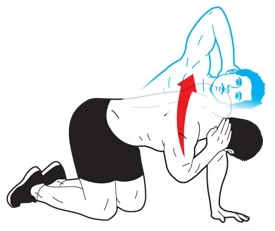
Twisting the spine and gently opening the chest can help release tension in addition to increasing mobility and stability.
How to do
- Place yourself on all fours, rest on your shins, and lower your hips back to your heels.
- Put your right hand behind your head and extend your elbow to the side.
- Bring your left hand to the centre and either keep it under your shoulder or place it on your forearm.
- As you exhale, extend the front of your torso and lift your right elbow toward the ceiling.
- Breathe deeply and then release it while in this position.
- Return to the starting position by releasing yourself.
- Switch sides after performing this motion five to 10 times.
Glute bridge
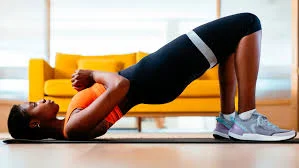
Glute bridges strengthen and activate your glutes while easing lower back pain. Your posture may improve as a result of your hips and pelvis functioning and aligning properly.
How to do
- Bend your knees and position your feet hip-distance apart while lying on your back.
- Keep your feet and hips one foot apart.
- Put your arms next to your body with your hands facing down.
- As you raise your hips toward the sky and straighten your spine, exhale.
- Hold this position for no more than a minute at a time while you repeat three times.
Child’s Pose
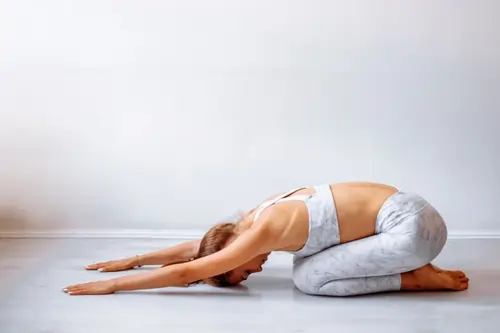
Child’s Pose stretches and lengthens your hamstrings, glutes, and spine. It may also lessen lower back and neck stiffness.
How to do
- With your knees together or slightly apart, sit on your shins with your big toes in contact.
- Stretch your hands out in front of you while folding forward at the hips.
- Return your hips to your heels.
- Put a pillow or folded blanket between your hips and heels for support if they are too far away.
- Put your forehead on the ground, a block, or a pillow.
- You can either keep your arms outstretched or lay them along your body.
- Inhale deeply into your waist and the back of your ribs.
- Continue taking deep breaths while you unwind in this pose for up to five minutes.
Cat-Cow
Cat-Cow Pose may help relieve tension in your neck, shoulders, and chest in addition to improving blood flow and spinal flexibility.

How to do
- Drop to your hands and knees with your wrists under your shoulders and your knees beneath your hips.
- Distribute your weight uniformly using your hands and knees.
- Inhale as you lift your chest and tailbone, allowing your abdomen to drop toward the floor and your spine to arch.
- (Cow) As you circle your spine toward the ceiling, draw your chin toward your chest and release your breath.
- (Cat) Continue switching your breath between Cat and Cow for at least a minute.
Standing Cat-Cow
This standing pose, a variation on the traditional Cat-Cow, may help reduce tension in your back, hips, and glutes.
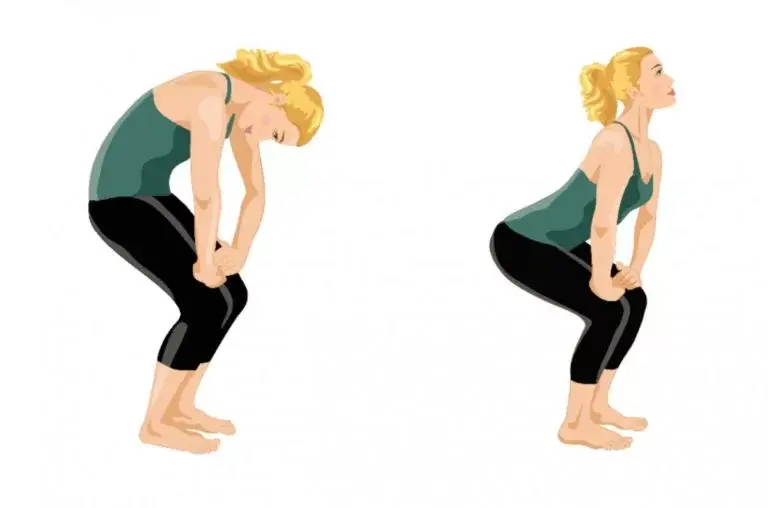
How to do
- Place your feet hip-width apart and flex your knees a little.
- You can put your hands on your thighs or in front of you.
- Pull your chin into your chest, stretch your neck, and arch your back.
- Then lift your chest, look up, and turn your back.
- Hold each posture for five breaths at a time.
- For a few minutes, keep doing this.
Downward-Facing Dog
One forward bend that can be used as a resting position to balance the body is the downward-facing dog. It can relieve lower back discomfort in addition to strengthening and straightening your back muscles.

How to do
- Place your hands slightly forward of your shoulders and begin on your hands and knees.
- Press into your hands, raise your heels, and tuck your toes beneath your feet.
- To bring your sitting bones closer to the ceiling, raise your hips and knees.
- Lengthen your spine and slightly bend your knees.
- Keeping your ears parallel to your upper arms, position your head and neck between your arms.
- While exerting intense pressure with your hands, keep your heels slightly elevated.
- For no more than a minute, maintain this posture.
Pigeon Pose
This hip-opening pose can increase the flexibility of your glutes, hamstrings, and spine.

How to do
- Drop to all fours with your knees below your hips and your hands just in front of your shoulders.
- Bend your right knee and place it behind your right wrist while slanting your right foot to the left.
- Put your thigh on the floor, slide your left leg back, and straighten your knee.
- Make sure your left leg stretches back straight rather than sideways
- While extending your arms in front of you, slowly lower your chest until it rests on your inner right leg.
- Maintain this posture for a maximum of one minute.
- To gradually release the posture, elevate your torso and walk your hands back toward your hips.
- On the other side, repeat.
Isometric pulls
By strengthening the muscles in your arms, shoulders, and back, isometric pulls assist you in maintaining proper posture.
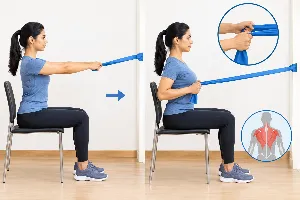
How to do
- Start either sitting in a chair or standing.
- Clench each hand into a fist and extend your arms in front of you until they are parallel to the floor.
- Squeeze your shoulder blades together and return your elbows to your shoulders as you release the breath.
- Breathe deeply and maintain this position for ten seconds.
- Breathe in and slowly go back to where you were.
- Do this exercise for one minute, three times.
Bird Dog
This exercise is excellent for strengthening your lumbar back and core muscles.

How to do
- To start, get on your hands and knees, place your knees beneath your hips and your hands beneath your shoulders.
- Before starting any movement, brace (contract) your core as tightly as you can.
- Raise your left arm and extend it forward until it is in line with your torso while bracing your core
- Using the same motion, kick your right leg back until it lines up with your body.
- It’s important to avoid arching your low back when doing this.
- After holding this posture for two to three seconds, gradually go back to the beginning position.
- Continue with your left leg and right arm.
- For ten repetitions, switch sides.
Chin Tucks
Your deep cervical muscles, or the muscles in the front of your neck, will be strengthened and activated by this exercise.
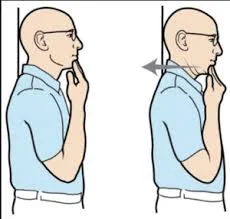
How to do
- Place two fingers on your chin’s base.
- Gently tuck your chin in after pulling your head back. Simultaneously, keep your fingers tucked into your chin.
- Keep the terminal position for three to five seconds.
- Take a moment to allow your neck to come forward and relax.
- Two or three sets of 10 repetitions should be your goal.
Cobra Pose
The Bhujangasana (Cobra pose) is an excellent way to invert most people’s slouched shoulder posture and lengthen the low back.
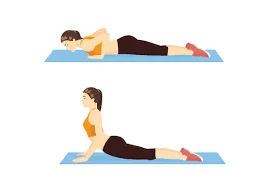
How to do
- Starting with your hips in contact with the floor, steadily raise yourself up on your elbows while lying prone or on your stomach.
- Hold the prop-up position for ten to fifteen seconds before returning to the prone position (lying face down).
- Gradually raise the position until you can maintain it for thirty seconds.
Doorway Stretch
Your chest and abdomen are very tense when you sit, so the doorway stretch will help them relax.
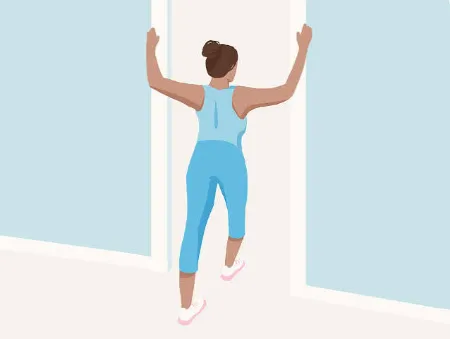
How to do
- Align your hands and elbows with a doorframe.
- Proceed cautiously through the door until you sense a stretch.
- Do this stretch three times.
- Hold the final position for 15 to 20 seconds before returning to the starting position.
Maintaining Spine Alignment Daily
Ergonomic Advice for Everyday
- Life: Making minor changes to your surroundings can help you keep your spine in alignment: Anatomy
- When sitting, use a lumbar cushion.
- Make sure your monitor is at eye level.
- To encourage good posture, use an adjustable chair.
Mobility and Stretching Exercises
Simple daily stretches can help you stay active in life:
- Twists when seated:
- Gently turn your torso to one side while seated in a chair.
- After 15 seconds of holding, switch sides.
- Side Bends While Standing:
- Lean to the other side while extending one arm above.
- Do five to six repetitions on each side.
- To maintain long-term spinal health, use these practices.
FAQs
Can years of poor posture be corrected?
Improvements are feasible, but it’s crucial to control expectations. It will take time for change to occur.
Consult a healthcare provider if, after a few weeks of deliberate effort and regular stretching, you still don’t see improvements in your posture.
Which workout is most effective for enhancing your posture?
Exercises you feel comfortable performing on a regular basis are the best. This could entail experimenting with a range of yoga poses, stretches, and other exercises intended to lengthen and stretch the spine.
Which workouts help with slouching?
A slouching posture may be corrected with exercises that lengthen, strengthen, and stretch the muscles in your lower body, chest, back, and spine.
Controlling how you sit and stand is also crucial. Rounding or a hunched-over stance can be alleviated by letting your shoulders drop and pulling back a little.
How Can You Determine Whether You Require Exercises for Posture Correction?
During everyday tasks, you can have soreness in your lower back, shoulders, or neck. There may be less control or restriction in movement than usual.
These indicators frequently point to the need for improved support and alignment. Keeping an eye out for these trends can help direct your strategy.
How long would it take for these exercises to show results?
You might experience better posture and less soreness in two to four weeks with regular practice. Long-term advantages, such as improved spinal health, necessitate continued commitment.
References:
- The Pilates Circuit. (2026). 10 Posture Correction Exercises for Easier Movement — The Pilates Circuit. The Pilates Circuit. https://www.thepilatescircuit.com/blog/posture-correction-exercises
- maliha. (2025). Spine Alignment Exercises for Perfect Posture & Pain Relief. Dr Mahmood Ahmad. https://drmahmoodahmad.com/spine-alignment-exercises
- Leon Turetsky (NASM-CPT, NASM-CES). (2023). 10 Posture Correction Exercises – Upper & Lower Back. Back Intelligence (Creators of PostureFlow App). https://backintelligence.com/exercises-to-improve-posture/
- Emily Cronkleton. (2026). Posture Exercises: 12 Exercises to Improve Your Posture. Healthline Media. https://www.healthline.com/health/posture-exercises#isometric-pulls