

7 Best Home Exercises for Frozen Shoulder Relief
Introduction:
Frozen shoulder can cause pain, stiffness, and difficulty moving your arm during daily activities. Performing gentle stretching and mobility exercises regularly may help reduce shoulder tightness, improve range of motion, and support faster recovery.
Adhesive capsulitis, another name for frozen shoulder, is a common condition that results in pain, stiffness, and loss of shoulder range of motion. If left untreated, the illness tends to worsen over time and can result in a major impairment. Women are more likely than men to be affected, and it primarily affects those between the ages of 40 and 60.
In this article, we will explore the best exercises for frozen shoulder relief that can help improve flexibility, decrease discomfort, and restore normal shoulder movement safely.
Symptoms:
When a shoulder is frozen, its range of motion is restricted, and it feels uncomfortable and rigid. The following are signs of a frozen shoulder:
- Stiffness that initially becomes worse but eventually starts to get better
- Dull, aching pain that gets worse as the illness advances and may get worse when you move your arm.
Risk Factors:
- Lack of exercise therapy following tendinitis or an injury
- Wearing a sling for longer than a few days without periodically stretching
- Rotator cuff disorders (about 10% of people with these disorders develop frozen shoulder)
- Forced immobility brought on by a heart condition, stroke, or surgery
- Other conditions like Parkinson’s disease or thyroid issues
Benefits of doing Exercise:
Enhanced Range of Motion: Exercises aid in progressively expanding your shoulder joint’s range of motion.
Suffering Relief: Regular exercise helps lessen the stiffness and suffering brought on by frozen shoulder.
Faster Recovery: Exercise and physical therapy help hasten the healing process.
Improved Quality of Life: Your general quality of life can be greatly enhanced by regaining shoulder mobility.
Treatment:
- Aspirin, ibuprofen (Motrin, Advil), or naproxen (Aleve, Naprosyn, Anaprox) are examples of anti-inflammatory medications that can help with pain.
- An ice pack or bag of frozen vegetables applied to the shoulder for ten to fifteen minutes several times a day can also help.
- A corticosteroid injection into the shoulder joint or soft tissues is another option.
- Physical therapy is the mainstay of treatment, with a focus on exercises that stretch the joint capsule first and then on strengthening exercises.
Physiotherapy Exercises:
Pendulum Exercise:
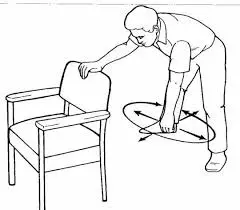
- Let your shoulders drop.
- Lean a little over while standing with your affected arm hanging down.
- Swing the arm in a tiny, one-foot-diameter circle.
- Once a day, make ten revolutions in each direction.
- Increase the swing’s diameter as your symptoms get better, but don’t push yourself.
- Holding a small weight (three to five pounds) in the swinging arm will boost the stretch when you’re ready for more.
Towel Stretch:

- Hold a three-foot-long towel horizontally with both hands behind your back.
- To extend the affected arm, lift it upward with your good arm.
- Draping the towel over your healthy shoulder is another advanced version of this exercise.
- Using the injured arm, grasp the towel’s bottom and use the unaffected arm to bring it toward the lower back.
- Ten to twenty times a day, perform this stretch.
Finger Walk:

- Position yourself three-quarters of an arm’s length away from a wall.
- Use the fingertips of the affected arm to reach out and touch the wall at waist level.
- Walk your fingers slowly, spider-like, up the wall with your elbow slightly bent until your arm reaches shoulder level or as far as is comfortable. Instead of using your shoulder muscles, you should use your fingers.
- Lower the arm gradually (using the good arm if needed) and then repeat.
- Ten to twenty times a day, do this workout.
Cross Body Stretch:

- Take a seat or stand.
- Lift the affected arm at the elbow with your good arm, then move it up and across your body while applying light pressure to extend the shoulder.
- For 15 to 20 seconds, hold the stretch.
- Ten to twenty times a day, perform this stretch.
Armpit Stretch:

- Raise the affected arm approximately breast height onto a shelf using your good arm.
- Open your armpit by gently bending your legs.
- Straighten after slightly deepening your knee bend and stretching your armpit.
- Stretch a bit more with each knee bend, but don’t push yourself.
- Ten to twenty times a day, perform this stretch.
External Rotation with Resistance Band:

- With your elbows at a 90-degree angle toward your sides, grasp a rubber workout band between your hands.
- Hold the position for five seconds while rotating the bottom portion of the affected arm outward by two or three inches.
- Once a day, repeat ten to fifteen times.
Internal Rotation with Band:

- Put one end of a rubber exercise band around the doorknob while standing near a closed door.
- Holding the elbow at a 90-degree angle, grasp the other end with the hand of the affected arm.
- Hold the band for five seconds after pulling it two or three inches closer to your body.
- Once a day, repeat ten to fifteen times.
FAQs
How to get instant relief from frozen shoulder?
Swing your arm gently in circles or back and forth after letting it hang like a pendulum. Walk your fingertips up a wall as if they were your feet. Reducing shoulder pain and maintaining as much shoulder range of motion as possible are the main goals of treatment for frozen shoulder.
Can I massage my frozen shoulder?
Two possible treatments for a frozen shoulder include massage therapy and stretching exercises to reduce tension and relax the muscles. Stretching exercises and muscle relaxation will improve function, mobility, and possibly reduce inflammation.
What is the most painful part of having a frozen shoulder?
Frozen shoulder pain is typically dull or painful. Attempting to move can make it worse. Usually, the outside shoulder region and occasionally the upper arm are where the pain is noticed. Shoulder stiffness or limited range of motion is a hallmark of the illness.
What deficiency causes frozen shoulder?
Vitamin shortages are not directly linked to frozen shoulder, but those with diabetes or thyroid conditions are more prone to having it, which may have an impact on the healing process in general.
At what age is frozen shoulder common?
It affects around 1 in 12 males and 1 in 10 women of working age, and it is most prevalent in those between the ages of 40 and 70. Within five to seven years of the first, up to 20% of persons may experience frozen shoulder in the opposite shoulder.
References:
- How to release a frozen shoulder: 5 stretches to use – 2023 – Harvard Health/www.health.harvard.edu/pain/how-to-release-a-frozen-shoulder
- The 5 best frozen shoulder exercises to help get back your reach | Physiotherapists in Toronto | Yorkville Sports Medicine Clinic – 2023 – Jey/www.yorkvillesportsmed.com/blog/the-5-best-frozen-shoulder-exercises-to-help-get-back-your-reach
- 5 best frozen shoulder exercises for quick relief – 2024 – Shah, Shah/www.aasthajoints.com/blog/best-frozen-shoulder-exercises-for-quick-relief/


