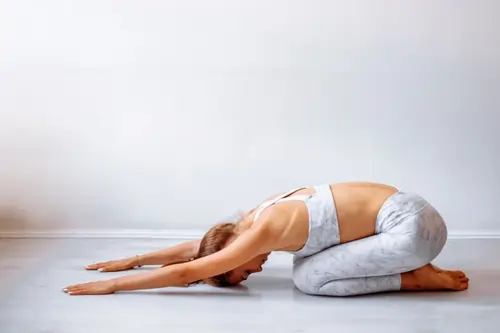
Warrior Pose 2 (Virbhadrasana 2)
What is Warrior Pose 2?
Warrior II posture, also known as Virabhadrasana II, is a powerful standing yoga posture in which you spread your legs wide and extend your arms to the sides. This position is named after the warrior Virabhadra (Shiva) and denotes power, attention, and courage. It promotes muscular growth and flexibility while enhancing balance and body awareness.
In Warrior II, you place your feet, bend one knee, and extend your arms to form a sturdy and strong posture. This stance exercises many muscles and keeps you focused and centred. Whether you’re new to yoga or have been doing it for a while, Warrior II is an excellent posture for developing strength and confidence.
Muscle Work During Warrior Pose 2?
- Shoulder Muscles
- Chest Muscles
- Core Muscles
- Hip Flexor Muscles
- Groin and Inner Thigh Muscles
- Quadeiceps and Hamstring Muscles
- Calf Muscles
Video of Warrior Pose 2?
How to Perform?
- Begin in Mountain Pose, with feet together.
- Exhale and widen your legs 3 to 4 feet apart.
- Place your hands at your waist.
- Turn your right foot out 90° and your left foot in 15°.
- Turn your head to the right and look in that direction.
- Inhale, then stretch your arms to the sides, palms down, at shoulder height.
- Exhale, then bend your right knee over your ankle, not past it.
- Tuck your pelvis and maintain your spine straight.
- Hold this posture for 30-60 seconds, inhaling deeply.
- Exhale and straighten your right knee.
Benefits:
Improves stability: Virabhadrasana II emphasises muscular alignment, which is essential for core stability. This position strengthens the core and increases body control, making it a great injury prevention technique. It aids practitioners in developing a stronger awareness of balance and stability throughout the body.
Improves respiration: Deep breathing is required to hold the Warrior II stance efficiently. This activity strengthens the respiratory organs, expands the chest and lungs, and aids in the prevention of respiratory illnesses.
Cures infertility: Virabhadrasana II is excellent for couples suffering from infertility since it strengthens the core, legs, and lower body. It primarily targets the sacral chakra, which is linked to the reproductive system.
Helpful during pregnancy: The Warrior II position is beneficial during pregnancy because it requires extending muscles for a longer period of time, which increases endurance and flexibility while also improving overall strength. As a result, it might be advantageous to practise throughout pregnancy.
Tones abdominal organs: This asana helps to revitalise and invigorate the abdominal organs. It targets the abdominal cavity inside and helps to tone all of the major abdominal organs.
Increases stamina: The Warrior II stance helps the practitioner gain and maintain stamina. By maintaining the stance correctly, endurance develops, resulting in more energy and vitality.
Improves focus power: In addition to its physical advantages, Virabhadrasana II is good for your mental health. Maintaining the stance necessitates focusing your sight on a single point, which improves mental clarity, minimizes distractions, and increases concentration.
Therapeutic action: This position has the potential to help treat specific ailments and diseases. Virabhadrasana II is beneficial for treating carpal tunnel syndrome, flat feet, osteoporosis, and sciatica.
Advice for Beginners:
- When completing the position, focus on your left knee.
- Smoothly bend your left knee while breathing deeply.
- Make sure your knee does not bend towards the big toe. To ensure appropriate alignment, tilt it slightly towards the little toe.
- Draw your tailbone down to help strengthen and straighten your spine.
- Begin with a shorter space between your feet, keeping your front knee bent. This gives greater stability while requiring less strength.
- To relieve strain on the knee, bend the back knee slightly as well.
Preparatory Poses:
- Bound Angle Pose (Baddha Konasana)
- Tadasana (Mountain Pose)
- Tree Pose (Vrikshasana)
- Wide-legged two-fold
- Lunge with chair
- Warrior Pose I (Virabhadrasana I)
- Triangle Pose (Trikonasana) with support.
Modifications:
Using a Block: To give additional support, place one or two blocks beneath your front foot. This prevents the back foot from collapsing and keeps it aligned.
Using a Folding Chair: If bending the knee properly is difficult, use a folding chair beneath your front thigh to support your body.
Against a Wall: To improve balance and control, place the heel of your back foot against a wall while completing the posture. This provides additional support and stability.
Using a cloth Strap: Tie a cloth to a hammock and do Warrior II aerially. Instead of bending the right knee, pull your leg over the strap and lunge forward. This needs less strength and offers more support.
Holding the Fabric by Hands: Tie a piece of fabric in the front and rear, then raise your hands to maintain the stretch. This might be difficult at first, but it helps to extend the groin and hip area.
Variations:
Warrior Pose 2: One Knee on the Floor:
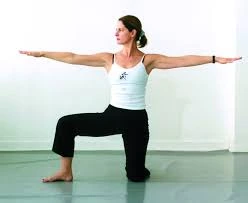
It might be done by keeping the neck in the same direction while elevating the arms.
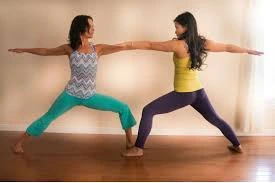
Warrior Pose 2, with a partner on the back:
Precautions:
- Keep your front knee directly over your ankle.
- Align your front heel with your back arch.
- Make sure your hips are square and not tilted forward or backward.
- To minimise lower back discomfort, engage your core muscles and slightly tuck your tailbone.
- Relax your shoulders and keep them over your hips.
- If you feel shaky, shorten your stance or lean on a wall for support.
- If you have knee, hip, or lower back problems, modify the stance or visit your doctor.
Contraindications:
- If you have significant knee pain, avoid this stance since it might increase your discomfort or damage.
- Those with high blood pressure should use caution, since holding the position may raise blood pressure levels.
- If you are having diarrhoea, use caution when performing the position, since it may not be pleasant or recommended.
- Individuals with persistent neck or shoulder ailments should avoid or modify this stance to avoid aggravation.
- While Warrior II is typically safe for most people, you should talk with your doctor before doing it during pregnancy, especially if you have any unique concerns or issues.
- If you have just undergone surgery or have any post-operative limitations, avoid this stance.
Common Mistakes:
- The front knee falls inward or extends past the ankle, straining the joint.
- The back leg is not fully engaged, which reduces stability.
- Torso leans forward or backward rather than remaining erect.
- Arms sagging or unequal, disrupting the horizontal line.
FAQs:
How long should I hold Warrior II Pose?
Hold Warrior II Pose for 30-60 seconds on each side, making sure to maintain balance and appropriate alignment.
Is it required to complete Warrior II on an empty stomach?
Yes, it is necessary to allow at least four to six hours between eating and executing Virabhadrasana II. Before attempting the posture, make sure your stomach is empty and your bowels are clean.
What is the optimum timing to complete Warrior II?
Virabhadrasana II works well in the morning because it promotes focus. If morning practice is not possible, training in the evening is still useful.
What are the common faults to avoid in Warrior II Pose?
Avoid allowing the front knee to fall inward, maintain your body upright, and have your rear foot firmly placed.
What should I do if I get knee discomfort while executing the Warrior II Pose?
If you have knee pain, lessen the depth of the knee bend, check your alignment, and consider adjusting the posture with support or a limited range of motion.
What are the precautions for Warrior 2?
Anyone suffering from knee discomfort or a knee injury, as well as anyone healing from a muscular strain, should avoid Warrior Two. It is advised to avoid this posture until the discomfort subsides. If you experience a shoulder ache, keep your hands down instead of lifting them.
Can Warrior 2 help with back pain?
Warrior II Pose can help relieve sciatica and back pain while stretching your groin, legs, abdomen, and chest.
References:
- Fetters, K. A. (1970, January 1). How to do the Warrior 2 pose, according to experts. https://www.onepeloton.com/blog/warrior-2-pose
- Warrior II Pose (Virabhadrasana II): How to Do, Benefits, and Modifications – Fitsri Yoga. https://www.fitsri.com/poses/warrior-2
- Filippo. (2024b, December 8). Warrior Pose 1, 2, 3 – Steps, Benefits, and variations of virabhadrasana. One Yoga. https://oneyogathailand.com/warrior-pose-1-2-3-steps-benefits-and-variations-of-virabhadrasana/