
10 Best Trapezius Exercises
The trapezius is a large, triangular muscle that spans the upper back, supporting posture, shoulder movement, and neck stability. Strengthening this muscle is key for reducing neck and shoulder pain, improving upper body strength, and enhancing athletic performance.
Trapezius Workouts: What Are They?
The trapezius, or trap muscles, is a major muscular group located in the upper back. These workouts can help you develop larger traps, boost your strength for Olympic weightlifting exercises like deadlifts, and correct your posture.
The middle traps in your midback allow you to rotate your shoulder blades (scapula). Located behind your shoulder blades, the lower traps create a V-shape in the centre of your lower back. The lower traps stabilise the spine while allowing your body to twist and flex.
10 Best Exercises for the Trapezius Muscle:
Trapezius Self Stretching

- You should begin by sitting or standing in whatever posture seems most comfortable to you.
- One hand must be placed on your back and the other on your head to stretch.
- The trapezius muscle may be stretched by extending your head to the other side.
- Extending the right side of the muscle also stretches the head on the other side.
- When you feel strained, stop. You should also consider stretching rather than taking overstretched positions.
- Hold for 30 or 60 seconds.
- You should do three repeats.
- Repeated it two or three times.
Shoulder stretch
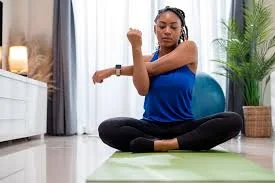
- Begin by sitting or standing in whatever posture seems most comfortable to you.
- It is required to position one hand on the back in order to facilitate stretching, and then place the head of the other hand there.
- Now, extend your head to the opposite side, which stretches your trapezius muscle.
- Stretch the muscle’s right side while simultaneously stretching the head on the other side.
- When you feel strained, stop. You should also consider stretching rather than taking overstretched positions.
- Hold for 30 or 60 seconds.
- You should do three repeats.
- Repeated it two or three times.
Ear-to-shoulder stretch

- Ear-to-shoulder stretch can also be done on your own; you can sit or stand, depending on whatever posture is most comfortable.
- You are sitting with a straight spine; you can use a supported chair or place a cushion between the chair and your spine, tilting your head towards your right shoulder joint.
- Then move as far as you can without straining the muscle, and avoid elevating your left shoulder joint.
- For Stretch deeply by gently pulling your head down with your right hand.
- Maintain this stretching position for 30 or 60 seconds, regardless of is necessary.
- This ear-to-shoulder stretching exercise was repeated three times in a single session and three times daily.
Head tilt
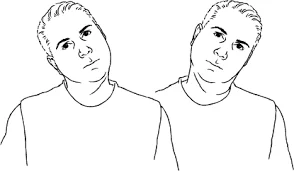
- Start by finding a comfortable sitting or standing posture.
- Gently turn your head sideways and bring your ear down to your shoulder.
- After holding this position, raise your head back to the beginning.
- Do the same on the other side.
Chin tucks
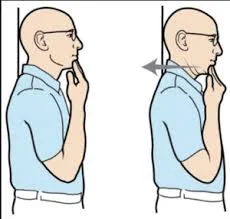
- Keep your chin relaxed and nod slightly as you bring it in towards your chest.
- Maintain your chin in this position.
- As you slide or pull your mouth muscles back, focus on them.
- To get back to the starting position, let your neck muscles relax.
Shoulder Shrug

- Dumbbell shrugs, commonly known as dumbbell shoulder shrugs, are an individual exercise that targets the upper trapezius muscles.
- Dumbbells should be picked up and held at your sides in a neutral position.
- Maintain a straight arm as you raise your shoulders to your ears.
- Pause briefly.
- Following that, restore your shoulders to their previous position.
- Repeat this action for the appropriate length of time.
Face pulls

- The face pull is an isolation exercise that works the muscles in your lower and upper back, particularly the rear deltoids on the back of your shoulders.
- Even though standing in front of a cable pulley machine, spend some time performing face pulls.
- The rope connection is best grasped with an overhand grip.
- Contract your upper back muscles, and stop pulling the rope towards your face once your hands are over your shoulders.
- If you lack the tools required for a cable machine face pull, consider employing a resistance band.
Arm circles exercise

- Take a standing position and abduct your arms 90 degrees to do the arm circle exercise.
- Maintain your foot’s usual foundation of support.
- Then, circularly move your arms, either clockwise or anticlockwise.
- It should be important to keep your arms straight during 90-degree abduction.
- After 15-20 repetitions, go to the opposite way and rotate your arms in a circle, travelling backward.
- This exercise should be repeated ten to fifteen times in a single session, four times each day.
Pendulum stretch
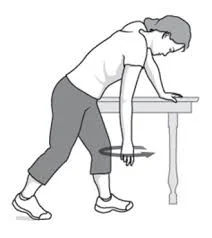
- This exercise relaxes your shoulder muscles. This exercise requires the assistance of a plinth or chair.
- For the pendulum stretch, use a dumbbell or a heavy weight appropriate to your strength.
- Then, place your right hand on a table or chair for support, and use your other hand to grip the dumbbells.
- After that, the left arm dropped.
- You should have a forward-leaning posture.
- Then swing the left arm lightly in short circular motions (anticlockwise or clockwise), and gravity will do the rest of the job.
- For 30 to 1 minute, keep doing this pendulum stretch exercise.
- Then reverse the direction of motion for the horizontal and vertical motions.
- Do this 3 times a day.
Scapular push-ups
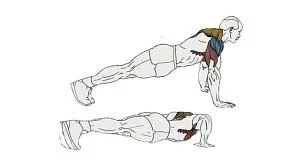
- Scapular push-ups should be performed in the conventional push-up or high plank position.
- Maintain a straight back and avoid bending your elbows.
- Lowering and raising your upper body may be achieved by slowly moving your shoulder blades apart and together.
Three Benefits of Trapezius Workouts:
Including trapezius training in your fitness routine can provide several benefits.
Trap exercises might help you develop larger trap muscles. Trap exercises are one of the most effective strategies to build hypertrophy in the back and shoulders. Many bodybuilders attempt to build bigger trap muscles not just for aesthetic reasons, but also to give the strength required to complete Olympic weightlifting exercises like deadlifts.
Trap training might assist with your posture. When performing trap exercises, keep your standing upright while exercising your back and core muscles. This will strengthen your stabiliser muscles, preventing you from slouching.
Stronger traps can help alleviate neck discomfort. Strengthening your upper traps stimulates the activation of your shoulder muscles, resulting in stronger support for your head and neck.
Making lifestyle modifications to aid with the prevention:
Good posture will help to lessen the tension on your trapezius muscles, which will reduce pain.
Throughout the day, sit or stand up straight. Keep your shoulders down and avoid forward head posture while you do this. Continue to hold your head straight.
Avoid actions that result in bad posture, such as carrying a phone on one shoulder.
A heavy shoulder bag or backpack is not something you should be carrying. An expensive backpack strains your trapezius muscles.
Elevate your electronics so you won’t slump. Slouching posture can produce sensitivity in your trapezius muscles, resulting in discomfort and tension, and if you are using your smartphone or computer, you may droop into a position that generates stress, so avoid slumping. To resolve the issue, adjust the device position so that it is at eye level.
If you are used to working at a desk, avoid the forward head position and take breaks to relax your muscles. Perform the same stretch at work.
To avoid bad posture, make sure the keyboard and armrests are at the proper height.
How can I maintain my trapezius muscle health?
You should keep your body flexible by stretching and exercising, and there are several shoulder and trap exercises available to promote mobility, build strength, and release stiff muscles.
When you first start working out at the gym, be careful not to overdo it. Whenever you feel discomfort or distress, stop.
Maintaining a healthy weight preserves flexibility while lowering the chance of muscular tension and stress. For information on the right weight for your body, speak with your healthcare provider. Prior to starting your workout, spend five to ten minutes warming up and stretching.
Before commencing your workout, take the time to properly stretch your key muscles, such as the calf stretch. Warm up and stretch your hamstrings, biceps, and triceps. Exercise causes your muscles to warm up and become more flexible, lowering your chance of injury. The regular trapezius stretch increases your muscular flexibility.
FAQs
How can you fix the trapezius quickly?
Trapezius Muscle Strain Management
Rest: Rest the affected area.
Ice: Ice lowers swelling in the affected muscles.
Compression treatment helps to minimise swelling in the muscles.
Anti-inflammatory medications help alleviate muscular soreness and swelling.
Physical therapy is used to strengthen muscles and then move on to the trap muscles after they have healed.
Is massage effective for trapezius strain?
Massage treatment involves applying mild to moderate pressure to specific locations to relax tight muscles and enhance blood flow in the affected area, which reduces inflammation. This massage therapy has been utilised to relieve discomfort caused by trapezius strain while still maintaining mobility in the affected regions. Massage can also be classified into distinct forms, such as friction massage. Massage the trapezius muscle in a circular motion, starting at the origin and moving to the insertion.
Is trapezius discomfort severe?
If your trapezius muscle discomfort or back pain does not improve within a few days, see your doctor. If you have significant muscular weakness or are having trouble moving your shoulders, lifting your arms, or moving your head, see your healthcare provider. These might indicate nerve injury, which could result in trapezius muscle paralysis.
Does a tight trapezius produce nerve pain?
If there is a trapezius with muscular spasm and tightness in the trapezius muscles just from the origin to the insertion, stress on the bundle of nerves (the brachial plexus) and blood supply to the arms can occur, aggravate or produce symptoms such as heaviness, aching, fatigue, and numbness radiating from the arms to the hand with the fourth and fifth fingers.
Is Yoga Effective for Trapezius Pain?
Yoga for Trapezius. This type of yoga works the neck and shoulders while also maintaining the flexibility and mobility of your body posture.
Yoga techniques to loosen might aid in loosening the trapezius muscles, neck, and shoulders.
You may manage stress and relieve tension in your shoulders, neck, and trapezius muscles by practicing yoga.
Referances
- Prajapati, D. (2023, May 29). 11 Best Exercises for Trapezius Muscle Pain – Samarpan Physio. Samarpan Physiotherapy Clinic. https://samarpanphysioclinic.com/11-best-exercises-for-trapezius-muscle-pain/
- Heitz, D. (2019, August 24). 4 No-weights trapezius exercises. Healthline. https://www.healthline.com/health/no-weights-needed-4-trapezius-exercises#shrug
- Chin Tucks ET. (n.d.). [Video]. Hingehealth. https://www.hingehealth.com/resources/articles/trapezius-pain-exercises/