Functional Training
Introduction
A fitness strategy called functional strength training aims to improve the body’s capacity to carry out daily tasks with ease and effectiveness. Functional training includes workouts that simulate real-life actions like lifting, squatting, and climbing, as opposed to standard strength training, which isolates particular muscle groups. Functional strength training attempts to enhance whole-body coordination, stability, and strength by working several muscles and joints at once. Kettlebells, resistance bands, medicine balls, and core exercises, including squats, lunges, push-ups, and planks,s are frequently utilized.
Increasing flexibility and balance, lowering the risk of injury, and enhancing everyday performance are all greatly enhanced by functional strength training. Because it targets several muscle groups at once, it also offers a time-efficient workout, making it perfect for people looking for affordable training options. All fitness levels, from beginner to athletes, can benefit from this type of exercise, which can be modified with bodyweight or additional resistance, providing a thorough approach to improving functional fitness and general health.
How Functional Training is Used in Exercise
Large muscle groups cooperate throughout your body to perform functional actions. These workouts frequently resemble everyday motions. Functional training can help you get better at real-world tasks like carrying groceries, swinging a baseball bat, and picking up heavy objects.
Some exercises do not meet the criteria for “functional training,” but many do. The features and objectives of less-functional strength training can vary:
exercises that focus on a certain body area. Exercises that are not functional target a single muscle or group of muscles in a single area of the body. Consider “arm day” or “leg day” at the gym. Bicep curls, calf raises, and seated leg presses are examples of traditional strength training exercises that are less useful.
How to Get the Most Out of Functional Training
There is no one-size-fits-all approach to functional training. Each person’s advantages and disadvantages vary based on their objectives, the workouts they perform, and other factors. Mix it in with other workouts. You can achieve the same aims with different types of exercise. Even exercises that focus simply on a few leg muscles can help runners improve faster. To increase your level of fitness, combine functional training with other forms of exercise.
It is important to be specific. More than jumping jacks, chair squats will assist you in getting out of chairs. When your functional training closely mimics an activity, you are more proficient at it.
Keep yourself safe. Although functional training may be less dangerous than other forms of exercise, there is still a chance of injury. To get the most out of your workout, perform high-intensity functional motions with proper technique. If you have any concerns or questions about beginning a functional fitness program, consult your physician.
Functional training workout to improve performance
We have solutions if you want to add functional fitness exercises to the way you exercise. Generally speaking, “compound movements,” or workouts that employ many muscle groups simultaneously, are the main focus of functional training. Start doing this exercise.
Push-Up

This tried-and-true favorite is a great technique to increase your total-body strength and doesn’t require any equipment. Throughout, maintain a flat back and align your hips with your shoulders.
- How to:
- With your elbows bent, your legs straight behind you, and your chest almost touching the floor, support your body with your hands and toes.
- Raise your arms to a straight position.
- Return your body to the beginning position slowly, then repeat.
- Do three sets of eight to twelve repetitions.
Dumbbell Bent-Over Row
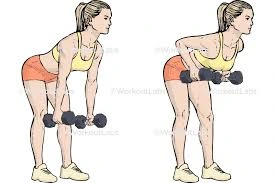
Prepare to gain back strength with this powerful exercise by grabbing a set of dumbbells.
- How to:
- Holding a set of dumbbells with your arms straight and palms facing in, bend forward at the waist with your knees slightly bent and your back flat.
- Keeping your elbow close to your body and bent at a 90-degree angle, raise the dumbbells to the sides of your chest.
- Maintaining a flat back, lower the dumbbells back to a straight arm posture.
- Do three sets of eight to twelve repetitions.
Kettlebell Goblet Squat
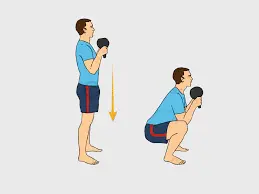
This exercise improves flexibility and range of motion in your hips, ankles, and thoracic spine, in addition to strengthening your core. Prepare for this multitasking exercise by grabbing your kettlebell.
- How to:
- Hold a kettlebell at chest height in a goblet stance while standing straight.
- Maintaining your weight at chest level, squat by bending your knees and hips.
- Extend your legs completely by driving your hips forward and upward.
- Do it again.
- Do three sets of eight to twelve repetitions.
Reverse Lunge to Press
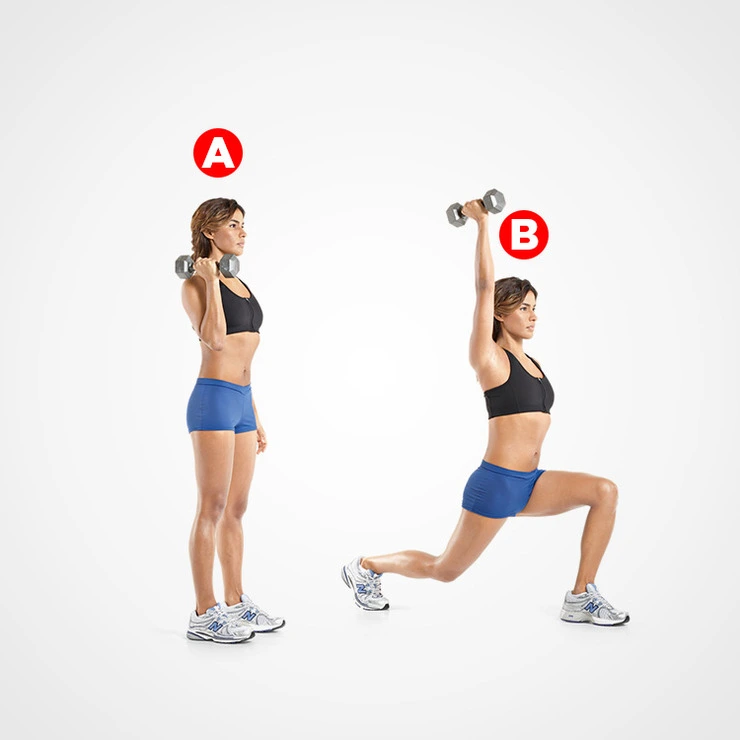
For this exercise, you’ll also utilize a kettlebell, which has several advantages, such as better balance and coordination,n as well as increased hip and knee stability.
- How to:
- Hold a kettlebell at shoulder height in one hand while standing straight.
- With the kettlebell at shoulder level and your body upright, take a step back on one leg while lowering your knee to the ground.
- Press the kettlebell straight up overhead while fully extending your arm after pushing off your front foot and returning to the starting position.
- Repeat after lowering the kettlebell back to your shoulder.
- Do three sets of eight repetitions on each side. Make sure you finish every repetition on one side before moving on to the other.
Suitcase Deadlift
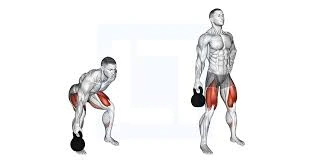
This exercise strengthens the main muscle groups while improving core stability. You can use a barbell, kettlebell, or dumbbell for the weight.
- How to:
- Hold your weight to one side and begin in a hip-width posture.
- Lower the weight toward the floor by flexing the knees and pulling the hips back while maintaining a flat back. Make sure the weight stays ie proximity to the body.
- Return to the beginning position by driving the hips forward and upward.
- Do it again.
- Do three sets of eight repetitions on each side. Before moving on to the opposite side, finish all of the repetitions on one side.
Medicine Ball Low to High Chop

Using a medicine ball of your choice weight, this full-body workout simultaneously strengthens the glutes, legs, back, core, and shoulders.
- How to:
- Holding the ball to one side with both hands, squat with your arms straight at knee level.
- Lift the ball from your hip and move it across your body to the shoulder on the other side. Maintain a straight arm position.
- Return the medicine ball to its starting position gradually, then repeat.
- Do three sets of eight repetitions on each side. Before moving on to the opposite side, finish all of the repetitions on one side.
Benefits of Functional Training
Instead of training individual parts, functional workouts teach your body how to function as a whole. Your health will benefit greatly by strengthening your entire body in this way.
Daily life
The same muscular movements you utilize are trained through functional training. For instance, to strengthen their capacity to get out of a chair, an elderly person could perform bodyweight squats. Training for these daily tasks might make them easier.
Balance and coordination
Your sense of balance can be sustained and maintained with the use of functional workouts. Your body’s various parts operate more smoothly when you engage in functional exercise. Elderly people can avoid falls and associated injuries by doing this. Functional training can help people recovering from injuries regain their balance.
Injury protection
You can avoid injury by honing the motions you use daily. Your spine remains safe from back-pain-causing movements through functional training. You can prevent accidents when taking up big objects at work if you lift them off the floor properly when working out.
Athletic performance
Functional exercises based on their sport’s movements help athletes get better. To increase their speed and agility on the floor, a basketball player may practice jumping from side to side. To strengthen the same leg muscles they use in the boat, rowers can perform squats.
Time-efficient
When it comes to fitness and weight loss, functional workouts can be more time-efficient than concentrating on a single muscle. You can increase the number of calories you burn by incorporating a few shorter, more intense full-body workouts into your schedule.
FAQs
What is functional training?
Functional training is a type of exercise that helps you get better at doing everyday tasks like lifting, bending, and reaching. It increases strength, stability, and mobility while lowering the risk of injury by focusing on compound movements that work multiple muscle groups at once.
Important Features and The Benefits
Focus on Daily Life: Exercises that mimic real-life movements include squats (sitting and standing), lunges (walking), and pushing and pulling.
Multi-Muscle Engagement: This type of training teaches muscles to work together more effectively than isolated machine training.
Improves Mobility & Core: Focuses on stability and makes the core, lower back, and shoulders stronger.
Injury Prevention and Rehab: Physical therapists first used it to help people get back to normal function or heal from injuries.
Flexibility: Works for everyone, from seniors who want to stay balanced to athletes who want to get better at what they do.
Some examples of functional exercises are
Squats: Like sitting down and standing up.
Lunges: improve balance and strength in one leg.
Deadlifts: Make the back chain stronger so you can lift things.
Push-ups and pull-ups: These exercises make your upper body stronger so you can push and pull things.
Farmer’s Carry: This exercise makes your grip stronger and helps you stay stable while carrying heavy things.
Rotational movements: improve core strength and the way you move in everyday life.
What are the 7 functional exercises for training?
The seven basic movements that people make are squat, hinge, lunge, push, pull, twist/rotate, and gait/locomotion. Training these patterns builds functional strength, makes you more mobile, and lowers your risk of getting hurt by working out your muscles in ways that are useful and compound, not just isolated.
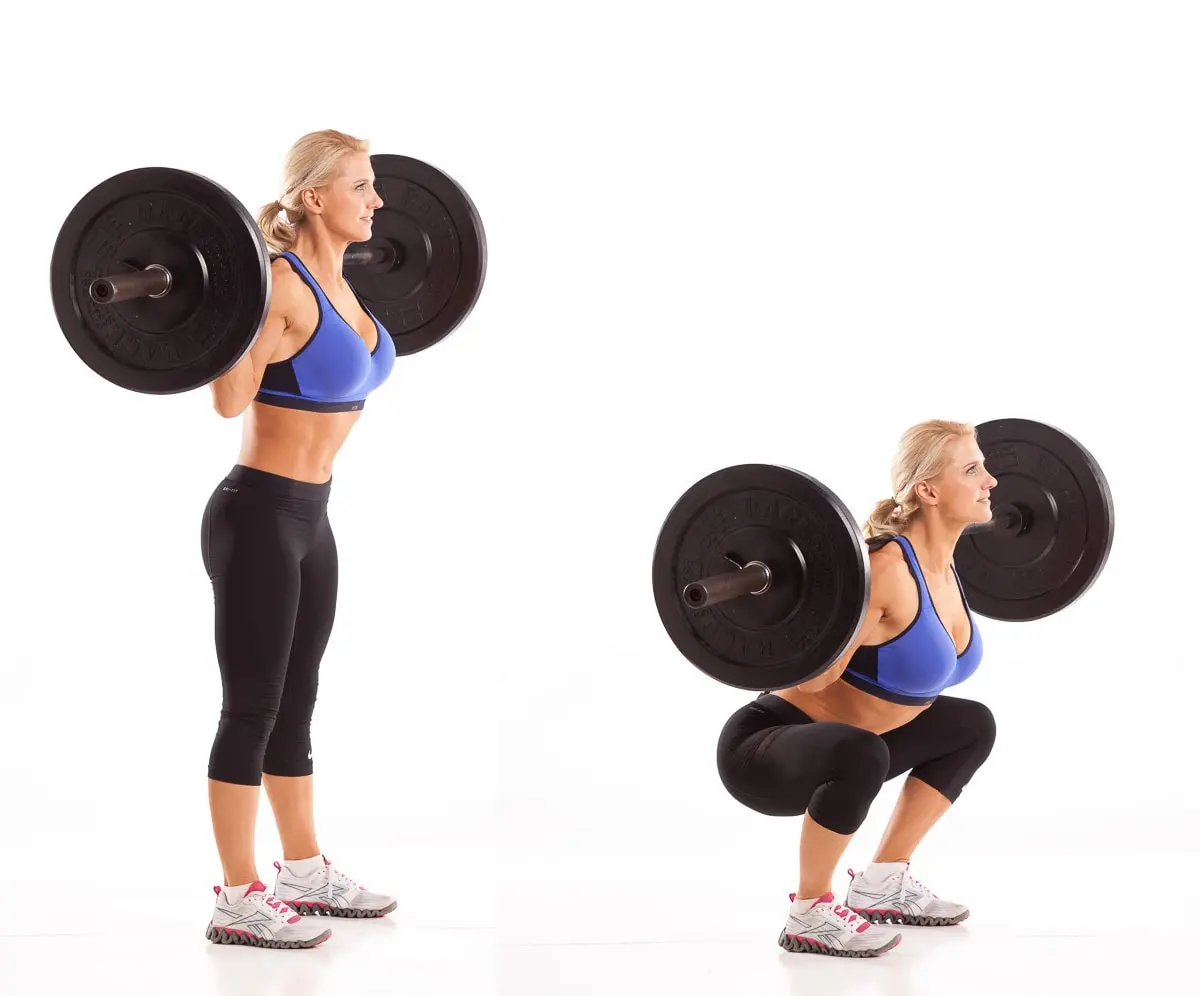
Squat: Lowers the hips from a standing position. This is important for sitting, standing, and lifting (like the goblet squat).
Hinge: Bending at the hips with little bending at the knees is necessary for picking things up off the floor (for example, the deadlift or the kettlebell swing).
Lunge: A one-legged movement that helps with balance and strength, which are both important for walking and climbing stairs (for example, forward/reverse lunge).
Push: Moves weight away from the body, which is important for pushing doors or doing things overhead, like push-ups and overhead presses.
Pull: Pulling weight toward the body is necessary for lifting and carrying things (like a pull-up or a row).
Twist/Rotate: Moving the body in a circle is important for spinal health and changing direction (for example, Russian twist or wood chop).
Gait/Locomotion: The act of moving the body through space, mostly by walking, running, or carrying things (like a farmer’s carry).
These movements cover all the basic ways the body is meant to move, making sure that your fitness routine is complete and safe.
Is functional training better than the gym?
Both kinds of training are advantageous. You can improve your mobility and avoid injuries in daily life with functional training. You can gain strength and muscle by engaging in strength training. Both kinds of training are advantageous. You can improve your mobility and avoid injuries in daily life with functional training. You can gain strength and muscle by engaging in strength training.
What is an example of a functional exercise?
Functional training is a kind of strength training that was first used to treat injured athletes. It consists of exercises that simulate commonplace motions such as standing up, lifting, carrying, reaching, ascending stairs, bending down, and twisting.
What is the 3-3-3 rule for a workout?
The 3-3-3 rule is a simple and popular way to work out that is meant to be consistent and effective. It usually involves doing three workouts a week, focusing on three key movements each time, and doing three sets of each exercise. It gives you a balanced, easy-to-follow plan for building strength and endurance that usually lets you do cardio three days a week and rest three days a week.
Important Parts of the 3-3-3 Gym Method:
Three times a week of exercise: Instead of having long, hard training sessions every day, focus on consistent, long-term training.
Three exercises for each session: Choose three main movements that work on big muscle groups for the best results. These could be squats, presses, or rows.
3 sets for each exercise: Do three sets of each exercise, with a break of three minutes or less in between.
Example 3-3-3 Full Body Session:
Three sets of squats
Three sets of push-ups
Three sets of dumbbell rows
3-3-3 Variations:
3-3-3 Walking: 30 minutes, four times a week. You walk for three minutes at a high intensity and then three minutes at a low intensity.
The 3-3-3 Weight Loss Rule says you should eat three healthy meals a day, wait three hours between meals (no snacks), and do three types of exercise (strength, cardio, and NEAT).
For beginners and intermediate lifters who want structure without the complications of traditional, high-volume programs, this method is very popular.
Is functional training good for beginners?
In addition to being extremely affordable, functional training eventually produces observable advantages like: Reduced joint pain. Everyday functioning is enhanced by muscle memory. improved coordination and balance.
What are the 5 pillars of functional movement?
Pressing, pulling, level changes, rotation, and locomotion are the fundamental motions, which are referred to as the five pillars of human movement. Each pillar contributes to general strength, mobility, and coordination and is an essential component of functional fitness.
What is the king of all exercises?
Many people think that the squat is the best exercise because it works many major muscle groups at once, including the quads, glutes, hamstrings, and core. This leads to a lot of muscle growth and strength. It works very well, improves posture, and releases a lot of anabolic hormones that help the body grow and develop.
Why the Squat is the Best
Maximum Muscle Recruitment: Squats work more than half of your body’s muscle mass, which makes them the best way to build strength and mass in your lower body.
Functional Strength: Squatting is a basic human movement that makes it easier to move around and do everyday tasks.
Metabolic Boost: Squats are great for building strength and helping you lose fat because they work big muscles.
Anabolic Hormone Response: The hard work and use of muscles can cause hormones to be released, which helps muscles adapt and grow.
Other People Who Could Be “King”
The squat is the most common answer, but other exercises are often suggested for different goals:
Deadlift: Often called the king because it works the whole back chain and builds brute strength.
Clean and Jerk: Some people think it’s the best exercise for athletes because it’s so hard and requires a lot of explosive power.
Weighted dips are often called the best exercise for building the chest and triceps in the upper body.
It is best to focus on proper form and consistency in your training routine to get the best results.
What are the disadvantages of functional training?
A disadvantage: It is challenging to execute functional training at home without the necessary equipment or access to a gym because it calls for specialized equipment like kettlebells or resistance bands.
What are the 4 types of strength?
Maximum, static, dynamic, and explosive strength are all types of strength. Muscular endurance and dynamic strength are comparable. Power is explosive strength.
Does functional training burn fat?
Benefits of functional training
Since they are natural motions, they have numerous advantages. For example, you burn more calories when you work a lot of muscles, which increases your energy consumption and speeds up fat loss. We may say that functional training and a healthy diet help you lose weight.
Is 3 times a week at the gym too little?
Before you lose your progress, you train every major muscle group, take a break to recover, and then train again. Is lifting weights three days a week sufficient to gain strength and muscle? Indeed. As long as you work out hard and eat healthily, three weekly training sessions will provide you with all you need to make significant progress.
Can beginners do functional training?
For beginners, functional training is perfect since it: Increases strength safely with appropriate mechanics. enhances mobility, balance, and coordination. lowers your chance of getting hurt both inside and outside of the gym.
What are the only 5 exercises you’ll ever need?
Five fundamental motions that comprise almost all of our daily motions are the result of human evolution. This means that you just need five movements for your workout: push (pushing away from you), pull (pulling toward you), hip-hinge (bending from the middle), squat (flexing at the knee), and plank.
References
- Anderson, H. (2024, December 16). What is functional training? How to make everyday tasks easier | Anytime Fitness. Anytime Fitness. https://www.anytimefitness.com/blog/what-is-functional-training
- Nishatedgydkkfu. (2025, November 7). 10 functional fitness workouts to build strength. Gold’s Gym. https://www.goldsgym.com/blog/functional-fitness-workouts-to-build-strength/
- WebMD Editorial Contributor. (2025, July 11). How to exercise with functional training. WebMD. https://www.webmd.com/fitness-exercise/how-to-exercise-with-functional-training
- What is functional training? (n.d.). Nike.com. https://www.nike.com/a/what-is-functional-training
- Wikipedia contributors. (2026, March 21). Functional training. Wikipedia. https://en.wikipedia.org/wiki/Functional_training
- Davis, N. (2026, January 29). Why is functional fitness important for everyone? Healthline. https://www.healthline.com/health/fitness/functional-fitness-adults
- Cave, K. (n.d.). Functional training: compound workouts for fitness. https://blog.nasm.org/functional-training-compound-workouts