Ardha Navasana (Half Boat Pose)
What is Ardha Navasana?
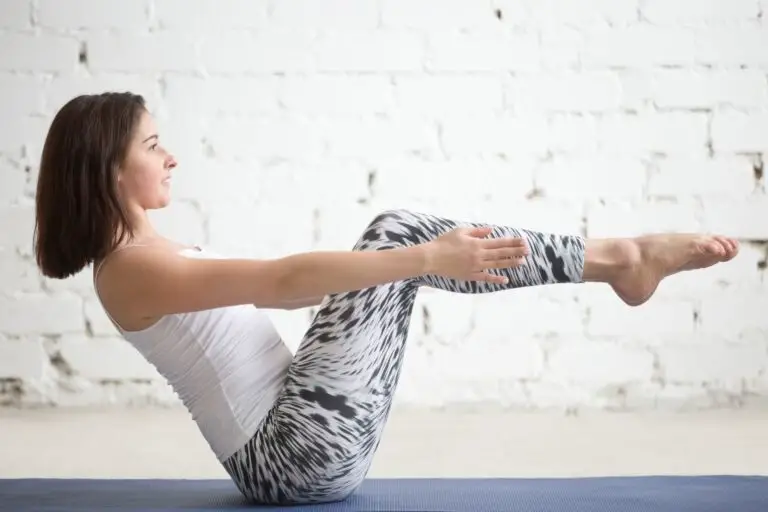
Ardha navasana, often known as the half boat position, is a forward-bending, seated balancing pose. The position is at the intermediate level when considering the degree of effort and strength needed.
The supine position is used to do Ardha asana. It focuses on strengthening the hip flexors, adductor muscles, and abdominal muscles. In addition to these, it affects the spine, hamstrings, and quadriceps.
It strengthens and enhances the practitioner’s mental health in addition to giving the body flexibility and strength.
Muscle Work During Ardha Navasana:
- Lower Back Muscles
- Upper Back Muscles
- Core (Abs) Muscles
- Gluteus Muscle
- Pelvic Muscles
- Quadriceps Muscle
Difference Between Ardha Navasana and Paripurna Navasana:
The name of this position comes from the way the body resembles a half-boat.
An advanced variation of the half boat pose, Paripurna Navasana, also known as Navasana (boat pose), requires powerful thighs and core to maintain.
- In the half boat pose, the legs are raised off the ground at a lower angle (30–35 degrees) due to a lack of strength in the core muscles.
- In paripurna navasana, on the other hand, the legs are raised higher than the head level (60–65 degrees), resulting in a very small gap between the thighs and abdomen.
The only body parts that come into contact with the floor while maintaining the position are the sit and tail bones. With a straight spine, the entire body is balanced between them. The lower leg and arms are parallel to the ground and extended forward. The knees are kept bent, though.
How to Perform?
- Stretch your straight legs out in front of you while sitting on your mat in the dandasana position.
- With your hands by your sides and your feet on the mat, bend your knees.
- Lean a little on your back and roll your shoulders back.
- Put your hands behind your knees.
- Take a breath, raise your feet off the ground, and lengthen your lower legs until they are parallel to the ground.
- Make an effort to balance your sitting bones.
- With your fingers pointing forward, let go of your hands and stretch your arms. Keep them in line with the bottom legs and parallel to the floor.
- Hold the posture for 30 to 60 seconds. Continue to breathe normally.
- Breathe out, grip your knees, and return your feet to the ground.
- Take a breath and bring your upper body to the centre while maintaining a straight spine.
- Breathe out, straighten your legs, and place your hands on the ground.
Benefits:
Makes the body stronger:
The hip flexors, spine, and abdominal muscles are all worked in the half boat position. Muscles become stronger and more resilient as a result. The complete body is strengthened because the arms, legs, and core muscles are also used.
Enhances equilibrium:
The entire body is balanced on the sitting bones while maintaining the position. Finding balance is crucial in this pose since both the upper and lower bodies are raised. Body balance gets better with consistent practice.
Burns fat in the abdomen:
This pose works the muscles in the abdomen by contracting them. The practitioner’s body becomes toned as a result, and the energy used to maintain the pose aids in burning the excess abdominal fat.
Enhances digestion:
The abdominal muscles involved with ardha navasana stimulate the digestive organs. This enhances the digestive system’s performance and guards against associated conditions.
Improves blood flow:
It controls the lower body’s blood flow. Increased blood flow can reduce leg stiffness, discomfort, and shivering. In addition, it strengthens them.
Stress reliever:
This position soothes the mind and lowers tension, anxiety, and even despair by clearing the body of impurities. As a result, the ardha navasana also relieves tension.
Beginner’s Advice:
- Instead of lifting your feet off the ground, concentrate on maintaining a straight back. To add balance to the posture and maintain a straight spine, a beginner can execute it by keeping their hands and feet on the ground.
- Maintain a solid abdomen without allowing the belly to swell or thicken.
Follow-up Poses:
- Bound Angle Pose (Baddha Konasana)
- Plough pose (Halasana)
- Supported Headstand (Salamba Sirsasana)
- Chair Pose (Utkatasana)
Props and Modifications:
Using a wall: To perform ardha navasana, keep your lower legs parallel to the floor and place your feet on the wall. This aids in keeping the position balanced.
Using a block: Put a block in the area of your lower back. Take its support and lean back. Additionally, it helps relax the position a little and support your back while you hold it.
Folded blanket: Perform the pose while seated on a folded blanket or foamed block. By providing a little height, this will prevent back slouching and provide your spinal muscles with an additional extension.
Using a chair: While seated, perform ardha navasana. The hands can grasp the edge of the seat, the chest opens nicely, and the chair’s back supports the spine. The chair’s additional height, back support, and handgrip make the stance much easier.
Variations:
Boat Pose:
In contrast to the half boat stance, the legs are fully extended, and the knees are not bowed. The feet and head remained in line. The entire body resembles a boat as the upper and lower bodies form a V.
Eka pada Navasana (One-legged boat pose):
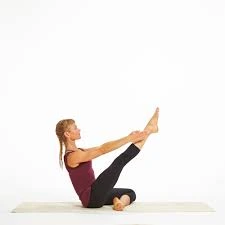
It just requires the extension of one leg, as the name implies. The other leg, however, remains on the ground and is bent in the direction of the stretched thigh. After that, the legs are switched, and the process is repeated.
Half Boat Variation Arms Overhead:
Once you’ve achieved the stance, raise your arms above your head and point your fingers towards the ceiling. Arms should be extended in line with the spine.
Another way to perform ardha navasana is to keep your hands behind your back, palms touching the ground.
Precautions and Contraindications:
- If you are pregnant or menstruating, do not perform ardha navasana.
- It is not recommended for people with diarrhoea or asthma.
- If you have an injury to your neck, back, hip, knee, or ankle, avoid doing ardha navasana.
- Avoid performing the half boat posture if you have insomnia or a heavy head.
- Avoid slouching and always maintain a straight spine when performing ardha navasana.
- To avoid internal damage and misalignment, do it under the right supervision.
FAQs
What are the benefits of Ardha Navasana?
Enhances Posture: By strengthening the core muscles, Ardha Navasana helps to enhance posture and lessen back pain. Increases Confidence: The power and sense of achievement that come from performing this position can increase one’s self-esteem and confidence.
What are the contraindications for Ardha Navasana?
Teachers should not permit pupils who suffer from depression, vertigo, or severe migraines to perform this pose because these illnesses can induce mental distraction and imbalance. Pregnant ladies and children should likewise avoid this stance because of their sensitive cores.
What is Navasana and its benefits?
Boat Pose, also known as Navasana, is a seated yoga pose that calls for core strength to keep the body in a “V” form. Over time, it enhances mental concentration, core strength, balance, and stamina.
What muscles does Ardha Navasana work?
The difficult yoga stance known as Ardha Navasana (Half Boat stance) develops a close relationship with your core. Abdominal muscles, hip flexors, adductors (inside thighs), and spinal muscles are all strengthened at the same time.
References:
- Ardha Navasana (Half Boat Pose): How to Do, Benefits & Its Variations – Fitsri Yoga. https://www.fitsri.com/poses/ardha-navasana
- Half Boat Pose Yoga Pose (Ardha Navasana). Tummee. https://www.tummee.com/yoga-poses/Ardha Navasana.