
18 Best Gluteus Muscle Exercise
The gluteus muscles, comprising the gluteus maximus, medius, and minimus, play a crucial role in hip stability, posture, and lower body strength. Strengthening these muscles improves athletic performance, supports the lower back, and enhances daily functional movements.
What is the Gluteus Muscle exercise?
The method of exercising to build gluteal muscles is known as gluteal strengthening. Having proper posture, movement, and balance all depend on these muscles.
There are three muscle in gluteus:
- Gluteus maximus (the biggest),
- Gluteus medius,
- Gluteus minimus.
Gluteal Muscles: What are they?
- The three muscles collectively known as the glutes originate in the gluteal region. They are commonly known as buttocks.
- One can find the gluteal area underlying the girdle that surrounds the pelvis.
- These three muscles link to the femur bone using the ilium and sacrum as their beginning locations.
Gluteus Maximus: It is the largest muscle. It can be discovered at the back of the hip joint. This muscle helps with pelvic rotations and upright posture.
Gluteus medius: The femur and ilium are connected by this fan-shaped muscle. It helps during walking and standing.
Gluteus minimus: It is a triangular muscle. It connects the gluteal portion of the ilium to the femur.
Health Advantages of the Gluteus muscle:
Glute workouts are extremely beneficial since they target the body’s powerhouses, the muscles. Here are some of the most significant advantages of including glute exercises in your routine:
Workouts for the gluteus muscles help avoid lower back discomfort by supporting hip and trunk mobility. They do this by uniformly spreading the weight’s load and preventing overload on any one area of the back.
Butt workouts help develop and maintain strong gluteal muscles, which helps avoid knee, ankle, hip, and lower back issues. This is accomplished by reducing dynamic bending and improving knee balance when running or walking.
Exercises that enhance the glutes help to enhance lower-body posture and stability. This has a direct influence on posture and can help reduce posture-related problems.
Glute workouts enable you to swing, jump, twist, and drive with your hips and legs. This is especially useful for athletes who require strength and coordination in their hip regions. Lower body workouts offer you a toned and attractive image, which boosts your confidence.
This strengthens the bones and may prevent age-related bone density loss.
When paired with other types of exercises, such as oblique exercises or abdominal workouts, glute exercises help you burn more calories and lose weight faster. This decreases the major health hazards connected with obesity.
Other advantages of strength training include:
Exercises that strengthen the gluteus muscles improve their performance. Glute muscle workouts can assist a person in acquiring the strength to do daily activities, including lifting, standing, and walking. Reduced discomfort: Strengthening activities can help with persistent pain from certain disorders like arthritis.
Increased metabolism: Gaining muscular mass can boost metabolism over time. Enhancing coordination and reducing the risk of falling can be achieved through muscular strengthening.
18 Best Exercises for the Gluteus Muscle:
Stretching Exercises for the Gluteus muscle:
- Gluteus stretch
- Seated figure-four stretch
- Seated glute stretch
- Z – Sit exercise
- Supine Hip Twist Stretch
- Wall Glute Stretch
- Supine Leg Extension Stretch
Gluteus stretch:

- The workout begins in the supine posture.
- After lifting the knee joint, the patient lies down on his back and crosses the right ankle joint to the left knee joint.
- Then take a gentle grip on the left thigh.
- Advance the hip joint towards the chest.
- For thirty seconds, maintain these stretches.
- The stretching procedure should then be performed with the opposing leg.
- This stretching should be done three times in one session.
- Then do three workouts every day.
Seated figure-four stretch:

- Start by sitting upright in a chair.
- The next stage is to lift one leg above the other.
- Then, place the hands on the shins.
- To further extend the stretch, keep your spine straight and bend forward a little.
- Hold the stretching position for 30 seconds before repeating three times in one session.
- Then return to the starting position.
- After that, repeat with the opposite leg.
- Additionally, this stretching is performed while standing or sitting on the floor.
- The position described above is also known as the Seated Pigeon stance.
Seated glute stretch:
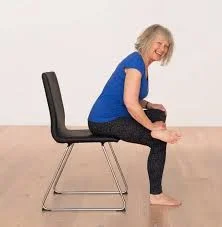
- Start by sitting upright in a chair.
- Straighten your back and elevate your left leg.
- The left ankle joint should be positioned against the right knee joint.
- After that, feel the patient extend their stretch by bending slightly forward.
- Repeat 3 times.
- Hold for 30 seconds.
- Repeat the stretching on the opposite side.
- Do it three times in one session.
Z – Sit exercise
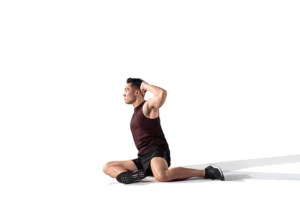
- Begin by kneeling.
- Then, press into the hands until the hip joint lifts towards the ceiling.
- Put your chin on your chest and align your ears with your upper arms by lowering your head.
- Bend at the knee joint to tilt the pelvis slightly forward.
- Then go to the body, using any modifications of the feel to the proper.
- Hold this up to 1 min.
- Do this 3 times a day.
Supine Hip Twist Stretch
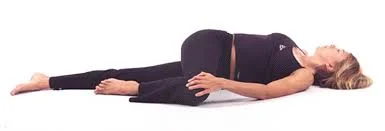
- This exercise extends the outer hip, where the gluteus minimus muscle is situated, without putting strain on the spine.
- Lie on your back on the floor, arms out to the sides, and hands on the floor.
- Your left foot should be crossed over your right thigh and around your knee.
- After taking a deep breath, move your pelvis to the right such that your left foot and outer right knee are on the floor.
- Avoid lifting your left shoulder off the ground or twisting your upper back.
- Hold this stretch for 5–6 deep breaths.
- Stretch for two sets on each side of your body.
Wall Glute Stretch
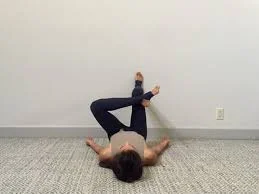
- This exercise extends the whole hip area, relieving pressure on the sciatic nerves that run down each side of the buttocks.
- Lie on your back on the ground with your feet about hip-width apart against the wall.
- Your left foot should be crossed over your right thigh and around your knee.
- As you cross your foot, keep your pelvis in the same posture.
- Use your hip to push your left knee towards the wall.
- Hold this stretch for 5–6 deep breaths.
- Switch leg positions and perform the stretch on the opposing hip.
Supine Leg Extension Stretch

- This exercise extends the whole back of your hip and leg, from the buttocks to your calves.
- Start with supine lying.
- One leg bends, while the other is extended.
- Slowly stretch your leg straight up, flexing your left foot towards your right shoulder.
- Hold the stretch for 5–6 deep breaths.
- Repeat the stretch with the opposing leg.
Gluteus muscle strengthening exercises:
- Supine bridges
- Hip thrusts
- Clamshells
- Side Leg Raises (hip abduction) exercise
- Prone Straight Leg Raises (hip extension) exercise
- Glute bridge with the band
- Seated hip abduction with resistance band
- Knee to Chest
- Downward-Facing Dog
- Pigeon Pose
- Weighted deadlift
Supine bridges
- Start with supine lying.
- Your heels should be near your butt when you bend your knees.
- You will activate your rump more when your heels are in closer proximity to your glutes.
- Push onto your hands and upper back as you raise your buttocks and lower back towards the ceiling.
- Squeeze your buttocks as you raise.
- Hold for a second as you give your buttocks a solid squeeze.
- Slowly descend back to the bottom.
- Hold for a second, then repeat.
- Complete eight to twelve repetitions.
Hip thrusts
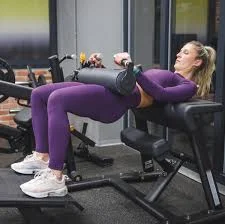
- A workout bench may support your head, neck, and shoulders. (You may use a yoga ball instead, but make sure you can maintain stability during the workout.)
- Bend your knees to a 90-degree angle.
- Make sure to extend your pelvis and squeeze your glutes.
- Slowly lower yourself back down.
- Hold for a second, then repeat.
- Complete eight to twelve repetitions.
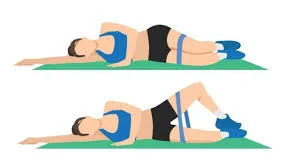
- Take a position on your left. Either bend your arm at the elbow and support your head with your hand, or extend your arm flat and place your head on it.
- Bend your knees gently.
- Your left knee should be on the floor, with your right knee placed on top of it.
- Lift your right knee as if it were a clamshell, keeping your heels in touch.
- Repeat 15 times.
- Repeat for 10 to 15 times while resting on your right side.
Side Leg Raises (hip abduction) exercise

- The workout starts with a side-lying position.
- The patient is resting on one side, with legs stacked.
- The patient is bending the bottom leg for support.
- The leg should then be raised to a 45-degree angle.
- Hold this workout stance for 10 seconds and then relax.
- Repeat this exercise ten times.
- Do this workout three times every day.
Prone Straight Leg Raises

- The exercise starts in the prone position.
- The patient lies flat on their stomach.
- Must keep your legs straight.
- Then tighten the muscles at the bottom, followed by the hamstring muscles in one leg.
- One leg is raised towards the ceiling.
- Hold this exercise stance for ten seconds.
- Repeat this 10–15 times.
- Do this workout three times every day.
Glute bridge with the band
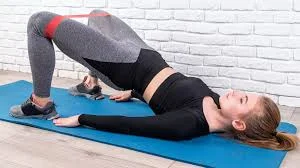
- The workout begins in the supine posture.
- Place a tiny, tight resistance band around the calves.
- The patient is resting on their back and elevating their hips.
- It is necessary to keep the band taut and touch the hip joint on the ground before raising it again.
- This is necessary to keep the spine straight and perform the action from the hip joint.
- Repeat ten times.
- Do this workout three times every day.
Seated hip abduction with resistance band
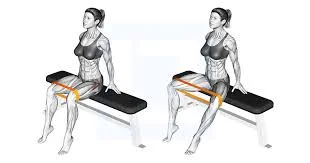
- The starting position is seated.
- The patient is sitting on the floor and wrapping the resistance band around his calves.
- Then, position the hands slightly behind the patient.
- Must be Keep your back straight and press your legs out to the sides to externally rotate your hip joint.
- Then, gently and with control, draw the legs back together.
- Repeat ten times.
- Do this workout three times every day.
Knee to Chest
- The beginning posture is supine.
- Lie on your back.
- Begin with the left or right knee.
- Use your hands to gently bring the bent knee towards your chest.
- Hold for ten seconds.
- Use the opposite leg to do the knee-to-chest motion again.
- Repeat this exercise 10 times.
Downward-Facing Dog

- Start this exercise by getting down on your hands and knees.
- Then, press into the hands until the hip joint lifts towards the ceiling.
- Lower your head.
- Bend at the knee joint to tilt the pelvis slightly forward.
- Then go to the body, using any modifications of the feel to the proper.
- Hold this up for one minute.
- Do this 3 times a day.
Pigeon Pose:
- Begin with all four limbs.
- Place the right knee joint near the right wrist, followed by the shin on the ground.
- Then, starting from the right ankle, go to the left wrist.
- Pointing the toes while maintaining the hip joint facing front, slide the left leg rearward.
- Then expand the spine.
- Gently move the hands forward.
- Hold this stance for 5–10 breaths.
- Then, return to the starting location.
- Switch the legs and repeat.
- Do this yoga three times every day.
Weighted deadlift
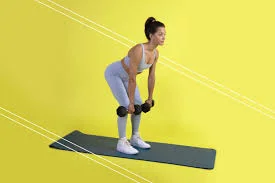
- Make sure your feet are parallel to the floor and hip-width apart as you stand.
- Carry dumbbells lightly if you are comfortable doing so.
- Maintain a long spine and forward-focused gaze.
- Avoid being tempted to bend your spine and “give in to the weight” by lowering your knees, tightening your glutes, and folding from the hips until your seat extends past your heels.
- Let the rise and descent be controlled by your glutes and stomach.
What precautions should I take when exercising?
- Start gently. These are preliminary exercises. Consult your doctor to determine whether more advanced workouts necessitate the assistance of a physical therapist. As your strength increases, you may be able to execute more sets of each exercise or add weights.
- Stop if you are in pain. It is normal to feel some pain at first, but you may not encounter distress. Constant activity will help relieve the ache over time.
- Warm up before performing glute workouts. Warm up your muscles by riding a stationary bike or walking for five to ten minutes.
- Follow the exercise regimen advised by your healthcare physician. He or she will recommend the finest workouts for your situation. He or she will also advise you on how many repetitions and how frequently you should execute the workouts.
Summary
Your glutes are a set of powerful muscles that aid in everything from standing to accelerating to lifting big things.
Glute workouts are about more than just having great buns (although they may assist in shaping and tightening your hips). A trained personal trainer can help you move through life more easily.
FAQs
What is the greatest workout for the glutes?
The top glute workouts include Bulgarian split squats and step-ups. Eat additional protein and do two non-consecutive workouts every week to strengthen your glutes. Glute exercise is crucial since it allows us to walk, run, leap, and climb stairs more easily.
What are the three most effective glute strengthening exercises?
Squats, lunges, deadlifts, donkey kicks, glute bridges, glute/ham rais, and hip thrusters are just a few examples of glute Maximus strengthening exercises. The gluteus medius and minimus are referred to as side glutes or lateral glutes because they are placed on the side of the pelvis rather than the gluteus maximus.
Do squats increase the size of the buttocks?
When you carefully activate and stress these muscles, you can cause hypertrophy. So, certainly, squats can help you create larger glutes.
Why is my bum shrinking after a workout?
Excessive cardio might tear down the muscle structure and reduce muscle mass. If you feel you can’t live without considerable cardio in your exercises, the stair climber is a wonderful gadget to utilise; it burns fat while remaining slim.
Why are my buttocks flat?
Conditions that induce flat buttocks:
This is frequently caused by sitting for an extended period of time, sleeping in the foetal position, or performing repetitive activities. A lack of activity might also lead to dormant buttock syndrome. This causes excessive pressure and strain on other regions of the body.
Referances
- Cpt, P. W. (2024, May 13). 7 Best glute exercises for a stronger butt. Verywell Fit. https://www.verywellfit.com/best-butt-exercises-1230773
- Klein, S. (1970, January 1). 7 Moves to Train Your Gluteus Maximus, aka the Largest Muscle In Your Body. https://www.onepeloton.com/blog/gluteus-maximus-exercises
- Clinic, C. (2025, April 29). How to exercise your glutes (and why they need your attention). Cleveland Clinic. https://health.clevelandclinic.org/glute-exercises
- Valand, B. (2022, September 26). Gluteus muscle exercises – Health Benefits, How to do? Samarpan Physiotherapy Clinic. https://samarpanphysioclinic.com/gluteus-muscle-exercises/