

Viparita Karani (Legs-Up-the-Wall)
What is Viparita Karani?
Viparita Karani is referred to as a form of Kaya yoga mudra in the traditional yoga scriptures. In contrast to basic yoga hand mudras, Kaya mudra combines breathing and concentration exercises with the entire body to create a mudra.
Viparita Karani mudra’s body alignment resembles that of other inverted yoga postures, such as Sirsasana (headstand) and Sarvangasana (shoulder stand). Viparita Karani Asana is another name for it that is frequently used. Yogis have noted a number of physical benefits of Viparita Karani, such as anti-aging, relief from constipation, increased appetite, improved circulation, and facial shine.
A supported restorative position that affects the entire back is Viparita Karani. Because of the wall support in this supine position, there is less strain on the core. In addition to being therapeutic, it serves as a foundation for more difficult postures, including Shoulderstand Seal Pose (Salamba Sarvangasana Yoga Mudrasana), Half Plow Pose (Ardha Halasana), and Plow Pose (Halasana). After back-bending poses, it can also be used as a cooling pose. Seniors and those with chronic illnesses can both benefit from this restorative pose.
Muscle Work During Viparita Karani:
- Lower Back Muscles
- Pelvic Muscles
- Quadriceps Muscle
Difference Between Viparita Karani and Sarvangasana:
Note that, unlike Sarvangasana, which is merely an inversion pose, Viparita Karani is a flow-reversing technique. Reversing the flow indicates “going back to the origin,” whereas inversion means “opposite to the flow.”
Viparita Karani adheres to the mudra mechanism. By reversing the fluid flow back to the head, it eliminates energy dissipation and, like other mudras, creates a loop of energy in the body.
How to Perform?
- Lie down on your back on your mat or a level surface. Place your hands beside your hips.
- Bend your legs from hip level and slowly elevate them until they are not perpendicular to the floor.
- To support it, place your hands beneath your lower back at waist level and grasp your waist from behind.
- Breathe in slowly, hold it, then raise your legs and lower your back farther up with the help of your hands.
- Raise your lower back and entire trunk by using your hands and elbows to support each other. A 45-degree angle should be maintained between your trunk and the floor.
- After the trunk is set, raise your legs straight so that they are 90 degrees off the ground.
- Your inverted bodyweight should be distributed on your shoulders in the final posture.
Benefits:
- Viparita Karani’s “legs up the wall” variant eases lower body stress and eases cramping in the legs and feet.
- opens the throat chakra, allowing you to express yourself more creatively and emotionally.
- Increases the secretions of digestive fluids for the digestive process. There may also be an increase in appetite.
- In obese people, a decrease in waist fat is the result of increased metabolism in body cells.
- Pooled cellular fluid that has accumulated in lower body regions enters the bloodstream when the head is turned upside down.
- It prevents atherosclerosis, a disorder in which lipids, cholesterol, and other chemicals build up in the walls of arteries, by restoring the vascular tone and flexibility.
- Beneficial for relieving a slight backache.
- Provides a mild stretch for the front torso, pelvis, legs, and back of the neck.
Therapeutic Applications:
- Viparita Karani effectively treats senile dementia and cerebral insufficiency by increasing blood flow to the brain.
- cures a certain kind of hernia, varicose veins, and hemorrhoids.
- The thyroid gland is stimulated by the pressure applied to the throat muscles in this mudra. It restores equilibrium to the hypoactive thyroid’s functioning.
Variations:
Legs up the Wall:
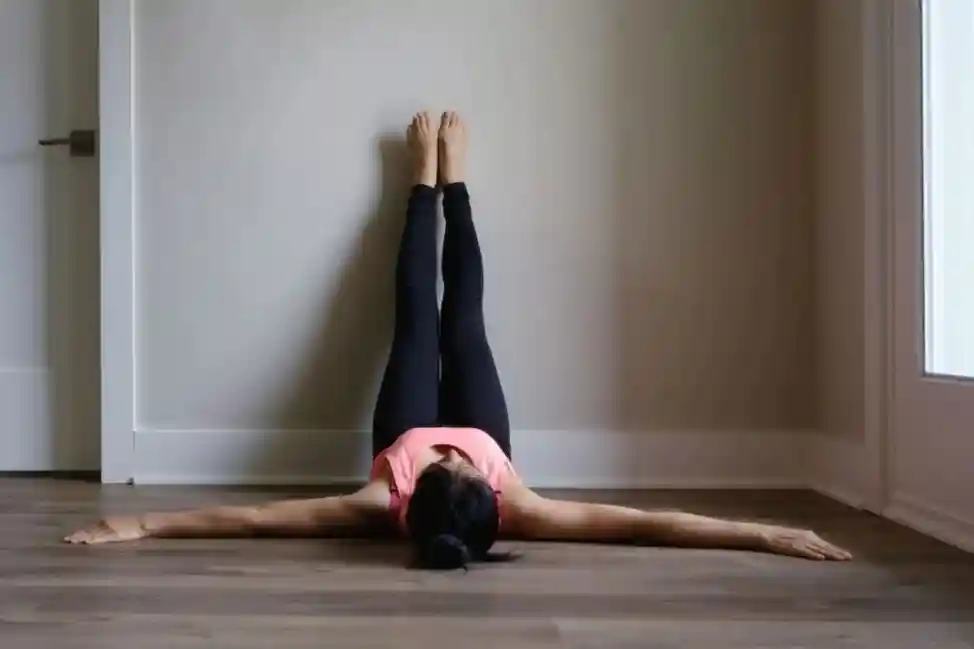
- You will need a folded blanket or a bolster to support your back when you are legs up the wall.
- Put your support a few inches from the wall to start. Place your legs straight out in front of you, sideways, between the wall and your support.
- Exhale and place your head and shoulders on the floor while turning your legs up onto the wall. Make sure your hips are directly beneath your lifted legs by adjusting your scrum forward and backward on the ground.
- Additionally, position your supine trunk on the floor so that your lower back is supported by the folded blanket or bolster.
- Make sure your rear legs are fully resting against the wall.
- You can position your hands on your abdomen or sideways.
Butterfly Variation:
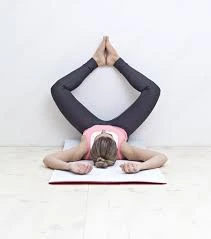
- Bending your knees and putting your foot soles together in the Butterfly Pose (Wall Baddha Konasana) is one way to do it.
- Gently press your hands into your thighs to increase the stretch’s depth. You can also stand wide-legged and let your feet spread out to the sides. Your inner thighs and hips will feel this stretch.
Precautions and Contraindications:
- Be sure that your bowels are empty before practicing Viparita Karani. Make sure to perform laghoo shankha prakshalana prior to experiencing constipation.
- If you have thyroid issues, high blood pressure, or heart disease, you should avoid this inversion pose.
- Keep a 6-hour interval between practicing Viparita Karani and eating if you do it for a long time.
- If you get a heavy head, carefully release the stance.
Conclusion:
Legs up. In the inversion yoga stance known as “Wall Pose,” you raise your legs against a wall. There are a number of variants that can help those who are new to yoga or have been doing it for a while. Enjoying your yoga practice is crucial, but if you want more advice, think about consulting a professional.
FAQs
What is the asana of Viparita Karani?
In Hatha yoga, the legs-up-the-wall posture, also known as Viparita Karani (Sanskrit: विपरीतकरणी; IAST: viparītakaraṇī), is a mudra as well as an asana. In contemporary yoga, it is a calming practice that is typically performed in a fully supported stance with the aid of a wall and occasionally a stack of blankets.
What are the side effects of Viparita Karani asana?
If you have a detached retina or glaucoma, you should stay away from Viparita Karani because the stance can put more strain on your eyes.
You have serious problems with your neck or back since the stance can make them worse.
Can Viparita Karani reduce belly fat?
Legs-Up-The-Wall Pose, or Viparita Karani, is a potent nervous system reset, even though it isn’t an active fat burner. Cortisol and other stress chemicals are strongly associated with abdominal obesity. This relaxing inversion promotes better circulation, lowers heart rate, and balances hormones.
Is Viparita Karani good for the heart?
Viparita Karani, or simple inverted position, involves using your own hands to support your legs and hips as you raise and lower them. This boosts blood circulation to the lower body and puts additional strain on the heart; therefore, people with heart issues should avoid it.
What are the risks of Viparita Karani?
Edema, or fluid accumulation in the tissues, has a significant effect on tissue health. This is particularly apparent in the legs and other lower body parts. A damaged circulatory system’s capacity to defy gravity and return blood to the heart is severely impaired.
What are common mistakes in Viparita Karani?
If your torso ends up on a diagonal line, with the “lake” spilling toward your neck and chest, the weight of the body will flood into the shoulders, neck, and head, making the yoga posture uncomfortable and not restful. In order for your “lake” to be horizontal, make sure your hips are fully supported.
Is Viparita Karani good for lower back pain?
Place your lower back on the floor and rest your legs out. You can stay as long as you want! Benefits include relieving lower back discomfort, reviving fatigued legs, and easing migraines.
References:
- Cronkleton, E. (2024b, September 25). How to do a Legs-up-the-Wall pose. Healthline. https://www.healthline.com/health/exercise-fitness/legs-up-the-wall#variations
- Viparita Karani Mudra (Asana): Steps, Benefits, Legs Up the Wall Pose – Fitsri Yoga. https://www.fitsri.com/yoga-mudras/viparita-karani
- Legs-Up-the-Wall Pose Yoga Pose (Viparita Karani). Tummee. https://www.tummee.com/yoga-poses/Viparita Karani.


