
Sarpasana (Snake Pose)
What is Sarpasana?
Sarpasana (Snake Pose) is a prone yoga posture that deeply stretches the spine, chest, and abdomen while strengthening the back muscles. It helps improve spinal flexibility, opens the chest, and stimulates abdominal organs, making it beneficial for posture improvement and overall back health.
Snake position has been incorporated into the flow yoga sequence due to its dynamic approach, which energizes the practitioner’s body. Sarpasana is regarded in traditional yoga as the foundation for more complex backbending poses.
Meaning:
Sarpa, which means “snake,” and Asana, which means “pose,” make up the Sanskrit name Sarpasana. As a result, the pose’s practitioners mimic the snake, with their outstretched hands behind them pulling up the serpent’s hood.
Snakes and serpents have historically been associated with fertility, creative life energy, and subtle energies. The coiled snake represents Kundalini in yoga. However, the reason this element is symbolically represented is that when celestial beings—those who are more intelligent and capable than humans—entered this plane, they assumed the shape of a snake.
In addition, the snakes peel off their skin. They stand for rebirth, fertility, and metamorphosis. By transforming the practitioner, snake position improves their physical, mental, and spiritual states and increases their fertility and vitality.
Muscle Work During Sarpasana:
- Arms and Shoulders Muscles
- Biceps and Triceps Muscles
- Chest Muscles
- Lower Back Muscles
- Core Muscles
- Pelvic Muscles
- Psoas Muscle
- Gluteus Muscle
Difference between Sarpasana and Bhujangasana:
- In Bhujangasana, the hands are positioned on either side of the torso, slightly away from the shoulder, to support the weight of the upper body. However, in sarpasana, the hands are interlaced behind the body to assist in raising the torso via the spine.
- Compared to Sarpasana, Bhujangasana has a more bent spine. From the front body, the floating ribs stay in contact with the floor in the latter stance, whilst the hips touch the floor in the former.
- In snake posture, the inner thigh, glutes, and buttocks are more profoundly engaged than in cobra pose, while in sarpasana, both feet are active and directed backward.
- In Sarpasana, the chin faces the front, and the chest is more open, while in Bhujangasana, the chin faces the ceiling and the chest is less open.
- The majority of Sarpasana’s advantages, such as spinal flexibility, core strengthening, and abdominal organ massage, are comparable to those of Bhujangasana. However, compared to bhujangasana, sarpasana activates the lower body more, strengthening the muscles in that area.
How to Perform?
- Start by resting on the mat on your stomach. Your legs are straight with the soles facing the ceiling, and your hands are by your hips. On both sides of your body, place your head down.
- Now place both hands behind you, slightly over your hips, and intertwine your fingers. Get ready for the lift here.
- Take a breath, hold it, and raise your torso so that the head comes up first, followed by the remainder of your body. To assist with this lifting, use your back and core muscles. Only your body will be raised; your legs should stay grounded.
- To stay in the final position, contract your buttocks, inner thighs, glutes, and shoulder blades. Here, breathe shallowly to maintain the position.
- Now, extend your interlaced arms as far back as you can to further elevate your body. Hold this position for 15 to 20 seconds.
- Breathe out from here, then slowly release the outstretched hands to return. Lying prone on the mat, release the tense muscles.
Benefits:
Adjusts the Round Shoulder:
Over time, the body slumped forward due to improper posture. The bodily muscles further pretend that this is their natural state, which, if addressed, can be quite dangerous. The prior spinal alignment that leads to a normal shoulder was restored through the practice of Sarpasana. Snake posture strengthens the shoulders, back, neck, and core muscles in young children.
Builds Resistance and Immunity:
Regular Sarpasana practice builds resilience and immunity. The thoracic opening facilitates better breathing, which in turn promotes the exchange of components and cells of the innate immune system between the blood compartment and lymphoid tissues.
Beneficial for Diabetes:
Unhealthy eating habits, such as consuming too many calories, lead to fat accumulation, which, when combined with inactivity, results in abnormal endocrine secretion. The pancreatic gland is stressed by sarpasana. The insulin hormones are then stimulated and secreted in the ideal quantities. Thus, conquer the diabetes disease.
Overcomes Digestive Disorders:
Sarpasana’s prone position applies pressure on the abdomen. This has a massaging effect on the digestive organs, protecting them and facilitating their smooth operation. This helps your body overcome digestion issues and absorb the majority of the nutrients from food.
Reproductive organs are strengthened:
Compared to bhujangasana, sarpasana involves more movement of the lower body. Because of this, parts of the body constantly strive to maintain the pose, and the muscles want oxygen, which is supplied by the blood flow to the affected area. This guarantees strengthening and toning both the male and female reproductive organs.
Therapeutic Benefits:
Corrects spinal alignment: By bending the spine backward, the snake stance exercise corrects poor posture. In this position, the front of the vertebrae is compressed, and the posterior portion of the spinal column pushes the disc away from the spinal nerves. This activates the neurological system and aids in realigning the vertebrae.
Encourages deep breathing: The Sarpasana’s backbending causes the thoracic region to expand. It encourages deeper, more relaxed breathing, which increases blood oxygenation and fortifies the heart muscles. Consequently, it lowers the risk of heart disease and enhances breathing.
Preparatory Pose:
- Adho Mukha Svanasana (Downward Facing Dog Pose)
- Bhujangasana (Cobra Pose)
- Dhanurasana (Bow Pose)
Beginner’s Advice:
Use a rope: Beginners may find it difficult to grip the hand behind their bodies because of tensed shoulders. Therefore, one can approach each other by sliding the fist to the centre or by grasping a rope or strap in a clinched fist. But with consistent practice, the shoulder’s stiffness progressively goes away.
Wall support: Lifting the body from the floor is more difficult when there is a lack of spinal flexibility and weak core muscles. Thus, novices can place their hands at their waist and tilt their head to either side while resting their torso against the wall. This will stretch the core and create flexibility in the spine.
Use a pillow or bolster: The pressure on the abdomen makes it difficult for practitioners to maintain the final pose. Breathing becomes painful in the snake stance. Their floating ribs are supported by a pillow or bolster. This will help with breathing during the practice and distribute the torso’s weight across all of the objects.
Variations:
Cobra Pose (Bhujangasana):
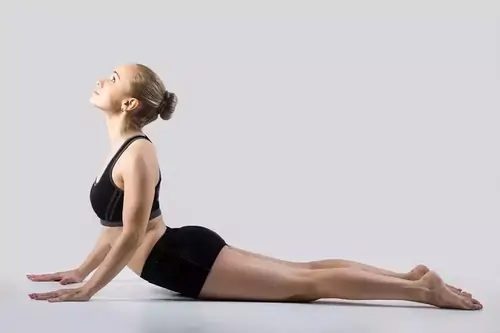
The same is true for Sarpasana, which is an advanced variant of Bhujangasana. Here, the practitioners raise their bodies with a palm slightly out of the shoulder, straight legs, a curved spine, and an eye towards the ceiling.
In the sarpasana, the legs are straight, the chest is raised, and the hands are intertwined and clasped together behind and above the hips. In Bhujangasana, on the other hand, the legs are straight backward, and the torso is supported over the hand positioned out of the shoulder. In the former, both the upper and lower bodies are actively involved; in the latter, only the upper body is.
Striking Cobra Pose (Sashank Bhujngasana):

Striking Cobra is a flow sequence pose that combines Bhujangasana (Cobra Pose) with Shashankasana (Hare Pose). This is a dynamic take on the snake position.
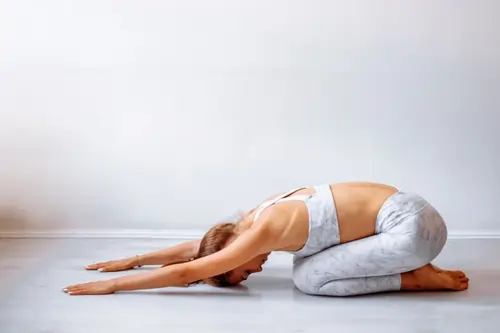
Beginning with the child pose, practitioners press their palms to enter the Bhujangasana. It must be carried out according to ability in a flow.
Precautions:
- In the snake posture, practitioners should avoid jerking their torso off the ground. It may result in neck and lower back injuries.
- The snake pose’s final position causes breathing difficulties for its practitioners. Avoid deep, prolonged breathing while in the final position since the diaphragm is under pressure.
- Practitioners should keep their fingers entwined when returning to the floor. Until or unless everything is finished to reach the floor, as a quick release when elevated could strain the back or force the head to strike the ground.
Contraindications:
Snake position should be avoided by practitioners with intestinal TB, peptic ulcers, and hernias. Additionally, ladies who are pregnant or who are still menstruating should avoid doing Sarpasana.
Avoid practicing if you have a shoulder, lower back, or spinal injury. Before performing this position, practitioners with heart issues or those who have recently had stomach surgery should speak with their doctors.
Conclusion:
By modifying the flexibility and position of the spine, the sarpasana is a powerful pose that enhances posture. It helps with digestive disorders and diabetes.
This pose may be performed by anyone with some spinal flexibility, and it can be increased with consistent practice. Sarpasana is therefore a simple method for improving one’s general health and well-being.
FAQs
What are the benefits of Sarpasana?
Aids with posture correction.
Opens the chest.
Makes the back muscles stronger.
Corrects rounded shoulders.
Enhances and deepens breathing.
Tones the uterus and ovaries.
Increases hunger.
Relieves constipation.
What is Snake Pose?
In yoga, Sarpasana is an advanced backbend stance that is similar to Bhujangasana or Cobra stance. This position’s name, which comes from the Sanskrit words sarpa (snake) and asana (stance), refers to its flowing, serpentine form.
Is the snake pose good for back pain?
Opens the shoulders and chest. keeps the shoulder blades stable. enhances posture. can aid in the relief of neck, upper back, and lower back discomfort.
What are the contraindications for Sarpasana?
Injury and Surgery: Students with an ulcer, hyperthyroidism, hernia, or any other medical condition that affects the abdominal organs should avoid this practice since it puts pressure on the entire abdomen.
Which body part is most benefited by Sarpasana?
A fundamental backbend that primes the body for more difficult postures like Bhujangasana, or the Cobra Pose, is Sarpasana, or Snake Pose. It is a great place to start before moving on to other versions because it opens the chest and strengthens the back.
What is the breathing technique for Sarpasana?
Take a breath and lift your head and torso off the ground. Put your hands in the direction of your feet. Breathe deeply and slowly while maintaining the posture. Exhale as you descend and let go of your hands.
What is the spiritual meaning of Sarpasana?
It is said that this stance, which resembles a snake, represents the awakening of this energy and its passage through the energy centres of the spine for spiritual development. Sarpasana is regarded as a heart-opening pose, much like many other backbend poses.
References:
- Snake Pose Yoga (Sarpasana): How to Do, Benefits, Precautions – Fitsri Yoga. https://www.fitsri.com/poses/snake-pose
- Snake Pose Yoga Pose (Sarpasana). Tummee. https://www.tummee.com/yoga-poses/Sarpasana.