
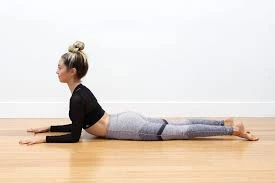
Salamba Bhujangasana (Sphinx Pose)
What is Salamba Bhujangasana?
Salamba Bhujangasana, commonly known as Sphinx Pose, is a gentle back-bending yoga posture performed while lying prone with the forearms resting on the floor. It helps promote spinal extension, improve posture, and gently strengthen the lower back while providing a mild stretch to the chest and abdomen.
Lying prone with your forearms next to your head is a simple way to enter the sphinx pose. After that, raise your head and chest while keeping your forearms on the ground.
Meaning:
The posture’s name comes from Sanskrit, where “salamba” means “supported,” “bhujanga” means “serpent/cobra,” and “asana” means “pose.”
The pose was fittingly dubbed salamba bhujangasana due to the body’s similarity to a cobra raising its hood.
Sphinx’s name is derived from its position. This is because it resembles the fabled Giza sphinx.
In addition to warming up the body for more difficult backbends, this pose is excellent for stretching the spine.
Muscle Work During Salamba Bhujangasana:
- Biceps and Triceps Muscles
- Chest Muscles
- Lower Back Muscles
How to Perform?
- With your forehead on the ground, lie down in the prone posture.
- Raise your head so that your chin touches the ground.
- Bring your hands forward so that your forearms are next to your head.
- Place the elbows beneath the shoulder.
- Take a breath and raise your chin, chest, and abdomen off the ground by pressing your forearms to the ground.
- To move the ears away from the shoulders, arch your neck.
- Continue inhaling while extending your legs outward.
- Hold the position for five to ten breaths while maintaining an upward gaze.
- Breathe out, lowering your forehead, chest, and abdomen to the ground.
- In savasana, extend your arms over your head and avoid.
- If you can, repeat, then avoid.
Benefits:
Strengthening of the spine:
Salamba bhujangasana is a pose that gently bends the back. It makes the spine more flexible. The spinal column becomes stronger as a result of the vertebrae being stretched.
Stretches the abdomen, chest, and shoulders:
The abdomen and chest are raised off the ground in this stance. Additionally, the shoulders are actively used. The muscles in these areas are strengthened and stretched.
Makes the hip joints stronger:
The psoas and hips are stretched in this stance. It makes the buttocks firmer and the hip joints more flexible.
Internal organs are stimulated:
Internal organs like the kidney, liver, and digestive system are massaged during the abdominal stretch. Breathing capacity is increased as the lungs are stimulated by the stretch in the chest.
Enhances blood flow:
A heart-opening pose, salamba bhujangasana, raises the heart and improves its function. This keeps the heart rate steady and improves blood flow to the cells.
Helps the endocrine system:
Salamba bhujangasana promotes the thyroid and adrenal glands. This keeps the endocrine system functioning and controls hormone output.
Therapeutic Applications:
- The salamba bhujangasana is a wonderful spinal stretch. As a result, it helps relieve any spinal discomfort, such as back or neck pain.
- People with mental health problems, such as tension, worry, etc., can gain control over their mental state by practicing the sphinx pose.
- Additionally, it has therapeutic benefits for sciatica pain relief.
- Salambha bhujangasana is beneficial for asthma sufferers as well.
- Additionally, this pose can be used to correct any spinal misalignment and improve posture.
Beginner’s Advice:
Keep your shoulders rolled away from your ears and your neck relaxed. Don’t try to achieve a deeper backbend by pushing your body; instead, remain gradual and soft. Continue to press down and activate your legs. This will assist in raising the pose’s chest.
Follow-Up Poses:
- Superman Pose (Viparita Shalabhasana)
- Cobra pose (Bhujangasana)
- Bridge Pose (Setu Bandha Sarvangasana)
Props and Modifications:
- Blocks: To improve the lower back’s bend, place your forearms on the blocks. While maintaining the stance, it improves the stretch.
- Bolster: While maintaining the last stance, place a bolster beneath your chest. It helps expand the chest and balance the upper body off the ground.
- Roll a blanket or towel: Place it beneath your pelvic area. The upper body and lower back will be more stretched thanks to this prop.
- Yoga belt: After tying the belt around your feet, execute the pose. In order to achieve salamba bhujangasana, it stretches the entire body while preserving the position and integrity of the legs.
Variations:
Sphinx pose with bent knees:
Stretch your legs and spine by striking the sphinx stance. Bend your knees and raise your lower legs so that your heels face the ceiling.
Sphinx pose with Eagle legs:
After performing salamba bhujangasana, bend your right leg at the knee. Tie your right foot around your left ankle and hook your left leg behind your right knee. The position of the legs is similar to the eagle stance position of the hands.
Sphinx pose with half frog pose legs:
Drag your right knee outside and place your right foot next to your left knee after performing salambha bhujangasana.
Cobra Pose (Bhujangasana):
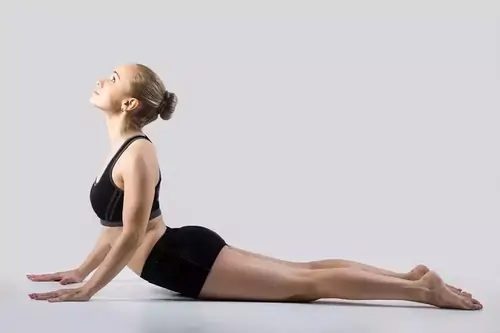
- With the body in the prone position supported by the hands rather than the forearms, this pose resembles a version of the sphinx pose.
- Hands move to the side of the chest from the prone position. Raise your head, chest, and abdomen off the ground while pressing your palms to the ground. Maintain the position with gentle elbows.
Precautions and Contraindications:
- If you have a spinal injury or back discomfort, avoid doing this position.
- If you have a broken wrist or ribs, avoid attempting this pose.
- Salamba bhujangasana is not appropriate during the recuperation phase following recent abdominal surgery.
- This position is not appropriate for pregnant ladies.
- When performing this pose, those with spondylitis or other neck conditions should avoid straining their necks.
FAQs
What is the Sphinx Pose?
The Sphinx Pose is a backbending yoga pose that is appropriate for learners. It expands the lower back, lungs, and chest, and is very soothing for the spine. The Cobra Pose is a beneficial variation for those with wrist conditions or carpal tunnel syndrome because it is performed on the forearms. The Sphinx Pose is called Salamba, which means “with support,” and Bhujanga, which means cobra. It is called the Sphinx Pose in English because it resembles the mythological Egyptian statues.
What are the benefits of Sphinx Pose?
The Sphinx posture, or Salamba Bhujangasana, is a gentle backbend that lengthens the front of the body. The abdomen, hip flexors, and chest region are all extended and stretched. The posture improves the spine’s strength, flexibility, and range of motion. It is also quite peaceful and soothing, which contributes to the system’s overall calming. It energises the body, soothes the nervous system, and lessens fatigue.
What are the contraindications of Sphinx Pose?
Women should avoid the Sphinx pose during pregnancy. The lower back may feel slightly compressed, but if you get a strong ache, twinge, or pinching sensation, relax and release your posture. If you have a recent or ongoing injury to your arms, shoulders, or back, you should avoid this posture.
How to do the Sphinx Pose?
To begin, lie on your stomach in the prone posture. Lift your chest slightly while keeping your forearms on the ground. The elbows should be beneath the shoulder. Retract the shoulders so they are not in contact with the neck. To feel a slight lift in your chest, let the shoulder blades slide down your back. Breathe deeply into your stomach. Take a few minutes to stay here. Bring your body down and lower your chest to exit the stance. Take a few minutes to relax in the crocodile pose, Makarasana.
Is the sphinx pose good for beginners?
Whether from deadlifting, sitting at a desk, or other fitness activities, this is the perfect exercise to counteract a rounded spinal position. It’s a great way to strengthen your back and engage your abdominal muscles.
References:
- Salamba Bhujangasana (Sphinx Pose): How to Do, Variations & Benefit – Fitsri Yoga. https://www.fitsri.com/poses/salamba-bhujangasana
- Singhdeo, A. (2024a, January 19). How to do the Sphinx Pose. https://www.shvasa.com/yoga-blog/how-to-do-sphinx-pose
- Sphinx Pose Yoga Pose (Salamba Bhujangasana). Tummee. https://www.tummee.com/yoga-poses/Salamba Bhujangasana.