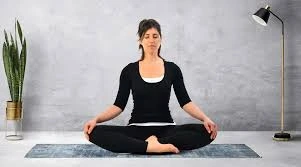

Table Top Pose (Bharmanasana)
What is Table Top Pose?
Table Top Pose (Bharmanasana) is a gentle yoga posture performed on the hands and knees, creating a stable, table-like alignment of the body. It helps improve spinal mobility, balance, and coordination while gently strengthening the core, shoulders, and hips. This pose is commonly used as a starting position for many yoga sequences and is especially beneficial for warming up the spine and relieving mild back stiffness.
For those who are new to yoga and are learning about their bodies, the position is quite helpful. It can be used as a warm-up before yoga because it improves the muscles in the wrists, arms, and shoulders. Additionally, when switching between poses in vinyasa, tables can be a soothing position. It will assist you in finding stability and balance, as well as raising your prana level.
Meaning:
The Sanskrit term for tabletop pose is Bharmanasana. Asana means “pose,” while Bharma means “table or board to hold something.” Bharmanasana is known as the tabletop posture because the back of the body is flat, resembling a table or board.
This pose stretches every muscle in your body and significantly strengthens your core. Finding your balance and learning to use your core muscles for more intermediate and advanced poses can be accomplished in this preparatory pose.
Muscle Work During Table Top Pose:
- Arms Muscles
- Shoulders Muscles
- Lower Back Muscles
- Biceps and Triceps Muscles
- Knees Muscle
How to Perform?
- Start by just kneeling or sitting in a Vajrasana pose.
- Put your hands on the ground, palms down. To prevent pressure on the wrist, spread your fingers and place your weight on the first knuckle.
- Raise your torso so that it is parallel to the floor. You should bend your knees to a 90-degree angle. Place your knees hip-width apart.
- Your hands should be shoulder-width apart, your arms should be straight, and your shoulders should be stacked over your wrists.
- To maintain a straight spine, contract and raise your core muscles.
- Imagine stretching your spine by bringing your tailbone to the back and keeping your head in line with your spine by slightly tucking your chin.
- After holding this attitude for a substantial amount of time, return to the kneeling position to exit it.
Benefits:
Makes your muscles stronger and more flexible:
The arms, shoulders, elbows, wrists, quadriceps, hamstrings, and neck muscles are all strengthened by the gentle stretch of the tabletop posture. Your body will be toned in addition to being stretched, which will improve your flexibility and stability.
Aid in achieving balance and awareness:
Before moving on to more challenging poses that need a great deal of concentration and balance, beginners must establish their equilibrium.
Practicing tabletop posture can increase body awareness, which will aid in effectively balancing the body on hands and knees. As you strive to achieve balance, your body and mind are in a condition of equilibrium.
Good for the back and spine:
People with back and spine problems, as well as those with stiffness and tension in these regions, can greatly benefit from practicing the Table Top position. Maintaining a straight back can help with spinal decompression, and a strong backbone will support the body as a whole. Additionally, any postural flaws will be fixed.
Helps with limb alignment:
If you’re a new student, you must learn to better understand your body and align your limbs. Therefore, practicing this pose with an instructor will help you get ready for other yoga poses that require balancing or inversions.
Beginner’s Advice:
- Make sure your wrists and shoulders are not bearing the weight of your upper body.
- Your shoulders should be exactly on top of your wrists when your arms are perpendicular to the ground.
- Put a cushion, rolled towel, blanket, or yoga mat on your knees if they are hurting.
- Avoid bending your head since it can strain your spine and give you a headache. Look at a focal point for a steady glance to maintain it in line.
Follow-Up Poses:
- Downward Facing Dog (Adho Mukha Svanasana)
- Cat/Cow Pose (Marjaryasana/Bitilasana)
- Plank Pose (Phalakasana)
- Child’s Pose (Balasana)
Variations:
Twisted Table Top Pose:
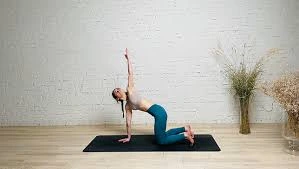
Bend your left elbow to a 90-degree angle, rotate your back slightly, and glance over your right elbow head while maintaining the tabletop stance. After five breaths of holding this stance, switch sides.
C-curve Table Top Pose:
You don’t need to bend your elbows like in the stance mentioned above. Make a C-curve with the right side of your body while maintaining the initial tabletop position. Look over your right shoulder at the same time, hold the pose for five breaths, and then exchange sides.
Balancing Table Top Pose:

When you believe you have acquired the necessary stability and balance, you should practise this position. Extend and maintain the straightness of your right leg while using your core. Stretch your left arm forward as a counterweight. After five deep breaths in this position, switch the arm and leg.
Go a step further and grasp the right foot with your left hand. This pose works well for backbends and chest openings.
Lateral Leg Lift Pose:

Take your right leg out to the side after you’ve found your balance. Using your thigh and hip muscles, raise the leg off the ground and hover it in the air for a little while while maintaining alignment with your hip. Before doing the leg lifts again with the other leg, take a brief pause.
Precautions and Contraindications:
- You should avoid doing the tabletop position until you have healed if you have an injury or have had surgery on your knees, shoulders, wrists, back, or elbows. Before beginning the posture, speak with your instructor or doctor.
- When doing the posture, people with arthritis should exercise extreme caution because the pressure on their joints could be uncomfortable.
- Because there is a significant risk of losing balance and falling, pregnant women should speak with their doctor or avoid performing this posture completely.
Conclusion:
Even if you have been practicing yoga for a while, it is crucial that you adhere to the guidelines and take safety measures. You mustn’t put too much pressure on yourself to achieve perfection quickly.
Even though this is a beginner’s position, anyone can do it since it is a restorative posture that is very beneficial for boosting prana energy circulation throughout your body and soothing your mind.
FAQs
What is the Table Top pose called?
Bharmanasana, also known as Table Top Pose, is a novice pose that helps balance the body while stretching all of its muscles equally. The arms, shoulders, wrists, hips, core, thighs, knees, and spine are all gently stretched to balance and release tension.
What are the benefits of the Table Top Pose?
It is a chance to develop trust (team building). It stimulates cognitive functions. aids in identifying any problems, difficulties, and/or presumptions. aids in determining the resources required to overcome any problems, obstacles, and/or presumptions.
What is the purpose of the Table Top pose?
Many yoga positions start with the Table Top Pose (Bharmanasana). The newbie can position their hands and legs in the proper measurements with the aid of this pose. Bharmanasana, also known as Table Top Pose, is a novice pose that helps balance the body while stretching all of its muscles equally.
When performing bharmanasana tabletop pose, it is important to ___________.?
Make a tabletop stance with your hands behind your shoulders, your knees beneath your hips, and your fingers wide, pressing towards the floor. Bring your hands and knees to the floor. For improved stability, extend your spine while maintaining alignment with your neck and core.
What muscles are used in the reverse table top pose?
In addition to using the power of the lower back, abdominal muscles, pelvic floor muscles, and quadriceps to aid in maintaining balance, Reverse Table Top Pose requires the strength of the shoulders and arms to raise the body. The ankle, knee, and hip joints are flexed to increase hip stability.
References:
- Table Top Pose (Bharmanasana) – How to Do, Benefits, Variations and More – Fitsri Yoga. https://www.fitsri.com/poses/table-top-pose
- Table Top Pose Yoga Pose (Bharmanasana). Tummee. https://www.tummee.com/yoga-poses/Bharmanasana.