9 Foam Rolling Exercises
Introduction:
Foam rolling exercises are a simple and effective self-myofascial release technique used to reduce muscle tightness, improve flexibility, and enhance recovery. By applying gentle pressure to specific muscle groups with a foam roller, these exercises help release muscle knots, increase blood circulation, and reduce soreness after workouts.
Increased blood flow and flexibility in muscles, joints, and fascia—the body’s connective tissue—may result from foam rolling.
Warming up the muscles in preparation for exercise, reducing tension, stiffness, and tightness, and encouraging flexibility and muscle recovery.
For those with slouching posture, joint problems, or trouble keeping good form when exercising, foam rolling could be an excellent option.
Discover nine foam rolling techniques to help release stress in your body by focusing on typical tight spots and knots in your muscles.
Muscle work during Foam Rolling Exercise:
The quads, hamstrings, calves, lower back, lats, shoulders, and IT band are just a few of the body regions where foam rolling may assist in releasing tension or trigger points.
How to Start Foam Rolling Exercise?
- Generally speaking, start by using these suggestions:
- As you become accustomed to foam rolling, gradually increase the pressure. If your muscles are tense, foam rolling may first hurt. Reduce the amount of body weight you apply to the roller to modify the pressure. Use your arms to support your body and remove some of your body weight from the roller when you’re rolling out your calf, for instance.
- Tender areas should be rolled slowly for 10 seconds at first, then for 30 to 60 seconds at a time.
- After foam rolling, stay hydrated to aid with your recuperation.
How to Choose a Foam Roller?
- Smooth Roller: The smooth, dense foam surface of smooth rollers is well-known. For those who are new to foam rolling, they work best. They are less harsh than a textured roller and provide a uniform texture. Additionally, this method is less costly.
- Textured Roller: Knobs and ridges are features of textured rollers. They are used to release tension and knots in the muscles.
- Foam-covered massage sticks: You can give your upper back or legs a thorough massage with foam-covered massage sticks.
- Foam massage balls: Targeted muscle groups can be massaged with foam balls. For instance, to release shoulder knots.
Benefits:
- Localised reduction of discomfort
- Decreased inflammation
- Enhanced flexibility (passive range of motion)
- Enhanced mobility
- More focused than stretching
- An increase in blood flow
- accelerates the healing process after intense activity
- It’s soothing
- Foam Rolling is empowering
Foam Rolling Exercises:
Quads Foam Rolling:

Roll out your quadriceps to increase blood flow and maintain muscle engagement if your desk job requires you to be sedentary most of the day.
Instructions:
- Place the foam roller beneath your quadriceps and begin in a forearm plank position.
- Roll down the roller carefully until it is just above your knees, bracing yourself with your upper body and core. After that, roll in the other direction until your hip flexors are reached.
- Spend 30 seconds doing this.
- Hold yourself there for a few breaths when you come across a sensitive area.
Hip Flexors Foam Rolling:
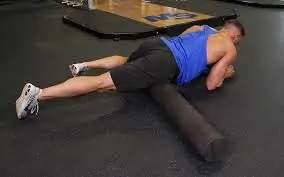
- Start by repositioning yourself in a forearm plank position while resting on the foam roller with your back to the floor. Make sure your right leg is comfortably bent to the side, and the foam roller is beneath your left hip flexor.
- To target the hip flexor, start softly rolling up and down and side to side on the foam roller while resting on your forearms. Pay special attention to trigger points.
- Spend 30 seconds doing this.
- On the right hip flexor, switch and repeat.
Calves Foam Rolling:
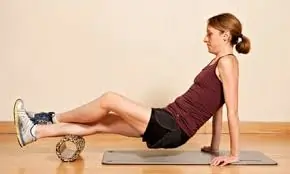
Foam rolling, in addition to calf stretches, is a useful technique for improving ankle range of motion and targeting trigger points and calf muscle knots.
Instructions:
- To begin, place the foam roller beneath your calves while sitting on the floor with your legs outstretched.
- Raise your body till the foam roller supports your weight. For additional pressure, cross your left leg over your right.
- Using your arms to guide your body forward and back, slowly roll your right calf back and forth on the foam roller.
- Finish for thirty seconds.
- Focus on your left calf while switching legs.
Hamstrings Foam Rolling:
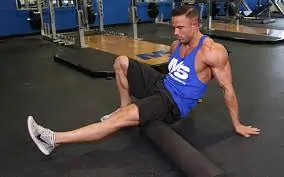
Strong muscles like the hamstrings are vulnerable to injury, stiffness, and tightness if they are not adequately warmed up before or after activity.
Instructions:
- Start by extending your legs while sitting on the floor. Place the foam roller beneath your hamstrings.
- Raise your body till the foam roller supports your weight. Roll slowly up and down between your glutes and the back of your knees.
- Roll for a minimum of 30 seconds while lingering on sensitive areas.
- This can also be accomplished by crossing your legs and concentrating on one hamstring at a time.
IT Band Foam Rolling:
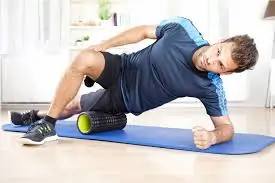
- To begin, place the foam roller on the side of your thigh or beneath your right IT band while resting on your right side. Place your weight on your right forearm. Your left leg should be bent at the knee with your foot comfortably in front of your right leg, while your right leg should be straight.
- Roll carefully along the foam roller on your right IT band between your knee and glute, stopping at any sore regions, while bracing your upper body and left leg.
- After 30 seconds of repetition, move to rolling your left IT band.
Upper Back Foam Rolling:

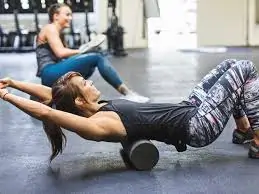
- To begin, place the foam roller beneath your upper back while resting on your back. You can cross your arms in front of your chest or keep them down by your sides.
- Lift yourself into a shallow bridge position while bracing your core.
- Pause at any tense areas as you slowly roll up and down between your lower neck and mid-back.
- For thirty seconds, repeat.
Lats Foam Rolling:
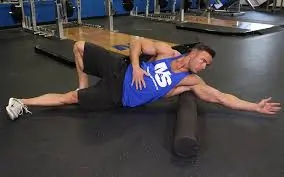
- To begin, place the foam roller beneath your right lat while resting on your back at a 45-degree angle. Bend your left leg into a comfortable posture while keeping your right leg straight.
- Roll slowly, paying attention to any sore spots, from your right armpit to your mid-back.
- For thirty seconds, repeat.
- To roll out your left leg, switch.
Shoulders Foam Rolling:
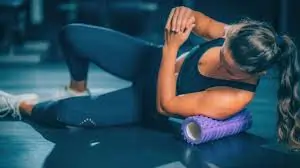
- To begin, place the foam roller beneath your right shoulder while resting on your side. Your left arm can be extended in front to direct movement while your lower body is securely resting on the ground.
- Over your deltoid muscle, softly roll up and down. Turn your trunk slightly if needed to hit a part of your upper back as well.
For thirty seconds, repeat. - Repeat on your left shoulder after switching sides.
Neck Foam Rolling:
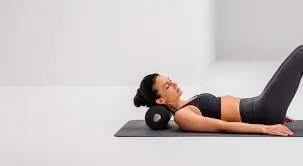
- To begin, lie on your back with your neck resting on the top of the foam roller where it attaches to your head.
Holding where you sense a tightness, slowly tilt your head to the right. - Breathe out and look to the left.
For thirty seconds, repeat.
Conclusion:
One form of self-massage that can help you release tension, soreness, and tightness in all of your body’s muscles is foam rolling.
While some workouts focus on the lower body, others may help increase your upper body’s flexibility and range of motion.
Before beginning foam rolling, think about consulting a physiotherapist or physician. They can assist you in creating a regimen that works for you.
FAQs
What are the negatives of foam rolling?
For most people, foam rolling is regarded as safe. However, foam rolling a region with an active injury—such as a bruise, strain, muscle rupture, or bone fracture—is best avoided. Additionally, foam rolling may cause temporary discomfort, particularly in extremely confined spaces.
Is it OK to foam roll every day?
Yes, foam rolling daily is generally acceptable. However, it’s best to see a physiotherapist or physician before engaging in daily foam rolling, particularly if you have a musculoskeletal disease or an injury. They can provide advice on the kinds and intensities of exercises as well as how frequently to foam roll.
Will foam rolling help piriformis syndrome?
Foam roller: To treat piriformis syndrome, some people use a tennis ball or foam roller. Your piriformis muscle’s trigger point can be found and released using a foam roller or ball.
Are foam rollers a good workout?
Overall, it was shown that foam rolling had relatively little and sometimes insignificant impacts on performance and recuperation; it may be useful in certain situations (e.g., to boost sprint performance and flexibility or to lessen muscle pain sensation).
Should I foam roll after a calf cramp?
Yes, foam rolling your calves can help you feel less sore, recover more quickly, and perform better in sports. Additionally, it works well for problems like patellar tendinitis, Achilles tendonitis, and shin splints.
References:
- Benefits of Foam Rolling: Pros and cons – 2025 – Momt/petersenpt.com/benefits-of-foam-rolling-pros-and-cons
- 9 Foam rolling moves that’ll remove every bit of stress in your body – 2025 – Yuen/www.healthline.com/health/fitness-exercise/foam-rolling-how-to#shoulders
- What are the benefits of foam rolling? – 2019 – Chertoff/www.healthline.com/health/foam-roller-benefits