

Best Home Exercises for Parkinson’s Disease
Introduction:
Parkinson’s disease is a neurological condition that causes a variety of movement-related symptoms, including sluggish movement, arm or limb stiffness, tremors at rest, and difficulties walking or balancing. Although these symptoms usually develop gradually, they might ultimately result in severe impairment and loss of autonomy.
Parkinson’s disease has no known treatment; engaging in a Parkinson’s exercise program can help you manage your symptoms and even increase your level of independence.
Benefits:
People with Parkinson’s disease benefit greatly from exercise, probably as a result of two distinct brain changes:
Dopamine release improves mood, pain perception, and mobility.
Modifications to the cortical striatum: This brain region regulates voluntary movements.
These modifications may result in advantages like:
- Better equilibrium
- Decreased chance of falling
- Improved walking quality
- Slower deterioration in life quality
- Improved mental performance
- Reduced disturbances to sleep
How to Exercise with Parkinson’s Disease:
Exercise with Parkinson’s disease requires regular, safe movement in a variety of ways, regardless of your level of experience. The following should be part of your routine:
- Aerobic exercises
- Resistance or strength training
- Exercises for balance, agility, and multitasking
- Extending
Aim for two to three sessions of different forms of exercise per week in addition to at least three aerobic sessions.
The Parkinson’s Foundation suggests engaging in moderate-to-intense physical activity for 150 minutes per week:
- No matter the weather, purchase an exercise bike, elliptical, or treadmill for your home.
- For a variety of strength training routines, purchase light hand weights.
Exercise:
Chair Squat:
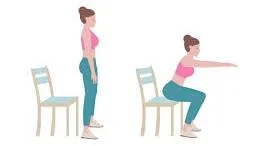
The quadriceps muscles are tested in this at-home strengthening exercise, which can be made more difficult by utilising a shorter chair.
- Place a chair behind you and extend your arms in front of you.
- Reposition your buttocks until you can tap the chair.
- Repeat three sets of eight to twelve repetitions while standing back up.
Push-ups:
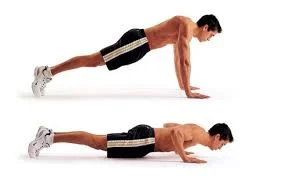
Push-up steps:
- Stand with your hands and toes on the floor, placing your hands slightly outside your shoulders.
- As you gradually lower your chest to the floor, bend your elbows.
- Push back up to the starting position whenever you are almost touching the ground. Perform eight to twelve pushups in three sets.
Brisk Walking or Jogging:

- Start running or walking at a pace that raises your heart rate but still lets you converse.
- Swing your arms as you go, and concentrate on taking bigger strides. For those with Parkinson’s disease, listening to a metronome app may also assist improve their stride.4 Rest when you’re tired. At least three times a week, try to gradually extend your running or walking sessions to 30 minutes.
Bridging:

- Lie on your back with your knees bent and feet on the ground.
- Lift your butt into the air and contract your stomach muscles.
- Before lowering it one more time, hold it there for ten seconds. Try doing eight to twelve repetitions in two or three sets.
Jogging in Place:
- Start jogging in place at a difficult but moderate pace while facing a solid surface. If necessary, lightly touch the surface to prevent falling.
- Step or jog to the beat of music or a metronome. Stop and relax when you’re exhausted.
- Complete three workouts per week of up to 30 minutes of jogging.
Dancing:
- Begin by steadily but carefully executing a basic three- to four-step dancing sequence. To assist in strengthening your vocal system at the same time, try singing or counting aloud to the beat.
- Keep switching up the song’s tempo and step patterns as you dance for up to 30 minutes at a time. At least three times a week, do this.
Clam Shells:

- Lie down in bed on your one side with your legs stacked on top of one another and your knees bent.
- Keeping your feet in contact with one another, raise your top knee without rolling back.
- Raise your knee as high as you can, then lower it back to the other leg. Try doing 12 repetitions in two or three sets.
Heel Raises:
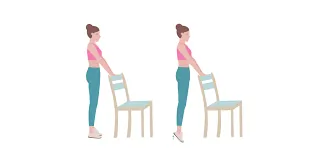
- Hold onto a counter or a walker while standing with your feet shoulder-width apart.
- Without leaning forward, lift both heels off the ground and roll up through your first and second toes.
- Return your heels to the floor after you’ve reached your tallest point.
- Try to perform two to three sets of eight to twelve heel lifts at a time.
Trunk Twist:
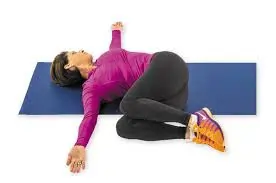
- Bend your knees and place your feet on the floor while lying on your back.
- Gently nod your chin while extending both arms to your sides.
- Let your legs drop to the opposite side as you turn your head to one side.
- Hold the stretch for 30 to 60 seconds once you feel it. On each side, repeat this two or three times.
Tips and Considerations:
If you have Parkinson’s disease, maintaining a regular exercise schedule can be difficult. To stay motivated and safe, heed these suggestions:
Set up the space: Take out any potential trip hazards, make sure the lighting is sufficient, and make sure you have a solid object to grip in case you lose your equilibrium.
Make a schedule for your workouts: To assist in establishing a consistent pattern, try to work out at the same time every day. For added accountability, post your schedule in a conspicuous location.
Choose a friend or family member to work out with: Having a workout partner can help you stay accountable and avoid missing your daily routine.
Speak with a physical or occupational therapist: Physical and occupational therapists can become highly skilled in treating Parkinson’s disease (PD). This includes training individuals, in particular, in at-home exercise regimens tailored to their functioning level, PD symptoms, comorbidities, and safety concerns.
FAQs
Which Parkinson’s exercises improve balance?
Your balance can be enhanced with exercises that target your legs and trunk. Yoga and tai chi are also excellent for stability. If you’re concerned about your risk of falling, consult a physical therapist.
How often should you exercise with Parkinson’s?
Three times a week, the Parkinson’s Foundation recommends at least 30 minutes of moderate-to-intense cardiovascular exercise. Additionally, they advise doing balance, strength, and stretching exercises two to three times a week. Every week, try to get in 150 minutes of exercise.
What exercises should you avoid with Parkinson’s?
Parkinson’s patients are not prohibited from performing any particular exercises, but they should stay away from activities that put them at danger of falling. The most important thing to think about when choosing exercises is safety.
What are the best exercises for Parkinson’s patients at home?
Parkinson’s patients should engage in aerobic, strength, and balance exercises for 150 minutes a week. Dopamine, which is released during exercise, helps improve mood and mobility in Parkinson’s patients. To stay active with Parkinson’s, try at-home workouts like chair squats, push-ups, and dancing.
Can exercise reduce Parkinson’s disease?
High-intensity exercise may reduce the disease’s course, according to studies. While everyone benefits from exercise, those who have Parkinson’s disease may find it especially helpful. Exercise may help delay the condition’s growth, according to recent studies.
References:
- Home Exercises for Parkinson’s Disease – Tim Petrie – 2026/www.verywellhealth.com/exercises-for-parkinsons-disease-5217557
- The best exercises for Parkinson’s disease (and why physical activity is important) – 2025 – HealthPartners/www.healthpartners.com/blog/the-best-exercises-for-parkinsons-disease-and-why-physical-activity-is-important/
- Staying active at home with Parkinson’s: your toolkit/www.parkinsons.org.uk/information/treatments/physical-activity-and-exercise/toolkit


