
Poor Posture Symptoms and How Physiotherapy Can Help
Introduction
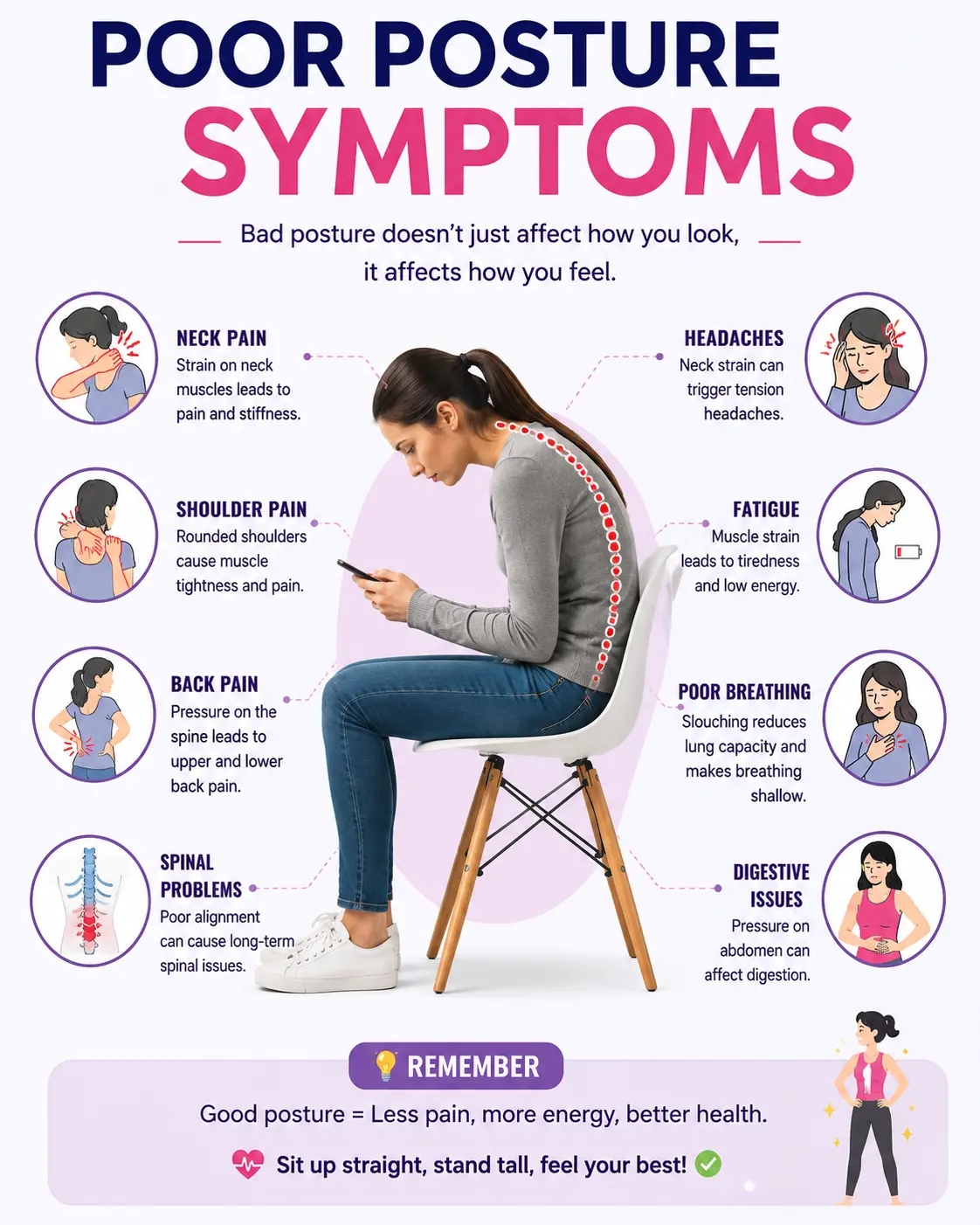
Poor posture has become increasingly common due to long hours of sitting, excessive smartphone use, computer work, and a lack of regular physical activity. While slouching or hunching over may seem harmless, maintaining poor posture over time can place excessive stress on the muscles, joints, ligaments, and spine. This added strain often leads to symptoms such as neck pain, shoulder stiffness, upper and lower back pain, headaches, fatigue, reduced flexibility, and even difficulty breathing.
Good posture helps keep your body properly aligned, allowing muscles and joints to work efficiently with less effort. In contrast, poor posture forces certain muscles to work harder, creating imbalances that can result in discomfort, reduced mobility, and long-term musculoskeletal problems. If left uncorrected, poor posture may contribute to chronic pain, spinal changes, and a lower quality of life.
The good news is that posture can be improved with awareness, ergonomic adjustments, regular stretching, strengthening exercises, and physiotherapy. Simple daily habits—such as sitting with proper back support, taking frequent movement breaks, and performing posture-correcting exercises—can significantly reduce pain and improve overall function.
In this article, we’ll explore the most common symptoms of poor posture, why they occur, and practical ways to correct them. Recognizing these warning signs early can help you protect your spine, improve your comfort, and maintain better posture for a healthier, more active lifestyle.
Poor ergonomics at work, weak core muscles, extended periods of sitting or standing in the incorrect position, and even stress can all contribute to poor posture. Poor posture can eventually lead to muscle imbalances, stiffness, and pain, particularly in the neck, shoulders, and back. Along with your mood and energy levels, it may also have an impact on your digestive and respiratory systems. Even chronic ailments like arthritis and spinal abnormalities may be worsened by it. For this reason, keeping proper posture is essential to your general health and well-being.
8 Common Signs of Bad Posture
Rounded shoulders
Because they show that the upper back is curved and the shoulders are bent forward, rounded shoulders are a sign of poor posture. This position strains the muscles in the neck, shoulders, and upper back excessively, making them tense and perhaps causing pain and discomfort. Furthermore, chest tightness caused by rounded shoulders may restrict lung capacity and impair breathing. Rounded shoulder correction entails:
Strengthening the muscles in the upper back.
Extending the muscles in the chest.
Keeping good posture while going about daily tasks.
Because it means putting the head in front of the shoulders rather than in a balanced position directly above them, forward head posture is a sign of bad posture. This kind of posture can lead to stiffness, migraines, and neck pain by putting extra strain on the neck’s muscles and joints. Correcting forward head position entails:
Strengthening the muscles of the neck.
Extending the muscles in the upper back and chest.
Being conscious of keeping the head and neck in the right alignment while going about daily tasks.
Hunchback
It describes a “hunched” appearance caused by the upper back’s excessive rounding. Weak upper back muscles or extended durations of sitting or standing without adequate alignment can cause this posture. Breathing problems might result from a hunched-back position that hurts the muscles in the neck and upper back.
Slouching
This posture can be caused by weak back and abdominal muscles, extended sitting, or inadequate workstation ergonomics. Slouching puts more strain on the spinal discs, which can cause pain and discomfort in the shoulders, neck, and back. Additionally, it may impair digestion and restrict lung capacity.
Poor posture, which includes an inward curvature of the lower back and an excessive forward tilt of the pelvis, is sometimes indicated by an anterior pelvic tilt. This postural problem can be caused by several things, such as weak hip flexors and lower back muscles, extended sitting, or incorrect standing posture. An anterior pelvic tilt can limit hip mobility and cause lower back and hip pain and discomfort.
Recurring headaches
Recurrent headaches may be linked to poor posture. Tension headaches can result from bad posture, especially forward head posture, which strains the neck joints and muscles. Additionally, poor posture can impact blood flow to the brain and respiratory patterns, which may worsen migraines.
Muscle fatigue
Because poor posture puts excessive strain on muscles, it might eventually result in weariness. However, because weakened muscles are unable to sustain the body’s weight and maintain normal alignment, muscle exhaustion can also lead to poor posture. Therefore, by encouraging greater muscle endurance and minimizing the formation of poor posture habits, addressing muscle exhaustion through regular exercise, stretching, and ergonomic changes can improve posture.
Back & neck pain
Slouching or hunching are examples of poor posture that can cause strain in the muscles of the neck and back as well as disturb the natural alignment of the spine. Pain, stiffness, and soreness may result from this.
How to Correct Posture?
Stretch regularly
By increasing the strength and flexibility of the muscles involved in maintaining optimal alignment, regular stretching can help repair bad posture. While weak muscles find it difficult to maintain ideal posture, tight muscles can cause problems with body placement. While certain strengthening exercises can encourage improved posture, stretching helps ease tense and tight muscles.
Optimize your workstation
For those with desk employment, improving your workspace is a great approach to fix poor posture. This may involve placing your computer monitor at the proper height, modifying the height of your desk and chair, and utilizing ergonomic equipment like a supportive chair cushion or an adjustable keyboard tray. These adjustments can assist in maintaining a good sitting position and lessen pressure on the neck, back, and shoulders.
Wear supportive footwear
By distributing body weight uniformly across the feet, well-cushioned shoes with sufficient arch support lessen the pressure on the lower limb joints. This might lessen the chance of acquiring or aggravating bad posture habits by enhancing alignment and balance.
Maintain proper workplace posture.
Correcting bad posture at work requires maintaining good posture. Start by positioning your computer monitor at eye level, keeping your feet flat on the floor, and matching the height of your desk and chair to your body. Keep your arms close to your body, your shoulders relaxed, and your back straight. When sitting at your desk, take regular breaks to stand, stretch, and avoid slouching or hunching over. Make proper posture a priority.
Switch sitting positions often.
Long durations of sitting can lead to stiffness and muscle exhaustion, which can result in poor posture. To spread pressure across many muscles and lessen tension on any one place, alternate between sitting forward, leaning back slightly, and sitting erect.
What are the 5 types of postures?
Postures are divided into two basic types. Static ( holding a position without movement); dynamic ( in motion ) . When people talk about the 5 different “types” of posture, they’re usually talking about the five common spinal alignments. One healthy ideal and four common postural dysfunctions.
There are 5 common types of posture:
Neutral (Healthy) Posture: The optimal vertical alignment of the head, shoulders, hips,s and ankles, which is the ideal spinal alignment. Your ears sit right over your shoulders, rs and your spine has the natural, healthy curves it was meant to have.
Kyphosis: Also called a hunchback, it is characterized by excessive rounding of the upper back. A hunchback is characterized by a hunched back and rounded shoulders.
Lordosis: This is an exaggerated inward curve in the lower back that pushes the pelvis forward and causes the buttocks and abdomen to stick out. It is also called “swayback” or hyperlordosis.
Flat Back: This is when your lower and middle spine loses its natural curvature, and your back looks completely flat. It usually makes the man lean a little forward to keep his equilibrium.
Forward Head Posture: A modern,n widespread problem also known as “tech neck,” where the neck is leaning forward, and the head is in front of the shoulders instead of directly over them.
What are signs of bad posture?
Symptoms of poor posture can range from obvious physical misalignments—such as rounded shoulders, a potbelly, and forward head posture—to chronic issues like tension headaches, muscle fatigue, and localized back or neck pain. It also constricts the body severely, causing lung capacity to drop, digestive strain,n and shooting nerve pain.
The most common signs and physical effects of postural dysfunction can be found in a few distinct categories:
Spinal & Joint Misalignments: The classic structural signs include a rounded upper back (kyphosis), rounded shoulders, forward head tilt (often called “text neck”), and exaggerated lower back arch (anterior pelvic tilt). You may also have uneven shoulders or hips.
Pain & Stiffness: Poor posture places uneven, excessive stress on your joints and discs. Symptoms include chronic neck, shoulder, and lower back pain, frequent tension headaches, and muscle fatigue from the constant compensation of trying to stay balanced.
Nerve pinching. Sitting slumped for hours at a time can pinch nerves in your neck or lower back. This can lead to radiating pain, numbness, tingling sensations in the arms or legs, and weakness in your extremities.
Breathing & Digestion Difficulties: Hunched positions create a compressed ribcage and limit diaphragm movement. This can decrease lung capacity by as much as 30% and result in shortness of breath. It also pushes on the organs in the abdomen, which can lead to problems like heartburn, acid reflux, and constipation.
You might notice that your shoes are wearing unevenly or your clothes are hanging asymmetrically.
How long does physiotherapy take to work?
Physiotherapy generally takes 2 to 6 weeks to provide significant relief for minor muscle or soft tissue injuries, and 6 to 12 weeks for moderate or chronic conditions. Complex cases or post-surgical rehab usually take from 3 to 6 months.
The time frame is determined by the severity of the injury, your age, and most importantly, your consistency with the prescribed home exercises.
Typical healing stages may include:
Initial 1-2 Weeks (Pain & Protection): Most patients will experience decreased pain and improved basic mobility within the first few sessions as inflammation is controlled.
Weeks 2-6 (Mobility & Flexibility): Typically, the goal shifts towards regaining your full range of motion and baseline strength.
Weeks 6-12 (Strength & Conditioning): Workouts get harder to help you rebuild endurance and stability.
What is the best treatment for bad posture?
The best way to improve posture is by incorporating targeted strength training, daily stretching, and ergonomic changes to your work environment. Simply using passive braces is not the real answer; strengthen your core, back, and shoulder muscles to give your spine natural support.
1. Specific Exercises and Stretches
To correct problems such as rounded shoulders and forward head posture, specialists recommend a daily routine focused on strengthening the upper back and relaxing tight chest muscles:
Scapula Squeezes: Squeeze your shoulder blades together, hold for 5 seconds, and repeat 10 times to engage the rhomboids.
Doorway Stretches: Stand in a doorway and place forearms on the frame. Lean forward gently to stretch tightened pectoral muscles.
This corrects the pelvic tilt and strengthens the posterior chain.
2. Ergonomic Modifications to Workstations
If you’re a desk person, the environment is everything. Arrange your desk to support spinal neutrality:
Monitor Height: Position your computer screen so that the top third of your screen is at or slightly below eye level.
Keyboard Position: Position your keyboard and mouse so that your elbows are at a comfortable 90 degrees and close to your body.
Use Stands & Supports: Use an adjustable Branch Laptop Stand or a supportive lumbar cushion to help maintain the natural curve of your lower back.
3. Posture braces and smart wearables
Supportive braces: You may gently realign your shoulders with customizable devices like the Posture Corrector on Amazon.
Tech Wearables: Take into account biofeedback devices such as the Upright Go, which allow you to self-correct in real time by gently vibrating when you slouch.
FAQs
Can physiotherapy cure bad posture?
You will have pain from poor posture, and without physical therapy, it will be challenging to restore your ideal posture. Reducing pain is only one of the many advantages of incorporating postural alignment into your treatment. Strengthening weaker muscles.
Should I go to a physiotherapist for posture?
You can enhance your posture and lower your chance of experiencing pain and other problems related to bad posture by consulting a physiotherapist. You can create lifelong healthy habits and keep proper posture with their help.
Can physio realign the spine?
Another essential component of spine-focused physical therapy is postural instruction. The way we sit, stand, or move during the day often causes spinal alignment problems. By teaching you how to keep your spine in alignment when working, sleeping, and exercising, a physical therapist can assist you in improving your body mechanics.
Can I go to physical therapy to fix my posture?
The goal of your therapist’s customized treatment plan is to address any uncomfortable ailments or postural issues you may have.
What kind of doctor do you see for bad posture?
By evaluating your lifestyle and the factors that have contributed to your need for posture correction, a chiropractor can assist you in correcting poor posture. After that, a comprehensive assessment will be conducted to determine the root cause of your posture problems and assist in developing a treatment strategy.
Can I correct years of bad posture?
Yes, you absolutely can correct bad posture in years. Structural bone changes are irreversible, but most bad posture is caused by muscle imbalances, which can be corrected with consistent stretching, targeted strengthening, and conscious ergonomic adjustments to your daily routine.
There is a specific structured routine to lengthen tight muscles (chest and hip flexors) and strengthen weak ones core, mid-back, glutes). The best way to achieve permanent correction is to
Open Up Your Muscles: Doorway stretches (chest openers) and cervical chin tucks to fix forward-head rounded-shoulder slouching.
Strengthening Postural Muscles: Seated rows, scapular squeezes (pinching shoulder blades together), planks to stabilize your core and lower back.
Ergonomic Setup: Place the lumbar roll on your office chair to support the natural curve of your lower back. Raise your monitor to eye level so you’re not looking down.
References
- Hazelwood, C. (2025, September 2). 10 Bad Posture Symptoms and How to Fix Them | Improve your posture today. dukefamilywellness. https://www.dukefamilywellness.com/post/10-bad-posture-symptoms-and-how-to-fix-them-improve-your-posture-today
- Kyphosis. (2026, April 6). Cleveland Clinic. https://my.clevelandclinic.org/health/diseases/17671-kyphosis
- Lg-Content, & Lg-Content. (2021, August 31). The Painful Side Effects of Poor Posture. Texas Spine and Sports Therapy Center. https://texasspineandsportstherapy.com/the-painful-side-effects-of-poor-posture/
- MyChiroPractice. (2025, August 29). 9 Signs of poor posture: How to correct them. DeCarlo Chiropractic. https://decarlochiropractic.com/signs-of-poor-posture/
- National Spine Health Foundation. (2026, July 12). Poor Posture & Its Effects on the Body. Spine Health Foundation. https://spinehealth.org/poor-posture-and-its-effects-on-the-body/