
Balance Exercise
Introduction
The capacity of an individual to regulate their centre of gravity within the bounds of their Base of Support (BOS) is known as balance. The complex bodily function known as body balance control involves the cerebellum processing sensory inputs from the vestibular, visual, and proprioceptive systems to regulate posture and movement.
Cognitive decline, age, neurovascular issues, weak muscles, and restricted range of motion can all hurt one’s ability to control one’s balance both dynamically and statically. This can make it more likely that one will fall and make it more difficult to do activities of daily living (ADLs).
Strength, cardio, flexibility, and balance exercises combined with multicomponent training enhance general health and physical activity.
Indications
- Prevent accidents or falls.
- Enhance older people’s standing balance, strength, posture, and locomotor function.
- Enhances a person’s post-stroke mobility, balance while sitting and standing, and dynamic trunk control.
- Enhance self-efficacy in balance control to boost walking speed, decrease fear of falling, enhance physical function, and improve fall-related self-efficacy.
- Boost the standard of living.
For Whom
- Senior citizens
- Neuromuscular disorders (stroke, Parkinson’s, multiple sclerosis)
- Amputees with Dementia and Cancer Rehabilitation
- Those who are fat are so because the body does not always carry or distribute weight evenly.
- Back discomfort (one of the best strategies to prevent back pain and improve your core is to do balancing training).
How Balance Exercises Work?
Your legs, lower back, and core muscles are worked with balancing exercises. Strength training routines for the lower body can also help you become more balanced.
Exercises involving balancing can occasionally be difficult, but they will become easier with regular effort. Increase the amount of repetitions gradually as the workouts get easier. When you’re first starting, you might ask someone to help or monitor you.
You can change the exercises to suit your needs or to make them harder or easier. For the second side to be easier, start with your nondominant side. If you want your body to be balanced between both sides, you can exercise your nondominant side twice. Once the exercises become second nature to you, try performing them with one or both eyes closed.
Clinical balance tests:
- 4 Stage Balance Test
- Berg Balance Scale
- Falls risk assessment tool
- Timed Up and Go Test
- The Balance Outcome Measure for Elder Rehabilitation
- Functional Reach
- Short Physical Performance Battery (SPPB)
- Performance-Oriented Mobility Assessment
- Balance Evaluation Systems Test
Examples of Balance Exercise
1. Sideways walking

- Place your feet together and bend your knees slightly.
- Move one foot to the side first and take slow, deliberate steps sideways.
- Join it with the other. When you step, try not to sink your hips. Take ten steps in each direction or move from one half of the room to the other.
2. Simple grapevine

To do this, cross one foot over the other and walk sideways.
- To begin, cross your right foot over your left foot.
- .Join it with your left foot.
- Try five sideways cross-steps. If you need support, press your fingers up against a wall. You have to practise your balance more when the step is smaller.
3. Heel-to-toe walk

- Position your right heel on the floor just in front of your left toe while standing erect.
- Next, repeat with your left heel. It is important to always look forward. If you need support, press your fingers up against a wall.
- Try to complete at least five steps. Keep moving away from the wall as you go.
4. One-leg stand

- To begin, place your arms out in front of you and touch the wall with your fingertips.
- Raise your left leg while maintaining a small bend in the other leg and level hips. Replant your foot gently on the ground.
- Repeat three times on each side, holding the lift for five to ten seconds.
5. Step-up

- For support, use a step, ideally next to a wall or with a railing.
- Elevate your right leg.
- Join it by raising your left leg.
- Resuming your starting posture, step down once more.
- Stepping up and down gradually and deliberately is the key to improving balance. Take up to five steps with each leg.
6. Flamingo stand

- Keep your right leg up and stand on your left leg.
- Stretch your right leg forward, using a chair or wall for support.
- To maintain proper posture, align your head, neck, and spine.
- Reach for your right foot with your extended hand to make it more challenging.
- Hold for a maximum of 15 seconds.
- Do the other side after that.
7. Rock the boat
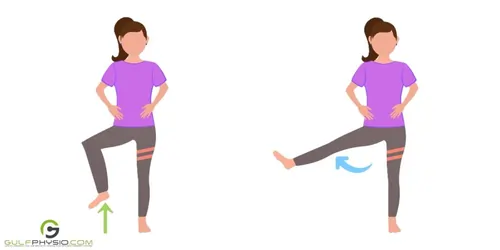
- Your feet should be hip-width apart.
- Put your weight evenly and firmly on both feet.
- Elevate your right foot while shifting your weight to your left.
- For a maximum of 30 seconds, hold.
- Repeat with your left foot, lowering it slowly to the ground.
- Repeat 5–10 times on each side.
8. Tree Pose
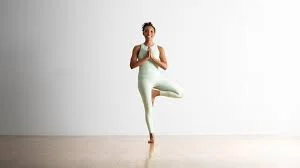
Vrikshasana (Tree Pose) steps:
- Begin in Tadasana, also known as Mountain Pose, by standing erect, keeping your arms by your sides and your feet hip-width apart. Breathe deeply a few times to help you focus yourself.
- Move Your Weight: Elevate your left foot off the ground after shifting your weight to your right leg.
- Put the foot on your inside calf or thigh: Try not to put your foot on your knee. Lower your foot or simply touch the ground for support if you have trouble balancing.
- Find Your Equilibrium: Hold your hands in front of your chest in the Namaste prayer position or extend them upward toward the sky once you are secure.
- Breathe and focus: To stay balanced, keep your eyes fixed on a point in front of you. Take deep breaths and maintain an engaged core.
- From 30 seconds to 1 minute, hold: Continue to hold the position while maintaining a balanced and steady stance.
- Release and Switch Sides: Gently let go of one hand and drop your foot to get out of the pose. Do the same with the other leg.
Why is Balance important?
Walking upstairs, carrying heavy objects, and abruptly changing directions are all made simpler with better balance. You can move with greater comfort, fluidity, and coordination if you have a solid, sturdy platform. Additionally, your movement will become stronger and more improved when participating in sports.
You can increase your level of fitness and general health by learning to balance. These enhancements reduce the incidence of falls and injuries, particularly in older folks and those suffering from Parkinson’s disease. As a result, you can continue to be independent for longer.
Throughout the day, keep your stability and posture in mind. Check to see if you’re distributing your weight equally across both feet, then try to anchor your weight into them.
In space, you can also see if you tend to shift your body weight forward or backward. Aim to arrange your body correctly and establish a solid connection with the floor. Make the necessary adjustments in your body by observing where and how you lose your equilibrium.
FAQs
What is Balance Exercise?
The capacity of an individual to regulate their centre of gravity within the bounds of their Base of Support (BOS) is known as balance. The complex bodily function known as body balance control involves the cerebellum processing sensory inputs from the vestibular, visual, and proprioceptive systems to regulate posture and movement. Cognitive decline, age, neurovascular issues, weak muscles, and restricted range of motion can all hurt one’s ability to control one’s balance both dynamically and statically. This can make it more likely that one will fall and make it more difficult to do activities of daily living (ADLs).
Strength, cardio, flexibility, and balance exercises combined with multicomponent training enhance general health and physical activity.
What are the indications of balance exercise?
Prevent accidents or falls.
Enhance older people’s standing balance, strength, posture, and locomotor function.
Enhances a person’s post-stroke mobility, balance while sitting and standing, and dynamic trunk control.
Enhance self-efficacy in balance control to boost walking speed, decrease fear of falling, enhance physical function, and improve fall-related self-efficacy.
Boost the standard of living.
What are the clinical tests for balance?
4 Stage Balance Test
Berg Balance Scale
Falls risk assessment tool
Timed Up and Go Test
The Balance Outcome Measure for Elder Rehabilitation
Functional Reach
Short Physical Performance Battery (SPPB)
Performance-Oriented Mobility Assessment
Balance Evaluation Systems Test
How to perform the flamingo stand exercise?
Keep your right leg up and stand on your left leg.
Stretch your right leg forward, using a chair or wall for support.
To maintain proper posture, align your head, neck, and spine.
Reach for your right foot with your extended hand to make it more challenging.
Hold for a maximum of 15 seconds.
Do the other side after that.
Why is balance important?
Walking up stairs, carrying heavy objects, and abruptly changing directions are all made simpler with better balance. You can move with greater comfort, fluidity, and coordination if you have a solid, sturdy platform. Additionally, your movement will become stronger and more improved when participating in sports.
You can increase your level of fitness and general health by learning to balance. These enhancements reduce the incidence of falls and injuries, particularly in older folks and those suffering from Parkinson’s disease. As a result, you can continue to be independent for longer.
Throughout the day, keep your stability and posture in mind. Check to see if you’re distributing your weight equally across both feet, then try to anchor your weight into them.
In space, you can also see if you tend to shift your body weight forward or backward. Aim to arrange your body correctly and establish a solid connection with the floor. Make the necessary adjustments in your body by observing where and how you lose your equilibrium.
How to perform the tree pose exercise?
Begin in Tadasana, also known as Mountain Pose, by standing erect, keeping your arms by your sides and your feet hip-width apart. Breathe deeply a few times to help you focus yourself.
Move Your Weight: Elevate your left foot off the ground after shifting your weight to your right leg.
Put the foot on your inside calf or thigh: Try not to put your foot on your knee. Lower your foot or simply touch the ground for support if you have trouble balancing.
Find Your Equilibrium: Hold your hands in front of your chest in the Namaste prayer position or extend them upward toward the sky once you are secure.
Breathe and focus: To stay balanced, keep your eyes fixed on a point in front of you. Take deep breaths and maintain an engaged core.
From 30 seconds to 1 minute, hold: Continue to hold the position while maintaining a balanced and steady stance.
Release and Switch Sides: Gently let go of one hand and drop your foot to get out of the pose. Do the same with the other leg.
References:
- Website, N. (2024a, February 15). Balance exercises. Nhs.uk. https://www.nhs.uk/live-well/exercise/balance-exercises/
- Website, N. (2024a, February 15). Balance exercises. nhs.uk. https://www.nhs.uk/live-well/exercise/balance-exercises/