
8 Best Weight Bearing Exercises
Introduction
Weight-bearing exercises are activities that force your body to work against gravity while staying upright, helping to strengthen bones, muscles, and joints. These exercises are essential for improving bone density, balance, and overall functional fitness.
The primary weight-bearing exercises were covered in this article. Research indicates that adding weight or resistance to joint motions is referred to as a weight-bearing workout. This indicates that your body weight is supported by your bones and muscles without the need for outside help, such as water or a bike seat.
Types of weight-bearing exercises
- Low-impact exercises: Exercises with little impact put the least amount of strain on your joints. These activities avoid jarring motions entirely or keep at least one foot on the ground, in contrast to high-impact routines like sprinting or leaping. Beginners, senior citizens, those recuperating from injuries, and everyone else seeking long-term fitness will find them excellent.
- Example: Walking, stair climbing, squatting. Dumbbell curls, resistance band exercises, and body-weight squats. Pilates, yoga, and oblique crunches while standing.
- High-impact exercises: In high-impact activities, both feet leave the ground at the same time, putting more strain on your bones and joints. These workouts are great for increasing cardiovascular fitness, strength, and endurance since they are fast-paced and intense.
- Example: Strength+impact, cardio, plyometrics, and high-intensity interval training. Example: Strength+impact, cardio, plyometrics, and high-intensity interval training.
Wight-bearing exercises
Walking

- One of the easiest and best weight-bearing activities is walking, which is also much more adaptable than it first appears to be! Walking may be customized to meet your objectives, whether they are to increase bone density, enhance cardiovascular health, or just keep you active.
- Increases calorie expenditure, bone density, and reaction time.
- Fat walking: Directional steps, knee lifts, and posture advice are all part of fat walking.
- Excellent for coordination and cardiovascular health.
Step up or stair climbing

- Position: standing position.
- Make sure the surface is level. Either stand about a foot away from the box, use your body weight, or hold dumbbells at your side. With your toes pointing forward, place your whole lead foot on the box.
- These exercises work your quadriceps, glutes, and hamstrings, among other lower extremity muscles.
- Pressure should be applied to the injured leg while the unaffected leg remains on the stool. Whereas this workout helps with balance.
- Hold duration is five to ten seconds. Repetition should be ten each session.

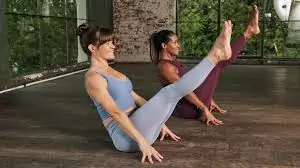
- Your bones are subjected to resistance whenever you lift your body weight, press against a Pilates reformer spring, or hold a plank. The body reacts to this by boosting bone-building activity.
- Pilates works the tiny stabilizing muscles that promote bone alignment and joint health, in contrast to standard strength training, which frequently concentrates on huge muscle groups.
- Mat Exercises: Since mat exercises mainly use body weight as resistance, they are typically not regarded as weight-bearing workouts. However, by using a dumbbell or resistance band, many mat exercises, such as the Side Plank and Single-Leg Bridge, may be altered to include more weight.
- Equipment workouts: Conversely, equipment workouts frequently include weight-bearing. You may incorporate all gym exercises into your equipment workouts. Strengthening using weight plates, dumbbells, and resistance bands. For Pilate, there are several adapted equipment that strengthen the muscles.

- Straight leg raise position: supine lying position. Your arms should remain by your sides. Now, elevate your left leg with your feet up till it points straight up into the air while maintaining a straight posture. After holding for eight counts, softly drop the leg to the ground. Next, do the same with the opposite leg. 12 increases on each side are the goal. Hold duration is five to ten seconds. Repetition should be ten each session. This exercise has two variations: the side leg lift and the prone leg rise.
- The main error to avoid in this exercise is arching your lower back, which puts additional strain on your hip flexors and back extensor muscles and allows your ab muscles to relax.
- Superman exercise: position: Quadrupod position. Then, only raise your leg as far as it feels comfortable. Hold duration is five to ten seconds. Repetition should be ten each session.
- Squeeze your arms twice: The spine is strengthened by performing this double arm squeeze exercise. To perform, sit in a chair with proper posture or stand up straight. Avoid turning, bending, or twisting at the waist. Hold duration is five to ten seconds. Repetition should be ten each session.
- One-leg stand: This is a beneficial workout for the legs, hips, and spine. Then, while keeping your posture straight, stand up. For balance, reach your arms out to the front chair, but avoid pressing on the back of the chair. Hold duration is five to ten seconds. Repetition should be ten each session.
- Biceps curl: Standing is the position for the bicep curl. Perform biceps exercises with a straight hand while holding a dumbbell or a weight cuff on your wrist. Hold duration is five to ten seconds. Repetition should be ten each session.
- Squat: When you squat, hold a dumbbell or kettlebell around your chest. It works the core, hamstrings, glutes, and quadriceps. Beginners starting to squat will benefit from the weight in front, which keeps them upright. Hold duration is five to ten seconds. Repetition should be ten each session.
Tai chi

- The ancient Chinese martial technique of tai chi is sometimes referred to as “meditation in motion.” It combines deep breathing, mental concentration, and fluid, leisurely movements. It is remarkably effective at boosting physical fitness despite being mild.
- You can increase your lower back and lower extremity strength and bone density by practicing tai chi. The improvement takes at least six months. Additionally, it improves your equilibrium.
Dancing

- Dancing is an exercise for dynamic strength. Dancing works all of the body’s muscles rather than just a few. Dancing is a highly interesting weight-loss workout. Dancing asks you to support your own body weight through rhythmic movements, hops, twists, and transitions, in contrast to non-weight-bearing sports like swimming or cycling.
- It is especially advantageous for avoiding osteoporosis and preserving musculoskeletal health since this continuous contraction of muscles against gravity promotes bone formation, increases bone density, and strengthens joints.
Racket Sports

- Racket sports like tennis, badminton, squash, and pickleball are great examples of weight-bearing, high-impact activities that combine musculoskeletal training with cardiovascular fitness. Players in these sports must often move, pivot, jump, and lunge—actions that make the body carry its own weight while working against gravity. Over time, this mechanical stress helps to maintain or increase bone density by stimulating bone remodeling, especially in the hips, spine, and lower limbs.
- Racket sports’ dynamic nature also improves proprioception, agility, and coordination—all of which are essential for maintaining balance and preventing falls. These sports use both fast-twitch and slow-twitch muscle fibers because they need rapid direction changes and power bursts, which enhance joint stability and overall muscular endurance. The dominant arm and shoulder girdle can also be strengthened via asymmetrical actions, such as swinging a racket, albeit balanced training is advised to prevent muscle imbalances.
Yoga

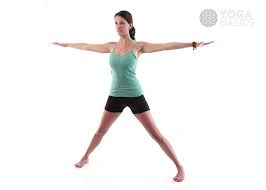
- Yoga positions that require you to use your arms, legs, or core to support your own body weight can be particularly effective weight-bearing exercises. Weight-bearing yoga postures, as opposed to passive stretching, work muscles and bones against gravity, promoting bone development and enhancing joint stability. Because of this, yoga is especially good for improving posture, bone density, and general musculoskeletal health, particularly in the spine, hips, and wrists.
- By way of example, the traditional weight-bearing pose known as Plank Pose requires full-body involvement and develops the arms, shoulders, and core. The Downward Facing Dog promotes flexibility and bone stimulation by engaging the arms, legs, and spine. Warrior poses I, II, and III are great for increasing hip and leg strength while enhancing proprioception and balance. Fall prevention and upper body strength depend on wrist and shoulder stability, which is reinforced by even beginner-friendly poses like Tabletop and Reverse Tabletop.
You should alert if you have these symptoms during weight-bearing exercise.
- Tightness or pain in the chest
- Lightheartedness or fainting
- Unexpected joint pain or edema
- Breathlessness that goes beyond typical effort
- Limb numbness or tingling
Importance of weight-bearing exercises
- Bone health: Lowers the risk of osteoporosis by promoting bone density and growth.
- Strengthening muscles: Promotes and preserves lean muscular mass.
- Increased range of motion: it works well for stiffness and spatiality, and increases mobility.
- Cardiovascular fitness: Regular exercise improves heart health.
- Promote coordination: You need to have the right balance and coordination for activities after a certain age.
Weight-bearing grade
- A leg that is non-weight bearing should not support any body weight or come into contact with the floor. Crutches are required.
- Toe-off exercises allow you to stand or balance using just your toes. The person should never put weight on the leg.
- When partial weight-bearing is being used, a small amount of weight can be applied to the injured extremity. To enable the patient to walk, the weight is progressively increased, although an ambulatory device, such as crutches or a cane, is still required.
- The patient may bear carrying 70% to 100% of their body weight on the injured limb. The situation determines how much weight is appropriate.
- The affected limb can support the entire body weight and walk when it is fully weight-bearing
Advantages of weight-bearing exercises
- Strengthened Muscles: Strengthening muscles is one of the most obvious advantages of weight-bearing workouts. Your muscles adapt and get stronger as you lift weights or do resistance training, which makes daily chores simpler.
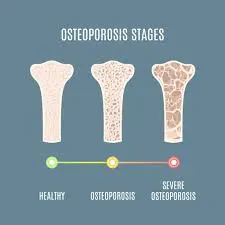
- Increased Bone Density: Exercises involving weight-bearing are great for maintaining healthy bones. Frequent strength exercise, especially for older persons, can improve bone density and lower the risk of osteoporosis and fractures.
- Increased Metabolism: Muscle burns more calories than fat when at rest. You may increase your metabolism and make weight control easier by doing weight-bearing activities to create lean muscle mass.
- Improved Balance and Posture: Your posture and balance can be enhanced by strengthening your muscles, especially those in your back and core. This is crucial for keeping a healthy spine and avoiding injuries.
- Enhanced Functional Fitness: Weight-bearing activities increase your capacity to carry out everyday duties with ease and a lower chance of injury, such as carrying children, climbing stairs, and moving groceries.
- Advantages for Mental Health: Frequent resistance exercise releases endorphins, which help lessen depressive symptoms, tension, and anxiety.
How to Make Weight-Bearing Exercises a Part of Your Everyday Schedule:
- Speak with an Expert: To develop a safe and efficient exercise program catered to your objectives and fitness level, if you’re new to weight-bearing activities, think about speaking with a fitness trainer or physical therapist.
- Begin slowly: To prevent overdoing it or getting hurt, start with smaller weights or resistance bands.
- Maintain a Balance in Your Daily Routine: For a well-rounded fitness program, mix aerobic exercises with weight-bearing activities.
- Correct Form: To avoid injuries and get the most out of your workouts, concentrate on keeping your form correct. Consult a specialist for advice if in doubt.
- Rest and Recuperation: Give your muscles a break in between weightlifting exercises. Getting enough sleep is crucial for both general health and muscle building.
Contraindications
- Recent weight-bearing joint operations or fractures (e.g., hip, knee, ankle)
- Elevated risk of fracture due to severe osteoporosis
- Uncontrolled cardiovascular problems, such as a recent heart attack or a systolic blood pressure of greater than 180 mmHg
- Active blood clots or deep vein thrombosis (DVT)
- flare-ups of severe arthritis
- neurological conditions that impair motor control or balance
- Osteopenia or moderate osteoporosis
- Chronic pain or unstable joints
- recuperation following surgery (e.g., ligament repair, joint replacement)
- Peripheral neuropathy associated with diabetes
- Vertigo or balance issues
- Joint stress associated with obesity
FAQs
Which kind of exercise is better for the density of bone?
The finest Weight-Bearing Exercises for Bone Strength and Resistance Exercises are the finest ways to increase bone density. Walking, running, and dancing are examples of weight-bearing activities that gently push on bones, encouraging them to grow denser and regenerate. By tugging on the bones, resistance activities like lifting weights and utilizing resistance bands also serve to build muscles, which in turn help to increase bone density.
Which five benefits come with walking every day?
Walking reduces your weight and enhances your well-being.
Walking briskly on a regular basis, for instance, can assist you:
Reduce body fat and keep your weight within a healthy range.
Prevent or treat a number of illnesses, such as type 2 diabetes, cancer, high blood pressure, heart disease, and stroke.
How long does it take for weight-bearing exercise to build bone density?
In young adults, the bone-building phase lasts three to four months at its fastest. If you are older or have osteoporosis, expect it to take much longer. Therefore, bone density testing won’t show significant changes right away. Although it happens gradually, bones do change.
Weight-bearing exercise: what is it?
Exercises involving weight-bearing are regarded as strengthening exercises. This workout improves your body’s equilibrium and strengthens your weak muscles. High-impact weight-bearing activities like running, skipping, dancing, aerobics, and simply jumping up and down on the spot can help build stronger muscles, ligaments, and bones.
After a certain age, are weight-bearing activities still necessary?
Indeed, at a certain age, weight-bearing or strengthening exercises are crucial for both men and women. Exercise, including weight-bearing, keeps the muscles strong throughout the body, which lowers the risk of falls in older adults. Strength training makes you self-sufficient, enabling you to perform all of your everyday tasks, including cleaning and bathing, on your own.
Which factors contribute to osteoporosis?
Osteoporosis causes:
Following certification, osteoporosis is a relatively prevalent ailment that affects the bones and can lead to a variety of knee, shoulder, and back pains. Your body may reabsorb calcium and phosphate from bones rather than retaining them as you age, which can damage bone structure and raise the risk of fracture. Men’s age-related testosterone reduction, women’s menopause (caused by a decrease in estrogen), and specific medical problems or drugs can all speed up this process.
References
- The Benefits and Importance of Weight-Bearing Exercises | DexaMonitor. (n.d.). https://www.dexamonitor.com/article/the-benefits-and-importance-of-weight-bearing-exercises
- Anderson, T. B., & Duong, H. (2023, May 1). Weight bearing. StatPearls – NCBI Bookshelf. https://www.ncbi.nlm.nih.gov/sites/books/NBK551573/
- Badon, M. (2025, May 22). What is Weight-Bearing Exercise? (And why your body loves it) — SOMA Movement Studio. SOMA Movement Studio. https://www.somamovementstudio.com/soma-scoop-blog/what-is-weight-bearing-exercise
- Vkim, & Vkim. (2022, November 15). Step Up To The Bench And Elevate Your Leg Gains with this Underrated Exercise. Muscle & Fitness. https://www.muscleandfitness.com/workouts/leg-exercises/step-up-exercise-how-to-benefits-variations/
- Kirkland, C. (2025, June 9). Is Pilates a Weight-Bearing Exercise? What You need to know — Christine Kirkland Pilates. Christine Kirkland Pilates. https://www.my-pilates.ca/blog/is-pilates-considered-a-weight-bearing-exercise
- Brown, S. E., PhD. (2025, July 6). Best exercises for bone strength — how exercise helps prevent osteoporosis. Women’s Health Network. https://www.womenshealthnetwork.com/bone-health/bone-strengthening-exercises/
- Gupta, A. (2024, June 12). 10 benefits of squats — and 7 squat variations to add variety to your fitness routine. Healthshots. https://www.healthshots.com/fitness/staying-fit/squats-benefits/
- Taylor, R. B. (2024, October 20). 8 workouts for stronger bones. WebMD. https://www.webmd.com/osteoporosis/features/exercise-weight-bearing