

Supraspinatus Muscle Strengthening Exercise
What is the Supraspinatus Muscle Strengthening Exercise?
Strengthening exercises for the supraspinatus muscles are an excellent way to enhance scapular and shoulder function, as well as your overall level of fitness and endurance, which will help you perform better in sports or daily activities.
It is located in the upper back. The rotator cuff, which encircles the shoulder, is supported by these muscles.
Rotator cuff tears often begin in the supraspinatus tendon and can spread to other rotator cuff muscles if the patient does not receive the necessary treatment.
The patient is more prone to experience shoulder problems if the supraspinatus is weak or perhaps damaged and cannot provide this support. Therefore, to improve shoulder support and reduce the risk of injury, strengthening the supraspinatus muscles is crucial.
The supraspinatus muscle, located in the upper back, controls shoulder abduction and stability.
When the deltoid muscle pulls upward, the supraspinatus muscles begin abduction, causing the humeral head to drop. This muscle and tendon can also aid in external rotation since they move somewhat obliquely from posterior to anterior.
Health benefits of the supraspinatus muscles:
- Improves the area’s healthy blood circulation.
- Improves posture.
- Lessen head and neck discomfort.
- It increases the range of the shoulder joint.
- Decrease shoulder joint stiffness.
- Enhance the function of the shoulder.
Supraspinatus Muscle Strengthening Exercise:
Prone External Rotation

- Start with the prone lying position.
- Next, position your right upper arm halfway off the edge of a bed or bench, at shoulder height.
- Then align your arm with the floor by rotating it.
- Hold a weight of one to two pounds while moving.
- Hold for 5-7 seconds.
- Do 10 reps.
- After that, repeat with the opposite arm.
Pendulum Exercise
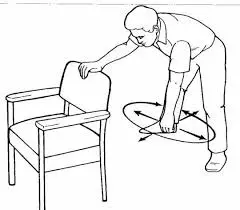
- Place your left hand lightly on top of a table, bench, or other stable surface to provide support while standing next to it.
- After that, lean forward.
- Completely relax your right arm and shoulder, allowing it to hang loosely in front of you.
- Make gentle forward and backwards motions with your right arm, then side-to-side and circular motions.
- Do the same with your left arm.
Double Shoulder Stretch

- Place your hands on your hips with the palms facing outward and the fingers pointing back, simultaneously extending your left and right shoulders while maintaining a straight spine.
- Gently move your elbows forward while pressing the backs of your hands into your hips, until you start to feel a slight tension behind your shoulders.
- After holding for up to 30 seconds, relax and put your elbows back in their starting positions.
- Do this as many as four times.
Resisted External Rotation

- Start with a standing position.
- Position your left side toward a door.
- Take a resistance band and place the first end on the door handle while holding the other end in your right hand.
- Make a 90-degree bend in your right elbow while keeping it securely at your side.
- Turn your right forearm as far away from the entrance as possible without rotating your trunk.
- Never leave your elbow by your side.
- After one or two seconds of grasping, drop your shoulder blade and bring your forearm returning to its original position.
- Do it 10 reps.
Prone Elevation

- Begin in the position of prone lying.
- Following that, stretch your arm over the side table.
- Place a weight weighing one to two pounds in your right hand.
- Raise your arm just above your ears until the bed is level with your right thumb. When performing, avoid raising your shoulder off the bed or shrugging it.
- Hold this 1-2 seconds.
- Do 10 reps.
Side-Lying External Rotation
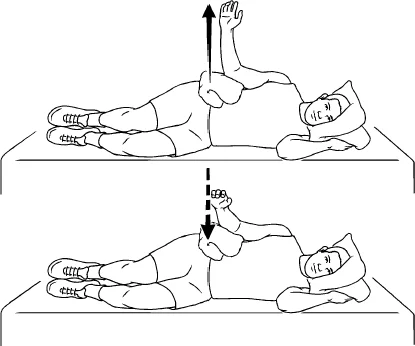
- Start with the side-lying position.
- Place your right elbow is 90 degrees.
- Carry a weight in your right hand that is between one and two pounds.
- Lower and reposition the right shoulder blade.
- After your forearm is straight, turn it away from your tummy using your right hand and forearm.
- After holding this posture for one or two seconds, slowly move your arm back to your stomach.
- Do 10 reps.
Full Can

- Make yourself stand on one end of the resistance band and utilize your right hand to hold the other end.
- One to two pounds of hand weight can be used as an alternative to a resistance band.
- Stretch your arm out with your upper body at a 45-degree angle.
- Maintain your elbow straight.
- After raising the arm just above the height of your ears, keep it there for a moment or two before lowering it gradually back to your right side. When performing, avoid shrugging your shoulders.
- Do it 10 reps.
- Repeat with the other hand.
Prone Full Can Raise

- Start with the prone lying position.
- Start with your palms facing forward and your arms pointing down towards the floor, slightly ahead of your shoulders rather than immediately beneath them.
- Gently lower your arms after raising them straight out to the side to shoulder height.
T-Band Rows

- Secure a band around a pole or any other stationary object at the level of your belly button.
- Maintain pressure in the band at the start while holding onto both ends, ensuring that each side has the same length.
- Pull your elbows straight back, keeping them tucked in, after starting with your elbows extended and your trunk erect (kept throughout).
- Reposition the band and squeeze the shoulders.
Incline Reverse Lateral Dumbbell Raise

- Lay on an angled bench, face down.
- Keep your arms extended and insert a dumbbell in both of your hands beneath your chest while you continue to maintain the extended arm stance.
- Bend the weights apart once you have raised them to shoulder height.
- Go back to where you were before.
Seated Stretch

- Take a seat on a sturdy bench or chair with a level surface.
- Hold your arm in front of you and place your right elbow across your lower rib cage, bending it at a 90-degree angle.
- Reach up with your left hand to grip your right thumb after sending your left upper arm beneath your right upper arm.
- Extend your right arm and let your right shoulder and arm relax. Start by gently pulling your right thumb to the right.
- Before moving on to your other shoulder, hold for up to 30 seconds, then take a little break and repeat up to four times.
Safety and Precautions:
When practising any of these stretches, if you experience any discomfort, numbness, or pinching, stop and exit the stretch. Remember to stop as soon as you experience unexpected pain or increasing discomfort, even if studies have shown that stretching helps relax tight nerves and improves one’s capacity to tolerate pain pressure.
Breathe out and release from the stretch hold if you start to feel numb or pinched. Allow time for your muscles and nerves to relax. It might take a few minutes to many days to recover. When you’re ready again, try a different version of the activity. However, perform a pendulum exercise or a towel stretch.
Shoulder (or rotator cuff) injuries are frequent, and studies have shown that tears are increasingly common as people age 6. If you are elderly or have had shoulder problems or tears in the past, you should exercise extra caution.
When was the supraspinatus strengthening exercise not performed by a patient?
- If the physician suggested that she relax.
- Stop right away and speak with the therapist if the patient has any pain or discomfort throughout this activity.
- If the arm bone has recently been fractured.
- If the muscle has recently sustained damage.
FAQs
How is the strength of the supraspinatus measured?
Empty can test- The patient fully internally rotates the shoulder after positioning a straight arm in around 90 degrees of abduction and 30 degrees of forward flexion. The patient then opposes the clinician’s attempt to abduct the arm.
Tight supraspinatus: what causes it?
Resistive overuse is a risk factor. The musculoskeletal system’s supraspinatus tendon of the rotator cuff is impacted and deteriorated, usually as a result of overloading and recurrent strains from sports or work-related activities.
What motions are controlled by the supraspinatus?
The humeral head flattens to initiate abduction when the supraspinatus muscle pushes the deltoid upward. It can also aid in external rotation since the muscle and tendon move somewhat obliquely from posterior to anterior.
What is the duration of recovery for the supraspinatus?
After six to eight weeks, the tendon will reattach itself to the bone. Large, significant tears might take six to twelve months to fully heal.
Referances
- Nakamura, K., & Nakamura, K. (2025, March 9). Best exercises for your supraspinatus. Bodi Empowerment. https://www.bodiempowerment.com/best-exercises-to-strengthen-your-supraspinatus/
- Ocs, T. P. P., & Hispanolistic/iStock/GettyImages. (2023, August 3). Exercises to strengthen the supraspinatus and infraspinatus muscles. Livestrong.com. https://www.livestrong.com/article/312733-exercises-to-strengthen-the-supraspinatus-infraspinatus-muscles-of-the-shoulder/
- Benton, E. (2022, April 19). How to stretch your supraspinatus: proper form, variations, and common mistakes. Verywell Fit. https://www.verywellfit.com/how-to-stretch-your-supraspinatus-4690461


