

Yogic Sleep Pose (Yoganidrasana)
What is Yogic Sleep Pose?
Yogic Sleep Pose (Yoganidrasana) is an advanced, deep-flexibility posture that involves folding the legs behind the head while lying on the back. It helps promote intense relaxation, deep hip opening, and improved body awareness, often used in advanced yoga practices for calming the mind and enhancing inner focus.
The reclining forward bend, known as the yogic sleep pose, involves placing both legs behind your head so that your chest is positioned between your thighs. Although it’s a calming pose, the lower back and hamstring muscles are thoroughly stretched.
In the Ashtanga yoga system, this position is frequently performed. It primarily targets the physical strength and flexibility of the hips, lower back, spine, and inner thighs.
Meaning:
The Sanskrit phrase “yoganidrasana” means “to unite,” “nidra” means “sleep,” and “asana” means “posture.” As a result, performing this pose mimics the yogi who is sleeping. Throughout the practice, the practitioner is conscious of himself and his surroundings.
Yoganidrasana stance is not intended for the typical sleep we all get to rejuvenate our bodies for the next day after a demanding day. It has a broader perspective and a more refined approach. Furthermore, basic yoga positions for sleep, which are similarly simple, should not be confused with yogic sleep poses.
Muscle Work during Yogic Sleep Pose:
- Neck Muscles
- Core Muscles
- Back Muscles
- Hip Muscles
- Groin Muscles
How to Perform?
- Start by assuming the Corpse Pose (Shavasana). Breathe slowly while placing your hands next to your hips and feet one to two feet apart.
- Now put both feet close to your hips while bending both knees. Here, too, hands stay motionless.
- Next, take hold of your feet with both hands and bring them back to your chest. Here, your knee flexibility aids in twisting the leg closer to the chest.
- Now raise your head and shoulder off the ground and place your left leg behind your shoulder. so that your left shoulder blade meets your left calf.
- Next, position your right leg behind your right side and bring your right foot to your chest by twisting your knee.
- Now place your back of your head on your interlocked ankles. Make a Namaste mudra by placing your armpits on the inner thighs of both legs. Alternatively, you can interlock your fingers behind your hips.
- After maintaining the position for as long as it feels comfortable, progressively unlock each heel to return to the standard position. Then Relax.
Benefits:
Enhances Leg Muscle Strength:
Yoganidrasana’s stretching leads muscles to tighten and release during practice, putting strain on the muscle fibres. Regular practice like this strengthens muscles, including the hamstrings, calves, and glutes.
Enhances Blood Flow:
A practitioner’s entire body is constantly engaged, which increases the amount of oxygen and nutrients that their muscles require. Therefore, the improved blood circulation satisfies every need. Additionally, the increased blood flow serves as a detoxifier for the body’s muscles.
Encourage Digestion:
Yoganidrasana’s deep forward bend applies pressure to the abdomen, further massaging the digestive system. Better functioning and the elimination of many digestive diseases follow from this. In this way, it contributes to the human body’s digestion.
Adrenal gland activation:
In this pose, the inner thighs press against the area where the adrenal glands rest on the kidneys in an effort to place both feet behind the head. It enhances blood flow in the areas of the relevant glands, which are triggered on a daily basis and release their secretion into the bloodstream. This further controls the body’s metabolism and supports many health benefits.
Controls anxiety and stress:
Stress and anxiety are frequently caused by workloads and hectic lifestyles, and if they are not adequately managed, they may result in a major mental illness.
Yoganidrasana, on the other hand, is made in a way that, when practiced, creates a profound state of relaxation in the body that extends beyond the physical realm and encompasses all psychological facets.
Beginner’s Advice:
The yogic sleep pose should be done slowly and comfortably by beginners who have tensed inner thighs and hamstrings. It necessitates that the relevant muscles have good flexibility. Therefore, prior to signing up for this asana, concentrate on gaining flexibility.
Beginners shouldn’t attempt this pose all at once. To make up for the deficiency needed in Yoganidrasana, they should start with the above-mentioned preparatory asana at a steady pace.
When the knee joint is less movable, practitioners continue to work on the knees by stretching them or using other techniques that improve their range of motion.
Preparatory Pose:
Surya Namaskar (Sun Salutations):
Breathe in and out as you raise your arms overhead while standing in the mountain stance. Keeping your palms on the floor, exhale, fold forward, inhale, and raise your torso halfway.
After that, take a deep breath, slide your torso forward into the cobra stance, and exhale as you go into the eight-angle pose.
Breathe out, press into your hands, and raise yourself into the dog’s downward-facing position. Walk towards your palms while bending your knees. Breathe in and out, fold your spine forward, and then stand back up to the mountain stance.
Spend ten or fifteen minutes doing these, and you’ll notice that your entire body is gaining energy for the main position.
Malasana (Garland Pose):
To engage your glutes, inner thighs, ankles, and spine, perform a low squat. Keep your knees pointing sideways, your glutes in line with your ankles, and your legs spread wide.
In Anjali Mudra, bring your arms close to your chest and press your elbows into the sides of your knees to create a deeper opening. For three to five minutes, maintain this posture.
Modifications:
- If you feel pressure on your vertebrae while elevating your chest in the full yogic sleep pose, place a folded blanket under your head to prevent direct contact with the ground.
- A yoga strap can be used to bind the legs so they stay behind the shoulder for a longer period of time. In Yoganidrasana, it will stop the leg from coming back.
- This pose can be performed against the wall so that the practitioner’s head rests on it if they are unable or have trouble raising their head upward. To improve posture, though, one can also enlist the assistance of a second person.
Variations:
Dwi Pada Sirsasana (Two Legs Behind Head Pose):
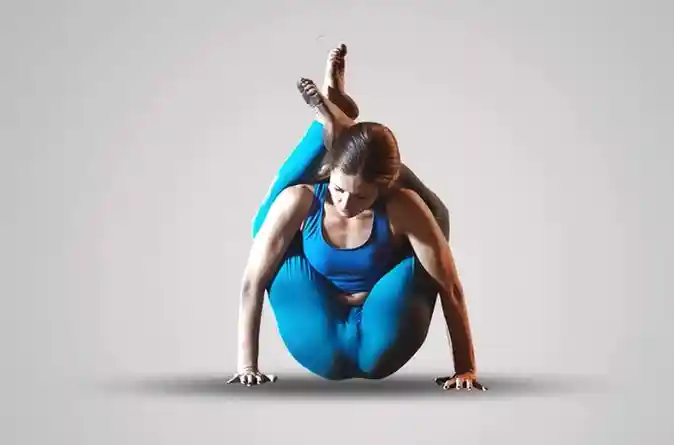
- Start by entering Dandasana, where your feet line up, and your legs stay straight. Your back should be straight, and your hands should be positioned next to your hips.
- Now raise the left leg so that it is parallel to the right knee, then lower the left knee to the left side of the torso.
- Next, grip the sole of your left foot and bring it near to your chest. Tuck your left leg behind your head after lowering your shoulder to wear it like a shirt.
- Similarly, bring your right leg up to your chest and place your right foot behind your left foot while using one hand to balance your body. Because the left foot makes it difficult to place the second leg behind the head, be careful to lean somewhat more.
- For intermediate practitioners, now place both hands on the floor to balance the body. Advanced practitioners, however, can perform the namaste mudra directly in front of the chest by joining their hands.
- Unlock each foot individually and return to the dandasana after holding the pose for a while. Then unwind.
Yoganidrasana with Hands in Anjali Mudra:
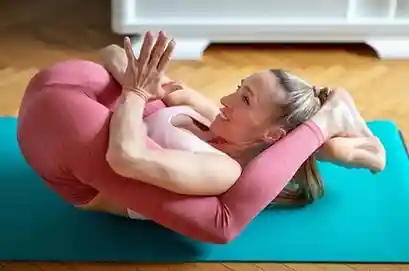
- Anjali Mudra, also known as Namaste, can be created by bringing your palms together and touching them together while in the primary Yogic Sleep Pose.
- This variant will test your ability to stabilise your lower back and glutes on your own.
Padma Yoganidrasana with Hands at Back:
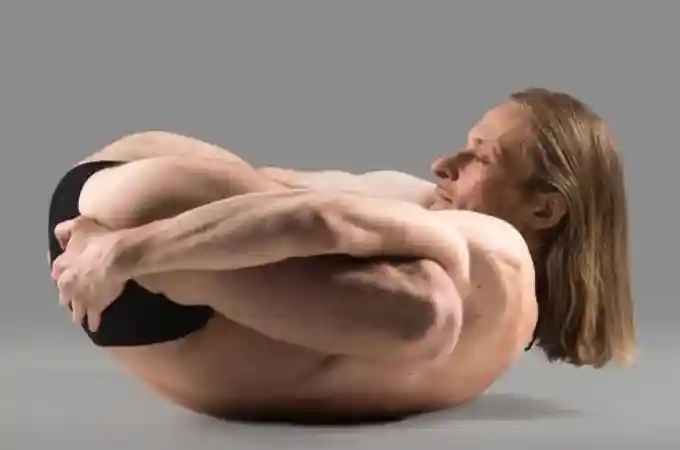
- Only highly skilled practitioners who have extreme flexibility in their pelvis and spine should use this one.
- Enter the knees-to-chest pose, raise your head off the mat, and maintain your shins close to your chest by crossing your legs in Padmasana. To maintain a firm and secure posture throughout the hold, be sure to grasp the back of your glutes with your palms.
Precautions:
- To avoid any mishaps, practitioners should bow their knees slowly. If you can’t get the leg in the necessary position, don’t force the knee to bend.
- When in the yogic sleep stance, try not to breathe deeply or heavily. Bending forward could cause the diaphragm to stop contracting and relaxing. As a result, one should breathe slowly and shallowly.
- After finishing this pose, the practitioner should focus on keeping their posture elevated by expanding their chest instead of getting sluggish and lowering their body.
Contraindications:
- This asana should not be performed by practitioners who have high blood pressure since it may increase blood pressure, which could be lethal.
- Yoganidrasana should not be performed by pregnant women. For the foetus that the woman is carrying, the forward deep bend is unsuitable.
- This pose should not be performed by anyone who has a hernia, lower back, shoulder, or knee ailment. Because additional stress could worsen the issue.
- Patients who have had surgery on any region of their bodies should avoid doing yoganidrasana until they have fully healed.
Conclusion:
Yoganidrasana is a successful method for creating a calm, joyful, healthy, and well-being-filled environment that rebuilds people’s mental, emotional, and physical structures.
Practitioners who are going through a difficult time in their lives should enrol once to see how their lives will change.
FAQs
What is Yoganidrasana good for?
Yoganidrasana poses help strengthen the hamstrings, glutes, calves, and deep pelvic muscles. This pose is the ideal advanced-level asana for increasing total body flexibility.
Can beginners perform Yoganidrasana?
Because yoganidrasana needs a high level of flexibility and focused breathing, it is not appropriate for beginners. Therefore, you must first improve your physical strength, flexibility, and focus to execute the yogic sleep pose with ease.
What are the different preparatory poses in Yoganidrasana?
To increase blood flow throughout the body, perform sun salutations for ten to fifteen minutes.
The lower-body muscles should then be prepared for your Yoganidrasana practice by performing deep hip-openers such as Baby Cradle Pose, Garland Pose, Compass Pose, Half Monkey Pose, etc.
What are the benefits of Yoganidrasana?
Some well-known health advantages of Yoganidrasana include stretching the glutes and inner thighs, activating the abdominal muscles, stimulating the adrenal glands, improving overall flexibility, strengthening the lower body, and expanding your heart.
How long should you hold Yoganidrasana?
Yoganidrasana can be held for 15 to 30 seconds by beginners. On the other hand, if they feel comfortable, expert practitioners can extend it to 90 seconds or even longer.
References:
- Yogic Sleep Pose (Yoganidrasana): Steps, Benefits & More – Fitsri Yoga. https://www.fitsri.com/poses/yogic-sleep-pose
- Allen, W. (2025ae, August 26). Yoganidrasana. https://myyogateacher.com/yoga-asana/yoganidrasana
- Yogic Sleep Pose Yoga Pose (Yoganidrasana). Tummee. https://www.tummee.com/yoga-poses/Yoganidrasana


