
Warrior Pose 1 (Virbhadrasana 1)
What is Warrior Pose 1?
The Warrior Pose, also known as Virabhadrasana in Sanskrit, is one of yoga’s most famous and inspiring poses. The name is derived from ancient mythology, namely from the legendary warrior Virabhadra, who was created by Lord Shiva to restore cosmic equilibrium.
This posture represents more than just physical strength; it is a summons to awaken your inner warrior: the fortitude to stand firm, the resilience to meet life’s difficulties, and the wisdom to stay grounded in the face of adversity.
Unlike many asanas, which prioritise flexibility, the Warrior Pose emphasises balance, stability, and alignment. Each iteration—Warrior 1, Warrior 2, and Warrior 3—requires the practitioner to anchor their body and mind while being present.
Beyond its physical advantages, Virabhadrasana has a deep spiritual connotation, representing the warrior’s commitment to confront life’s challenges with elegance and power. It represents the struggle against ignorance, fear, and self-doubt, inspiring practitioners to build clarity and purpose.
Like previous positions, this asana connects breath to movement, strengthening attention and helping you stay rooted in the present moment.
Muscle Work During Warrior Pose 1?
- Arm and Shoulder Muscles
- Neck Muscles
- Middle and Lower Back Muscles
- Chest Muscles
- Hip Muscles
- Gluteus Muscle
- Hamstring Muscles
- Quadriceps Muscles
- Psoas Muscle
Video of Warrior Pose 1
How to Perform?
- Stand up straight in mountain pose (tadasana), feet hip-distance apart, arms by your sides. Deep and even breathing can help to relax your thoughts and bring you back to the present moment. Draw your attention within.
- Separate your legs by at least three to four feet.
- Turn your right foot out at 90 degrees and your left foot in at 15 degrees, or maintain them straight with toes facing front.
- Align the heel of your right foot with the centre of your left foot.
- Turn your upper body to the right.
- Breathe in and raise your arms, keeping your hands shoulder-distance apart and palms facing each other. Allow your shoulder blades to expand and rise gently. Keep your eyes forward. You can place your palms together and stare up at your thumbs.
- Exhale, then lift your arms and bend your right knee, bringing your right thigh parallel to the floor. Feel the stretch in your thigh and hip.
- Keep your right knee over your right ankle. Make sure the knee does not extend beyond the ankle. Keep the rear foot stable and the back leg straight, without bending the left knee.
- Hold the posture for roughly five to ten breaths. If you like, you may stretch your spine slightly backward, like a crescent moon. Breathe evenly.
- Breathe in and straighten your right knee. Breathe out and lower your arms.
- Repeat the stance from the opposite side.
Benefits:
- Develop strength: This yoga posture involves power in the legs, hips, and glutes. Maintaining an upright and appropriate posture requires core and upper arm power. This is an excellent general strengthening stance.
- Improve Balance: Holding Warrior 1 also demands balance. It’s natural to feel a bit shaky when you first try this stance. You’ll gain better balance as you practise and strengthen your core and legs.
- Improve posture: Proper alignment in Warrior 1 necessitates strong posture, which includes keeping your body upright, shoulders back, and head up. It’s an excellent stance for counteracting the way most people sit all day, whether at a desk or bent over a phone or computer.
- Improves hip flexibility and mobility.
- Benefits include improved stamina, inner strength, attention, and willpower.
- Releases stress in stiff shoulders.
Preparatory Pose:
Suryanamaskar (Sun Salutations): Surya Namaskar is a set of yoga positions that flow together, including some standing poses. Performing this dynamic flow of stretching for five minutes can immediately enhance your blood flow throughout your body.
Vrksasana (Tree Pose): This is a fundamental standing pose that helps you feel centred, strong, and grounded by developing strength and balance. Begin with the tree position to improve hip balance and core stability.
Prasarita Padottanasana (Intense Leg Stretch Pose): To increase flexibility in the lower back and hamstrings, expand wide into Prasarita Padottanasana. This position will help you develop hip stability, strong leg strength, and forward fold balance.
Urdhva Hastasana (Upward Salute Pose): At first glance, Urdhva Hastasana looks to be one of the simplest yoga poses. However, variants such as standing on tiptoes need more concentration and effort.
Variations:
Humble Warrior Pose:
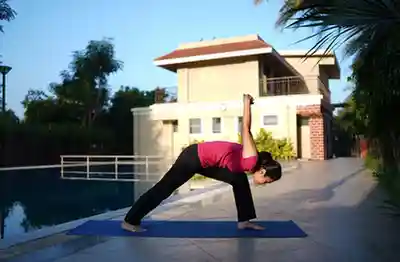
This is a Virabhadrasana I variant in which the body is stooped down over the front leg and the arms are raised vertically above the back with fingers interlaced.
Reverse Warrior Pose:

This is a Virabhadrasana I variant in which the upper body and front arm are both turned backwards. The lower arm may be stretched down the rear leg or around the back of the opposite hip.
Half-Warrior Pose:
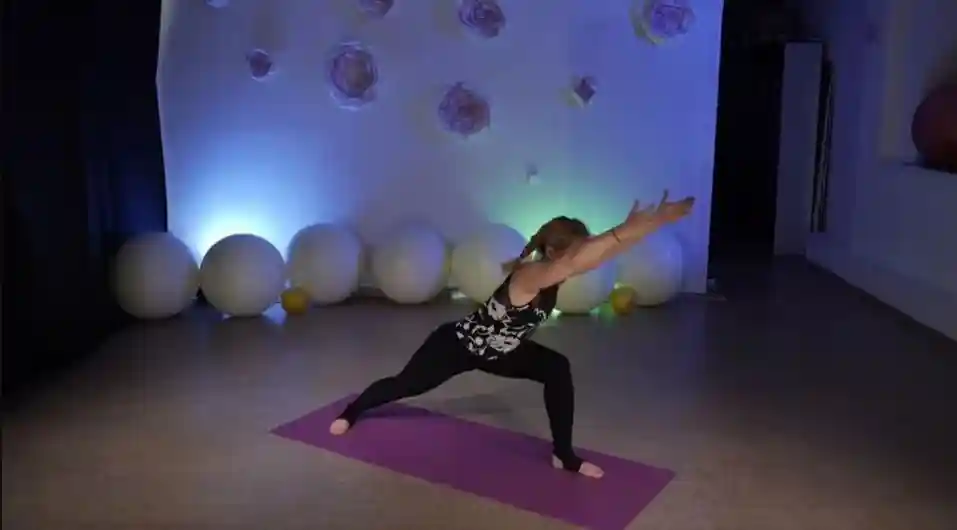
Another Warrior I version involves holding both hands aloft and bending the upper body slightly forward for a mild to deep stretch of the spinal column, shoulders, arms, and hamstrings.
Contraindications:
- Avoid if you have arthritis.
- Avoid if you have high blood pressure.
- Avoid if you are injured in your knees or hips.
- Avoid if you have problems keeping your body balanced on your core.
- Avoid arching the lower back; instead, use your core to support the spine.
- Pregnant practitioners should change their position to avoid strain.
Common Mistakes:
- The front knee collapses inward, rather than aligning with the ankle and middle toe.
- Hips are not squared forward, resulting in unequal alignment.
- Overarching the lower back as a result of insufficient core activation.
- Instead of remaining relaxed, the shoulders pinched up towards the ears.
FAQs
How do I practice Virabhadrasana I?
To start Virabhadrasana, I practise by making sure my right heel is parallel to my left heel and then squeezing my feet to activate my legs. Place your hands at your sides, squaring your glutes and shoulders straight in front. Then relax your shoulders and keep your eyes straight ahead. Hold this stance for a few minutes, then repeat on the opposite side.
What are the benefits of Virabhadrasana?
The whole body is energised.
The hips, chest, and lungs are all stretched out.
Focus, balance, and stability have all improved.
Promotes normal breathing and blood circulation.
The shoulders, arms, legs, ankles, and back are all strengthened.
The arms, abdomen, legs, shoulders, groin, ankles, and neck are all excessively stretched out.
What are the contraindications for Warrior 1?
Injury and Surgery: Students should avoid this posture if they have balance issues or have injured their hips, knees, backs, or shoulders. Someone who has just had surgery in these places should avoid this position until they have received permission from their physicians.
Why is Warrior 1 going to improve your balance?
Improves core stability: When you engage your legs and elevate your body in Warrior 1, your core muscles instinctively contract to maintain balance and strength. This strengthens and tones the abdominal muscles, resulting in better core stability and posture.
What are common Warrior 1 mistakes?
Keeping feet too far apart:
Beginners frequently make the error of spreading their feet too widely apart, resulting in an excessively lengthy stance. However, it might be useful to start with a shorter stance to accommodate restricted hip and ankle mobility.
References:
- Filippo. (2024, December 8). Warrior Pose 1, 2, 3 – Steps, Benefits, and variations of virabhadrasana. One Yoga. https://oneyogathailand.com/warrior-pose-1-2-3-steps-benefits-and-variations-of-virabhadrasana/
- Shah, S. (n.d.). Warrior Pose: 3 variants for hip Flexibility and Fortitude – Sri Sri School of Yoga. https://srisrischoolofyoga.org/na/blog/warrior-pose-3-variants-for-hip-flexibility-and-fortitude/
- Warrior 1 Pose benefits and tips | YOGA. (n.d.). https://yoga.issaonline.com/blog/post/warrior-1-pose-benefits-and-tips
- Allen, W. (2025j, August 26). Virabhadrasana. https://myyogateacher.com/yoga-asana/virabhadrasana
- Warrior Pose 1 Yoga Pose (Virbhadrasana 1). Tummee. https://www.tummee.com/yoga-poses/Virbhadrasana 1