
Powell Raises
What is Powell Raises?
The Powell Raise is a side-lying shoulder exercise primarily used in rehabilitation to improve shoulder stability and strengthen the posterior deltoid and rotator cuff muscles. It is especially beneficial for individuals recovering from shoulder injuries, dealing with muscle imbalances, or aiming to enhance scapular control.
The exercise mainly targets the posterior deltoids and supporting muscles because of this movement pattern. The goal is to test your shoulder stability and control rather than your absolute strength.
Powell raises are a fantastic substitute for individuals who only have access to (or prefer utilising) free weights, because doing horizontal shoulder abduction is difficult if you don’t have a cable pulley machine, or because of gravity. Because even a very modest weight can be extremely difficult, the movement feels a lot like high raises.
The Powell rise can be done on a level bench, the floor, or an incline bench that is adjusted to a 30- to 45-degree angle.
We prefer to use the floor/flat bench variation because it’s easier to set up and less awkward to get comfortable, even though we find the incline variation to be the most effective. This generally means that it’s more likely to become a regular exercise in someone’s fitness routine. The simplest setup for tall people is likely to be performing Powell raises on the floor.
Muscle Work During Powell Raises:
- Supraspinatus Muscle
- Lateral Deltoid Muscle
- Upper Trapezius Muscle
Equipment needed:
- All you need is a weight, ideally a weight plate or dumbbell.
- Even if you’re a seasoned gym-goer, start with the smallest weight you can manage and adjust as needed.
- You will also need a bench if you wish to perform the flat or incline bench versions.
How to Perform?
- Either raise yourself onto your left forearm or use your left hand to support your head while lying on your left side.
- With your right arm, grasp a weight, like a dumbbell or weight plate, and hold it out in front of you.
- Pause for a moment after pulling your right arm back until it is vertical.
- As you raise your arm, avoid bending or hunching your elbow.
- Lower your right arm back down slowly.
- Do the same on the opposite side after completing the repetitions.
Benefits:
Enhanced Stability of the Shoulders:
The Powell raise is a great way to increase shoulder stability since it strengthens the muscles surrounding the shoulder blades and the posterior deltoids.
This can lower the overall risk of shoulder injuries and enhance performance in other activities like pull-ups and bench presses.
People frequently allude to joint stability, range of motion, and strength when discussing “bullet-proofing” their shoulders, which helps reduce the risk of injury.
Lifts Overhead:
Exercises involving overhead lifts in particular will benefit greatly from improved shoulder control.
As you attempt to add more weight to these movements, you risk injury if you don’t have control over the joints.
For this reason, exercises that improve shoulder mobility and stability are crucial for anyone performing Olympic lifts.
Improved Alignment:
The muscles that the Powell raise targets aid in maintaining proper posture by preventing the rounding of the shoulders.
You can keep your shoulders back and assist open up your chest by strengthening these muscles.
This can lessen the pain and suffering brought on by bad posture.
Correct Muscle Imbalance:
To identify any muscle imbalances, perform a separate Powell raise test on each shoulder.
For sportsmen who might utilise one arm more than the other (such as tennis players or baseball pitchers), this is incredibly helpful.
Muscular imbalances should be evaluated because they can raise the risk of various injuries if left untreated.
Beginner’s Advice:
- To get the most muscle engagement, concentrate on keeping your action slow and deliberate.
- To guarantee that the back deltoids are doing the majority of the work, refrain from swinging the weight or using momentum.
- To avoid neck strain during the lift, keep your shoulders loose and don’t shrug them.
- To stabilise your body and avoid needless movement, make sure your core is tight.
- Before moving on to greater loads, start with a smaller weight to improve form.
- As you raise the dumbbell, exhale, and as you lower it back down, inhale.
Variations:
Dumbbell Reverse Fly:

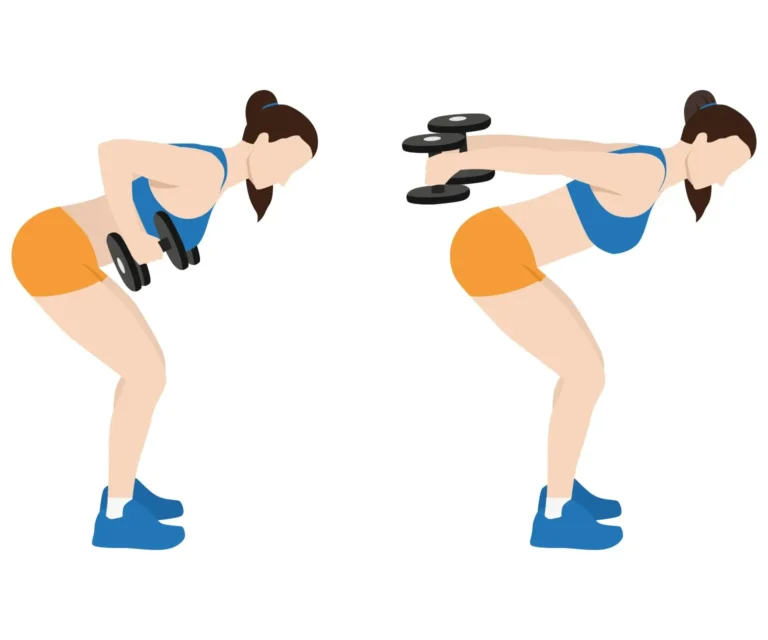
The dumbbell reverse fly, which may be done upright or hunched over, also works the rear deltoids.
It entails gripping a dumbbell in each hand, stretching your arms to the sides, and then bringing the dumbbells back together in front of you.
When using dumbbell reverse flyes as a substitute for the Powell raise, pay close attention to the slow, deliberate repetitions.
Face Pulls:
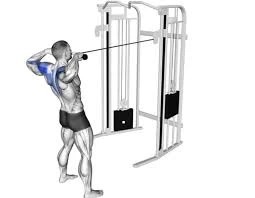
Cable face pulls work the muscles in the upper back and rear deltoids using a cable pulley machine.
Pulling the wire in the direction of your face while maintaining your upper arms parallel to the floor is the exercise.
This is yet another excellent posture-correcting exercise.
Scarecrows:

The main purpose of scarecrows is to increase shoulder mobility. Scarecrows require hinging at the shoulder with your shoulders and elbows bent at a 90-degree angle, either with no weight or very little.
Safety Tips:
- Only use light weights.
- Avoid if you have severe shoulder pain.
- If you feel soreness in your front shoulder, stop.
- Keep your elbows bent to lessen joint strain.
Contraindications:
- Acute Pain or Inflammation
- Rotator cuff tear
- Rotator cuff tendinitis
- Supraspinatus strain
- Deltoid strain
- Shoulder impingement
Common Mistakes:
The weight is too heavy:
The most frequent error we observe is choosing a dumbbell or weight plate that is excessively heavy. This will result in poor technique, such as using momentum and adopting more of a swing rather than a calm, controlled lift.
Keep it mild and concentrate more on shoulder joint stretching and very slow, controlled repetitions.
The momentum:
In addition to raising your risk of injury, using momentum to raise the weight also prevents you from testing your shoulder stability and control.
This typically occurs when you choose a weight that is too heavy, but if you’re not using the proper technique, it can also happen with minimal weight.
Slowing down will prevent any momentum or swing, so if in doubt, do so.
Excessive Extension:
As you raise the weight, try not to go beyond vertical. To see if this is happening, you might find it helpful to perform Powell raises in front of a mirror.
Hip Rolling:
Since the shoulders should be the main focus of this exercise, you must prevent your hips from rolling backward. If you do this, your shoulders won’t move as much, which will reduce the exercise’s effectiveness.
Stability around the hips can be achieved by maintaining an active and engaged core.
Because you have to keep your core engaged to hold the side plank, you could find that performing a Powell raise side plank not only makes the exercise more difficult but also helps with hip rolling.
Conclusion:
The muscles between the shoulder blades and the posterior deltoids can be effectively worked with Powell raises.
As with any workout, proper technique, as covered in this tutorial, is essential to maximising results and avoiding damage.
FAQs
What muscles does Powell raise work?
This workout targets the deltoids and strengthens the shoulder abduction. To begin, position a bench at an angle of around 30 to 45 degrees.
What are the benefits of the Powell raise?
Powell Raise works the lower traps, the rear delt, and numerous other vital upper back muscles. These are some of our body’s weakest muscles, pound for pound. Although it may be used in place of rear delt flies, I’ve discovered that the Powell raise’s instability is a major game-changer.
What are the cues for Powell raise?
To begin, position a bench at an angle of around 30 to 45 degrees. With the target shoulder on the upper side, lie on your side on the bench. Raise the weight from the side of your body while holding a dumbbell until your shoulder abduction is around 90 degrees. In front of you, drop the weight back down toward the floor.
What does Powell raise Target?
The Powell Raise. For shoulder stability and control, the Powell raise is an excellent supplement to any shoulder rehabilitation regimen. In addition to working the posterior cuff and periscapular muscles both concentrically and eccentrically, this exercise mainly focuses on the posterior deltoid muscles.
What are the common mistakes of Powell Raise?
Shoulder shrugging.
Making use of momentum.
Being overweight leads to trap domination.
Insufficient range of motion.
References:
- Powell raises – one of the best ways to bulletproof your shoulders | Fitness drum – 2023 – Turp/fitnessdrum.com/powell-raises-exercise
- Powell Raise — Rehab hero – 2022 – Song/www.rehabhero.ca/exercise/powell-raise
- Dumbbell Powell Raise – Exercise Guide | Motra – 2026 – Motra/www.motra.com/exercises/dumbbellPowellRaise