Best Strength Training Exercises at Home for Men and Women
Introduction
Strength training is an essential part of any fitness regimen, commonly known as weight training or resistance training. It increases. muscle endurance and strength. With strength training, you move your body against some form of resistance, such as
The weight of your body
- Resistance bands, sometimes referred to as resistance tubing or workout bands;
- Free weights, such as dumbbells or barbells;
- Resistance machines, such as cable machines, single-exercise machines, or multi-gym systems
Strength training is a varied type of workout. It’s a popular exercise program that you can build. Examples of exercises that you can find in the exercises that you will be included in the exercises that you can find in the exercises that you can find in the workout of exercises.
What Are The Benefits of Strength Training
- There are numerous ways that strength training can improve your fitness and health.
- Increase lean muscle mass, decrease body fat, burn calories more effectively even after exercise, increase metabolism, facilitate weight loss, improve bone density and health, increase range of motion and flexibility, and enhance brain and cognitive abilities.
- Lessen the signs of numerous chronic illnesses, such as diabetes, heart disease, arthritis, and back pain; enhance stability, balance, and posture; and increase vitality
- Enhance happiness and general well-being
What Are The Advantages of Exercising At Home?
Strength training may be done at home without any equipment and still give good results, but purchasing some equipment might help you vary your routines. Equipment can assist you in increasing the difficulty of your workouts as you gain strength, allowing you to continuously overload.
Benefits
- Time is saved. There’s no going or waiting for machines or standard equipment.
- It costs little. There is no expensive equipment.
- Secrecy. You don’t have to feel self-conscious when working out.
- Move at your own speed. No need to push yourself outside your comfort zone or keep up with others.
Getting Started
Finding a comfortable workout space in your house is the first step when you’re ready to begin planning your strength training regimen. You should locate a space that allows you to freely move your arms and legs.
Start With a Warm-Up
Spend at least five to ten minutes warming up before beginning your workout. This can be running on the spot, walking quickly, or doing exercises that target your arms, legs, and other main muscle groups.
What Tools Are Required for Strength Training at Home?
Although you don’t need to buy a lot of equipment, the following items can be useful if you do wish to buy a few:
- Resistance bands or tubing
- Dumbbells,
- Kettlebell,
- Stability ball,
- Medicine ball,
- Exercise mat
Bands of resistance. Resistance bands are an inexpensive piece of equipment that can increase the difficulty of exercises and take up very little room.
Weights are free. Purchasing a few kettlebells or dumbbells is a fantastic method to advance your at-home workouts. Select a reasonable weight that can be utilized for several different workouts, or gradually increase a few. Some stores sell adjustable dumbbells, which might be more affordable and require less room.
You can improvise by substituting water bottles, sandbags, or canned foods for dumbbells or a kettlebell.
The following are all of the following:
- Chairs. These are useful for push-ups, step-ups, dips, and other exercises.
- Sturdy table. Excellent for seated pull-ups and inverted rows.
- Heavy items. Can take the place of free weights.
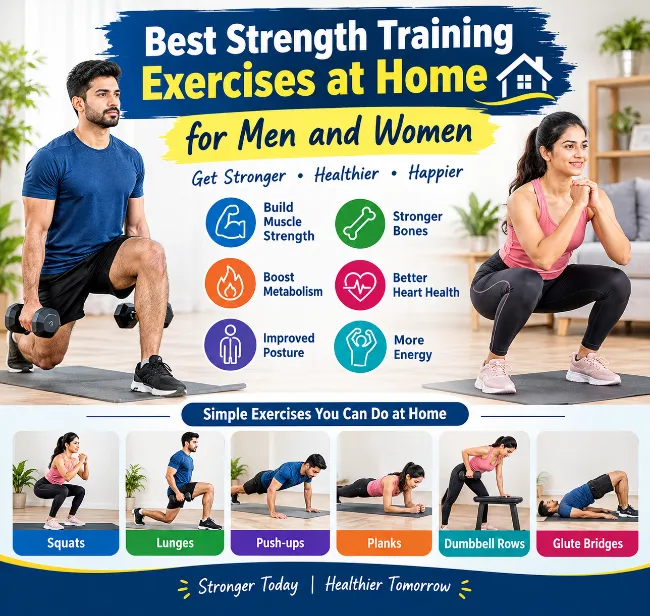
Strength Exercises You Can Do At Home
- You can begin with a series of bodyweight exercises once your muscles have warmed up and are prepared to move.
- Except for a workout mat if the floor is too hard, you don’t need any equipment for bodyweight exercises.
- Heel Raises
- Sit-to-Stand
- Standing Side Leg Raise
- Split Squats
- Glute Bridges
- Seated Forward Punches
- Seated Biceps Curls
- Seated Upright Rows
- Wall Push-Ups
- Lunges
- Squat to Overhead Raise
- Planks
- Pushups
- Dumbbell Shoulder Press
- Dumbbell Triceps Kickback
- Resistance Band Pull-apart
- Hip extension
- Resistance Band Leg Press
Heel Raises
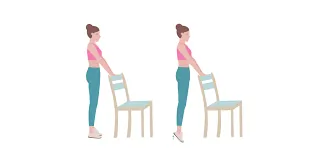
How to do
- With your legs slightly apart, toes facing front, and equal weight on both feet, stand upright.
- If necessary, cling to a solid surface for support, such as a table or kitchen worktop.
- Lift your heels off the ground slowly so that your weight shifts forward onto your toes while maintaining a straight back and knees.
- Return your heels to the floor slowly. Do the workout eight to fifteen times.
Advice: To make this workout easier, you can perform it while seated. Raise and drop your knees while lifting your heels off the ground, keeping your feet flat on the ground
Sit to Stand

How to do
- Look for a sturdy, upright chair, such as one for a dining table. To avoid resting on the back of the chair, take a seat slightly forward.
- With your feet flat on the ground, bend your legs 90 degrees at the knee and place them shoulder-width apart.
- Gently rise from a seated posture, then take a seat again.
- Do the workout eight to fifteen times.
Advice: If you need assistance, place your hands on the chair armrests or the tops of your thighs. Try performing the exercise without using your hands as you gain strength.
Standing Side Leg Raise

How to do
- With your feet together and your toes facing forward, take a straight stance.
- If you need support, hold onto a sturdy surface like a table or kitchen countertop; if your balance is fine, place your hands on your hips.
- Lift one leg off the ground and out to the side while maintaining a straight posture and elevating it no more than thirty degrees.
- Return your leg to its initial position.
- For each leg, repeat eight to fifteen times.
Advice: Avoid leaning away from the leg you are moving and maintain a tall posture.
Split Squats

How to do
- Stand upright with your feet together and your toes pointing forward.
- If you need support, hold onto a sturdy surface like a table or kitchen countertop; if you have strong balance, place your hands on your hips.
- Lift one leg off the ground and out to the side while maintaining a straight posture and lifting it no more than 30 degrees.
- Return your leg to the beginning position.
- For each leg, repeat 8–15 times.
Glute Bridges
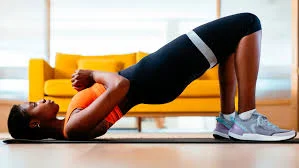
How to do
- Bend your knees, place your feet flat on the floor (or bed), and lie on your back with your arms by your sides.
- While maintaining contact with the floor with your shoulder blades, press down through your feet. Next, elevate your buttocks off the floor by raising your hips.
- Return slowly to the floor.
- Repeat the workout eight to fifteen times.
- Advice: When you first begin this workout, simply attempt raising your buttocks a couple of inches off the ground.
Seated Forward Punches
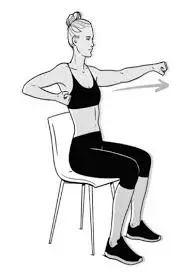
How to do
- Place your feet shoulder-width apart and flat on the floor while sitting upright in a sturdy chair (without utilizing the back support).
- Hold your fists in front of your face.
- Punch forward with one fist. Punch the other fist forward as you pull it back in.
- Alternating between your right and left arms, repeat with each fist eight to fifteen times.
Seated Biceps Curls
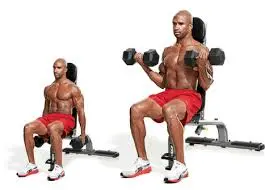
How to do
- Place your feet shoulder-width apart and flat on the floor while sitting upright in a sturdy chair (without utilizing the back support).
- Place your hands between your thighs.
- Bend your elbows to raise your hands to your shoulders, then return them to the starting position.
- Using one arm at a time or both at once, repeat eight to fifteen times.
Seated Upright Rows
How to do
- Place your feet shoulder-width apart and flat on the ground while sitting upright on a sturdy chair (without utilizing the back support).
- Lay your arms flat at your sides.
- As if you were lifting a shopping bag onto a table, bend your elbows up and out to the sides until your hands are just below your shoulders.
- Throughout the workout, maintain a relaxed posture.
- Go back to the beginning.
- Do this eight to fifteen times, either with one arm at a time or both at once.
Wall Push-Ups

How to do
- Approach a wall at a distance of one arm’s length.
- Your hands should be shoulder height, slightly wider than your shoulders, and level with the wall.
- Lean your body toward the wall while bending your elbows, then straighten your arms and push yourself back to your starting position.
- Repeat 8–15 times.
Lunges

How to do
- First, take a tall stance with your feet shoulder-width apart.
- Step forward with your right foot, then lower your hips to the floor until your left knee is parallel to the floor and your right leg is at a 90-degree angle.
- Keep your front knee under your toes at all times.
- To maintain an upright torso, extend your spine.
- Hold this posture for at least five seconds.
- Next, take a step back with your right foot to meet your left, then do the same with your left leg.
- After ten or twelve repetitions, take a quick break and repeat.
Squat to Overhead Raise
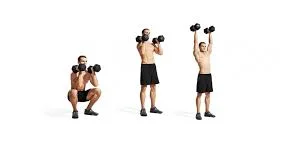
How to do
- Keep your feet slightly wider than your hips and your arms close to your torso.
- Squat down by slowly lowering your hips.
- Raise your arms above your head and press up to stand again.
- Go back to where you started.
- Perform 8–12 repetitions in 1-3 sets.
Planks

How to do
- Rest only on your forearms and toes, maintain an upright posture, clench your buttocks, and engage your abdominal muscles.
- Try to maintain this posture for thirty seconds. Start with 20 seconds if that’s too difficult.
- As your strength and fitness improve, try to hold the plank position for at least a minute.
- Try elevating one leg at a time while maintaining the plank posture when you’re ready for a more difficult variation of the exercise.
Dumbbell Shoulder Press
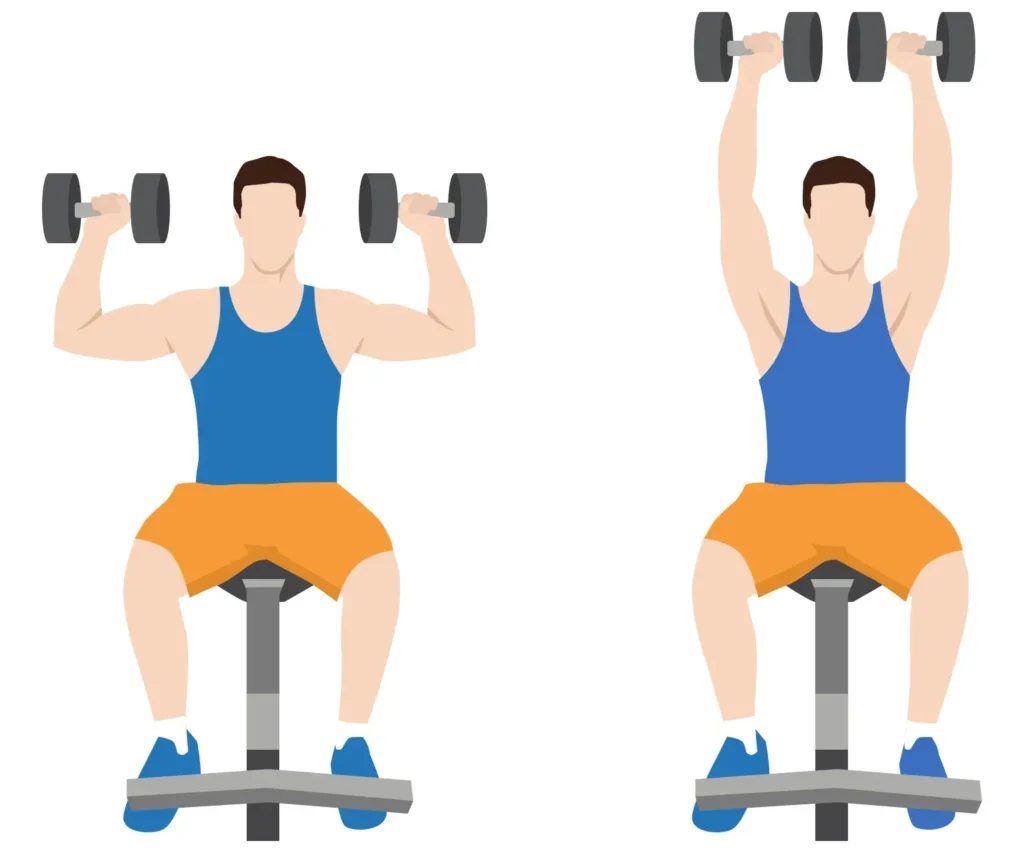
How to do
- Place your feet shoulder-width apart as you stand.
- Lift the dumbbells to shoulder height after picking them up.
- You can turn your palms toward your body or forward.
- Lift the dumbbells above your head until your arms are completely outstretched.
- Return the dumbbells to shoulder height after pausing for a little while.
- Perform 1–3 sets of 8–12 repetitions.
Pushups

How to do
- Place your palms right beneath your shoulders to begin in a plank position.
- Bend your elbows to lower your body till your chest nearly touches the floor while maintaining a flat back and bracing your core.
- Push your body back up to the beginning posture right away.
- Do this 8–12 times. As you gain strength, increase the number of sets from one to three.
- You can perform a less difficult push-up by shifting your weight from your toes to your knees.
Dumbbell Triceps kickback
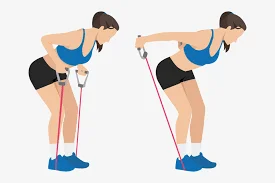
How to do
- Hold one dumbbell in each hand after grabbing two.
- Make a 45-degree bend in your torso and a 90-degree bend in your elbows.
- Next, extend your arms straight behind you while contracting your triceps.
- You can perform both arms simultaneously or one at a time.
- Start with 1-2 sets of 8–12 repetitions if you’re a beginner, and as you gain strength, increase to 3 sets.
Resistance Band Pull-Apart
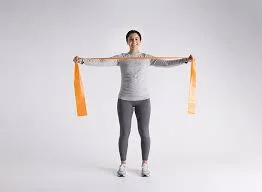
How to do
- Place your arms at chest height in front of you as you stand.
- Using both hands, hold a resistance band tightly. The band ought to run parallel to the ground.
- Pull the band toward your chest by extending your arms to your sides while maintaining a straight arm position. Start this motion with your mid-back.
- Squeeze your shoulder blades together while maintaining a straight spine, then slowly go back to where you were.
- Perform 15–20 reps in 1–3 sets.
Hip Extension

How to do
- Encircle both of your ankles with the resistance band.
- Pull your left leg back as far as you can while maintaining the straightest possible body alignment.
- Return to the beginning position slowly.
- After completing 12 repetitions with your left leg, switch to your right.
- Start with two sets on each side, and as your strength increases, increase to three sets.
Resistance Band Leg Press
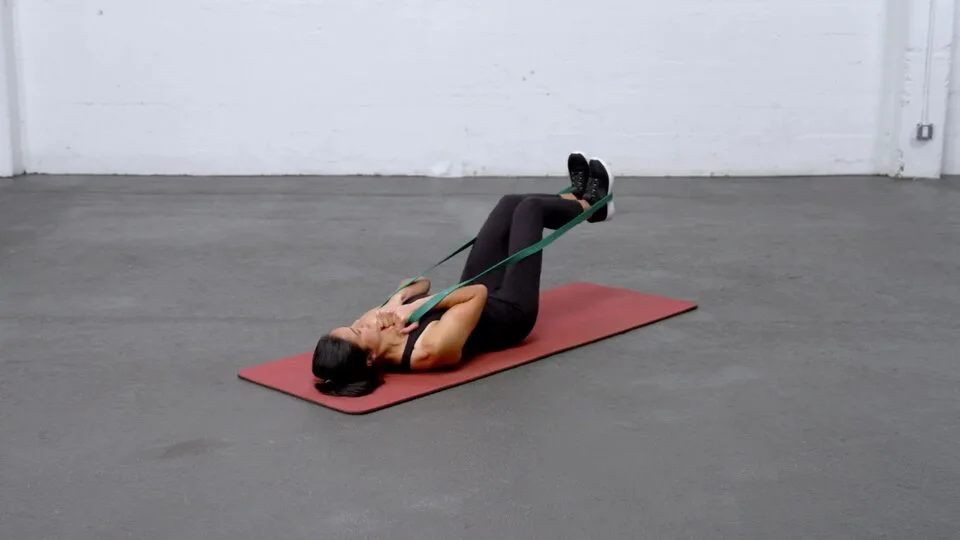
How to do
- Lift your feet off the ground while lying on your back.
- Make a 90-degree angle by bending your knees. Point your toes upward while flexing your feet.
- As you encircle your foot with the resistance band, hold its ends.
- Put your feet on the bands to lengthen your legs to their maximum length.
- Bend your knees until they return to a 90-degree angle.
- Perform 10–12 repetitions in 1–3 sets.
How to Cool Down
After your workout, cool down for five to ten minutes. This enables your heart rate and respiration to settle into a resting condition. Stretching gently and walking on the spot are two options.
Strength Training Tips
- Your blood pressure may rise if you hold your breath.
- With each exercise, release your breath.
- If, while performing the exercises, you are unable to speak normally, take a break.
- Be sure to move slowly and deliberately.
- For each exercise, count for two seconds during the “lift” or “push.”
- For the “release” of each exercise, count for two seconds.
- Take breaks as needed in between workouts.
Conclusion
- Strength training for 30 to 45 minutes two or three times a week is a great way to increase your metabolism, burn calories, and gain lean muscle mass. As a result, you may be able to lose weight more easily and burn fat.
- Strength training can also improve your flexibility, posture, and balance, strengthen your bones and joints, reduce your chance of developing chronic illnesses, and increase your energy and mood.
- With just your body weight or simple, inexpensive equipment as resistance, you can perform a variety of strength training exercises in the comfort and privacy of your own home.
- Before beginning an at-home strength training regimen, consult your doctor or a certified personal trainer if you have any health issues or an injury that prevents you from exercising
FAQs
What is at-home strength training for women?
Resistance bands, dumbbells, or bodyweight are used in this organized type of exercise, which is done at home rather than at a gym, to gradually test and develop muscle.
Is it possible for women to gain noticeable muscle by working out at home?
Yes, particularly in the initial stages of training when the body responds rapidly to new stimuli. Muscle tone and body composition can be significantly improved with bodyweight and modest dumbbell training.
How long does it take for women to notice results from strength training at home?
After two to three weeks of regular training, the majority of women report better posture and vitality. Depending on training frequency, diet, and sleep, noticeable changes in muscle tone and body composition usually start to show up between four and eight weeks. With regular exercise, significant strength gains—more repetitions, longer holds, or a higher load—usually show up in four to six weeks.
Can I begin strength training at home without any equipment?
No. To start with bodyweight workouts, all you need is a mat and some floor space. A resistance band kit or a set of adjustable dumbbells is a good low-cost investment as you gain strength. For months, many women have worked out efficiently with just their own body weight.
References
- Emily Cronkleton. (2026). Strength Training at Home: Workouts With and Without Equipment. Healthline Media. https://www.healthline.com/health/exercise-fitness/strength-training-at-home#at-home-workout-benefits
- Jack Heseltine, Clinical Exercise Physiologist. (2026). Strength exercises you can do at home in 10 minutes. British Heart Foundation. https://www.bhf.org.uk/informationsupport/heart-matters-magazine/activity/strength-exercises
- Cori Ritchey, C.S.C.S., Caitlin Carlson and Andi Breitowich. (2026). These Are the Only Strength Training Exercises You Need To Build Muscle And Strength Fast. Women’s Health. https://www.womenshealthmag.com/fitness/g27393163/strength-training-exercises/
- PureGym. (2025). Strength Training Exercises At Home. puregym.com. https://www.puregym.com/blog/strength-training-home/
- Trishala Bothra. (2026). Strength Training for Women at Home: Complete Guide. Habuild. https://habuild.in/habitology/strength-and-fitness/strength-training-for-women-at-home