
6 Best Exercise for Bell’s Palsy
Introduction
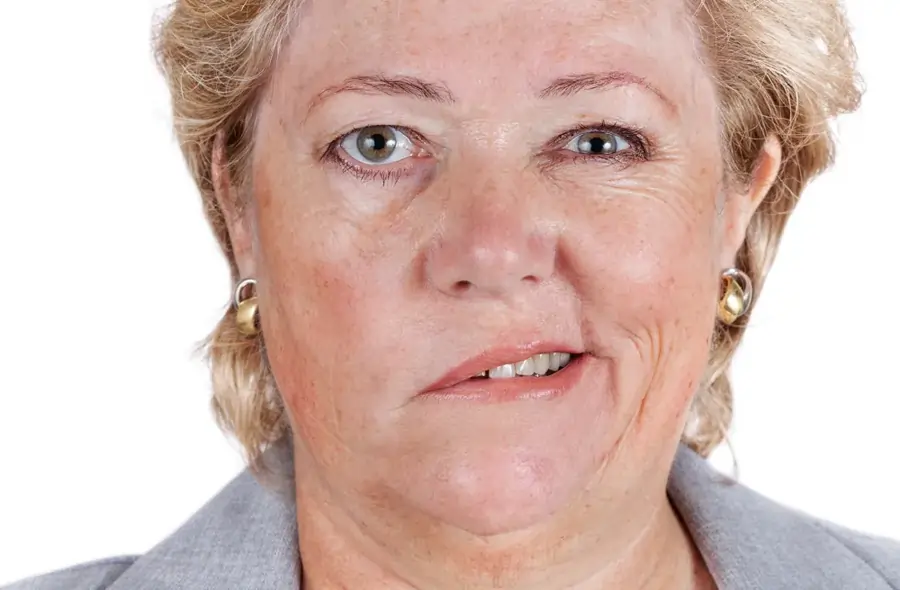
Bell’s palsy is a disorder that results in abrupt facial muscular weakening on one side. Frequently, the weakness is transient and gets better over many weeks. Half of the face appears to droop due to the weakness. The affected side’s eye is difficult to close, and smiles are one-sided.
Acute peripheral facial palsy of unclear etiology is another name for Bell’s palsy. Any age can experience it. We don’t know the precise cause. According to experts, it is caused by swelling and irritation of the nerve that governs one side of the face’s muscles. A response to a viral infection may be the cause of Bell’s palsy.
Within a few weeks, symptoms often begin to ease, and full recovery takes around six months. A tiny percentage of people will always have some symptoms of Bell’s palsy.
Symptoms
Bell’s palsy symptoms can appear abruptly and include:
- One side of the face may have mild weakness to complete paralysis in a matter of hours to days.
- Face droop and difficulty forming facial emotions like smiling or shutting an eye.
- Drooling.
- On the affected side, there may be discomfort in or behind the ear or around the jaw.
- Increased auditory sensitivity on the affected side.
- A Headache.
- Loss of flavour.
- Variations in the quantity of saliva and tears produced.
Causes
Although the precise cause of Bell’s palsy is unknown, viral infections are frequently linked to the condition. Bell’s palsy has been connected to viruses that cause:
- Herpes simplex, or genital herpes, and cold sores.
- Herpes zoster is another name for chickenpox and shingles.
- The Epstein-Barr virus causes infectious mononucleosis.
- Infections with cytomegaloviruses.
- Respiratory diseases caused by adenoviruses.
- Rubella is another name for German measles.
- The mumps virus is the cause of mumps.
- Influenza B is another name for flu.
- A coxsackievirus is the cause of hand, foot, and mouth disease.
- Guillain-Barré syndrome (GBS).
- Diabetes
- Hypertension
Does Bell’s palsy persist for a lifetime?
The majority of Bell’s palsy instances are transient. You’ll probably be able to use your facial muscles normally again after a while. About 80% of the time, this occurs.
Others may have persistent facial weakness. The likelihood of long-term problems increases with the length of the recovery. The following risk factors are linked to unfavourable outcomes:
- Total paralysis of the face.
- Being older than sixty.
- Total paralysis of the face.
- Being older than sixty.
- Having less flavour.
Exercises for Bell’s Palsy
Nose movement
- Position: Sitting Position.
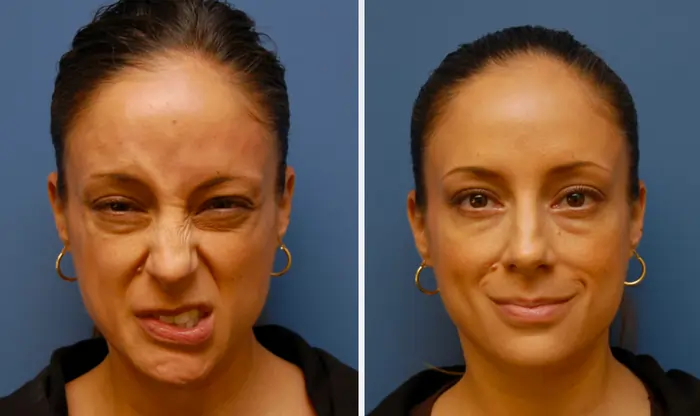
- Try to wrinkle your nose by using your fingers to gently press up the skin close to your nose on the affected side.
- Make an effort to wrinkle your face, paying particular attention to your nose and cheeks.
- Try inhaling deeply through your nose while flaring your nostrils. To make the affected muscles work harder, you might cover your unaffected nose.
- Exhale after puffing out your cheeks. Do this ten times.
Mouth Movement

- Position: Sitting Position.
- You can improve your ability to manage your mouth with these Bell’s palsy exercises. They can be repeated up to four times a day, thirty times each. As if you were going to grin, open your lips, then shut them. Next, practice frowning by doing the opposite.
- Let your lips relax after clenching them gently.
- One by one, try elevating each corner of your lips separately. The affected side can be raised with the aid of your fingers.
- Aim your tongue down toward your chin after sticking it out.
Eyebrows movement

- Position: Sitting Position.
- This eyebrow exercise strengthens the muscles that support facial expressions, such as frowning and lifting your eyebrows to convey shock or surprise. Also, it keeps your eyes from sagging, giving them a more symmetrical appearance.
- Raise both eyebrows while keeping your eyes open. To assist in elevating your affected eye, put your index finger over your eyebrow. Bring your eyebrows down.
- Raise and lower your eyebrows fifteen times.
- Try to pull your eyebrows together while frowning. It’s likely that the affected side of your eyebrow won’t move much at first, and that’s okay.
- You can raise your eyebrow by using your finger.
- Perform one to three sets of ten repetitions of the frowning exercise.
Eye-opening and eye-closing

- Position: Sitting Position.
- Exercises that include opening and shutting your eyes strengthen the muscles that enable you to blink.
- As wide as you can, open both eyes. To support this cause, you can be taken aback or horrified.
- Make wrinkles around your eyes by forcefully closing both of them.
- Continue to expand wide and close tightly fifteen to thirty times. Repeat one to three times.
Facial Stimulation

- Position: Sitting position.
- It’s crucial to warm up and activate your muscles before starting the face workouts. Experts advise sitting in front of a mirror so you can view your face clearly and observe your muscle movements in order to perform these facial exercises appropriately.
- Start by attempting to softly and slowly move every portion of your face.
- Gently raise your eyebrows with your fingers. Don’t exert too much energy on the side that is sagging; one side will elevate higher than the other.
- Gently massage your mouth, nose, cheeks, forehead, and other areas of your face with your fingertips.
Cheek Puffing

- Position: Sitting position.
- This cheek puffing exercise promotes face mobility by strengthening the muscles in your lips and cheeks.
- Pull one cheek out as much as you can while keeping your lips together. After a few seconds of holding, let go.
- To finish one rep, repeat step 1 on the opposite side. At first, your impacted side’s cheek won’t be as full as your unaffected side. But when your strength returns, it will become better.
- For one to three sets, repeat 15 times.
Differential Diagnosis
Facial palsy can also be caused by the following conditions:
- Herpes zoster infection, often known as shingles, is the cause of Ramsay Hunt Syndrome, which typically manifests as vesicles and involvement of additional cranial nerves.
- An MRI scan should be performed to rule out acoustic neuromas.
- An MRI scan with contrast will reveal a facial schwannoma, which is a tumour of the facial nerve.
- Facial nerve damage can arise from surgical trauma; the most frequent procedures that induce facial pain are mastoidectomy, parotidectomy, and auditory neuroma excision.
- Neurological (take into account Guillain-Barré syndrome, multiple sclerosis, and neurosarcoidosis)
- Acute otitis media, Lyme disease, cholesteatoma, viral infections including Epstein-Barr virus, neoplasms, especially parotid malignancy, and a variety of brain tumours, including meningioma, can (rarely) induce facial palsy.
- Facial palsy can be caused by head trauma, especially to the temporal bone.
- The forehead is not paralyzed in many cases of Upper Motor Neurone [UMN] facial palsy, which is often caused by a stroke.
Muscles of the face
The mimic muscles, or the muscles of facial expression, are other names for the facial muscles. These muscles are a collection of about 20 superficial skeletal muscles of the face and scalp that are separated into five groups based on where they are located and what they do. Among these groups are:
- Oral Group:
- Levator labii superioris
- Levator labii superioris alaeque nasi
- Risorius
- Levator anguli oris
- Zygomaticus major
- Zygomaticus minor
- Depressor labii inferioris
- Depressor anguli oris
- Mentalis
- Orbicularis oris
- Buccinator muscles.
- Nasal group: Procerus and Nasalis muscles.
- Orbital group: Orbicularis oculi and corrugator supercilii muscles.
- Occipitofrontalis and platysma muscles.
- Auricularis anterior, auricularis superior, auricularis posterior muscles.
Bell’s Palsy massage
Bell’s palsy massage is occasionally suggested as a component of a therapy plan for facial paralysis. A patient is first taught how to massage for Bell’s palsy by a Bell’s palsy exercise, massage, or physical therapy therapist. In addition to providing massage treatment for Bell’s palsy, the therapist addresses the worries and inquiries of the patient. A patient can then administer massage treatments outside of a therapist’s office once they feel comfortable doing so.
Bell’s palsy massage treatments often target various facial regions, such as:
- Lower Facial Muscles: During mouth exercises, patients are frequently asked to use their thumb and index finger to grab the centre of their lips, push them toward their faces, and bring them into a smiling posture. A patient with Bell’s palsy can regain the capacity to smile, frown, and make other facial expressions by strengthening the lower facial muscles.
- Forehead: A Bell’s palsy patient may find that massaging the upper part of their face helps lessen their forehead muscle weakness.
- Cheeks: A Bell’s palsy patient may be able to enhance cheek muscle mobility by moving their fingertips in a circular motion around their cheeks.
Complications
Bell’s palsy symptoms that are mild usually go away in a month. There are differences in recovery from more severe facial paralysis. Complications might consist of:
- Irreversible harm to the facial nerve.
- Irregular nerve fibre regeneration. This might lead to synkinesis, which is the involuntary contraction of certain muscles while attempting to move other muscles. For instance, the affected side’s eye may shut when you grin.
- Blindness, either partial or total, that prevents the eye from closing. This is caused by excessive dryness and scratching of the cornea, the transparent protective layer of the eye.
Stroke vs Bell’s palsy
- You may worry that you are suffering a stroke if you experience Bell’s palsy symptoms. Both can result in one-sided facial paralysis and exhibit comparable symptoms, such as drooping on one side of the face or difficulty shutting one eye. However, there are notable distinctions.
- Bell’s palsy is probably the cause if, for instance, your paralyzed side’s eye is watering or if you have sensitive hearing or ear ringing. Bell’s palsy can sometimes manifest as changes in taste perception.
- However, it may be a stroke if you have weakness or numbness on one side of your arms or legs. You shouldn’t have weakness or difficulty moving your tongue if you have Bell’s palsy.
- Get medical help as soon as you start having problems moving one side of your face, regardless of the symptoms you’re experiencing.
Are Facial Exercises Suitable for Bell’s Palsy recovery?
In the end, exercises for Bell’s palsy can guarantee a secure and successful recovery. Affected people can learn the proper exercises to speed up healing and improve facial muscles by carefully collaborating with a Bell’s palsy physical therapy therapist.
The patient determines the overall efficacy of face exercises for Bell’s palsy healing. Bell’s palsy patients are more prepared than ever to maximize the benefits of face exercises if they adhere to a physical therapist’s recommendations. On the other hand, a patient with Bell’s palsy is less likely to develop facial muscular strength and coordination if they do not adhere to a physical therapist’s Bell’s palsy exercise recommendations.
The staff at the Facial Paralysis Institute may decide that further treatment is required if the paralysis does not improve after eight months. Patients can talk to the team about two options: Botox and facial muscle reanimation surgery. To help with recuperation, the physical therapists will probably encourage patients to do facial muscle exercises in addition to these treatments.
Treatment
Antivirals have not improved Bell’s palsy patients’ recovery, but steroids did. Eye protection is necessary for people who are unable to close their eyes. Pregnancy management is comparable to non-pregnant management.
Steroids
- Prednisone and other corticosteroids are advised because they enhance healing at six months. With a 14% higher chance of recovery, early therapy (within 3 days of commencement) is essential.
- There is some disagreement about the best dosage approach, which is often doctor-dependent.
Antivirals
- In mild to severe cases of Bell’s palsy, one analysis concluded that antivirals (such as aciclovir) are unsuccessful in enhancing recovery beyond steroids alone.
- Another review found a benefit when paired with corticosteroids, but claimed the data were not very good to support this conclusion.
- Due to a possible connection between Bell’s palsy and the varicella zoster and herpes simplex viruses, they are frequently recommended. Since this has not been ruled out, there is still a chance that they will produce a benefit of less than 7%.
Protection for the eyes
- It is advised to apply tear-like eye drops or eye ointments often during the day when Bell’s palsy inhibits the blink reflex and prevents the eye from closing completely.
- During sleep and rest times, the eyes should be covered with patches or taped shut.
Physical therapy
- Some people with Bell’s palsy may benefit from physiotherapy because it helps stimulate the facial nerve and maintain the tone of the affected facial muscles. In order to assist in preventing persistent contractures of the paralyzed facial muscles, it is crucial to use soft tissue treatments and muscle re-education exercises prior to recovery.
- Heat can be administered to the affected side of the face to lessen discomfort. The use of electrical stimulation for Bell’s palsy is not supported by high-quality research.
Surgery
- If facial nerve palsy has not improved, surgery might be able to help. There are several methods. Smile reconstruction, often known as smile surgery, is a surgical treatment that can help people with facial nerve paralysis regain their smile.
- One of the side effects is hearing loss, which affects 3–15% of individuals.
Alternative medicine
- Because the studies that are now available are of poor quality (bad primary study design or inadequate reporting standards), the effectiveness of acupuncture is still uncertain.
- The evidence for hyperbaric oxygen therapy in cases of severe illness is quite preliminary.
Risk Factors
- Pregnancy(perhaps caused by viral infections, weakened immunity, elevated blood pressure and fluid intake, and hypercoagulability)
- Ear Infection
- Upper Respiratory tract infection
- Diabetes
Conclusion
You could feel self-conscious about the appearance of your face if you have Bell’s palsy. Fortunately, these symptoms typically improve with time. When you first have symptoms, see your healthcare physician. If you begin corticosteroid therapy within 48 hours of experiencing symptoms, healing can be accelerated. Additionally, your healthcare professional can rule out other, more serious illnesses that might cause paralysis of the face.
You just used a lot of your facial muscles. To manage the various areas of your face, your facial muscles cooperate. They are necessary for chewing, making facial expressions, and many other tasks, even though you may not give them much thought. Without them, it is impossible to eat, smile, or even speak. The next time you laugh at a joke or consume your favourite cuisine, keep in mind that your facial muscles are to blame.
FAQs
What is the most effective way to treat Bell’s palsy?
In order to reduce inflammation and promote nerve repair, the most effective treatment for Bell’s palsy usually combines corticosteroids, eye care, and physical therapy. To lessen facial nerve swelling, corticosteroids such as prednisone should be begun as soon as possible (preferably within 72 hours). To prevent damage, eye care is essential.
When you have Bell’s palsy, what should you avoid?
Dietary Considerations
It will probably be challenging to chew on the side of the mouth that is weak or paralyzed. Thick pieces of meat and crusty bread are examples of hard, chewy, crumbly, or sticky foods that should be avoided while dining with Bell’s palsy.
What is Bell’s palsy’s primary cause?
According to experts, it is caused by swelling and irritation of the nerve that governs one side of the face’s muscles. A response to a viral infection may be the cause of Bell’s palsy. Usually, symptoms begin to get better in a few weeks, and full recovery takes around six months.
Is Bell’s palsy caused by a vitamin deficiency?
Additionally, vitamin C has neuroprotective properties and is believed to aid in brain regeneration. Given these facts, vitamin C insufficiency may cause Bell’s palsy in people who are vulnerable.
What is the best treatment protocol for Bell’s palsy?
For treatment sequences that reduce inflammation and promote nerve repair, the most effective treatment for Bell’s palsy usually combines corticosteroids, eye care, and physical therapy. To lessen facial nerve swelling, corticosteroids such as prednisone should be begun as soon as possible (preferably within 72 hours). To prevent damage, eye care is essential.
Is being near someone who has Bell’s palsy safe?
Bell’s palsy risk factors include diabetes mellitus, obesity, and pregnancy. The illness is probably caused by a virus reactivating, even though it is not communicable. These include, among other viruses, upper respiratory conditions like the flu or a cold, herpes simplex 1, measles or chickenpox, and mumps.
Refrences
- Bell’s Palsy. (2025, September 26). Cleveland Clinic. https://my.clevelandclinic.org/health/diseases/5457-bells-palsy
- Bell’s palsy – Symptoms and causes. (n.d.). Mayo Clinic. https://www.mayoclinic.org/diseases-conditions/bells-palsy/symptoms-causes/syc-20370028
- Bell’s Palsy. (2023, November 14). WebMD. https://www.webmd.com/brain/understanding-bells-palsy-basics
- Effective physical therapy exercises for Bell’s palsy. (n.d.-b). https://facialparalysisinstitute.com/physical-therapy/exercises-for-bells-palsy/
- WebMD Editorial Contributor. (2024, December 3). Best exercises for Bell’s Palsy. WebMD. https://www.webmd.com/brain/best-exercises-bells-palsy
- Human face. (2023, July 12). Kenhub. https://www.kenhub.com/en/library/anatomy/the-human-face
- Professional, C. C. M. (2025, August 25). Facial muscles. Cleveland Clinic. https://my.clevelandclinic.org/health/body/21672-facial-muscles