Cool-Down Stretch Routine
Introduction
Finishing your workout with a proper cool-down stretch routine is just as important as warming up before exercise. After physical activity, your muscles remain tight, your heart rate is elevated, and your body needs time to return to its resting state. A well-planned cool-down helps gradually lower your heart rate, improves blood circulation, reduces muscle stiffness, and promotes faster recovery. It also decreases the risk of post-workout soreness, making it easier to stay active and consistent with your fitness routine.
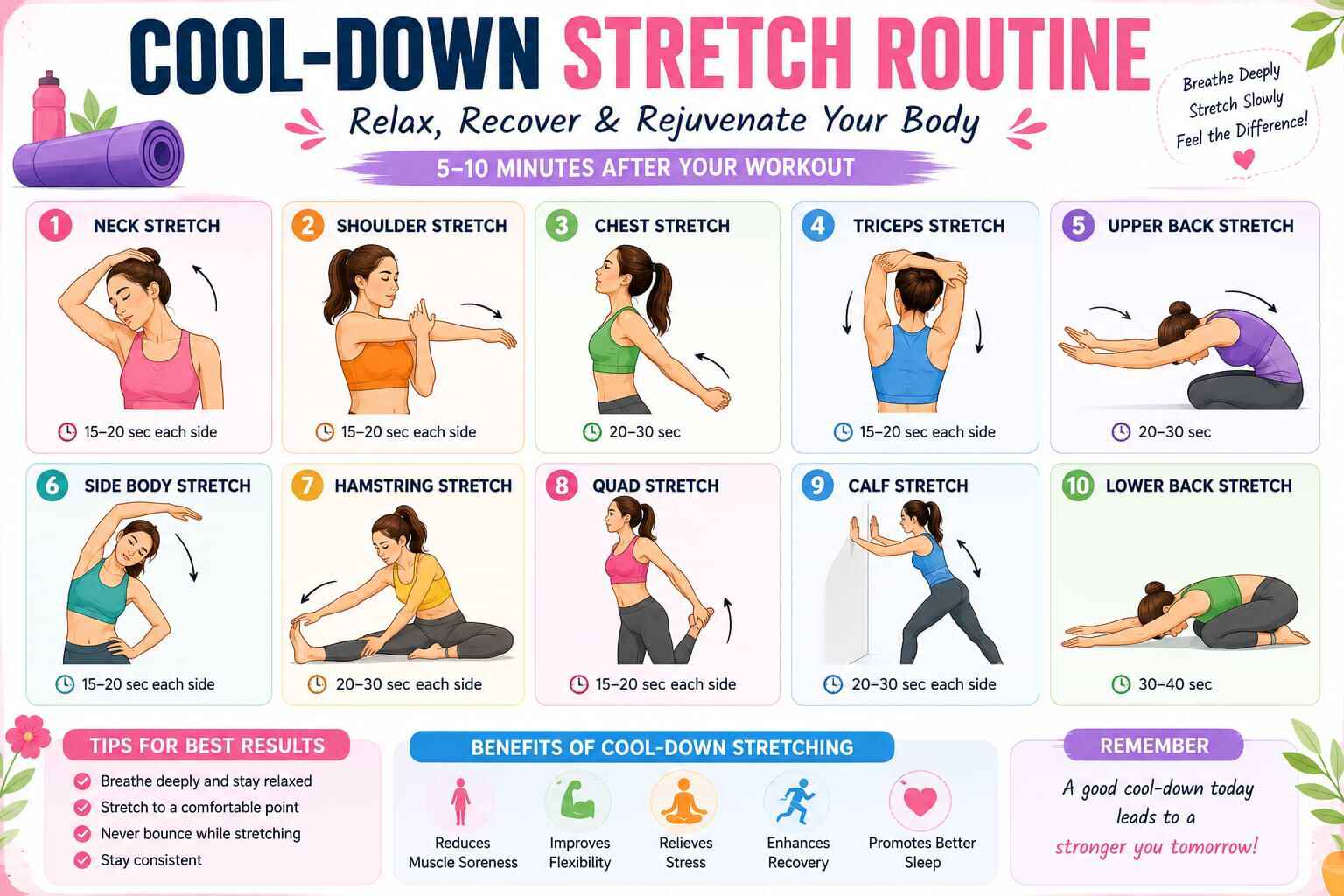
A complete cool-down stretch routine targets the major muscle groups used during exercise, including the neck, shoulders, chest, back, hips, quadriceps, hamstrings, calves, and lower back. Hold each stretch gently for 15–30 seconds while breathing slowly and deeply. Stretch only until you feel mild tension—never force a stretch or bounce, as this can increase the risk of injury.
Whether you’ve finished strength training, running, cycling, yoga, or a home workout, spending just 5–10 minutes cooling down can improve flexibility, increase your range of motion, and help your muscles recover more efficiently. Regular stretching also supports better posture, reduces muscle tightness, and may improve overall athletic performance over time.
This colorful cool-down stretch routine is suitable for beginners and experienced exercisers alike. By making post-workout stretching a daily habit, you can recover faster, feel less sore, and keep your body healthy, flexible, and ready for your next workout. A few minutes of stretching today can make a significant difference in how you move and feel tomorrow.
Cool-Down Stretch Routine
Seated Forward Bend

To release tense muscles and improve range of motion, perform a forward fold while seated as a hamstring stretch. It can help lessen tension and anxiety because it’s a yoga stance. Here’s how to fold forward while seated.
- Start by sitting on the floor.
- Keep your legs outstretched.
- Take a deep breath and lift both arms above your head.
- As you release the breath, softly bend forward from the hips and bring your hands down to your toes.
- Gently draw your upper body closer to your legs by placing your arms on your ankles, feet, or toes.
- For 20 to 30 seconds, hold.
Knee to Chest Pose
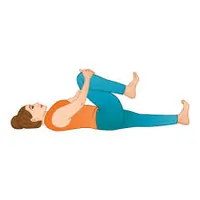
- Bend or extend your left leg while lying on your back.
- Interlacing your fingers around the front of your shin, bring your right knee closer to your chest.
- Maintain this position for 30 seconds.
- On the other side, repeat.
- Repeat two or three times on each side.
Butterfly stretch

After a workout, a butterfly stretch can assist your body in regulating by calming your central nervous system. Additionally, it may help loosen up and lessen stiffness in the hip joints. Here’s how to include a seated butterfly stretch in your cool-down routine.
- Take a seat with your legs outstretched on the floor.
- If needed, use your hands to pull the heel of your right foot up toward your groin.
- Bring the soles of your feet together by drawing your left heel toward your groin.
- Gently place your elbows on your knees while holding your feet with your hands.
- Maintain a straight back while sitting up straight and lowering your knees to the floor.
- Hold your knees for 20 to 30 seconds while applying light pressure with your elbows.
- Finish three times.
Standing quadriceps stretch

- Bend your right knee while standing so that your heel is closer to your buttocks.
- Use one or both hands to grasp your ankle.
- Don’t pull your knee out to the side; instead, keep your knees in line with one another.
- For thirty seconds, maintain this posture.
- On the other side, repeat.
- Repeat two or three times on each side.
Downward Facing Dog

- While maintaining a straight and balanced spine, raise and lower your hips from a tabletop or plank position.
- Press your weight equally between your hands while spreading your fingers.
- Press one heel into the ground at a time to pedal out your legs.
- For one minute, maintain this posture.
- Do the workout two or three times.
Head to Knee Forward Bend
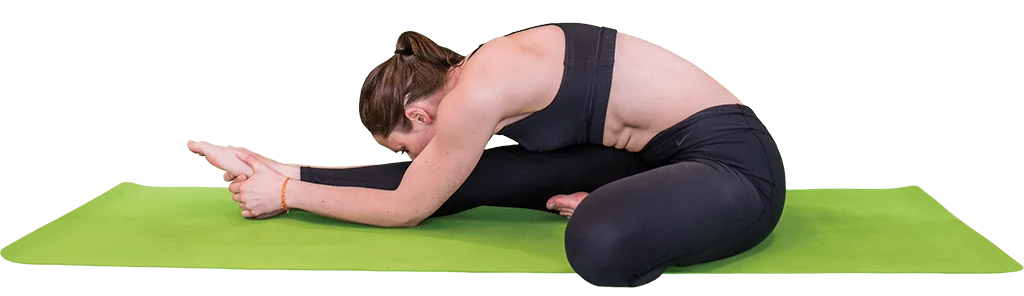
- Press your right foot into your left thigh and stretch your left leg while seated.
- Lift your arms above your head and fold forward over your left leg by hinging at your hips.
- Put your hands on the floor, around your foot, or on your leg.
- On the other side, repeat.
- Perform the exercise on each side two or three times.
Standing Forward Bend

- To bend forward, slowly hinge at your hips while standing.
- Maintaining a small bend in your knees, extend your spine and let your head drop heavily toward the floor.
- Put your hands on the ground, interlace your hands behind your back, or hold opposing elbows in front of or behind your thighs.
- For thirty seconds, maintain this posture.
- Do the workout two or three times.
- You can adjust this stretch if your hands can’t reach the floor. Instead of placing your hands on the floor, place them on a block or other strong object. The advantages will remain the same.
Legs Up the Wall Pose
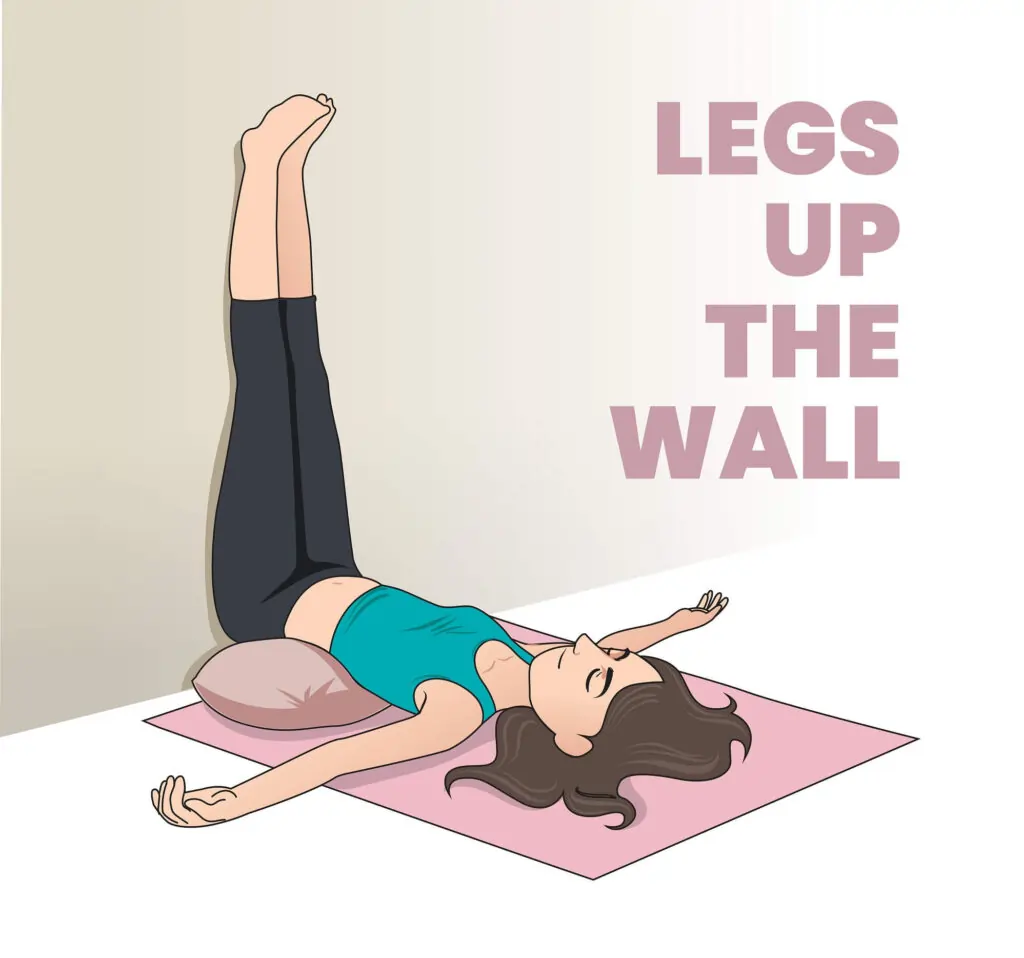
- Place the right side of your body against a wall while you sit.
- Lying on your back, swing your legs up along the wall.
- Put your hips a few inches away from the wall or against it.
- Put your arms over your head, on your stomach, or beside your body.
- For a maximum of five minutes, maintain this posture.
Upper body stretch

- Interlace your fingers and raise your palms toward the ceiling, whether sitting or standing.
- Keeping your spine straight, draw your hands as far up and back as you can.
- Eight to twelve pulses up and down.
- Do the workout two or three times.
Shoulder stretch
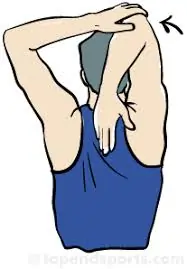
Shoulder stretch
- Raise your right elbow when standing or sitting, then put your hand close to your neck or spine.
- To gently press your right hand further down your spine, place your left hand on your right elbow.
- For thirty seconds, hold the stretch.
- On the other side, repeat.
- Perform the exercise on each side two or three times.
Child’s Pose

- Reach your arms forward or to the sides of your body as you sink back to sit on your heels from a tabletop position.
- Breathe deeply and let your chest sink into your thighs.
- Put your forehead down on the ground.
- For one to three minutes, maintain this posture.
- Do the workout two or three times.
Corpse Pose

- With your feet slightly wider than your hips and your toes spread out to the sides, lie on your back with your arms at your sides, palms facing up.
- Let go of any stress or tightness in your body and relax.
- Breathe deeply and let your body drop heavily to the ground.
- Hold this posture for at least five minutes.
Lying spinal twist

- With your arms extended to the side, lie on your back.
- Bring both knees up to your chest.
- Drop both knees to the floor and gently turn to the right. Turn your head to the left at the same moment.
- After 30 seconds of holding the twist, return to the center.
- On the other side, repeat.
Arm circles

- With your arms outstretched on both sides, take a tall stance.
- Make eight or ten forward arm circles.
- Make eight or ten backward arm circles.
- Repeat two or three times in each direction.
Arm cross-over stretch

- Take a seat or stand to begin.
- Cross your body with your right arm.
- Gently press back after placing your right hand or forearm on the outside of your right forearm.
- After 30 seconds of holding this stretch, switch to the opposite side.
What are 5 benefits of a cool down?
It requires 5-10 minutes of light physical activity (like walking) and stretching. It is necessary for:
Avoiding Dizziness: Slowly lowering your heart rate, which keeps blood from pooling in your legs and avoids sudden drops in blood pressure.
Reduces soreness: Helps flush out metabolic waste such as lactic acid to help reduce muscle stiffness after exercise.
Injury Prevention: Slow, static stretching helps preserve muscle length and joint mobility.
Regulating Core Body Temperature: Sure Safely cools down your elevated core body temperature.
Enhance Relaxation: It transitions your nervous system from a heightened ‘fight or flight’ mode to a restful, healing mode.
What are 7 physical activities?
There are seven core categories: aerobic exercise (like jogging), strength training (like weightlifting), flexibility training (like yoga), balance exercises (like tai chi), sports (like tennis), outdoor recreation (like hiking), and active daily chores (like gardening).
7 Kinds of Physical Activity
Knowing what the different types of physical activities are is very helpful in creating a balanced fitness plan that works on different aspects of health.
1. Aerobic (Cardio) Exercise
These activities raise your breathing and heart rate. They help cardiovascular health, lung capacity, and stamina.
Examples: Jogging, brisk walking, swimming, and biking.
2. Resistance (Strength) Training
This kind of exercise involves resistance (free weights, machines,s or your own body weight) to enhance muscle mass, strength, and bone density.
Examples: Dumbbells, push-ups, squats, resistance bands.
3. Stretching and Flexibility
These exercises will help you move your joints and muscles in a larger range of motion. Greater flexibility means fewer injuries, less muscle tension, and better posture.
Static stretching (hold a pose), dynamic stretching (move through a stretch), Pilates.
4. Exercises for Balance
Balance training improves stability and prevents falls by strengthening the core and lower body, especially for older adults.
Examples include standing on one leg, walking heel-to-toe, and some yoga poses (like the tree pose).
5. Team Sports and Games
Physical activities that are structured, usually competitive, and involve a mix of fitness components such as agility, coordination, cardiovascular endurance, and tactical thinking.
Examples: Basketball, football, tennis, volleyball.
6. Outdoor Adventures and Recreation
Outdoor activities that stimulate physical activity with mental health benefits and connection with nature.
Hiking, mountain climbing, kayaking, skiing, and so on.
7. Daily Lifestyle and Physical Activities
Non-exercise activities are things you do during your day.
Examples: Gardening, raking leaves, sweeping, walking to the store
What are the 5 benefits of stretching?
The body can move freely and fully. Benefits include: reducing muscle tension to prevent injury, improving circulation for better nutrient delivery to muscles, loosening tight areas for better posture, and stress relief through relaxation.
Fitness and medical professionals say there are five key benefits to making simple stretches part of your day:
1. Improved Flexibility and Range of Motion: Regularly stretching your muscles will increase your overall range of motion. This enables you to move joints through their full range of motion, making day-to-day activities easier to perform.
2. Enhanced Physical Performance: Doing dynamic stretches before working out prepares your muscles for better movement efficiency, which increases your performance in physical activities.
3. Better posture: Bad posture, which is often caused by tight muscles in your shoulders, neck,k and lower back, can be a contributor to chronic pain. Stretching loosens up these tight areas, which relaxes the muscles and helps to keep your spine better aligned.
4. Lower risk of injury: A flexible muscle is less likely to get injured during exercise. Stretching lengthens tight muscles and prevents muscle imbalances, reducing your chances of strains and joint damage.
5. Mental Wellbeing and Stress Relief: Stretching for just a few minutes releases physical tension and calms the mind. It has been linked to reduced levels of anxiety and can be used as a meditative practice to boost your mood.
What is the difference between stretching and cool down?
A cool-down is a short period of low-intensity exercise, like a gentle walk or bike ride, that gradually brings down your heart rate and prevents you from feeling dizzy. Stretching is a specific flexibility exercise to reduce muscle tension. Stretching is usually the final component of a cool-down.
The two practices are mainly different in their purposes and in their execution:
Cool-Down
Purpose: Safely brings the cardiovascular system back down to resting levels, assists with a gradual drop in blood pressure, and helps to flush the lactic acid from your bloodstream.
Activities: Rhythmic movements of low intensity of 3-5 minutes, using the same muscles worked out (e.g., slow jog or easy walk).
General Practice: Take 5 to 10 minutes to cool down at the end of any strenuous physical activity.
Stretching –
Purpose: Helps lengthen and tighten muscles to resting length, reduces soreness (DOMS) and builds long-term joint flexibility.
Activities: Mostly static stretching (hold a stretch for 20 to 30 seconds) instead of dynamic (moving) stretches.
General Practice is best performed after a workout when your muscles are warm and pliable, making it the perfect finishing touch to an active cool-down.
Benefits of cool-down stretch
Cool-down exercises may not seem like much, but they are essential to your body’s functioning.
The main benefit of cool-down exercises is that they reduce our physiological reactions, including variations in blood pressure, heart rate, and breathing.
Additionally, we begin to observe a decline in those capabilities as we reduce exertion. For the pressure changes to occur gradually, it is crucial to ensure that you have a brief cool-down, or at least a slowdown in exertion, and return the body to that resting condition.
Reduces muscle cramps
An additional advantage of cooling down? By doing this, you’ll be able to lessen any cramping in your muscles.
Muscle cramps may result from a build-up of lactic acid, depending on how high your heart rate is during activity. For example, completing sprints frequently can cause your heart rate to go into an anaerobic condition, which will cause lactic acid to build up in your muscle tissue.
Lowers your chances of injury
In addition to being beneficial in the near term, letting your body recuperate gradually from strenuous activity can reduce your risk of injury in the long run.
You may develop delayed onset muscle soreness (DOMS) if you don’t calm down after a strenuous workout.
When there are tiny tears in the muscle fibers, DOMS happens. DOMS can be decreased by going through a recovery procedure, such as a cool-down.
How long is a cool-down workout?
Depending on the kind of workout you’ve been performing, the duration may change.
You might want a lengthier cool-down if your workout involves a lot of high-intensity periods where your heart rate may enter the anaerobic region.
Generally speaking, you want to be able to see that the heart rate decreases gradually, so three minutes is the absolute minimum. Before you quit that activity entirely, you want your blood pressure, especially the systolic blood pressure, to drop and return to normal.
A cool-down is essential to feeling good after exercise if you have diabetes, high blood pressure, or a cardiac condition of any kind.
FAQs
What is a good cool-down stretch?
Bend your right knee and cross it to the left while lying on your back with your legs straight. Hold your leg down with your left hand. As you twist, try to keep both shoulders on the floor. To experience a complete body twist, turn your head to the right. Breathe while holding this stretch.
Is stretching a good way to cool down?
Following physical exercise, a cool-down enables a gradual reduction at the conclusion of the episode. Stretching can lessen the accumulation of lactic acid, which can cause stiffness and cramping in the muscles.
How long should a cooldown stretch be?
After working out, use this cool-down technique to progressively unwind, increase flexibility, and lower your heart rate. It should take roughly five minutes to complete these mild stretches. If you feel the need, give them extra time. You might need to modify certain stretches if you have a medical condition, an injury, or are pregnant.
Why is a cool-down stretch important?
Cooldown stretching helps to safely lower your heart rate, prevent blood from pooling in your extremities, and return your muscles to their natural resting length. This slow transition helps with less post-workout stiffness, less cramping, and flushing out metabolic waste for a more comfortable recovery.
Here are key benefits of adding 5 to 10 minutes of static stretching to the end of the workout:
Blood pressure drops with sudden stopping. The cool down allows the heart rate to gradually return to normal and assists in preserving a healthy venous return.
Decreases Muscle Soreness: Stretching while your limbs and muscles are still warm helps to lengthen the muscle fibers and decrease the accumulation of metabolic byproducts like lactic acid that can cause cramping and Delayed Onset Muscle Soreness (DOMS).
Increases Flexibility: Warm muscles are more flexible. Static stretches, which involve holding a position for 10 to 30 seconds, are most beneficial when done while your body is still warm. This helps to maintain or improve the range of motion in all of your joints.
Encourages Relaxation: By removing your nervous system from “fight or flight” (sympathetic) mode, a dedicated cooldown safely returns your physiological reactions, such as blood pressure and respiratory rate, to their resting baseline.
What type of stretch is best for a cool-down?
Static stretching is mainly used in a cool-down. This includes holding a stretch in a stationary position for 15 to 60 seconds to help gradually lower your heart rate, normalize your body temperature, and relax muscles that are tight or contracted from your workout.
Is 10 minutes of stretching a day enough?
Yes, 10 minutes a day is perfectly fine to keep yourself mobile, get rid of stiffness, and improve your general flexibility. It is also important to be consistent and to focus on the right areas such as your hamstrings, hips, and shoulders.
What are the two types of cool-downs?
Cool-downs come in two varieties: passive and active. Light movement and stretches that progressively relax every muscle are part of an active cool-down.
References
- Abbymccallsmith. (2025, August 25). Stretch to Success: The best Pre- and Post-Workout stretches to add to your routine. ATI. https://www.atipt.com/pre-post-workout-stretches/
- Build flexibility and add this stretch routine to your busy schedule. (2025, November 13). [Video]. TODAY.com. https://www.today.com/health/diet-fitness/cool-down-exercises-rcna24609
- Cpt, L. B. (2026, April 7). 9 Cool-Down stretches to add to your workout routine. Nourish, Move, Love. https://www.nourishmovelove.com/cool-down-stretches/
- Cronkleton, E. (2026, May 22). 15 cooldown exercises you can do after any workout. Healthline. https://www.healthline.com/health/exercise-fitness/cooldown-exercises#upper-body-stretches
- Daisy, & Daisy. (2026, April 7). 5-Minute full body cool down exercises. SPOTEBI. https://spotebi.com/workout-routines/5-minute-full-body-cool-down-exercises/
- Sybertz, A. (2025, October 31). The best Post-Workout cooldown exercises to leave you recovered and refreshed. https://www.onepeloton.com/blog/cooldown-exercises
- The Beginner’s guide to cool down exercises. (2023, November 15). PureGym. https://www.puregym.com/blog/the-beginner-s-guide-to-cool-down-exercises/
- Website, N. (2026, April 2). How to stretch after exercising. nhs.uk. https://www.nhs.uk/live-well/exercise/how-to-stretch-after-exercising/
- Clinic, C. (2024, June 10). Why you shouldn’t skip Cool-Down Exercises. Cleveland Clinic. https://health.clevelandclinic.org/why-you-shouldnt-skip-cool-down-exercises