10 Best Home Exercises for Lumbar Sliped Disc
Introduction:
A slipped disc in the lumbar spine can cause sharp low-back pain, leg pain, and stiffness, but the right home exercises can ease pressure on the nerve and support healing. Simple, controlled movements that strengthen your core and improve spinal mobility help reduce symptoms and restore daily function safely.
Activities, stretches, and mild workouts can all help reduce slipped disc pain. Stretches for the back and hamstrings can increase flexibility and stop a herniated disc from happening again.
Surgery is typically not necessary for those who have a Slipped disc. Physical therapy is frequently suggested by doctors as a treatment for slipped disc problems.
Although herniation can occur in any disc in the spine, it most frequently happens in the lower back. Depending on the location of the slipped disc, different workouts may be beneficial.
Exercises that can reduce discomfort, hasten healing, and help stop a herniated disc from happening again will be discussed in this article.
10 Best Home Exercises for Slipped Disc:
Exercises for lumbar spinal disc:
Bridging

- Bend your knees and place your feet on the ground while lying on your back.
- Lift your buttocks as high off the ground as you can without experiencing any pain by contracting your abdominal muscles.
- After ten seconds of holding this position, descend to the ground.
- Try 10 repetitions in 1 or 2 sets.
Seated chair stretch

- Take a seat with one foot on the ground and the other straight out, with the heel on the ground.
- Lean forward over the extended leg and straighten your back until the back of your upper thigh is stretched.
- For five to ten seconds, maintain this posture.
- Repeat a few times with different legs.
Towel hamstring stretch

- Lie down on a yoga mat, lifting one leg into the air.
- Put a cloth around the leg’s foot while it’s in the air.
- Pull the leg towards the direction of the body while holding the towel.
- Hold for 30 to 60 seconds.
- Repeat multiple times, switching legs each time.
Knee to chest stretch
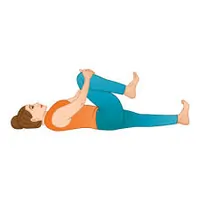
- Lie on your back, knees bent, and both heels on the floor.
- Pull one knee towards the chest by placing both hands behind it.
- For 15 to 20 seconds, hold the stretch.
- Repeat many rounds, switching legs.
Bird Dog

- Get down on your hands and knees.
- Flatten your lower back while contracting your abdominal muscles.
- Extend the opposing leg behind you and raise one arm in front of you.
- Repeat the exercise with the other arm and leg after holding this position for five seconds.
- Do ten reps on each side.
Dead Bug
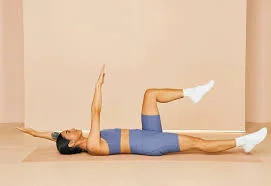
- Lying on your back, bend your knees and put your feet on the ground.
- Contract your abdominal muscles to flatten your lower back onto the floor.
- Lift both arms to the ceiling.
- Raise one foot a couple of inches off the ground slowly. Move the arm on the same side a few inches over your head while doing this.
- Repeat the exercise on the opposite side after lowering your arm and foot to their starting positions.
- Continue to carefully alternate from side to side for 15 repetitions with each arm and leg.
Standing Extension
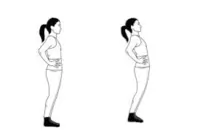
- Start this workout by standing up straight.
- Put both hands on either side of your lower back now.
- Now extend your spine back and press your pelvis forward with your hands.
- Make sure your neck is facing the ceiling by following the extension.
- Do two to three sets of ten repetitions to start.
Half Cobra Pose
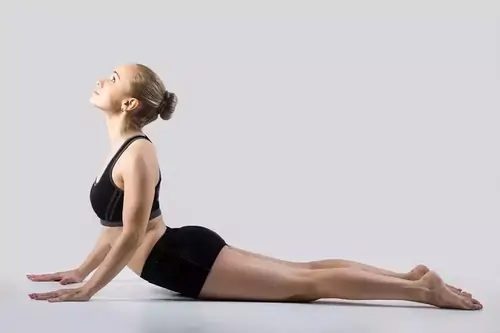
- Start this exercise by lying prone, or on your stomach, and gradually raise yourself on your elbows while maintaining hip contact with the floor.
- Hold the prop-up position for ten to fifteen seconds, then return to the prone position (lying face down).
- Gradually increase until you are able to maintain the final position for 30 seconds.
- Try to perform this stretch ten times.
Cat-Cow

- Start this stretch with your hands and knees.
- Take a breath and let your stomach “drop” towards the floor while you gaze up at the ceiling.
- After that, exhale, slowly round your spine, press your hands into the floor, and bend your neck slightly to look at your feet.
- Do two to three sets of ten repetitions of this stretch.
Plank

- Start by lying on your stomach with your forearms pressed up against the mat.
- Lift your body until you are resting on your forearms and toes by using your core.
- Make sure your spine is in a neutral position, meaning your butt should not be raised in the air or your lower back should not droop.
- After 20 to 30 seconds of holding the plank posture, descend to the floor.
- Try to perform this exercise two to five times.
Avoid These Exercises:
Avoiding certain exercises that can worsen your condition and even cause more injuries is essential when coping with a herniated disc. You should avoid the following exercises:
High-Impact Activities
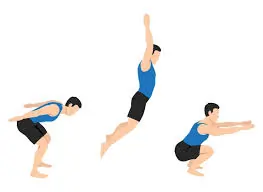
High-impact exercises like running and jumping can worsen a herniated disc and the spine. These activities put a lot of strain on the spinal discs, which raises the possibility of additional discomfort and damage.
Excessive Weightlifting
Excessive strain on your lower back can result from lifting big weights, especially if you do it incorrectly. Exercises with large weights, such as deadlifts, squats, and overhead presses, should be avoided since they can worsen a herniated disc.
Twisting Motions
Exercises that cause the spine to twist, such as some yoga positions or Russian twists, might make a herniated disc worse. These motions may worsen pain and put more strain on the affected disc.
Forward Bends and Toe Touches
Toe touches and forward bends are examples of bending forward from the waist that might place excessive strain on the lower back. A herniated disc may become more painful and uncomfortable as a result of these motions.
Crunches and Sit-Ups
Conventional crunches and sit-ups can put more strain on the lumbar spine. Flexing the spine during these workouts can worsen a herniated disc. Choose back-friendly core-strengthening exercises like planks.
Summary
The pain and pressure caused by a herniated or slipped disc can be reduced by performing mild stretches and exercises. To reduce pressure on the spinal column and avoid pain and recurrence, strengthen your hamstrings and back muscles.
Before performing any workouts to make sure they won’t harm your back or make it worse, always consult a doctor. Depending on where the herniated disc is located, a physician might suggest the ideal workouts for each patient.
FAQs
What is a home remedy for a slipped disc?
Home cures and lifestyle,
applying either cold or heat. Initially, pain and swelling can be reduced using cold packs.
Avoid prolonged bed rest. Remaining in bed can cause weak muscles and stiff joints, which can make healing more difficult.
Slowly getting back to work. Resuming your activities should be guided by your pain.
Can exercise be used to correct a slipping disc?
Exercise cannot heal a herniated disc, but it is an essential component of treatment to control pain and enhance long-term healing. In order to strengthen the muscles supporting the spine and relieve pressure and pain, it is advised to engage in modest movement and exercise rather than prolonged bed rest.
How quickly can a slipped disc be healed?
Changing activities to avoid painful movements and using painkillers are examples of conservative treatment. Most patients see symptom relief from this treatment in a matter of days or weeks.
How should a slipped disc be handled?
Avoid activities like sprinting, leaping, lifting heavy things, and sports like tennis or golf that involve high impact, severe bending, or twisting when coping with a herniated disc.
Is diarrhoea caused by a herniated disc?
Herniated discs can protrude and produce digestive problems, such as abdominal pain, diarrhoea, and constipation.
What makes a slipped disc worse?
Long-term sitting, particularly in non-ergonomic chairs, can worsen a herniated disc by putting undue strain on the lower spine. Sitting with bad posture can make symptoms worse, whether you’re at a desk, in a car, or on the couch. Take regular breaks to stand and stretch, and choose a chair with lumbar support.
What warning signs are associated with protruding discs?
Persistent or worsening pain, growing nerve symptoms, new or worsening weakness, loss of bladder or bowel control, or deficiencies in neurological function are some warning signs.
Referances
- Barrell, A. (2024, October 1). Safe exercises for a herniated disk. https://www.medicalnewstoday.com/articles/324311#summary
- McQuilkie, S., DC. (2023, July 3). 7 Herniated disc exercises for the lower back (Lumbar area). PostureFlow (Formerly Back Intelligence). https://backintelligence.com/herniated-disc-exercises/
- Ocs, T. P. D. (2025, September 7). 16 Exercises for herniated disc (Back or neck) pain. Verywell Health. https://www.verywellhealth.com/exercises-for-herniated-disc-7642792
- Carey, E. (2020, March 26). Fixing upper back and neck pain. Healthline. https://www.healthline.com/health/fitness-exercise/fixing-upper-back-and-neck-pain#when-to-see-a-doctor