Parsvottanasana (Pyramid Pose)
What is Parsvottanasana?
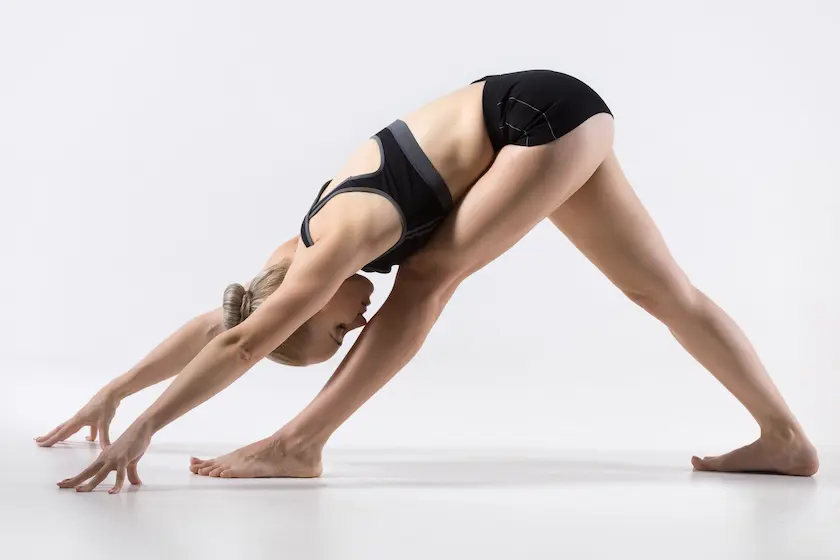
Parsvottanasana, sometimes referred to as Pyramid Pose, is a great pose for increasing posture, body awareness, and confidence. Forward bending, inversion, and full-body stretching are all incorporated into this intermediate-level standing pose. In addition to successfully warming up the legs, Pyramid Pose works the arms and back muscles.
To begin the pose, separate the legs, put the hands together in reverse prayer position, and line both heels sideways. Even though Parsvottanasana is a difficult forward fold while standing, regular practice helps the body and mind become more stable and balanced. Because of its strong base and strength. The entire back of the body is greatly stretched in this stance.
Meaning:
Parsvottanasana’s name comes from Sanskrit. It has four terms that help to make its significance and meaning clearer.
“Parsva” denotes “side,” “Ut” denotes “intense,” “Tan” denotes “to stretch,” and “Asana” denotes “pose.” This is the essence of what the practitioner must do to execute this pose, which is to bend the body to one side and stretch greatly.
It is better to think of Parsvottanasana as a stage between Utthita Trikonasana and Parivrtta Trikonasana. The body takes on the shape of a pyramid when it is bent forward and balanced in this inversion, hence the name.
Muscle Work During Parsvottanasana:
- Arms and Shoulders Muscles
- Upper and Lower Back Muscles
- Core Muscles
- Gluteus Muscle
- Hamstring Muscle
- Hip Muscles
- Quadriceps Muscles
How to Perform?
- At the top of your yoga mat, assume the mountain posture.
- Keep your legs three to four feet apart as you spread them.
- Make a 45-degree angle with your left foot and a 90-degree turn with your right. Turn your upper body to the right at the same time.
- Extend your arms sideways so they are parallel to the ground.
- Bring your palms into the reverse prayer position while internally rotating your shoulders.
- Lift your shoulders and spread your chest. Take a breath that lengthens your spine.
- Breathe out, bend forward, and push your hips back while maintaining a square pelvis.
- Attempt to bring your tummy to your thigh and your chest to your shin.
- For sixty seconds, maintain the relaxed neck position.
- Breathe in, raise your torso, and plant your back heel firmly on the floor.
- Bring your arms to your hips after releasing them.
Benefits:
Increases adaptability:
Parsvottanasana works the entire body. It include the whole body expanding. Its half variant stance, Ardha Parsvottanasana, is helpful during pregnancy because it lengthens the spine and stretches the hamstrings, legs, and hip muscles. As a result, the asana increases the body’s overall flexibility.
Increases awareness of one’s body and balance:
The entire body is deliberately stretched in this pose, which gives the body balance. The entire weight is evenly distributed and balanced on the core. This promotes calm breathing and total consciousness right now.
Enhances digestion:
This position include bending forward and touching the knee with the head. In the meantime, the abdominal organs are toned and massaged by the contraction of the abdominal cavity. This enhances the digestive system’s ability to work.
Improves breathing:
In this pose, the chest is fully expanded, and a deep breath is taken. This enhances deep breathing and contributes to improved breathing.
Soothes the mind:
Parsvottanasana restores control to the brain and nerves. It include balancing the body, which brings the mind to the present and demands attention to the body. Finding serenity is aided by this.
Treatment for arthritis:
Deep stretches are part of the position. It eases stiffness and soreness in the body. It is advised and has a therapeutic effect on wrist, elbow, shoulder, and neck arthritis.
Improves posture:
Achieving good posture is advantageous. Parsvottanasana must be incorporated into a person’s regimen if they have round, sagging shoulders. The stretches may be able to improve posture.
Stimulates the reproductive system:
The reproductive organs benefit from the asana as well. It even eases the discomfort brought on by menstrual cramps.
Therapeutic Applications:
- By correcting the drooping shoulders, the pyramid stance enhances posture.
- It treats wrist, elbow, neck, and shoulder arthritis by strengthening and stretching joints.
- It relieves mental stress and calms the brain.
- Parsvottanasana is also used therapeutically to treat flat feet.
- Lower back discomfort is also relieved by the pyramid position.
Beginner’s Advice:
- When starting Parsvottanasana, take a broader stance because it can be difficult to find balance at first.
- Additionally, it might be challenging for beginners to keep the back leg solid. It will be beneficial to soften the front knee to get the full stretch with the leg and inner groin.
Preparatory Pose:
- Tree Pose (Vrikshasana)
- Cow Face Pose (Gomukhasana)
- Standing Forward Bend (Uttanasana)
- Extended Triangle Pose (Utthita Trikonasana)
- Extended Side Angle Pose (Utthita Parsvakonasana)
Modifications:
Using blocks: Put two blocks, one on each side, next to the front foot. Rather than holding the blocks on your back, place your hands on them. As you stretch, this will maintain a straight spine.
Using a chair: Put a chair in front of you. Starting from a position near the chair, lean forward and grasp the seat with your hand while extending a leg backward. Stretch your arms forward while resting your head on the chair’s seat.
Yoga strap and block: To deepen the stretch and maintain your balance, hook the yoga strap behind your front hip in a loop and place the other end beneath your back foot. Additionally, rather than uniting them on your back while stooped forward, you can hold a brick between your hands.
Variations:
Ardha Parsvottanasana (Half Pyramid Pose):
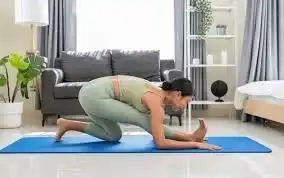
The standing stance for this variation is the same as for Parsvottanasana. As in an airplane stance, the trunk is bent at the hip crease. Either the arms are extended down to the floor or they are drawn backward, clasping the hands at the lower back. The trunk stays parallel to the floor in the final pose, which helps novices with tight backs become more flexible.
Utthita Parsvottanasana (Extended Pyramid pose):
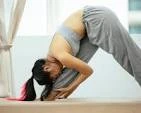
By bending the trunk and extending the hands past the front leg, one can attain this position. The head rests past the shin, and the spine is stretched farther than in the pyramid stance.
Pyramid Pose with wrapped wrists:
For this variation, every step is the same except for the hands. Just use alternating hands to grasp the wrists or elbows rather than uniting the palms behind the back.
Pyramid pose arms on the floor:
This position is more difficult than the original. Here, the hands are on the ground, and the twisted trunk is bowed towards the front leg. The arms are then rested on the floor while the legs stay straight by bending the elbows.
Precautions:
- Keep your front leg taut to avoid straining your knee. To prevent hyperextending or interlocking, soften the knee.
- When performing Parsvottanasana, avoid bending of the spine and rounding of the back when bringing the head to the knee.
- In order to later execute the original position with accuracy, beginners must constantly search for the modified version.
Contraindications:
- Back injury: If you have a back injury, don’t try the complete forward bend position.
- High blood pressure: It would be safer to see a doctor before if you have high blood pressure.
- Neck stiffness: If you are experiencing neck stiffness, avoid going deeper in this pose.
- Injured legs, hips, or hamstrings: Avoid doing this position if you have any injuries because the stretch is too strenuous for your muscles.
- Pregnancy: Steer clear of parsvottanasana, especially in the later months of pregnancy.
FAQs
What muscles are used in the pyramid pose?
Stretches, Strengthens, and Lengthens: Parsvottanasana is a great way to strengthen the legs and hips while stretching the hamstrings, calves, quadriceps, hips, gluteus, and pelvic floor muscles.
Who should avoid Parsvottanasana?
Injury and Surgery: Students should avoid this position if they have any injuries to their ankles, knees, legs, hips, hamstrings, rib cage, spine, lower back, shoulders, or neck. Additionally, this pose should not be performed by students who have had hip, cardiac, or abdominal surgery.
What are common mistakes in Parsvottanasana?
Over-Rounding the Back: Instead of collapsing, concentrate on stretching the spine. Unstable Hips: To prevent twisting or lowering, keep your hips level. Locking the Front Knee: To prevent strain, keep the bend mild or microbend. Weight Shifting Backward: Evenly divide the weight between the two feet.
What is the difference between Parsvottanasana and Parsvakonasana?
Parsvakonasana strains each side of the body independently, but Parsvottanasana stretches both sides equally and simultaneously. Parsvottanasana aids in preparing the body for twists, inversions, backbends, and seated forward folds.
Does Parsvottanasana improve digestion?
Parsvottanasana, sometimes referred to as the pyramid pose or intense side stretch in English, offers a combination of stillness, balance, and stretch. In addition to massaging the abdominal organs and improving digestion, it does a fantastic job of stretching out the hamstrings.
Is Parsvottanasana good for beginners?
This pose is a great complement to your normal yoga practice because it improves flexibility in your hips, legs, and spine. Even a modified variation, called Ardha Parsvottanasana, can provide a mild stretch, making it appropriate for novices or those with a restricted range of motion.
References:
- Parsvottanasana (Pyramid Pose): Meaning, Steps, Variations, Benefits – Fitsri Yoga. https://www.fitsri.com/poses/parsvottanasana
- Parsvottanasana Pose Yoga Pose (Pyramid Pose). Tummee. https://www.tummee.com/yoga-poses/Parsvottanasana