

Hand Function Exercise After Stroke
Introduction
A stroke is a medical disorder in which cell death results from inadequate blood supply to a portion of the brain. Strokes can be classified as either hemorrhagic (caused by bleeding) or ischemic (caused by a lack of blood supply). Both lead to malfunctions in some areas of the brain.
Facial drooping, the inability to walk, move, or feel on one side of the body, difficulties speaking or understanding, lightheadedness, or loss of vision to one side are some signs and symptoms of a stroke. Signs and symptoms frequently start to show up shortly after a stroke. A transient ischemic attack (TIA), often known as a mini-stroke, occurs when symptoms persist for less than twenty-four hours. Severe headaches can also be linked to a hemorrhagic stroke. Stroke symptoms may not go away. Pneumonia and lack of bladder control are examples of long-term consequences.
High blood pressure is the largest risk factor for stroke. High blood cholesterol, tobacco use, obesity, diabetes mellitus, a history of transient ischemic attack (TIA), end-stage renal illness, and atrial fibrillation are additional risk factors. Although there are other less frequent reasons, obstruction of a blood vessel is the most prevalent cause of ischemic stroke. Either bleeding straight into the brain or into the space between the brain’s membranes can result in a hemorrhagic stroke. A ruptured brain aneurysm may cause bleeding. Medical imaging, such as an MRI or CT scan, is usually used to support the diagnosis, which is usually based on a physical examination.
A CT scan can rule out bleeding, but it might not always rule out ischemia, which usually does not appear on a CT scan in the early stages. To identify risk factors and potential causes, further tests such as an electrocardiogram (ECG) and blood tests are performed. Similar symptoms could be caused by low blood sugar.
Reducing risk factors, anticoagulant treatment for those with atrial fibrillation, and surgery to widen the arteries to the brain for those with significant carotid constriction are all part of prevention. Physicians may recommend statins or aspirin for preventive purposes. A stroke is an urgent medical situation. Hemorrhagic strokes may benefit from surgery, but ischemic strokes may be treated with medication that can break up the clot if identified within three to four and a half hours. Stroke rehabilitation is a type of treatment that aims to restore lost function; ideally, this is done in a stroke unit, but they are unavailable in many parts of the world.
Classification
- Hemorrhagic stroke
- Ischemic stroke
Hemorrhagic stroke is caused by a ruptured blood artery or an irregular vascular structure, whereas a disruption in the blood flow to the brain causes ischemic stroke.
Approximately 87% of strokes are ischemic, with hemorrhagic strokes making up the remaining 25%. In regions of ischemia, bleeding may occur; this phenomenon is called “hemorrhagic transformation.” The number of hemorrhagic stroke instances that begin as ischemic stroke is unknown.
Symptoms
Keep track of when the symptoms started if you or someone you are with might be experiencing a stroke. Certain therapies work best when administered shortly after a stroke occurs.
Stroke symptoms include:
Difficulty communicating and comprehending what others are saying. A stroke victim may be disoriented, use profanity, or be unable to comprehend spoken language.
facial, arm, or leg numbness, weakness, or paralysis. Usually, just one side of the body is impacted. A person may attempt to lift both arms above their head. A stroke may be indicated if one arm starts to fall. Additionally, when attempting to smile, one side of the mouth may droop.
vision issues in one or both eyes. Alternatively, the individual can perceive twofold.
a headache. An abrupt, intense headache could be a sign of a stroke. The headache may be accompanied by nausea, lightheadedness, and altered awareness.
walking with difficulty. A stroke victim may lose their balance, coordination, or stumble.
Ischemic stroke
This kind of stroke is the most prevalent. It occurs when the blood arteries in the brain constrict or become occluded. This results in ischemia, or decreased blood flow. Fatty deposits that accumulate in blood vessels might result in blocked or constricted blood vessels. Alternatively, they may be caused by blood clots or other material that enters the bloodstream, usually from the heart. When fatty deposits, blood clots, or other debris get stuck in the brain’s blood arteries, an ischemic stroke happens.
Hemorrhagic stroke
A hemorrhagic stroke happens when a blood artery in the brain bursts or leaks. Brain hemorrhages, or bleeding inside the brain, can be caused by a variety of blood vessel-related disorders. Hemorrhagic stroke is associated with the following factors:
- uncontrolled high blood pressure.
- overuse of anticoagulants, another name for blood thinners.
- Aneurysms are bulges at weak points in the walls of blood vessels.
- head injuries, such as those sustained in an automobile collision.
- deposits of proteins in blood vessel walls that cause the wall to weaken. Cerebral amyloid angiopathy is the term for this condition.
- cerebral bleeding following an ischemic stroke.
However, a Transient ischemic attack (TIA) does not result in long-term harm. A brief reduction in blood flow to a portion of the brain results in a transient ischemic attack (TIA). It could be as short as five minutes.
A TIA occurs when a fatty deposit or blood clot reduces or blocks blood flow to a part of the nervous system.
Hand Function Exercise
Palm Up and Down

Pronation (palm down) and supination (palm up) are two motions that are crucial for clothing, carrying things, and turning doorknobs. Put your hand palm down on a table to perform this therapeutic hand exercise. Next, raise your palm with your unaffected hand. Do this 20 times, palm up, palm down.
Wrist Flexion and Extension

Gently introduce mobility into the wrist for the next exercise. Stretch your affected hand at the wrist by placing your non-affected hand on the palm rather than the fingers while keeping your elbow on the table. Stretch forward, then backward. Move slowly and within a range that doesn’t hurt.
Wrist Side Movement

Ulnar deviation (toward the pinky) and radial deviation (toward the thumb) are the terms used to describe this side-to-side wrist movement. Although it’s not frequently performed alone, it’s essential for positioning your wrist and hand correctly for several actions, including writing, lifting, and gripping.
Put your affected hand, palm down, on the table. Next, move your hand to the left and then the right with your unaffected hand. Twenty times, slowly move from side to side like a windshield wiper.
Wrist Curl
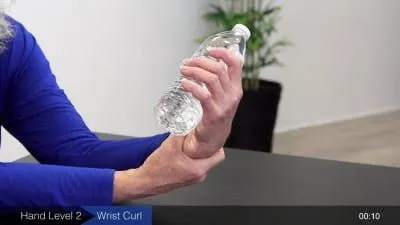
This stroke hand workout helps to improve grip function and is similar to a bicep curl for your wrist. Support your arm with your non-affected hand while holding the water bottle in your affected hand.
After letting your wrist stretch, curl it back up. For ten to fifteen repetitions, gradually go up and down. Your forearm muscles need to be contracting.
Grip and Release
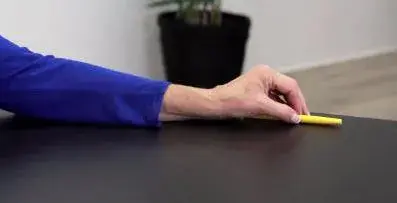
On one side of the table, place a pen. Use your affected fingers to grasp it as tightly as you can, paying particular attention to the space between your thumb and index finger. After moving the pen across the table, let it go.
Concentrate on holding the pen lightly. Use the least amount of force required to move the pen to highlight the therapeutic nature of this exercise.
Keeping your forearm on the table, repeat by moving the pen back and forth across the surface. This aids in isolating the hand and wrist while avoiding shoulder compensation to finish the movement (also referred to as synergistic movement).
Do just the difficult, not the frustrating, exercises. If you can’t do it at first, practice mentally and try again in a few weeks, or use some assistance with your unaffected hand.
Pen Spin

Put the pen on the table and spin it with your thumb and fingers for this advanced hand workout. To avoid using your shoulder during this exercise, place your elbow on the table. Concentrate on isolating your middle, thumb, and index fingers.
During this workout, test your speed. Try spinning the pen in the opposite direction after 15 seconds of rapid spinning.
Coin Pickup and Drop

There are three motions in this advanced hand workout. In the palm of your affected hand, start by arranging eight quarters in a row. To grasp with your thumb and index finger, move one quarter with your thumb.
Next, using your other fingers to hold the remaining quarters in your hand, place the quarter on the table. This is referred to as translating skills and hand manipulation. Because it calls for the coordination of all five fingers, this is a difficult hand workout.
Reverse the exercise to pick them back up once you’ve finished setting each one down. By using different-sized coins (such as nickels, dimes, and quarters) and adding up the amount as you arrange them in a random order on the table, you may both increase the difficulty and turn this into a cognitive training exercise.
Finger Opposition

Try touching each fingertip to your thumb in this final hand exercise for stroke victims. Beginning with your index finger and working your way down to your middle, ring, and little fingers, pinch and release. Stretch and fully extend your fingers in between each tap to work the extensor muscles as well.
Risk factors of stroke
Lifestyle risk factors
- Being overweight or obese.
- Physical inactivity.
- Heavy or binge drinking.
- Use of illegal drugs such as cocaine and methamphetamine.
Medical risk factors
- High blood pressure.
- Cigarette smoking or secondhand smoke exposure.
- High cholesterol.
- Diabetes.
- Obstructive sleep apnea.
- Cardiovascular disease, including heart failure, heart defects, heart infection, or irregular heart rhythm, such as atrial fibrillation.
- COVID-19 infection.
Additional variables linked to an increased risk of stroke include:
- Age: Compared to younger persons, those who are 55 years of age or older have a larger risk of stroke.
- Race or ethnicity: Compared to people of other races or ethnicities, African Americans and Hispanics are more likely to have a stroke.
- Sex: Men are more likely than women to have a stroke. Women are more likely than men to die from strokes, and they are often older when they occur.
- Hormones: Using estrogen-containing hormone therapy or birth control tablets may raise the risk.
FAQs
What is the hand assessment for stroke patients?
The Assisting Hand Assessment for Adults After Stroke is based on the same construct as the previous AHA versions; that is, it measures and describes how well the affected hands are utilised together when performing bimanual hand activities on their own.
Can I get my hand and arm function back after a stroke?
In the weeks following a stroke, some people can fully use their arm again. Many others still experience arm weakness, discomfort, or other issues. Arm therapy might still be beneficial to you. Your treatment plan can be customised to meet your needs by your medical team.
What is the 3 6 12 rule for stroke patients?
The “1-3-6-12-day rule” is a widely accepted consensus that calls for a graduated increase in anticoagulation delay between 1 and 12 days following the onset of neurological severity. It makes sense from the standpoint that the timing should vary based on the severity.
What is the 4-hour rule for stroke?
The “4-hour rule” (which is usually 4.5 hours) for stroke is a very important time frame for treating ischemic strokes, which are caused by clots. During this time, doctors can use intravenous clot-busting medication (tPA) to restore blood flow, stop brain damage, and improve the chances of a near-full recovery. The sooner you start treatment, the better.
Important Information About the 4.5-Hour Treatment Window
Best Time to Act: The sooner you start treatment, the better it will work. The window is usually 4.5 hours long, but the first hour is often called the “golden hour” for the best results.
Clot-Busting Medication (tPA): To dissolve the clot and get blood flowing to the brain again, an intravenous medication, usually Alteplase or Tenecteplase, must be given within 3 to 4.5 hours of the first symptoms.
What it Treats: This rule mostly applies to ischemic strokes, which happen when blood vessels get blocked. It doesn’t work for strokes that cause bleeding in the brain.
Importance of the Deadline: Every second counts because brain cells die quickly when they don’t get enough oxygen. It is very important to act within this time frame to protect brain tissue and limit long-term disability.
Terms and Ideas That Are Related: “The Golden Hour” is the first hour after symptoms start, when intervention is most important.”Time is Brain” is a medical saying that means that getting treatment quickly gives you the best chance of survival and the least chance of permanent brain damage.Door-to-Needle Time”: The goal is to start tPA within 60 minutes of the patient arriving at the emergency room.
“Mechanical Thrombectomy”: A procedure to remove big clots that can be done on some patients within 6 to 24 hours, which is different from the 4.5-hour tPA window.
Signs of a Stroke
To meet the 4.5-hour window, it’s important to be able to recognise symptoms right away:
Sudden weakness or numbness in the arm, leg, or face, especially on one side.
Sudden confusion, trouble talking, or trouble understanding what someone else is saying.
Sudden problems with vision in one or both eyes.
Dizziness, loss of balance, or trouble walking that comes on suddenly.
A sudden, severe headache that has no known cause.
How to increase hand power?
To make your hands stronger, you need to do exercises that work your fingers, thumbs, and forearms on a regular basis. For example, you can use grip trainers, tennis balls, or rubber bands to provide resistance. Farmer’s carries, dead hangs from bars, plate pinches, and towel wringings are all good exercises to do 2–3 times a week with rest days in between.
Best Exercises for Hand Strength:
Grip Crushers/Trainers: Use handheld spring grip strengtheners to make your grip stronger.
Tennis Ball Squeeze: Squeeze a tennis ball for 30 seconds to make your grip stronger.
Plate Pinches: Put a heavy weight plate between your thumb and fingers.
Rubber Band Extensions: Put a rubber band around your fingers and pull them apart.
Wringing a towel: Twisting a wet towel will make your forearms and wrists stronger.
Farmer’s Carry: Walk while holding heavy things like dumbbells or backpacks.
Dead Hangs: Hang from a pull-up bar for as long as you can.
Ways to Get Better:
Consistency: Work out 2–3 times a week, and give yourself 48 hours to recover.
Progressive Resistance: Make the grip trainer or the plates heavier over time to make it harder.
Range of Motion: To improve dexterity, do thumb stretches that involve touching each finger.
Safety: Don’t squeeze too hard if your joints are already inflamed.
What are the 7 stages of stroke recovery?
The Brunnstrom Approach often defines the 7 stages of stroke recovery, which show how motor function goes from being completely paralysed to normal movement, going through stages of spasticity along the way. These are the steps: 1. Weakness, 2. Spasticity Shows Up, 3. Spasticity Gets Worse, 4. Spasticity Gets Better, 5. Complex Movement Combinations, 6. Spasticity goes away, and 7. Normal Function comes back.
The Brunnstrom Stages of Stroke Recovery: 7 Stages
Stage 1: Flaccidity (No Movement): Muscles are limp and flaccid right after a stroke, and the person can’t move on their own.
Stage 2: Spasticity Appears (First Signs of Movement): Spasticity (involuntary stiffness/tightness) starts to develop, and small, jerky movements may start, usually in patterns that work together.
Stage 3: More Spasticity: Spasticity reaches its highest point, making limbs feel very stiff and making it hard to move.
Stage 4: Less Spasticity: The spastic muscle movement starts to go down, and movement patterns that are different from basic synergies become possible.
Stage 5: Complex Movement Combinations: Spasticity keeps going down, which makes it possible to do more complicated movement combinations and improves coordination.
Stage 6: Spasticity Goes Away: Spasticity goes away completely, and movement becomes more voluntary, coordinated, and controlled.
Stage 7: Normal Function Returns: In the last stage, full, normal function returns, and the person can move their joints in isolated ways and in complex, coordinated ways.
Important Points
Non-Linear Progress: Survivors may not go through all of the steps, and they may stay in one step for a long time or skip steps.
Timing for rehab: The first three to six months are when people are most likely to recover on their own, but they can keep recovering for years because of neuroplasticity.
Goal: Rehabilitation’s main goal is to help patients safely get through these stages, often by using functional and strengthening exercises.
Which arm is weak during a stroke?
Blood flow to several brain regions may cease during a stroke. Lifting or controlling the right arm may be difficult for someone with impaired blood flow to the left side of the brain.
How long does arm weakness last after a stroke?
After a stroke, arm and hand deficits can last for months or even years, reducing your ability to carry out daily tasks, while some recovery is possible. Osteoporosis, muscle atrophy, and persistent discomfort can also result from weakness and inactivity.
What hand exercises help the brain?
However, specialists claim that there are more effective strategies to safeguard the health of your brain. The hand exercises involve alternating motions such as clapping your palms and then striking the backs of your hands together, tapping your fingertips sequentially, pointing with your thumb and first finger on different hands while switching, and more.
What is the 10 rule for grip strength?
The dominant hand has a 10% higher gnp strength than the nondominant hand, according to the 10% rule. For many years, therapists have utilised this rule to help patients with hand injuries set strength objectives.
What are 80% of strokes caused by?
Ischemic strokes make up about 80% of all strokes. They happen when a blockage (like a blood clot or fatty plaque) cuts off or slows blood flow to the brain, which cuts off oxygen to brain cells. Atherosclerosis or blood clots moving from other parts of the body are two common causes of these blockages.
Main Reasons and Risk Factors (80% of Cases):
Atherosclerosis: The arteries get narrower and harder because plaque builds up in them.
Blood Clots (Thrombus/Embolism): A clot can form in an artery that goes to the brain or move from another part of the body, like the heart.
High blood pressure (hypertension) is the most important risk factor for ischemic stroke that can be avoided.
Atrial Fibrillation (Afib): An irregular heartbeat that can cause clots to form.
Lifestyle Factors: Being overweight, not getting enough exercise, eating a lot of fat and salt, and smoking all make it more likely that a clot will form.
Common Synonyms and Related Words:
Ischemic stroke is the most common term for this group.
Infarction of the brain
A blood clot in the brain that causes a blockage-related stroke is called a “mini-stroke” or TIA (Transient Ischemic Attack). Even though it is only a temporary blockage, this condition often happens before a major stroke.
References
- 25 hand exercises for stroke recovery. (2024, April 23). Saebo. https://www.saebo.com/blogs/clinical-article/reclaim-your-dexterity-with-hand-exercises-for-stroke-recovery?srsltid=AfmBOopA6h-hrOHP8YwXMKBs4fCjciz-V7wQiOcTPyG-z6-BAHwWdpN1
- Client challenge. (n.d.). https://www.slideshare.net/slideshow/hand-function-in-patients-with-hemiplegia/239851564
- Cscs, A. T. P. D. N. (2025, October 2). Helpful hand exercises for stroke patients of all ability levels. Flint Rehab. https://www.flintrehab.com/hand-exercises-for-stroke-patients/?srsltid=AfmBOoqFneBVQF2nVadJ5a23Hm50LDw-WZRtdS3fI90EMuzqPtd4L2Pj
- Knutson, J. S., Harley, M. Y., Hisel, T. Z., & Chae, J. (2007). Improving hand function in stroke survivors: A pilot study of contralaterally controlled functional electric stimulation in chronic hemiplegia. Archives of Physical Medicine and Rehabilitation, 88(4), 513–520. https://doi.org/10.1016/j.apmr.2007.01.003
- Wikipedia contributors. (2026, April 21). Stroke – Wikipedia. https://en.wikipedia.org/wiki/Stroke#Causes


