
Vrischikasana (Scorpian pose)
What is Vrischikasana?
Vrischikasana, or Scorpion Pose, is an advanced yoga inversion that blends strength, balance, and deep backbending. It challenges the shoulders, core, and spine while improving control and body awareness. This pose is best practiced after developing strong forearm balance and flexibility in the back.
One step closer to Pincha Mayurasana is the last pose of Vrischikasana. Pinch mayurasana must be modified for Vrischikasana by bending the knee to reach the feet to the head. The entire body is raised off the ground while balanced on the forearms in this backbend, which arches the back.
The spine, legs, abdomen, and neck muscles are all made more flexible by this deep body stretching stance.
Meaning:
In Sanskrit, “Vrischik” means “scorpion” and “asana” means “pose.” In this position, the foot is placed on top of the head, the knees are bent, and the body is inverted.
This looks like a scorpion with its tail curved over its back, ready to sting its victim. Thus, it is referred to as Scorpion Pose or Vrischikasana.
Muscle Work During Vrischikasana:
- Arms and Shoulder Muscles
- Biceps and Triceps Muscles
- Middle and Lower Back Muscles
- Core Muscles
- Gluteus Muscle
How to Perform?
- Start by kneeling on the ground.
- With your hands, forearms, and elbows on the ground, bend forward.
- Start moving as far as you can in the direction of your elbows.
- Lift each leg off the ground individually while exhaling.
- Extend your legs and chest vertically.
- Using your entire weight on your elbows, forearms, and palms, try to find your equilibrium.
- With pointed toes, softly bend your knees as you exhale.
- Raise your head and neck as high as you can by slowly lifting them off the ground.
- Until your feet are resting on your crown, keep lowering them.
- For thirty seconds, keep breathing normally.
- Bring your legs to the floor past your head to let go.
- To achieve Urdhva Dhanurasana, raise your elbows off the ground and straighten your arms.
- Try to reach vipritta chakrasana after that, and then unwind in tadasana.
Benefits:
Strengthens the muscles:
Vrischikasana works the muscles in the shoulders, arms, and wrists by balancing the body weight on the arms. Deep stretches are also performed on the hip flexors, spine, chest, and leg muscles. It enhances their flexibility and makes them stronger and stable.
Tones the abdomen:
The trunk is also raised off the ground in Vrischikasana. It tones and stretches the abdominal muscles. This increases endurance and fortifies the core muscles. Massaging the organs in the abdomen helps eliminate fat buildup and enhances digestion.
Increases the ability to breathe:
The chest is expanded while maintaining the complete position. This promotes lung expansion and raises oxygen intake. This enhances the respiratory system’s effectiveness.
Enhances equilibrium:
It’s an upside-down position. The head is positioned beneath the heart in this instance, which improves blood flow to the brain. Additionally, the amount of oxygen that reaches the nerves rises. This gives the body a sensation of control and coordination while also calming the mind. Vrischikasana is therefore known to enhance the body’s general balance.
Beginner’s Advice:
- Start by elevating just one leg when attempting to raise the legs off the ground. Raise the other heel and use the ball of the foot to balance the lower leg. Start rocking forward now, and elevate it until it is parallel to the opposite leg.
- Choosing a wall to practise this pose is a smart move because it provides support for the raised legs.
Preparatory Pose:
- Downward Facing Tree Pose (Adho Mukha Vrikshasana)
- Headstand (Sirsasana)
- Dolphin Pose (Catur Svanasana)
- Feathered Peacock Pose (Pincha Mayurasana)
- Cobra Pose (Bhujangasana)
- Wheel Pose (Urdhva Dhanurasana)
Props and Modifications:
- Chair: While kneeling on the ground with your forearms and elbows on the ground, place a chair in front of your hands. Take hold of the chair’s legs. Now put your toes on the chair as you raise your legs and bend them towards your head.
- Yoga wheel: Place a yoga wheel beneath your upper body as you fully execute the scorpion pose. It keeps the torso balanced and elevated.
- Bolsters: To perform Vrischikasana, stack three to four bolsters and assume an inverted position. Bend your knees, place your feet on the bolster, and do the position with your heels resting on them.
Variations:
Vrischikasana II:
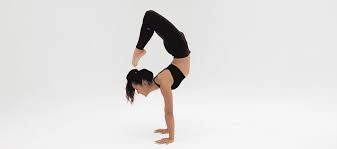
Uttanasana should be done first. Lift your legs while keeping your palms on the ground. Balance your weight on your hands while maintaining a vertical trunk, arms, and legs. As much as you can, lift your head and neck off the ground. Bring your feet up to your head while bending your knees.
Shalabh Vrischikasana:
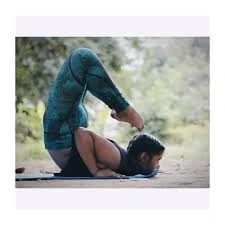
Put yourself in a prone position. Put your arms straight beneath your body and wrap the fingers around your pelvis. Next, with your chin touching the floor, raise your legs and trunk like in Vrischikasana. The shoulders, forearms, neck, and chin are used to balance the weight.
Precautions and Contraindications:
- This stance should be avoided by those who have heart disease or high blood pressure.
- Vrischikasana should not be performed while pregnant.
- As a novice yogi, take your time doing vrischikasana. Strive to become proficient in every stance that serves as its base. Only once you’ve developed that control and flexibility will you be able to go into such a complex stance.
- If you have any injuries or problems with your shoulders, wrists, hips, or spine, stay out of the pose.
- This pose should also be avoided by those who are experiencing vertigo.
FAQs
What are the common mistakes when doing the Scorpion Stretch?
Maintaining proper posture and keeping your back as straight as possible is essential to getting the most out of your Scorpion Stretch. If done incorrectly, excessive arching can cause damage and excessive strain on the lower back muscles.
Is scorpion pose safe for beginners?
Start with foundational exercises to develop strength and flexibility before attempting Scorpion Pose. Pay attention to backbend and forearm balancing exercises. For safety and support, use props like yoga blocks or a wall. Practice frequently, but pay attention to your body to prevent overdoing it.
How long should you hold a scorpion pose?
With your fingers pointing towards your feet and your elbows up, place your palms on the mat on either side of your head. Assume Wheel by pressing through both hands, then drop onto your forearms while keeping your head above the mat. Hold for three to five breaths, then let go.
What muscles does Scorpion Pose work?
Vrischikasana, or scorpion pose, has many advantages. It increases spinal flexibility and strengthens the shoulders, arms, back, and core. It also helps with posture by stretching the chest muscles and hip flexors.
What are the contraindications for Scorpion Pose?
Elevated blood pressure.
Neck, shoulder, or back injury.
Headache.
During pregnancy.
glaucoma.
Heart conditions.
ear infections.
What is a scorpion pose good for?
The arms, spine, forearms, and torso are all strengthened by the scorpion stance. The heart benefits from this stance as well. Since Vrischikasana is one of the most difficult postures, it is crucial to practise it under the right supervision. Passion, intuition, energy, loyalty, and psychic powers are all enhanced by striking this stance.
Is scorpion pose a full-body workout?
According to Kemo Marriott, the founder of the Brotherhood Training Club, “the Scorpion is excellent for stretching out your whole body.” “You’ll stretch your hips, shoulders, and spine, which is the ideal remedy for spending all day sitting down.”
References:
- Vrischikasana (Scorpion pose): How to Do, Variations & Benefits – Fitsri Yoga. https://www.fitsri.com/poses/vrischikasana
- Scorpion Pose Yoga Pose (Vrischikasana Pose). Tummee. https://www.tummee.com/yoga-poses/Vrischikasana