
Hamstring Curls
Introduction
An isolation exercise that works the hamstring muscles is the leg curl, sometimes referred to as the hamstring curl. Flexing the lower leg against resistance in the direction of the buttocks is the exercise’s objective. Leg curls come in three varieties. Leg curls can be performed standing, sitting, or lying down.
The muscles in the back of your thigh are called hamstrings. Among these muscles are:
- Biceps femoris semitendinosus semimembranosus
These muscles work together to move your thigh back and bend your knee. This facilitates running, jumping, and walking. - The hamstring curl, sometimes referred to as a leg curl, is a hamstring strengthening exercise. While the rest of your body remains motionless, you must bend your knees and bring your heels toward your butt.
- The exercise is usually performed on a leg curl machine. However, you can perform different kinds of hamstring curls at home if you don’t have any gym equipment or a membership.
- All you need for these variations is your body weight and basic tools.
Benefits of hamstring curls
- Increasing mobility and balance
- Increasing leg stability can lower the chance of injury, particularly to the lower back and knees.
- Enhancing general knee health by striking a balance between hamstring and quadriceps (front thigh) strength.
- Providing lower back support and reducing back pain while performing daily tasks.
- Making it simpler to get up from a seated position, run, climb stairs, and walk.
- Your back thigh muscles lift your lower leg when you perform a hamstring curl. Your glutes and hamstrings become stronger as a result of this exercise.
- You are less likely to sustain an injury or experience pain if your hamstrings are strong. This is because powerful hamstrings can support your knees and endure the strain of exercise.
- In addition to stretching your quadriceps, hamstring curls can help ease back pain and quad tightness.
- There are numerous advantages to including leg curls in your exercise routine. You can anticipate seeing results in your hamstrings (biceps femoris, semitendinosus, and semimembranosus) and calf muscles (gastrocnemius and soleus muscles) first because leg curls primarily target these muscles. Overall strength, balance, and endurance depend on having strong, flexible hamstrings. Twelve Stronger hamstrings have also been linked in studies to improved athletic performance, especially in sprint-based training and movements.
- But having strong hamstrings isn’t limited to the gym. Your thighs (quadriceps), buttocks (gluteus muscles), and the front of your shins (tibialis anterior) are also worked when you lower your feet back down during a leg curl. By conditioning these particular muscles, you can prevent injuries when using your lower body daily. This includes engaging in activities such as yard work, housework, and playing with children.
- Furthermore, as your body ages, increasing the strength and flexibility of this muscle group as well as these target areas will be beneficial, particularly if you have joint or back pain or are prone to knee issues.
Considerations
- When performing hamstring curls, it’s critical to maintain a neutral back. Your hamstrings won’t function correctly if your lower back is arched. Instead, your back will have to do the work, which can be uncomfortable and cause back pain.
- Throughout the exercise, contract your abs to prevent arching your back. Your spine will become more stable if you contract your abs. During hamstring curls, you should only bend your knees.
- Moving slowly is also the best option. You should control your movements because sudden, jerky movements can cause injury.
- If you experience back, hip, or knee pain, stop performing hamstring curls. Alternative leg exercises that are safe to perform can be recommended by a personal trainer.
Five Different Kinds of Hamstring Curls to Build Stronger Thighs
1. Hamstring curl while standing
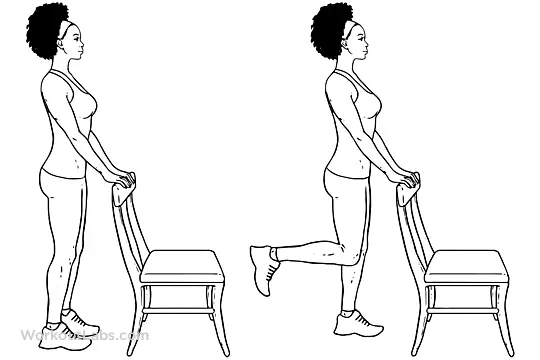
- A bodyweight exercise that tones your hamstring muscles is the standing hamstring curl. It’s the perfect exercise to strengthen your legs and balance.
- To perform a hamstring curl while standing:
- Place your feet hip-width apart as you stand. For balance, rest your hands on a chair or your waist. Use your left leg to support your weight.
- Bring your heel to your butt by bending your right knee slowly. Your thighs should remain parallel.
- Lower your foot slowly.
- Perform 12 to 15 repetitions.
- Do the same with the other leg.
2. Hamstring curl while seated

- Use a resistance band around your lower legs to perform a hamstring curl while seated.
- Moving your heels against resistance will require more effort from your hamstrings.
- To perform a hamstring curl while seated:
- Attach the ends of a resistance band to a solid object, like a piece of furniture or an exercise machine. Take a seat facing the band. Keeping your feet together, wrap the loop around one of your heels.
- Pull your heel back by bending your knee; stop when you are unable to do so.
- To get back to your starting position, extend your knee.
- Perform 12 to 15 repetitions. Repeat with the other leg after that.
3. Hamstring curl prone

- The prone version of the seated hamstring curl increases lower-leg resistance. When you bend your knees, this works your hamstrings.
- To perform a hamstring curl while prone:
- Attach a resistance band’s ends to something strong. Place your feet hip-width apart while lying on your stomach. Flex your ankle and wrap the band around one heel.
- Maintaining your thighs and hips on the mat, bend your knee to draw your heel toward your butt.
- Go back to where you were before.
- Perform 12 to 15 repetitions.
- As you gain strength, try using heavier resistance bands.
The prone hamstring curl can also be performed without a resistance band.
4. Use a ball to curl your hamstrings.

- The hamstring curl with a ball raises your legs and hips off the ground by using a stability ball. Your hamstrings will contract to roll the ball toward your body when you bend your knees.
- To perform a hamstring curl of this kind:
- Rest on your back. On a stability ball, place your heels and calves. Flex your ankles and place your feet hip-width apart. Place your arms, palms down, on the ground.
- Raise your hips until you have a straight body. Use your glutes.
- Bend your knees and slowly raise your hips. Move the ball toward your body by pulling your heels toward your buttocks until your foot soles make contact with the ball.
- Lower your hips and return to the floor after extending your knees.
- Perform 12 to 15 repetitions.
- Cross your arms over your chest or keep one leg up for an extra workout.
5. Use a dumbbell to curl your hamstrings
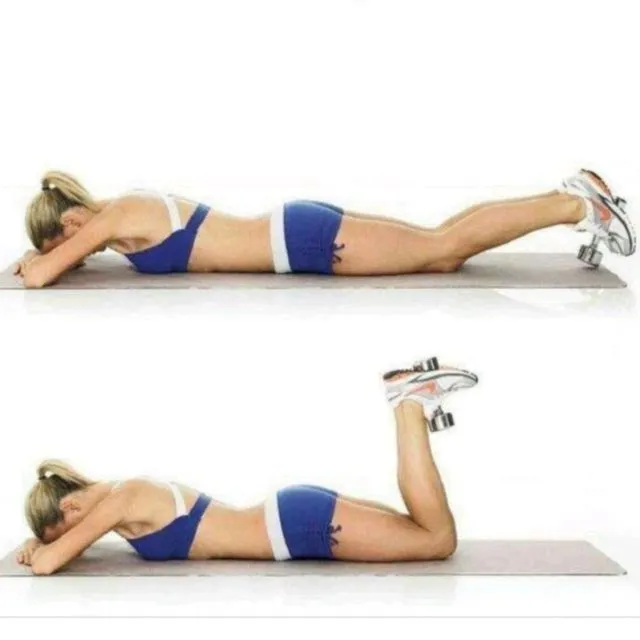
- A dumbbell is used in this exercise to increase the resistance between your feet. As you raise your lower legs, the additional weight puts strain on your hamstrings.
- Use a light dumbbell to begin. You can use a larger weight as your strength increases.
- To perform a hamstring curl of this kind:
- Fold your arms in front of you while lying on your stomach. A light dumbbell should be placed between your feet.
- Bring your heels up to your butt while bending your knees.
- Go back to where you were before.
- Perform 12 to 15 repetitions.
- Ankle weights can also be used in place of a dumbbell.
Common Mistakes During Hamstrings Curls
To keep leg curls safe and efficient, steer clear of these blunders.
Too-High Leg Pad
Your range of motion may be limited, and your Achilles tendon may be compressed if the padded lever is too high on your calves. When performing leg curls for the first time, you might want to have a fitness instructor or trainer demonstrate the proper form and assist you with any necessary roller pad adjustments.
Using the Incorrect Weight
Always begin with a lighter weight when performing a leg curl. Lifting the hips and flexing the lower back will cause your body to overcompensate. This can injure your back and fails to isolate your hamstrings and calves.
Different Types of Leg Curls
Leg curls can be done in a number of ways to suit your fitness objectives and skill level.
Leg Curl Standing
- Until they have mastered their form and improved their workout endurance, beginners might want to begin performing leg curls while standing. Because standing leg curls don’t involve the use of weights, they require less hamstring strength, which makes it simpler to finish sets, practice form, and prevent soreness or injury.
- To perform leg curls while standing:
- Your feet should be hip-width apart.
- To bring that foot closer to the butt, shift your weight onto one leg and bend the other at the knee.
- Repeat on the opposite side after lowering the foot.
- Start with up to 10 repetitions, at least three times per week.
Leg Curl Standing With Resistance Band
- Add a resistance band to your standing leg curl routine once you are comfortable performing this variation.
- If you don’t have access to gym equipment, this added resistance is a great way to strengthen your calves and hamstrings. Place the band slightly above your ankles and raise your foot against the resistance to finish this variation.
Leg Curl While Seated
- If the prone position is uncomfortable or causes pain in your neck or lower back, you might prefer the seated leg curl variation. In addition to preventing needless pain or discomfort from standing, the machine used for this specific variation keeps you from lifting your legs during the curling motion, which lowers the risk of injury to those same areas.
- Make sure the lower leg pad is directly below the calf and the thigh pad is slightly above the knees when performing seated leg curls. Pull the lower leg pad as close to your butt as you can while holding onto the machine’s handles. Return to the starting position after holding for up to five seconds.
Nordic Curl for Hamstrings
- The Nordic hamstring curl differs from the traditional leg curl and its other variations in that it involves only moving one lower leg at a time while maintaining a stationary body. Nordic curls have been linked in studies to a lower risk of hamstring injuries, so anyone who is prone to these problems during exercise or is recuperating from one is encouraged to try this technique.
- This variation entails leaning forward at the knee after kneeling on the floor and placing the ankles under an immovable object (or having someone hold them). You must therefore regulate the forward lean of your body. However, it’s important to keep in mind that this leg curl method calls for stronger core muscles than the other variations.
Precautions and Safety
- Hamstring curls are used by bodybuilders to gain muscle mass. However, because it can cause the hamstrings to foreshorten (or tighten), fitness professionals and athletes who participate in specific sports don’t always favor this leg curl variation.
- If you overtrain and neglect to properly stretch, repeated contraction and muscle growth can reduce hamstring flexibility. Therefore, always stretch after working out to maintain the elasticity of your hamstrings.
- However, leg curls can worsen an existing condition, slow healing, or increase your risk of developing new pain, so some people might want to stay away from them completely. This encompasses those who:
- Are you recuperating from neck, spine, or back injuries or surgeries.
- Have knee injuries or instability.
- Recently undergone hip or knee surgery.
- Have ligaments torn or ruptured in your ankle or knee, such as your anterior cruciate ligament (ACL) or Achilles tendon.
- As usual, it’s best to consult your doctor before beginning a weight training program. Consult your trainer or physical therapist for instructions on how to use the leg curl machine. You should also discuss any adjustments to your training regimen with your trainer or therapist whenever you feel ready to up the resistance or add more weight. Remember to strive for three sets of eight to twelve leg curls as you continue to hone your technique.
Instructions for Leg Curls
- Make sure the backrest on a leg curl machine is adjusted to your body size and that the pad fits comfortably just above your ankles.
- Place your body face down on the machine, keeping your legs straight and your torso flat, after choosing the weight you want to use.
- For stability, place your feet beneath the ankle pad and grip the machine’s handles. This is where you start.
- Contract your hamstrings to bring your heels toward your glutes while bending your knees slowly.
- Squeeze your hamstrings for a brief moment at the top of the movement.
- Return to the beginning position slowly while extending your legs fully. One rep is this.
- Do as many repetitions as you want to.
Advice For Leg Curl
- Do the exercise slowly and carefully to fully activate your hamstrings, especially when lowering your legs.
- Squeeze your hamstrings for maximum contraction when your legs curl up, pausing momentarily at the top.
- Breathe in as you slowly lower your legs back down after exhaling as you curl them up.
- Make use of the entire range of motion. At the bottom, try to fully extend your legs, and at the top, try to bring your heels as close to your glutes as you can.
FAQs
What does the hamstring curl do?
Benefits of hamstring curls
Enhancing leg stability can lower the chance of injuries, particularly to the lower back and knees. Enhancing general knee health by striking a balance between hamstring and quadriceps (front thigh) strength.
Are hamstring curls beneficial?
1. A quick and easy method to increase knee health, balance, and leg strength is to perform hamstring curls. 2. Hamstring curls can be performed in a variety of positions, such as lying, standing, or using gym equipment, making them suitable for people of all fitness levels.
Is 20 kg leg curl good?
Male lifters typically weigh 64 kg (1RM) for the Lying Leg Curl. This is a very impressive lift and puts you at an Intermediate Strength Level. What makes a Lying Leg Curl effective? In comparison to the general population, male beginners should strive to lift 23 kg (1RM), which is still impressive.
Does hamstring curl grow glutes?
To a limited extent, certain leg curl variations do engage the glutes. Check out our glute exercise page here if you’re serious about toning your glutes.
Do hamstring curls increase speed?
The Nordic hamstring curl is incredibly effective in sports like football and track, where explosive speed and power are essential. The hamstrings’ ability to produce force quickly is enhanced by the exercise, which is essential for quick acceleration and deceleration. These curls are very helpful for basketball players.
Is hamstring curl good for beginners?
Until they have mastered their form and improved their workout endurance, beginners might want to begin performing leg curls while standing. Because standing leg curls don’t involve the use of weights, they require less hamstring strength, which makes it simpler to finish sets, practice form, and prevent soreness.
Reference
- Nunez, K. (2019, May 23). 5 types of hamstring curls for stronger thighs. Healthline. https://www.healthline.com/health/hamstring-curls
- Rogers, P. (2024, June 8). Leg curls for beginners: form, variations, and common mistakes. Verywell Fit. https://www.verywellfit.com/how-to-properly-execute-the-leg-curl-exercise-3498304
- Standing hamstring curl. (n.d.). [Video]. Hingehealth. https://en-gb.hingehealth.com/resources/articles/hamstring-curl/
- Video: Lying hamstring curl with weight machine. (n.d.). Mayo Clinic. https://www.mayoclinic.org/healthy-lifestyle/fitness/multimedia/lying-hamstring-curl/vid-20084689