

Goddess Pose (Utkata Konasana)
What is Goddess Pose?
Goddess Pose (Utkata Konasana) is a powerful standing yoga posture that strengthens the legs, opens the hips, and enhances balance and stability. It also promotes inner strength and grounding.
In addition to strengthening your hips, legs, and glutes, it opens your chest and aids in spinal decompression. Stretch, strength, and mental tenacity are all combined in this position.
The Goddess position is a very easy and beginner-friendly pose that involves spreading your feet apart, squatting wide-legged, and bending your knees at a 90-degree angle. This position strengthens your hips, thighs, and groin area.
You can also execute this pose in a number of different ways, such as with your hands above your head, on your side with your fingers spread and elbows bent, on your thighs or hips, or in front of your chest while praying.
Meaning:
Goddess stance is called Utkata Konasana in Sanskrit, where Asana means pose, Kon indicates angle, and Utkata means furious. By striking this stance, you are enhancing your elegance and poise and calling forth the strong feminine energy inside you.
The Hindu goddess Kali’s beautiful femininity is symbolised by the Goddess Pose. This pose resembles Kali’s ferocious appearance, which she uses to slay demons. She is frequently linked to shakti, which represents feminine energy, fertility, and creativity.
By balancing our energies and connecting with the divine feminine, the goddess posture allows us to sense our inner knowledge. Pregnant women can benefit greatly from this position since it strengthens and widens the pelvis, which will be useful during delivery. The respiratory and cardiovascular systems will be stimulated by this invigorating stance.
Muscle Work During Goddess Pose:
- Lower Back Muscles
- pelvic Muscle
- Gluteus Muscle
- Hamstring Muscle
- Hip Muscles
- Knee Muscles
- Quadriceps Muscles
How to Perform?
- After striking Tadasana, or mountain position, extend your legs wide. Your toes should be 45 degrees outward, and your legs should be shoulder-width or three feet apart.
- As you exhale, bend your knees and squat. Your thighs should be parallel to the floor, and your knees should be placed on your ankles. Use your core muscles to drop your hips and draw in your navel.
- With your palms facing outward and your fingers spread, extend your hands above your head and bend them at the elbows. The upper arm should be parallel to the thighs and the elbows should make a 90-degree angle.
- Hold the stance for five deep breaths while slightly expanding your chest.
- Straighten your arms and legs, bring your feet together, lower your arms, and gradually return to Tadasana (mountain pose) to exit this posture.
Benefits:
Pregnant women’s expanding pelvis: The goddess posture exposes the pelvic area because of the wide-legged squat, which is very helpful during birthing. Additionally, it improves fertility by stimulating the reproductive organs through an increase in prana energy flow.
Reduces tension and stress in the hip area: The goddess pose squat stance opens and extends the hips, knees, ankles, and shoulders, with a focus on the hip. The Goddess Pose will assist in releasing the tension that frequently builds up in the hip region of the body. You can de-stress the hip more quickly if you hold the stance for a longer period of time.
Helps Manage Arthritis: This position, which entails stretching a variety of thigh, knee, and ankle muscles and joints, can help manage arthritis regularly.
Shapes and Tones the Body: By stretching and straightening the spine and strengthening the shoulders and chest, this pose aids in posture correction. Additionally, it eliminates stooping and hunchbacks, resulting in a toned body.
Develops Awareness: During this pose, paying attention to breathwork and balance helps to develop awareness. Additionally, this helps with limb alignment correction, guaranteeing the pose’s safe execution.
Increases Internal Body Heat: During the winter, the Goddess position is helpful for raising internal body heat because it is a warm and invigorating position.
Preparatory Pose:
- Mountain Pose (Tadasana)
- Garland Pose (Malasana)
- Standing Forward Fold Pose (Uttanasana)
- Chair Pose (Utkatasana)
Beginner’s Advice:
- To avoid losing your balance, make sure your knees are over your toes and not bending too far.
- A more sophisticated method is to align your heels with your toes so that the foot forms a straight line from one end to the other.
- You should have a straight spine. To maintain a straight spine, extend your tailbone downward and align your shoulders with your hips.
- If you have a painful burn, do not squat completely. You should only lower yourself as much as is comfortable for you.
- When you start to feel exhausted, gradually return to Tadasana and take a rest before beginning the pose once more.
Variations:
Goddess Pose with a twist:
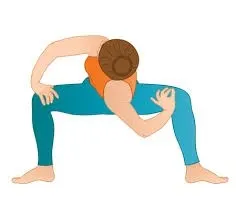
Place your hands on your thighs while maintaining a squat stance. Then, as you exhale deeply from your abdomen, lower your left shoulder to the centre and glance over your right shoulder. When you inhale, raise yourself back up, lower your right shoulder to the centre, and then glance over your left shoulder when you exhale.
Goddess Pose swaying:
You sway from side to side in this more difficult stance by first placing your weight on your right foot and then your left.
Goddess Pose push-ups:
You don’t have to go all the way down in this form. In the wide-legged posture, straighten your legs as you inhale, then return to the squat position as you exhale. You can keep doing this until you begin to feel burned or for five breaths.
Goddess Pose side stretch:

You can stretch the opposing hand over your head and bring your left palm to the floor while performing the twist, rather than keeping your hands on your thighs. Keep your eyes fixed on the extended hands above. Repeat with the other hand after holding the pose for five breaths.
Another variation of this stance is to extend your right arm above your head while placing your left elbow on your left leg. For a healthy stretch, bend slightly to the left.
Goddess Pose forward bend:
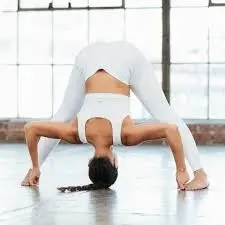
Stretch your arms down and place the palms on the ground, or bend forward and extend your arms to the side like aeroplane wings. You can alternatively use your hands to grab the opposing ankles while maintaining your arms in the shape of your legs.
Precautions and Contraindications:
- The Goddess pose is beneficial for pregnant women, although it should be avoided, especially in the final trimester, and should only be done under the supervision of a licensed prenatal teacher.
- If you have recently had surgery or have an injury to your shoulder, ankle, hips, pelvis, knees, calves, hamstrings, or legs, you should avoid or practise under after speaking with your doctor.
- People with a history of high blood pressure should execute this position under supervision or for a shorter period of time since it produces heat.
Conclusion:
The Goddess Pose is a standing pose that tones and strengthens the body and is demanding, strong, stimulating, and energising. Both men and women can execute this posture because, like yin and yang, everyone of us has a feminine side that needs to be balanced.
This pose can assist in stretching a variety of muscles and joints to relieve tension and stress, and it can be modified in a number of ways. It helps you develop grace in your personality and corrects your posture.
FAQs
What is the goddess pose used for?
Goddess Pose is a strong, grounded squat that develops hip opening, core stability, and lower body strength. It combines rooted physical involvement with an energetic lift to channel inner empowerment.
Is the goddess pose good for beginners?
For first-time practitioners, horse posture, also known as the goddess pose, is an excellent standing pose that works the core and lower body.
What are the benefits of the goddess pose?
Goddess Pose is a great way to strengthen and warm up the entire body, especially the lower portion. It helps to strengthen or soften the pelvic diaphragm, which can help with pelvic floor problems. It also opens up and stretches the inner thighs.
Why is the goddess pose so hard?
The challenge is not the pose’s intricacy but rather the endurance and attentiveness needed to perform it. Your thighs start to burn more the longer you maintain the stance, and that’s when the real effort starts.
What is the other name for the Goddess pose?
Goddess Pose is also known as Horse Pose, Fierce Angle Pose, Utkata Konasana, and occasionally even Victory Squat. Whatever name you give it, this shape is all about accessing your fierce feminine energy and inner fire.
What are the contraindications for the goddess pose?
If you have any injuries to your hips, knees, ankles, or pelvis, avoid this position or consult your physician before attempting.
What are the precautions for Utkata Konasana?
This posture should be avoided by students who have hip problems, injuries to the hamstrings, quadriceps, gluteus, pelvic, lower back, legs, feet, or toes, or who have recently had hip replacement, ankle, or knee surgery.
References:
- Goddess Pose (Utkata Konasana): How to Do, Benefits, and Variations – Fitsri Yoga. https://www.fitsri.com/poses/goddess-pose
- Utkata Konasana Pose yoga Pose (Goddess Pose): Meaning, Steps, Benefits, and Precautions – Fitsri Yoga. https://www.fitsri.com/poses/Goddess Pose


