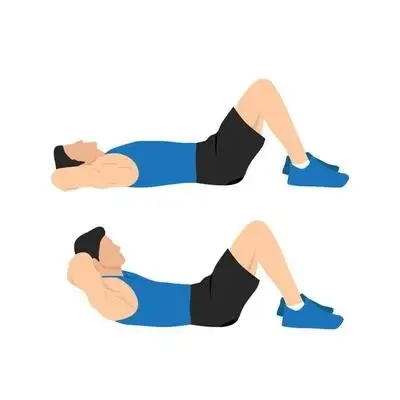
Chair Pose (Utkatasana)
What is Chair Pose?
Chair posture is a standing yoga posture that involves bending your knees and performing a half squat, as if you were sitting in an imaginary chair. Chair Pose appears to be a basic position, yet it works the whole of the body while simultaneously strengthening and stretching different regions. It’s a somewhat adaptable yoga stance, making it ideal for beginners.
It may appear simple to sit on an imagined chair, but this pose demands a lot of core stability and lower-body strength. Chair Pose is a deep-standing yogi squat that aims to strengthen the connection between your brain and pelvic muscles.
Chair Pose appears in a number of yoga forms, but it is particularly frequent in Vinyasa, a kind of yoga that connects postures in fluid sequences, matching your movements with your inhalations and exhalations.
Muscle Work During Chair Pose:
- Shoulder & Arm Muscle
- Core Muscles
- Back Muscles
- Calves and Ankle Muscle
- Pelvic Floor Muscle
Video of Chair Pose
How to Perform?
- Stand upright, your feet slightly apart.
- Stretch your hands to the front, palms facing downward. Don’t bend your elbows.
- Bend your knees and gently press your pelvis down, as if you’re sitting in an imagined chair.
- Be comfy, or strive to be. To further understand the Chair Pose, imagine yourself seated and reading a newspaper or working on a laptop.
- Check to make sure your hands are parallel to the ground.
- Sit upright and stretch your spine. Relax.
- Continue to breathe while flipping through the pages of the newspaper, absorbing national and worldwide news.
- Sink lower into the chair by gently descending, but make sure your knees don’t extend beyond your toes.
- Continue to descend gently until settling into Sukhasana (cross-legged position). If you wish, you can lie on your back and rest.
Benefits:
- Enhances core balance and stability.
- Strengthens the ankle and knee joints.
- Promotes awareness and focus.
- Helps to increase mental awareness and mindfulness.
- Strengthens the legs, glutes, back, and arms.
- Core engagement promotes abdominal organ function.
- Opens the chest and diaphragm to improve respiration.
- Burns extra fat in the legs, glutes, abdomen, and arms.
- Stimulates the throat, sacral, and root chakras.
- Activates the spinal column and boosts nervous system performance.
Preparatory Pose:
- Start with the sun salutation flow for 10 to 12 rounds, and you will notice an immediate stimulation of the glutes, spine, and upper body.
- This flow is useful before any standing yoga asana because it relaxes stiff muscles, awakens all of the bodily chakras, and enhances the flow of Prana throughout the body.
- Stand on one leg in the shape of a half-lotus and raise your arms aloft to activate your spine and leg muscles.
- Holding this position for 2 to 5 minutes while being alert and focused stimulates the knee joints.
Ardha Uttanasana (Standing Half Forward Bend):
- Stand straight in the centre of your mat and slowly bend forward, compressing your core.
- Bend just halfway. Hold the posture until you feel a release of tension or tightness in your upper back, shoulders, and tailbone.
Variations:
Utkatasana with Low Hands:

- If balance with your core is difficult with your arms aloft, do not extend your arms in the air.
- Keep them about your waist, or if you want, place your hands in a prayer formation close to your chest.
Utkatasana on Tiptoes:
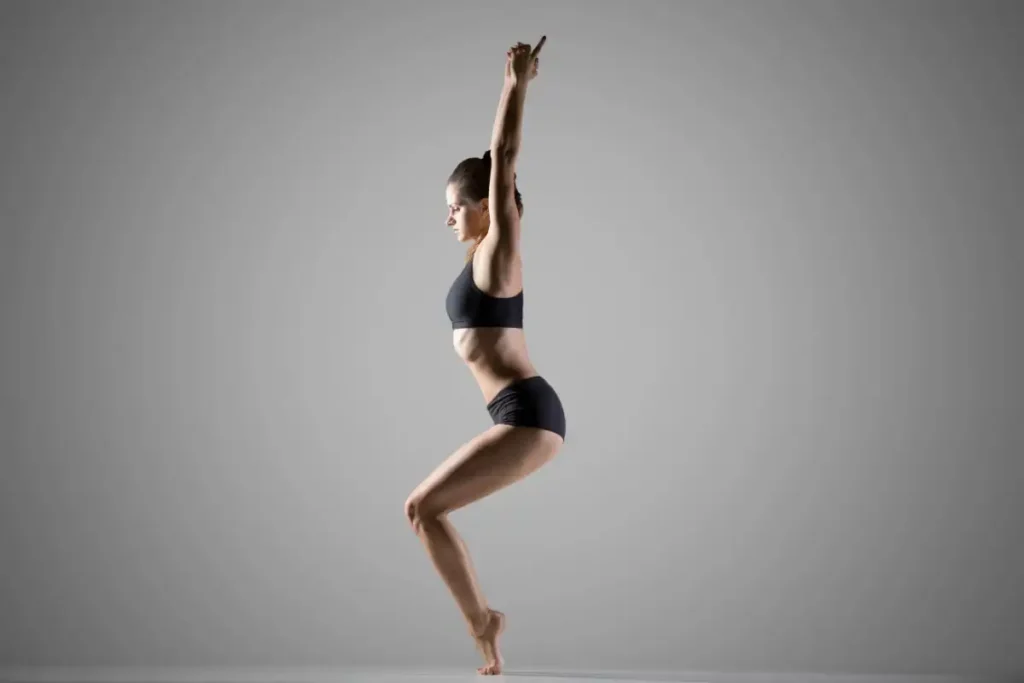
- If you’re seeking to test your legs even further, consider lifting your heels off the mat.
- Engage your legs and rise to your toes to heighten the tension of the position and tone your calves.
Single-Leg Chair Pose:
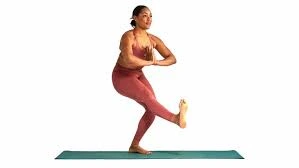
- Before bending your knees and dropping into Chair Pose, place your weight on one foot.
- Cross the opposing ankle over your knee.
Contraindications:
- Avoid if you have arthritis.
- Avoid if you have recurrent lower back pain.
- Avoid if you’ve just undergone a serious injury or surgery.
- Avoid if you suffer from migraines or high blood pressure.
Common Mistakes:
Tense your shoulders.
Keep your shoulders back and locked in position. Make sure your arms are stretched, but your shoulders aren’t raised towards your ears. This will stimulate extra muscles in your neck and the rear of your shoulders that we do not wish to engage.
Arch your back.
If you feel pressure in your lower back, tuck your glutes (squeezing your buttocks may assist). This tiny movement will guarantee that you are engaging the proper muscles and preventing your lower back from arching.
Sinking too deeply or not far enough.
Instead of attempting to drop to a precise depth or angle, focus on bending your knees until you reach a position that is difficult to hold. This is the position you should maintain while you breathe through the pose.
FAQs
What is the chair pose good for?
Strengthens muscles: The chair pose works your legs, upper and lower backs, shoulders, hamstrings, hips, glutes, and feet. This position elongates and lengthens the back, which can assist in enhancing core muscles and strength. It also helps ease stiffness in your shoulders, back, arms, and legs.
Who should not do Chair Pose?
If you have any of the following ailments, please refrain from performing the chair pose until your condition has improved or you have received consent from your healthcare physician:
Chronic knee discomfort or arthritis in the knee.
A sprained ankle.
Knee ligament injury.
Shoulder injury.
Low blood pressure.
Headache.
Insomnia.
Low back ache.
What are the mental benefits of Chair Pose?
Reduces tension: The chair position relaxes the mind and relieves tension. A tranquil mind cultivates inner strength and confidence, allowing you to face life’s problems more efficiently. Accepting the stress of Utkatasana will reveal your inner force and vitality.
What muscles does Chair Pose activate?
Strengthens muscles: The chair pose works your legs, upper and lower backs, shoulders, hamstrings, hips, glutes, and feet. This position elongates and lengthens the back, which can assist in enhancing core muscles and strength. It also helps ease stiffness in your shoulders, back, arms, and legs.
Is Chair Pose good for the knees?
Supported chair pose. The supported chair posture, also called utkatasana, is excellent for strengthening the knees. It permits the surrounding muscles, such as the hamstrings and quadriceps, to strengthen over time in the posture.
References:
- Allen, W. (2025, August 26). Utkatasana. https://myyogateacher.com/yoga-asana/utkatasana
- Winderl, A. M. (1970, January 1). Want a full-body challenge without any weights? Try Chair pose. https://www.onepeloton.com/blog/chair-pose
- Rakshak, & Rakshak. (2024c, June 18). Utkatasana (Chair Pose) | How to do | Benefits – The Art Of Living. The Art of Living – Making Life A Celebration. https://www.artofliving.org/in-en/yoga/yoga-poses/utkatasana-chair-pose