Lung Expansion Exercises after Illness
Introduction
Lung Expansion Exercises after illness help restore normal breathing, improve oxygen intake, and prevent chest congestion—especially after respiratory infections or prolonged bed rest.
Your lung capacity refers to the entire amount of air that your lungs can hold. Our lung capacity and function normally begin to decline gradually after the age of 35 years.
Some disorders, such as asthma, can accelerate the decline of lung capacity and function. This causes difficulty breathing and shortness of breath.
Some exercises can assist maintain lung capacity, making it easier to keep your lungs healthy and your body getting enough oxygen.
What causes low lung capacity?
Several factors can contribute to a decline in lung capacity over time. The primary cause is usually aging, since our bodies inevitably slow down over time.
Other probable causes are:
- Risk factors for chronic lung disease include obesity, lack of physical activity, chest wall abnormalities, and a high waist-to-hip ratio.
- Vitamin D insufficiency during pregnancy.
What is normal lung capacity by age?
Lung capacity and function can differ greatly from person to person and even alter over our lifetimes. The lungs can carry up to 6 liters (L) of air, or approximately 1.5 gallons.
As you get older, your breathing muscles weaken, and your lungs lose elasticity. This reduces the amount of air your lungs can contain and how efficiently they exchange oxygen and carbon dioxide.
Spirometry is a test that doctors use to measure lung capacity. The test results can help diagnose illnesses,s including COPD and asthma. They can also display how effectively therapies are functioning.
Spirometry tests can reveal:
Forced expiratory volume (FEV1) is the amount of air that you can exhale in one second.
Forced vital capacity (FVC) is the amount of air you can exhale after taking a deep breath.
Doctors calculate spirometry test results as a percentage of the “normal” number for someone of your height, age, gender, and race. For example, if your FEV1 is 80%, you can exhale 80% of the air that a person of your height, age, gender, and race with healthy lungs might exhale in one second.
Diaphragmatic (belly) breathing

Diaphragmatic breathing, often known as “belly breathing,” activates the diaphragm, which is meant to do the majority of the work when it comes to breathing.
This approach is very beneficial for those suffering from chronic obstructive pulmonary disease (COPD). With this condition, the diaphragm is less effective and could be strengthened. The approach works best when you’re feeling rested.
If you have COPD, see a doctor or respiratory therapist about how to perform this exercise for the best outcomes. Keep in mind that, while breathing exercises can help COPD symptoms over time, there is no scientific proof that they can reverse the disease.
The COPD Foundation recommends doing the following to practice diaphragmatic breathing:
- Relax your shoulders and sit or lie down.
- Put one hand on your stomach and one on your chest.
- Inhale via your nose for 2 seconds, feeling the air enter your abdomen and the stomach exit. Your stomach should move more than your chest.
- Exhale for 2 seconds via pursed lips while pressing your abdomen.
- Repeat.
Pursed-lip breathing

Pursed-lip breathing can slow down your breathing, minimizing the amount of labor required by keeping your airways open for longer. This helps the lungs function better and promotes oxygen and carbon dioxide exchange.
This breathing technique is typically easier for beginners than diaphragmatic breathing, and you can do it at home even if no one has taught you how. It can be practiced at any time.
Practice the pursed-lips breathing technique:
- Inhale slowly via the nostrils.
- Purse your lips as if you’re about to pout or blow on something.
- Breathe out slowly through pursed lips. This should take at least twice as long as taking a breath in.
- Repeat.
Deep-breathing with hold

- A relaxing technique in which the individual concentrates on taking calm, deep breaths.
- Deep breathing involves gently inhaling through the nose and exhaling through the mouth, utilizing the diaphragm (the thin muscle that separates the chest from the abdomen) and abdominal muscles.
- This helps to increase the amount of oxygen in the blood, lower blood pressure and pulse rate, and relieve muscle tension.
- Deep breathing can be used to manage tension, pain, and anxiety. Also known as abdominal breathing and diaphragmatic breathing.
Rib stretch
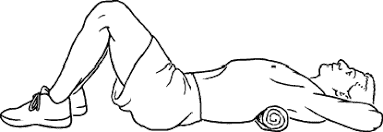
Thoracic self-mobilization
- Lie down with your arms outstretched on a rolled towel placed lengthwise over your spine, making sure your neck is supported.
- Maintain the location for the specified time.
Trunk rotation stretch
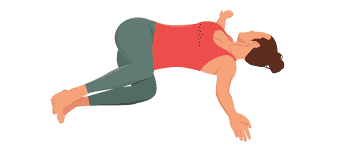
- Lie on your side, with your lower leg straight and your upper leg bent and on the floor.
- Both hands are held together in front of your chest.
- Keep your bottom arm on the floor and roll back, allowing your top arm to touch the floor and open up your chest.
- Hold your position.
Active cycle of breathing technique
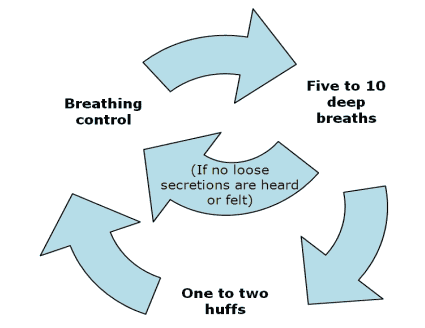
1. Breath control
Breathing control helps to relax the airways. You should inhale via your nose and exhale through your mouth with minimal effort. Breathe normally and gently from the lower chest while relaxing the upper chest and shoulders.
One effective technique is to place one hand on your tummy while breathing. Remember to breathe lightly to relax the airways. When breathing out, use the pursed lip technique (purse your lips as if kissing someone) to create back pressure in the airways, which keeps the airway open for longer. Repeat breathing control for six breaths before moving on to chest expansion exercises.
2. Chest Expansion Exercises
Inhale deeply. (Some individuals employ a three-second breath hold to get more air into the narrow airways and behind the mucus.) Then exhale without forcing air out. This can be accomplished by clapping or vibrating your chest before repeating the breathing control cycle.
3. huffing or coughing
Huff cough for varying, regulated periods to transport mucus up to the bigger airways, also known as the forced expiration technique. To remove mucus from the lungs, repeat this process.
Tips for keeping your lungs healthy
Prevention is the best medicine. Taking care of your lungs can help you avoid future difficulties. Here are some strategies for maintaining lung health:
- If you smoke, consider quitting and avoiding secondhand smoke and environmental irritants.
- Consume antioxidant-rich meals that are high in fiber.
- Obtain vaccines such as the influenza vaccine and the pneumonia vaccine. This can assist to prevent lung infections and improve lung health.
- Exercise more frequently to help your lungs function properly.
- Improve the interior air quality. Use interior air filters to reduce pollutants such as artificial perfumes, bacteria, and dust.
FAQs
How to strengthen the lungs after sickness?
Diaphragmatic breathing.
Take 10 slow, even breaths and concentrate on them. Rest for a minute, then repeat the process. Once you’re secure in using your diaphragm to breathe while lying down, do the exercise while sitting up and finally standing.
Is it possible to regain lung capacity?
Your lung function is fixed and cannot be improved. However, there are several things you can do to improve your lung capacity. This will help your body use oxygen more efficiently and reduce the stress on your respiratory and pulmonary systems.
What is the best exercise for lung repair?
Stretching Exercises
Sit comfortably, with your shoulders back. Inhale slowly and deeply.
Lower your chin while exhaling.
Breathe in, then slowly return your head to neutral.
Move your head from side to side, nodding gently and naturally while you breathe.
Return to neutral and restart.
How do you treat lung expansion?
The most frequent techniques include deep breathing/directed cough, incentive spirometry (IS), continuous positive airway pressure (CPAP), positive expiratory pressure (PEP), and intermittent positive airway pressure breathing (IPPB).
How do I naturally heal my lungs?
To naturally heal your lungs, you should focus on quitting smoking and avoiding pollutants, drink plenty of water, eat foods high in antioxidants (such as berries, leafy greens, ginger, and turmeric), exercise frequently (cardio, yoga), practice deep breathing and controlled coughing to remove mucus, and use steam therapy to relieve congestion. Because your lungs are self-cleaning, it’s important to eliminate irritants and support their function with these practices.
Habits & Lifestyle
Stop Smoking and Steer Clear of Pollutants: Stopping smoking, including secondhand smoke, and avoiding other lung irritants like indoor fumes or high air pollution is the most important step.
Exercise: Consistent exercise, such as walking, swimming, or cycling, strengthens the lungs and improves oxygen delivery; stretching and yoga also help the lungs expand.
Keep Yourself Hydrated: Water helps thin mucus, which facilitates its removal.
Reduce the amount of incense and candles, use air purifiers, and open windows to improve the quality of the air indoors.
Nutrition and Supplements
Antioxidant foods include citrus, beetroot, kale, spinach, and berries.
Anti-inflammatory Spices: Turmeric (curcumin) and ginger both aid in lowering infection and inflammation.
Honey: May soothe the throat and serve as a carrier for herbs that support the lungs.
Methods for Clearing Mucus and Breathing
Deep Breathing Exercises: To increase lung capacity, practice taking deep breaths and letting them out more slowly (1:2).
Controlled coughing: Assists in clearing the airways of mucus.
Steam Therapy: If you have a lung disease like COPD, consult a doctor before using steam therapy, which opens airways and helps release phlegm (perhaps with eucalyptus).
Gargle with salt water to remove bacteria and mucus from the throat.
What is the 4 7 8 rule?
Inhaling quietly through the nose for four counts, holding your breath for seven counts, and then exhaling forcefully through the mouth (making a whoosh sound) for eight counts—and repeating the cycle multiple times—is the 4-7-8 rule, a straightforward breathing technique for relaxation, stress relief, and improved sleep. It is a variant of the ancient yogic breathing technique known as pranayama, which was created and aids in nervous system relaxation.
The 4-7-8 breathing technique: How to use it
Position: Take a comfortable seat and press the tip of your tongue against the tissue ridge behind your upper front teeth.
Exhale: Make a whooshing sound as you exhale fully through your mouth.
Inhale (4): Shut your mouth and take a quiet, four-count breath through your nose.
Hold (7): For seven counts, hold your breath.
Exhale (8): For a count of eight, exhale fully through your mouth while producing a whooshing sound.
Repeat: One cycle is finished. For a total of four cycles, repeat the cycle three more times.
Use it when you’re feeling anxious or overburdened, to fall asleep more quickly, and to lower stress and anxiety.
Important advice:
You can speed it up if necessary, but maintain the ratio; the counts (4, 7, 8) are more significant than the actual time.
To become accustomed to taking deeper breaths, practice frequently.
What is the 555 rule of breathing?
It consists of inhaling for 5 seconds, holding your breath for 5 seconds, then exhaling for 5 seconds. This repetitive pattern has a relaxing impact on the neurological system, allowing you to face the problems of daily life with greater ease.
How to fully expand the lungs?
Simple, deep breathing.
Deep breathing can help you come closer to your lungs’ maximum capacity. As you slowly inhale, intentionally extend your belly while lowering the diaphragm. Next, stretch your ribs so they float open like wings. Finally, allow your upper chest to expand and rise.
What are the first signs of lung damage?
Symptoms of lung illnesses may include a cough.
Dyspnea, or shortness of breath
Wheezing or whistling coming from your chest.
Tiredness or weariness
Chest discomfort.
Coughing up blood.
Frequent respiratory illnesses.
Fingers clubbed.
What drink is good for lung repair?
Green tea, ginger tea, turmeric milk, and even warm lemon water are great options for lung health and repair because they are high in antioxidants and anti-inflammatory qualities, which help to clear mucus, calm airways, and shield tissues from harm. It’s also important to stay hydrated overall. Pomegranate juice and water-rich foods also support lung function, while staying hydrated keeps the respiratory tract moist and helps flush out toxins.
The Best Drinks to Support the Lungs:
Green tea: Packed with antioxidants and polyphenols that promote lung detoxification and reduce inflammation.
Ginger tea’s anti-inflammatory qualities aid in clearing the airways and reducing throat irritation.
Turmeric Milk (Golden Milk): Turmeric’s curcumin provides lung tissues with potent anti-inflammatory and antioxidant properties.
Lemon Water: Antioxidants and vitamin C help strengthen immunity and cleanse the lungs.
Antioxidants found in pomegranate juice can reduce inflammation in the lungs.
Hydration in General & Other Choices:
Water: Vital for maintaining moisture in the respiratory tract and aiding in the lungs’ detoxification.
Plantain tea is a traditional remedy that helps clear the lungs and soothe mucous membranes.
How They Help: Although they are not remedies, those drinks can help the lungs by supporting the body’s natural detoxification processes, lowering lung tissue inflammation, clearing congestion and mucus, and supplying antioxidants to combat cellular damage.
What are pulmonary rehabilitation exercises?
PR is an exercise and education program for patients with lung disease who have complaints of breathlessness. PR focuses on personalized physical activity and knowledge to assist people to better understand and manage their condition(s) and symptoms, such as shortness of breath.
Does walking improve your lung capacity?
Both aerobic and muscle-strengthening activities can help your lungs. Aerobic exercises such as walking, running, or jumping rope offer your heart and lungs the exercise they require to function properly.
References
- American Lung Association. (n.d.). Breathing exercises. https://www.lung.org/lung-health-diseases/wellness/breathing-exercises
- Gotter, A. (2024, March 15). Breathing exercises to increase lung capacity. Healthline. https://www.healthline.com/health/how-to-increase-lung-capacity
- NCI Dictionary of Cancer Terms. (n.d.). Cancer.gov. https://www.cancer.gov/publications/dictionaries/cancer-terms/def/deep-breathing
- Osteopathy in Hatfield. (2021, June 14). Ribs Stretching Exercises | Osteopathy and physiotherapy in Jersey and Northampton. Osteopathy and Physiotherapy in Jersey and Northampton | Jersey and Northampton Physiotherapy and Osteopathy. https://osteopathy.colganosteo.com/ribs-stretching-exercises/


