
Uttanasana (Standing Forward Bending Pose)
What is Uttanasana?
Uttanasana, or the forceful stretch pose, is a beginner-friendly standing forward bend in yoga. This is a tension-releasing position that focuses on the legs, tailbone, and spine, allowing the body to release excess tension in these places swiftly.
This position may be tailored to your fitness level so that you can raise or reduce the intensity felt in your hamstrings.
Uttanasana stance is utilised in various yoga routines, including Surya Namaskara. It is a stress-relieving yoga asana, particularly when your heart is beating from exercise and quick shifting movements.
Muscle Work During Uttanasana:
Because Uttanasana is a full-body stretch, many various muscles are engaged when practicing this position, although there is a strong emphasis on the following muscles:
- Back Muscles
- Abdominal muscles
- Hamstring Muscle
- Spine Muscles
Video Of Uttanasana
How to Perform?
- Stand in Tadasana with your feet slightly apart.
- Use both of your feet to evenly distribute your weight.
- Extend your arms above while inhaling.
- Bend forward towards your feet, breathing out and keeping your back flat.
- Deeply breathe while holding this stance for 20 to 30 seconds.
- Rest your hands beside or on your feet, keeping your legs and spine erect.
- Exhale, extending your chest towards your knees and raising your tailbone and hips higher.
- Continue taking deep breaths, allowing your head to relax and move towards your feet.
- Move slowly to a standing posture.
Benefits:
Improved flexibility
Uttanasana lengthens and extends the whole back and torso, including the spine, hamstrings, and legs. Regular practice gradually improves flexibility in these regions and promotes good posture while lowering the chance of injury.
Stress Relief
Bending forward in Uttanasana relaxes and regulates the neurological system. This moderate inversion relaxes the mind, reduces tension, and increases mental clarity.
Enhanced blood circulation
This enhanced circulation nourishes the nerve system, which may help to relieve headache and migraine symptoms.
Strengthened Muscles
- This not only strengthens
- the core muscles
- also contributes to the body’s stability and balance.
Digestive Benefits
It might be good for people who have stomach problems.
Therapeutic for anxiety and mild depression
Uttanasana’s relaxing quality has a beneficial influence on the psyche. It may assist in reducing anxiety and mild depression by promoting introspection and tranquilly.
Preparatory Pose:
- Mountain Pose | Tadasana (Preparatory)
- Paschimottanasana (Seated Forward Bend)
- Ardha Uttanasana (Standing Half Forward Bend)
Variations:
Half Intense Stretch Pose with Hands on Shins:

Hinge forward in a half-standing stance with hands on shins. When you place your hands on your legs, be careful not to lock your knee joints.
Maintain a straight line between your spine, neck, and tailbone, with your eyes fixed on the ground.
Baddha Hasta Uttanasana:
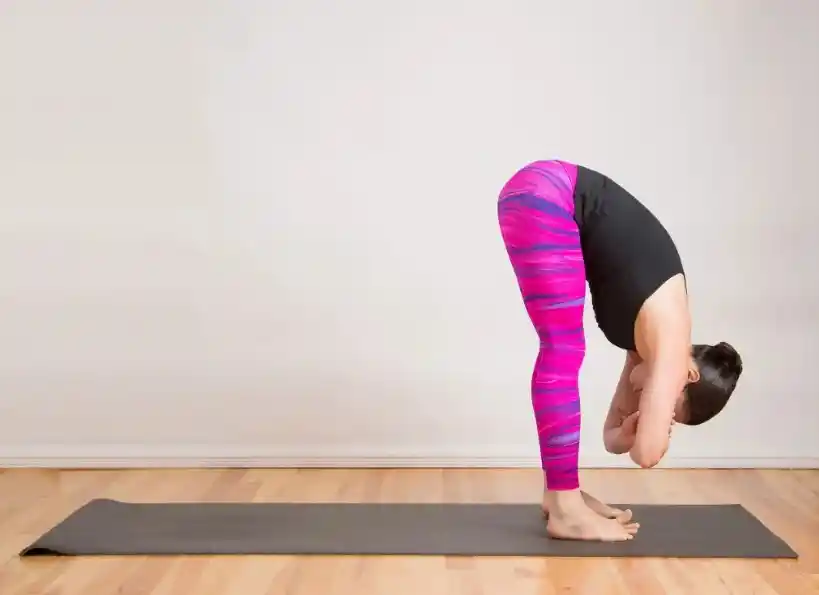
This posture variant is ideal for practitioners with tight spines, hamstrings, and tailbones.
You may employ this dynamic bending variant to improve blood circulation throughout your body, which promotes mobility in the important muscle groups.
Parivrtta Uttanasana:
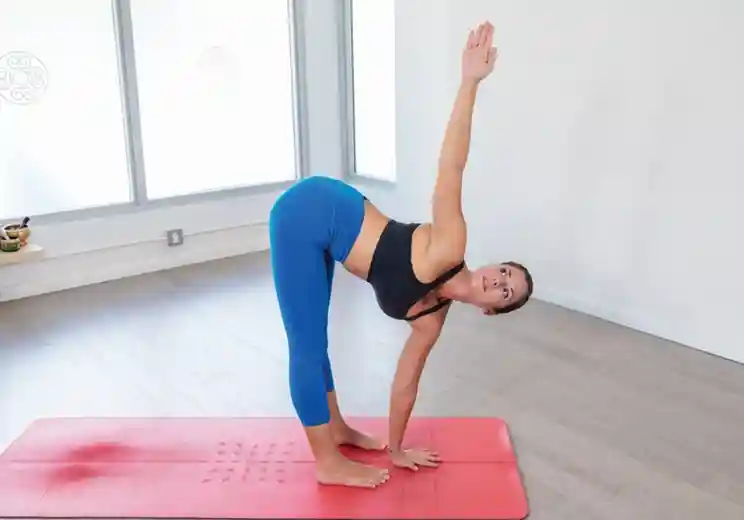
This is a deeper forward bend position in yoga. Begin by slowly rotating your spine in Uttanasana, one hand on the floor and the other arm up in the opposite direction.
In this position, your neck should be relaxed, and your attention should be directed to your elevated arm. Hold this stance for a few seconds to feel your chest and back muscles expand out deeply.
Precautions:
Back issues: Individuals with spinal difficulties should use caution and may benefit from maintaining a modest bend in the knee.
Pregnancy: Pregnant women should avoid Uttanasana in its latter stages, or modify the pose by broadening their legs to accommodate their growing belly.
Hypertension: Those with high blood pressure should keep their heads lifted over the heart or avoid the stance entirely.
Contraindications:
- If you have a terrible migraine, don’t practice uttanasana. The position includes a quick rush of new blood to the head. It may leave the practitioner with a heavy head.
- If you are pregnant or menstruation, avoid practicing with a complete front bend. Instead, try Ardha uttanasana, with your spine parallel to the floor and your hands against the wall.
- If you have high blood pressure, just stay in the posture for a lengthy amount of time if your breathing is not too difficult.
- If you have a back issue, avoid completing a full forward bend.
- If you have sciatica, do not execute the position.
Common Mistakes:
One of the most common faults when performing Uttanasana is not keeping the feet parallel. This might cause the hips to twist, putting extra strain on the knee joints. Additionally, keep the pelvis in a neutral posture throughout the pose; tilting the pelvis too much forward or back might cause joint discomfort.
Another typical mistake is folding from the waist rather than the hips. This puts unneeded strain on the spine and can cause lower back discomfort. Instead, concentrate on stretching the spine and maintaining the chest open while you fold forward. Finally, avoid rounding the shoulders as you fold; this will simply cause strain in the upper back and neck.
FAQs
What are the benefits of Uttanasana?
Benefits of Standing Forward Bend (Uttanasana)
Releases lower back tightness, relaxes tired muscles, relieves stress, and provides therapeutic benefits.
Benefits include strengthening the liver and kidneys, treating insomnia, and improving digestion.
What are common mistakes in Uttanasana?
Uttanasana, like any other yoga practice, carries some dangers. The most typical faults in this position are: Folding from the waist rather than the hips. Bounce or jolt into the posture. Overextending the knees.
Can Uttanasana improve blood flow?
Uttanasana improves blood circulation throughout the body. When you lean down, blood travels to your brain, rejuvenating the cells. It helps you feel energetic and comfortable.
Is Uttanasana good for back pain?
This is a basic standing yoga position for back pain that helps to relax the muscles in the lower back. Stand hip-distance apart. Inhale deeply, then move your arms out to your sides and up above your head in one fluid motion.
Which disease is cured by Uttanasana?
Uttanasana promotes digestion by squeezing and kneading the abdominal organs. This action reduces bloating, constipation, and other digestive disorders while improving overall gut health and facilitating regular bowel movements.
References:
- Allen, W. (2025c, August 26). Uttanasana. https://myyogateacher.com/yoga-asana/uttanasana
- Felton, A. (2024, July 19). How to do an Uttanasana yoga pose. WebMD. https://www.webmd.com/fitness-exercise/how-to-do-an-uttanasana-yoga-pose
- Team, T. A. (2023, December 29). Uttanasana Yoga – Benefits, Steps & Types | Tata AIG. https://www.tataaig.com/knowledge-center/health-insurance/health-benefits-of-uttanasana
- Uttanasana (Standing Forward Bend): Steps, Benefits, Variations & More – Fitsri Yoga. https://www.fitsri.com/poses/uttanasana
- Mandiram. (2024, April 22). How to safely practice the standing forward bend. Yoga Vidya Mandiram – 200, 300 & 500 Hours Yoga Teacher Training School. https://yogavidyamandiram.com/avoiding-common-mistakes-in-uttanasana-how-to-safely-practice-the-standing-forward-bend