
Anantasana (Sleeping Vishnu Pose)
What is Anantasana?
Anantasana (Sleeping Vishnu Pose) is a gentle reclining yoga pose that stretches the hamstrings, opens the hips, and improves balance. Named after the resting posture of Lord Vishnu, this pose promotes relaxation while strengthening the sides of the body and enhancing overall stability.
The same pose is known by several names, including Anantasana, Sleeping Vishnu Pose, Vishnu’s Couch, and Side-Reclining Leg Lift. Lying on your side, support your head with one forearm while flexing your other arm and leg upward towards the ceiling and grasping your big toe with your fingers.
Anantasana is an intermediate side-balancing yoga pose that helps awaken the body’s chakras and open the pelvic region. Several advanced Anantasana variations are thought to be based on this position. To experience the spiritual healing advantages of the Sleeping Vishnu Pose, one must possess a profound sense of realisation, intuition, and mindfulness.
Anantasana is a type of pose that promotes balance and relaxation. This pose involves lying down with the body reclined to one side. It delivers a smooth stretch to the complete torso and leg muscles. Indeed, in a deeper level of Anantasana, the doer experiences the delight of a relaxing position with enhanced awareness required to balance the pose. For new practitioners, practicing Anantasana would be an incredibly thrilling experience because of its many health advantages and diverse approach.
Muscle Work During Anantasana:
- Shoulder Muscles
- Core Muscles
- Innere Thigh Muscles
- Hamstring Muscle
- Calves
How to Perform?
- Start by resting on your right side with your left foot symmetrically over your right. Flex your ankle, press your right heel, and use your foot to keep your balance.
- Now make a line from your fingertips to your heel by extending your right arm parallel to your body. Stretch the armpit and extend the right arm outward before placing it on the ground.
- Lift your torso and then place your right side of your head in your right palm. the right hand’s upper arm and forearm in a vertical position.
- Make your left leg point upside down by rotating it. Next, bend your knees, bring them to your torso, and use your thumb and first two fingers to grasp the left leg’s big toe between the legs.
- Now take a breath and elevate the leg at a modest forward angle. The raised leg is balanced in a reclining position by moving the sacrum against the pelvis, which serves as the fulcrum.
- Hold on, this is the last slot.
- Release: Hold the position for 30 to 60 seconds while applying pressure to both heels. It is also possible to extend the time required to master the asana.
While the right foot maintains stance, unlock the hold and gradually release the leg using your core muscles.
Removing the elbow near the side of the right torso while keeping the left hand on the side of the thigh. Breathe out and unwind.
Benefits:
- The side of the thoracic muscles is strengthened and stretched by Ananatasana. increases the shoulder joint’s and scapula’s range of motion.
- Frequent exercise improves movement by making the calves and hamstrings flexible and elastic.
- Additionally, it strengthens the core and expands the abdominal muscles, which helps in a variety of balance poses. But it also helps with digestion.
- Ananatasana’s horizontal stance enhances circulation, which promotes mental calm and relaxation while relieving tension and stress.
- The sacral chakra is stimulated when the sacrum is involved while balancing in a reclined position; this promotes the practitioner’s feelings of pleasure, desire, and creativity.
- Holding for a longer period of time aids in lowering waist and hip weight. makes one happy and healthy as a result.
- In patients with coronary artery disease (CAD), the reclining position enhances cardiorespiratory health by coordinating the heart and lungs.
Beginner’s Advice:
- When using the starter, exercise caution when placing your head in your palms and make use of your torso to prevent any pressure on your neck.
- When it comes to stretching their legs, beginners should avoid pushing themselves too far; instead, they should do what they can.
Preparatory Pose:
Phalakasana (Plank Pose): This traditional pose engages your core muscles. Increased blood flow to your thighs, lower back, obliques, and abdomen will assist you in avoiding injuries when performing Vishnu poses.
Take a breath, straighten your legs behind you, and begin in a tabletop position. For a secure grip and to stimulate blood flow, contract your shoulders and core. Make sure your legs, neck, and tailbone are all in a straight line. Until your core starts to burn, hold this stance for one minute.
Trikonasana (Triangle Pose): To begin, stand with your legs spread wide in the mountain posture. With your left foot pointing forward, align your right foot with the rear of the mat. Keeping your knee joints slightly bent, extend your arms to form a T. Take a breath and line up your eyes with your forward-pointing foot.
With momentum in your hip joint, stretch your torso to the right as you exhale. Put your left palm on your left shin or the mat and bend forward and sideways. Keep your side obliques and hamstrings well stretched while you hold this pose for one minute on each side.
Supta Padangusthasana (Reclining Hand-to-Big-Toe Pose): Any tightness in your glutes, hip flexors, or lower back will be relieved by this pose. Just take a deep breath while lying on your back. Breathe out now and raise your right leg to your chest.
Tuck your tailbone into the floor and contract your core. Stretch your right leg towards the ceiling while holding onto its big toe. Hold this stance for one minute on each side while keeping your left leg flexed on the ground.
Props and Modifications:
- At first, practitioners may find it challenging to maintain the reclined position. Thus, they can support the back in the position with a wedge or a bolster.
- You can use a strap to wrap around your ankle and hold it if you feel uncomfortable reaching your toes or lengthening your leg.
Variations:
Half Sleeping Vishnu Pose:

Only half of your lower body should be resting sideways in this pose, while your upper body should be resting diagonally on your elbow.
This will minimise the amount of stretch in your legs, and you can modify the stretch’s intensity based on how your body feels.
Easy Side-Lying Leg Lift Pose:
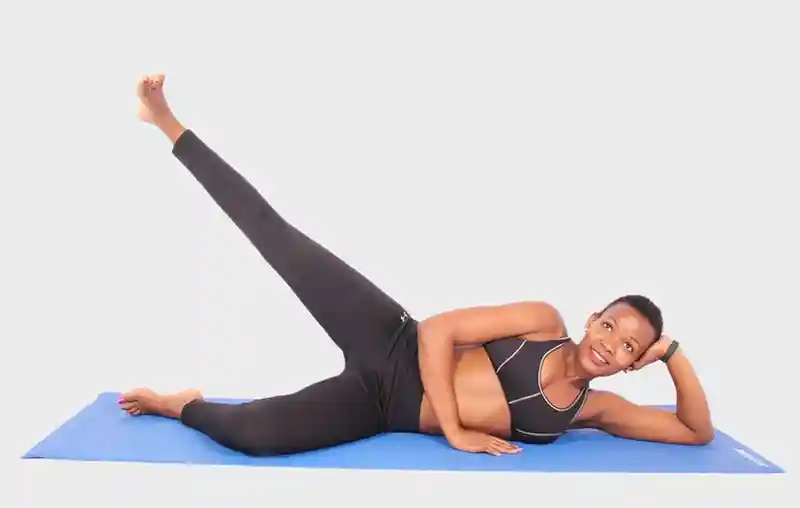
If lifting your arm and leg upright feels difficult for your shoulders and core, try this modification.
Just place your arm on the ground and raise your leg only halfway using your effort. You can gradually go towards the full stretch by practicing hovering your leg at this level.
Anantasana Deep Stretch Variation:

Now, from the standard sleeping Vishnu Pose, lower your head to the floor. Gently try to bring your raised leg closer to your head while holding it from your shin.
For yogis with exceptional hip mobility, this is a variant. Therefore, only stretch as far as it is comfortable for you. The goal is to prevent your pelvic muscles from being torn. Reduce the amount of flex if the stance becomes unpleasant.
Precautions and Contraindications:
- Those who suffer from cervical, slipped disc, or spondylitis should proceed with caution.
- Practise this pose carefully under supervision if you have a backbone issue like scoliosis.
- This asana should not be performed by practitioners with shoulder injuries or sciatic pain until they are well.
FAQs
Can beginners perform Anantasana pose?
Because Anantasana is a reclining ground pose, it is indeed suitable for beginners. Since it’s a sideways reclining yoga pose, it’s crucial to pay attention to your balance if you want to hold it for a longer period of time.
What are the benefits of Anantasana?
Anantasana has the following health advantages:
enhances side-body equilibrium.
improves cognitive performance.
Your leg muscles get stronger and longer as a result.
Your wrists, shoulders, and arms are gently stretched.
Who should not perform Anantasana?
If you have lately experienced any pain in your neck, spine, pelvis, oblique, or shoulder, you should avoid doing Anantasana. Additionally, stay out of this side-reclining position if you have a slipped disc or migraine.
What are the different types of variation in Anantasana?
Depending on how much their bodies can bear, practitioners can add a variety of Anantasana variations into their daily regimen.
The Half-Sleeping Vishnu stance, Anantasana with just Leg-Lifted Up, and Anantasana with Deep Leg Stretch are a few variations of the pose.
What are the contraindications for Anantasana?
Avoid performing the Sleeping Vishnu Pose if you have any injuries or soreness in your knees, shoulders, or neck. Additionally, stay away from it if you have recently had surgery. If you have lower back or hip pain, avoid doing this pose.
How does Anantasana affect the hips?
By stimulating the gluteus muscles in this pose, you can increase hip strength and function. Hips-External Rotators: Anantasana works the piriformis and gemellus, two hip external rotator muscles. These muscles are essential for hip rotation and preserving the lower body’s correct posture.
Is Anantasana good for back pain?
If you have cervical spondylitis or a slipped disc, you should avoid this position. An expert’s advice is essential when dealing with sciatica.
References:
- Allen, W. (2025b, August 26). Anantasana. https://myyogateacher.com/yoga-asana/anantasana.
- Anantasana (Sleeping Vishnu or Side Reclining Leg Lift Pose): Steps & Benefits – Fitsri Yoga. https://www.fitsri.com/poses/anantasana