Supta Vajrasana (Reclined Thunderbolt Pose)
What is Supta Vajrasana?
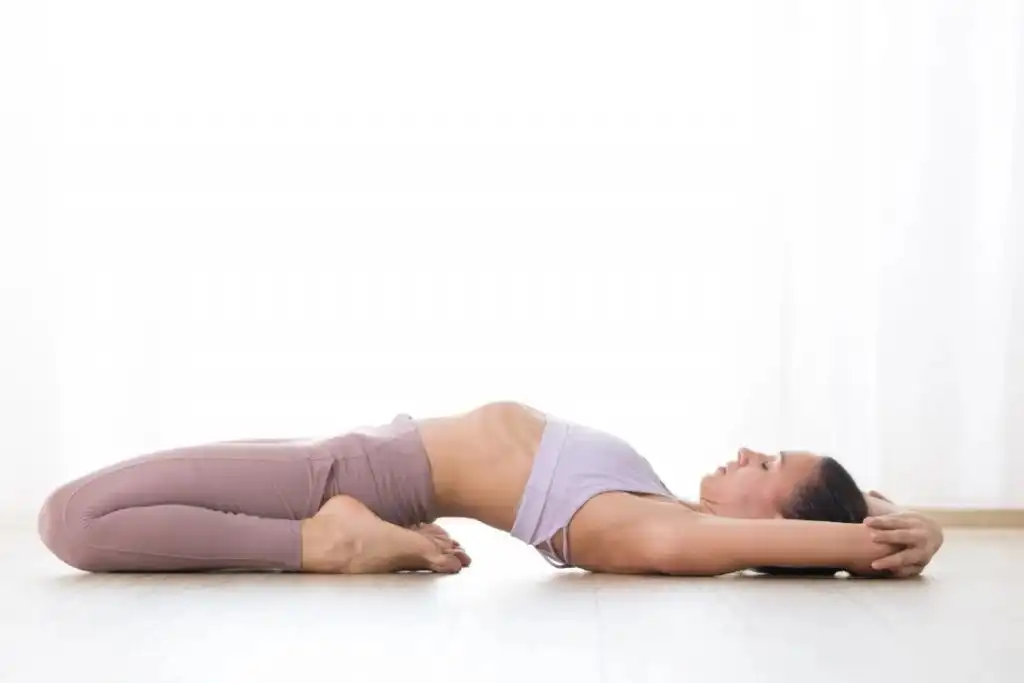
Supta vajrasana is a variation of classic Vajrasana in which the back is arched, and the body is reclined in a sleeping position. Reclined thunderbolt position, sleeping thunderbolt pose, or supine thunderbolt pose are some names for it in English. This pose is performed in the supine position.
It makes the stance ideal for ladies who want to minimise pregnancy risks and alleviate menstrual pain. Reclined Thunderbolt Pose gives us strength, empowerment, and a chance to check in with our bodies in addition to helping us stretch and tone. Long-term practice of Pratyahara (withdrawal of senses), Dharana (single-pointed focus), and Dhyana (meditation) gradually paves the way for spirituality.
Meaning:
The Sanskrit name of this asana is comprised of three basic words. Here, ‘supta‘ means ‘reclining‘ or ‘lying down’, ‘vajra‘ is ‘thunderbolt’ or ‘excessively firm’, and ‘asana’ is ‘pose.’
In this posture, the body of the practitioner is kept tight and entails leaning on the back.
Leaning backward facilitates chest expansion. This strengthens the lungs. It also extends the pelvic joint, making it more flexible.
Muscle Work During Supta Vajrasana:
- Chest Muscles
- Upper Back Muscles
- Middle Back Muscles
- Lower Back Muscles
- Core Muscles
- Pelvic Muscles
- Psoas Muscle
- Knees Muscles
- Quadriceps Muscle
Difference Between Supta Vajrasana vs. Supta Virasana:
As in vajrasana, the lower legs and heels lie directly beneath the thighs and buttocks, respectively; in supta vajrasana, also the lower legs and heels remain directly below the buttocks. Whereas, in Supta Virasana lower legs need to be stretched adjacent to the buttocks so the side heels touch the buttocks exclusively.
How to Perform?
- Begin with vajrasana, folding your legs under your torso and sitting on your ankles.
- Lean back slowly, bending your lower back while using your forearms and elbows for support.
- Lean back till the head rests on the floor.
- Draw the top of your head to the floor while arching your back. Now let go of your lower back’s elbow support.
- Bring your hands to your thighs and push your knees towards the floor.
- Keeping the eyes closed, keep the arch back, and hold the pose for 30-60 seconds with deep breaths.
- Using your elbows and forearms for support, take a breath and raise your head and upper torso off the ground.
- Relax in vajrasana.
Benefits:
Enhances flexibility:
Supta vajrasana incorporates the stretching of the chest, belly, spine, hips, and leg muscles. By stretching these muscles, the asana offers a toned body. It enhances the flexibility of the spine, thighs, pelvis, and ankles.
Enhances posture:
The entire body is strengthened and stretched by Supta Vajrasana. It tones the spinal neurones and other muscles. This is also effective at strengthening shoulder alignment by straightening rounded shoulders.
Facilitates respiration:
The tilting backward included in the asana extends the dorsal area. It opens the chest cavity totally and extends the lungs. It helps in enhanced oxygen flow into the lungs. Therefore, this asana is good for enhancing respiration. It also addresses lung problems, including asthma and bronchitis.
Enhances digestion:
While maintaining the stance, the abdominal muscles are also stretched. It improves the digestive system’s performance and activates the digestive organs.
By gently massaging the stomach organs, this also eliminates constipation and other digestive issues.
Vajra Nadi is activated:
The Vajra Nadi is stimulated by this position. Vajra nadi is one of the several nadis in our bodies that aid in regulating sexual energy.
It also aids in minimising reproductive abnormalities in males and females. Additionally, a scientific investigation demonstrates that it is appropriate for enhancing sexual wellness. Infertility can even be cured by it.
Beginner’s Advice:
Keep your hips exactly between your side heels and maintain the correct alignment throughout the stance.
With your toes pointing backward, maintain a straight ankle.
Avoid lifting your knees off the ground.
Adjust the posture depth if you experience discomfort while maintaining the pose.
It could be difficult to sit on your heels initially; however, neither push yourself nor stop. Just work your way into it gradually and do it to the best of your abilities.
Preparatory Pose:
- Thunderbolt Pose (Vajrasana)
- Bound Angle Pose (Baddha Konasana)
- Child Pose (Balasana)
Modifications:
Bolster – Maintain a horizontal bolster behind you. After leaning on it, lower the head’s crown to the ground. This will help in forming an arch between your back and neck.
Yoga strap – If you are having trouble keeping the thighs and knees in place, wrap a strap across your thighs. By doing this, the thighs won’t slide out.
Variations:
Eka pada supta vajrasana:
In this version, the practitioner extends one leg while keeping the other under the torso. The further steps stay the same.
Ardha Supta Vajrasana:
Maintain one leg beneath your chest and bend the other knee while keeping your foot on the ground. Lean back and touch the crown of your head to the floor. Lift the foot off the floor and place it over the other thigh, turning the knee outward.
Precautions and Contraindications:
- Do not execute supta vajrasana if you have a damaged knee or back.
- Avoid doing this asana with a fractured ankle.
- People having a problem with sciatica, a slipped disc, and other spinal disorders should not practise this asana.
- Never straighten your legs before releasing yourself from supta vajrasana. This could cause the knee to dislocate. After performing Vajrasana, always let your legs relax.
- Supta Vajrasana should always be done on an empty stomach.
Conclusion:
The potent yoga stance Supta Vajrasana has several advantages for both physical and mental well-being. Its unique blend of deep stretching, reclining, and strength-building makes it a great supplement to any yoga practice, especially for women.
FAQs
What is the difference between Vajrasana and Virasana?
The Difference Between Virasana and Vajrasana
These poses appear similar when they are kneeling upright; however, their leg positions differ. To put it simply, you kneel while sitting ON your feet in Vajrasana and BETWEEN your feet in Virasana.
Is Supta Vajrasana good for back pain?
Strengthens and lengthens abdominal muscles. Creates a fantastic stretch into the hip joints and the diaphragm. relieves pain in the lower back.
What are the common mistakes in Supta Vajrasana?
Don’t arch your lower back too much.
You must make sure that every technique and step in Supta Vajrasana is correct and that you don’t rush through it.
It is crucial to perform warm-ups, preliminary postures, and follow-up poses.
Avoid keeping your knees too wide.
Use props to support yourself if you’re not flexible.
How does Supta Vajrasana affect breathing?
Strengthens the lungs and helps with bronchitis and asthma. Caution: Avoid this Asana during an asthma episode, with acute pain in the region of the lumbar spine or knees.
What precautions should be taken while doing supta vajrasana?
A person with joint pain ought to stay away from it.
Pregnant women should not practise this.
If you are having slipped discs, a knee or back problem, then don’t go for this.
A female suffering from menstrual issues should not perform this.
What is the position of supta Vajrasana?
Sit in the Vajrasana stance and maintain the hands on the sides. Bend the body backward and place the head on the ground with their assistance. The knees should be resting on the floor and held together. Slowly try to rest the neck, shoulders, and back on the ground.
How does Supta Vajrasana affect the spine?
Enhances the flexibility and strength of the ankle, knee, and lower back joints. improves circulation and lubricates joints. Strengthens and lengthens abdominal muscles. Creates a fantastic stretch into the hip joints and the diaphragm.
References:
- Supta Vajrasana (Reclined Thunderbolt Pose): Steps, Benefits & Precautions – Fitsri Yoga. https://www.fitsri.com/poses/supta-vajrasana
- Reclined Thunderbolt Pose Yoga Pose (Supta Vajrasana). Tummee. https://www.tummee.com/yoga-poses/Supta Vajrasana.