
Extended Side Angle Pose (Utthita Parsvakonasana)
What is Extended Side Angle Pose?
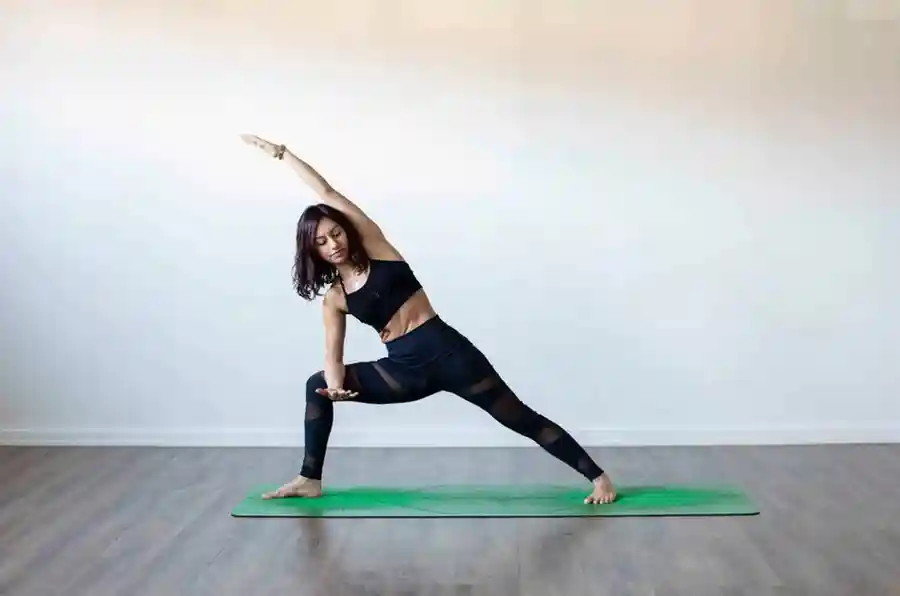
Utthita Parsvakonasana is a standing position with the body reclining at an angle and stretching from the point of the extended finger to the outside heel. Vinyasa flow was designed to tone the dormant side body muscles.
Utthita Parsvakonasana (Extended Side Angle Pose) focuses on the extension of your arms, legs, and upper torso. This asana is ideal for extending your sides and strengthening your lower body.
The Extended Side Angle Pose develops your core muscles and improves shoulder flexibility. It promotes both awareness and the physical involvement of major muscle groups.
The Extended side angle posture is performed by stretching the side body to a precise position where you may measure the distance from your heel to your fingertips above.
Although it is a beginner’s posture, if it is challenging for someone, it may be practiced as a combination of Utthita Trikonasana and Warrior posture 2. The legs in this stance are identical to Warrior pose 2, while the hands are in the extended triangle pose.
Muscle Work During Extended Side Angle Pose:
- Arms and Shoulders Muscles
- Chest Muscle
- Upper and Lower Back Muscles
- Gluteus Muscle
- Hamstring Muscle
- Hip and Pelvic Muscles
- Knee Muscles
- Psoas Muscle
- Quadricep Muscle
How to Perform the Extended Side Angle Pose?
- Stand erect in Tadasana at one of your mat’s edges (such as the left edge). Take a big step from the right foot to the long length of the mat (right side), keeping your hands on your hips.
- Turn your right foot out at 90 degrees to expand the pelvis towards the front, then bring your left foot in the same manner at 45 degrees.
- With a calm breath out, bend your right knee at 90 degrees and slowly lower your trunk. Maintain your thighs in a parallel alignment with the ground. Let the quadriceps muscles operate by elevating the knee caps towards the thighs.
- Take some deep breaths here.
- Exhale, tilt your body over the right leg, and extend sideways through the crown of your head. Simultaneously, reach down with your right hand and rest it within or outside of your right foot.
- Position your left hand (palm down) parallel to the left ear and over the head.
- Stretch vigorously from the fingers of the left hand down to the side ribs, waist, side thighs, and finally to the outside of the left heel.
- If your neck allows you, glance up from behind the left armpit to the ceiling.
- Hold the ultimate position for a few breaths. Continue deep breathing.
- Slowly emerge out of the stance, firmly pressing your feet down, down the left arm on the left thigh, and straightening your body.
- Change your posture on the mat, switch the orientation of your feet, and repeat the pose on the opposite side (left).
Beginner’s Tips:
- To support the body in the broad stretch of Parsvakonasana, place your back leg on the wall or have a buddy hold your back leg.
- If you feel you can’t stand solidly with your legs wide apart, start with shorter gaps and stay as comfortable as possible.
Benefits:
- Utthita Parsvakonasana serves to strengthen the knees, calves, ankles, and thighs. This position strengthens the quadriceps by keeping the legs at the proper angle while extending the torso sideways. People who suffer from knee discomfort, back pain, or groin tightness will benefit from this.
- Overall leg strengthening in this position promotes balance in advanced postures.
- This position increases lung capacity since it stretches the lungs and chest region.
- The correct stretch of the side body rubs the stomach organs and aids in the secretion of digestive juices, resulting in improved digestion.
- Regular practice of the side angle pose minimises the risk of menstrual problems and eliminates fertility-related concerns.
- This position is the finest workout for losing waist and hip fat since it engages the body’s side muscles.
- This yoga position is beneficial to the heart muscles and cardiovascular health.
- Utthita Parsvakonasana is a chakra-balancing posture. It opens the Manipura, Heart, Root, and Swadishthana chakras.
- This asana helps to balance emotions, release and mend blocked energy, and direct it in the appropriate path. Practicing this position will increase your flexibility and improve the flow of energy throughout your body.
Preparatory Pose:
- Vrikshasana (tree pose)
- Prasarita Padottasana (Intense leg stretch pose)
- Utthita Trikonasana (Extended Triangle Pose)
- Virabhadrasana 2 (Warrior Pose 2)
Modifications:
- Use a strap to construct a noose, and have a companion hold the bent leg thighs through it. It will help support your inner groins and allow you to hold the position for extended periods of time.
- There is one additional change to Parsvakonasana: maintain the lower arm in front of the bent-knee thigh. This will assist in increasing the stretch in the front groin.
Variations:
Extended Side Angle Pose Variation Elbow Arm:
The Extended Side Angle Pose Variation Elbow Arm is a beginner-friendly form of the Utthita Parsvakonasana. It involves hip opening, spine twisting, and lateral extension. This variation’s support around the elbows helps increase the much-needed strength, flexibility, and core balance required to achieve the desired posture.
Extended Side Angle Pose Variation Namaste Hands:
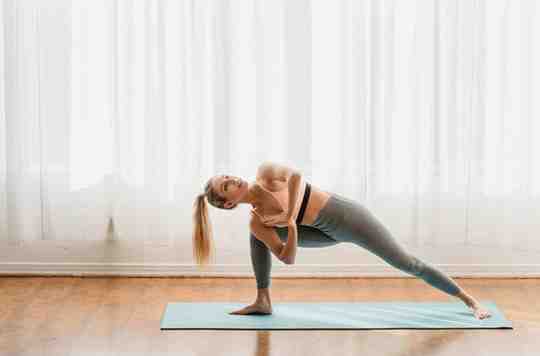
Namaste Hands is a variant of Utthita Parsvakonasana that involves touching hands together. Simply establish equilibrium in your core muscles while performing namaste in the extended side angle stance.
Bound Extended Side Angle Pose (Bent Knee):

In this position, the “bind” is the way your arms wrap around your body. “Bound Side Angle Pose” is another term for Baddha Utthita Parsvakonasana. It also works as a warm-up for standing balance poses like the Full Bound Extended Side Angle Pose.
Precautions:
- Parsvakonasana should not be practiced if you have a knee or hip ailment since the body is supported by one bent leg and two extended legs.
- If you have a migraine, migraines, vertigo, or other similar symptoms, it is recommended that you practise balanced breath exercises like anulom vilom pranayama first; otherwise, you may have limits in neck motions.
- People with high blood pressure should practise with extremely modest intensity, such as reducing stretched hand elevation.
Contraindications:
- Avoid during migraines.
- Avoid high blood pressure.
- Avoid if you have weak or painful joints.
- Avoid if you have nervous system issues.
- Avoid if you’ve recently been hurt or had surgery.
FAQs
What are the benefits of the side angle pose?
The side angle posture trains your legs to remain strong while expanding and stretching the sides of your rib cage, strengthening the muscles that promote poor breathing.
It also strengthens the muscles on your sides, from your outside heel to your outer hip, over your chest, and up to your outer arm.
This strength offers the structural support required to elevate and flex your spine. As a result, the Side Angle Position is a vital daily practice stance.
What is an extended side angle bend?
The Extended side angle bend position is a side-stretching standing yoga posture that requires balance and flexibility. This position has several physical benefits, but it has also been shown to reduce mental and emotional stress.
The practitioner starts in a lunge stance. The lead arm rests on the lead leg or reaches for the ground, while the opposite arm stretches upwards and forward to stretch the side of the body. The head rises to look at the sky.
What are the common mistakes in the extended side angle?
Common Mistakes: to Avoid The knee is bent past the ankle. We want our knee to stack squarely over the ankle, so the weight is equally distributed and the ankle can fully sustain itself without vulnerability.
What are the contraindications for the Extended Side Angle Pose?
There are a few contraindications to Parsvakonasana. Pregnant women and those with knee ailments should avoid this stance. People who have high blood pressure or migraine headaches should avoid this stance.
What are the modifications for the extended side angle?
Place your front hand on a block outside of your front foot, or your front forearm against your thigh (ardha parsvakonasana). To avoid slumping at the shoulder joint, press your forearm into your thigh as if pushing it away from you.
References:
- Utthita Parsvakonasana (Extended Side Angle): Steps, Benefits, Precautions – Fitsri Yoga. https://www.fitsri.com/poses/utthita-parsvakonasana
- https://myyogateacher.com/yoga-asana/utthita-parsvakonasana
- Extended Side Angle Pose Yoga Pose (Utthita Parsvakonasana). Tummee. https://www.tummee.com/yoga-poses/Utthita Parsvakonasana.