
Vajrasana (Thunderbolt Pose)
What is Vajrasana?
The Thunderbolt Posture, also known as Vajrasana, is a basic sitting pose that may be used for pranayama, meditation, or as a starting point for a variety of seated yoga poses. Beginners, seasoned practitioners, the elderly, and even smaller children may all execute it.
This position involves sitting on one’s heels with the soles of the feet facing up and the toes pointed inward. In addition to improving knee flexibility, this upright position serves to strengthen the back muscles, stretch the quadriceps, ease lower back discomfort, and correct posture.
Asana is a posture or position, while Vajra is a thunderbolt or diamond in Sanskrit. The term itself conveys stability and strength, which are attributes developed during this pose’s practice. Additionally, a prominent nadi (pranic channel) that is intimately related to the genito-urinary system is called “Vajra.” A feeling of balance and poise is created from inside as the thighs contract, the spine lengthens, and the shoulders softly roll back.
Muscle Work During Vajrasana:
- Gluteus Muscle
- Knee Muscles
- Feet and Ankle Muscles
Video of Vajrasana
How to Perform Vajrasana?
- With your legs together and your feet flat on the yoga mat, kneel on the mat.
- Place your buttocks on your heels as you gently sit down. Verify if the large toes are pointed backward and touching.
- For support and cushioning, place a folded blanket beneath the ankles and knees.
- Raise the head and grind the tailbone to maintain a straight back.
- Put your hands on your thighs in a mudra, or hand motion.
- Pull the shoulder blades down and back, away from the ears, to relax the shoulders.
- You may either close your eyes or look straight ahead.
- Beginners can begin by maintaining the posture for two to five minutes, then progressively extend it to ten to fifteen minutes, or as long as they like.
Benefits:
- It enhances the digestive system’s performance: Vajrasana’s upright position encourages blood flow to the digestive system. It may be done after a meal since it encourages the digestive system to operate at its best and most efficiently. Improved blood flow results in improved nutritional absorption. Additionally, there are fewer digestive issues like hyperacidity, indigestion, gas, constipation, etc. when the digestive system is operating at its best.
- Reduces lower back pain: Tense your back muscles, paying particular attention to your lower back muscles, while you sit up straight on your heels. Strengthening the local muscles helps reduce stiffness and discomfort.
- Might aid in weight loss by breaking down extra fat: By increasing metabolism, vajrasana helps the digestive system. A better detoxification process is also aided by an enhanced digestive system. Sweating and excretion help the body rid itself of toxins, which can help break down body fat.
- Makes the lower body stronger: This sitting position increases hip joint flexibility and strengthens the pelvic muscles. Additionally, it relieves stored tension and stiffness and relaxes the thigh muscles. You may progressively expand your range of motion and enhance your flexibility by bending your knee.
- Additionally, Vajrasana increases blood flow to the pancreas, liver, and kidneys, enhancing their functionality and halting the onset of diabetes.
- This position is very beneficial for pregnant women and those who have menstrual cramps or urine incontinence since it strengthens the lower back muscles in addition to the pelvic muscles.
- In conjunction with deep yogic breathing, it facilitates the body and mind’s transition into a meditative state and can help ward against psychological issues like despair and anxiety.
- Sleeping peacefully and restfully is also facilitated by lowering unpleasant emotions and sentiments.
- You may awaken the kundalini and encourage its ascent via the nadis and chakras by doing it on a regular basis in conjunction with pranayama and chanting.
Preparatory Poses:
- Happy Baby Pose (Ananda Balasana)
- Eagle Pose (Garudasana)
- Easy Pose (Sukhasana)
- Wind-Relieving Pose (Pawanmuktasana)
- Half Lord of the Fishes Pose (Ardha Matsyendrasana)
Beginners Advice:
- For further support and to avoid knee discomfort, place a folded blanket beneath your knees.
- To alleviate the pain that comes with stiffness, place a blanket or towel beneath your ankles.
- To improve comfort if your lower back is weak, insert a soft cushion beneath your hips.
- To maintain the posture for longer, think about using a wall for more support.
Modifications:
Squat on your toes:
This is a modified stance where you maintain the feet elevated rather than flat on the floor. You sit on your heels while the balls of your feet are on the floor. It increases the strain on the quadriceps and hamstrings and has a direct effect on the ankles, heels, soles, and toes. This should be done carefully since it strains the plantar fascia, a muscle found in the soles of the feet.
Namaste in reverse:
Try doing the namaste or anjali mudra at the rear with your hands behind your back while maintaining the vajrasana pose. This is an excellent method for opening your chest and relieving shoulder discomfort.
Cow Arms with Face:
In this gentler version of the Cow Face posture, you only work on the hand placement to strengthen your arms and expand your chest. To perform this, raise your right arm over your head and bend it at the elbow to lower your forearms towards your back. Similarly, bend your left elbow so that the palm of your left arm faces the back. Try holding your hand or touching the back of your hand. Although it could be challenging at first, you can bridge the gap between the hands by using props like towels or straps.
Variations:
Reclining Vajrasana:
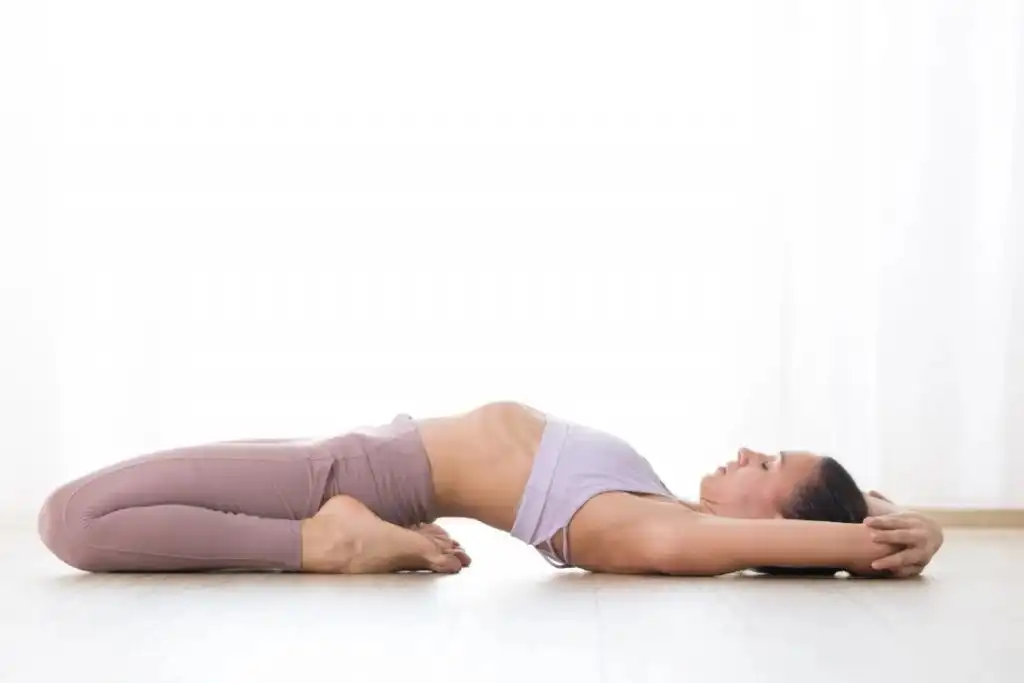
In this posture, as the name suggests, you lie down while keeping your legs in the same position as in Vajrasana. Put your hands outside your feet and start bending backwards after you’ve reached Vajrasana. Place your upper body on your forearms, then your elbows, and ultimately by your side as you bend to change the height of your hands. This facilitates a more thorough stretch for the knees, lower back, and quadriceps.
Vajrasana- Ankle Stretch:
In this more complex version of the classic position, you expand the ankles’ range of motion and apply pressure. This position involves moving your body back while holding your knees with your hands and pulling them up. To help with the backward lean, use a wall for support. For the purpose of practicing this position, you should be at ease with ankle flexibility.
Vajrasana Twist:
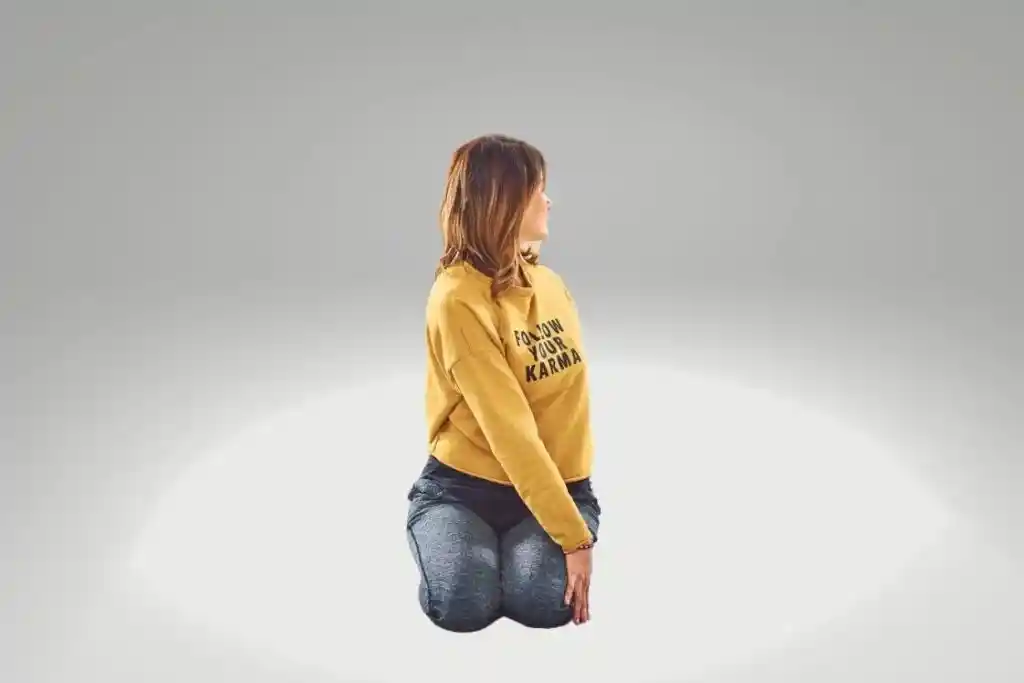
In this form, you can rotate your complete upper body, including your head, laterally, rather than maintaining your torso facing forward. To relieve shoulder stiffness, take one arm at the back and put the hand outside the foot. Additionally, the twist will stretch the spine and back muscles more deeply. Additionally, your chest will enlarge, expanding your lung capacity.
Precautions and Contraindications:
- Keep your toes crossed and relaxed instead of touching down with them on the ground.
- Remain within a comfortable range of motion and acknowledge your body’s limitations.
- Take your time into the stance, particularly if your ankles and feet feel stiff. You risk hurting your ankles if you jump into the stance too rapidly.
- Because Vajrasana places a lot of strain on the knees, you should avoid doing it if you have arthritis or other knee issues.
- Thunderbolt Pose should not be performed by anybody who has an ulcer or hernia since it creates pressure on the intestines and anus, which might worsen their condition.
- Avoid this position if you recently damaged your ankles, hamstrings, calves, shins, or knee ligaments, since it can make the injury worse and slow the healing process.
FAQs
In a day, how many times can I perform Vajrasana?
The number of times you can perform Vajrasana in a day is not set in stone. Depending on your comfort level and preferences, you can repeat it several times. It is advised, therefore, to pay attention to your body and refrain from overdoing it.
How long can I sit in Vajrasana?
Depending on comfort and flexibility, the length of time spent sitting in Vajrasana might change. As the body adjusts, beginners can progressively extend the time from a few minutes to longer periods. But it’s crucial to prevent undue effort or discomfort and to gradually build up stamina.
Can Vajrasana be practiced after meals?
It is possible to perform Vajrasana after eating, and it is frequently advised to improve digestion. After a meal, spending five to ten minutes sitting in Vajrasana can help with digestion and reduce digestive problems. It is thought to enhance the digestive system’s general performance.
Can Thunderbolt Pose help with sciatica?
The Little Thunderbolt Pose, or Laghu Vajrasana, is demonstrated by Miss Aashi Vijayvargiya. It provides a number of mental and physical advantages. It increases spinal flexibility and strengthens the muscles in the knees, thighs, hips, chest, and back. It is especially helpful for people who have back issues or sciatica.
What are the common mistakes in Thunderbolt Pose?
Avoid typical faults in Laghu Vajrasana, such as rounding your back, raising your heels off the floor, or applying excessive pressure to your knees. To maintain correct alignment, make sure your spine remains straight and that your core muscles are used.
References:
- Vajrasana (Thunderbolt Pose): How to Do, Benefits & Precautions – Fitsri Yoga. https://www.fitsri.com/poses/thunderbolt-pose.
- Thunderbolt Pose Yoga Pose (Vajrasana). Tummee. https://www.tummee.com/yoga-poses/Vajrasana