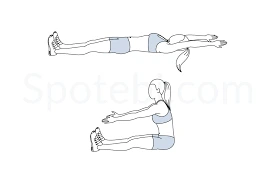

Best Glute Exercises To Activate Your Posterior Chain
Inroduction
Strong glutes are essential for powering your movements, supporting your lower back, and improving overall athletic performance. Activating the posterior chain—which includes the glutes, hamstrings, and lower back—can enhance strength, stability, and posture.
The muscles in your lower back, which allow you to do vital tasks such as getting off the ground, running, and picking up heavy objects (including kids), are called the posterior chain. In addition to enhancing longevity and reducing injuries, having a strong posterior chain improves athletic performance.
Preventing sarcopenia, or an age-related loss of bone and muscle mass, also requires strengthening the posterior chain. If you don’t correctly and frequently strength train these muscle groups as you age, your muscular mass may continue to drop. Additionally, you may become more susceptible to arthritis and other health problems, such as injuries.
Problems in the posterior chain may also be linked to lower back pain. The lower back provides support and stability. So, you must ensure that you are also training in that to some extent.
The posterior chain is the anatomical term for what most of us refer to as the “backside of our body.”
Although the posterior chain extends from your neck to your ankles, the glutes, hamstrings, and lower back are frequently highlighted.
Increasing the strength of these muscles enhances posture, lessens low back pain, and improves sports performance.
What are the posterior chain muscles?
The following are the main posterior chain muscles:
Gluteus:
gluteus maximums
gluteus medius
gluteus minimus
Hamstrings:
semitendinosus
semimembranosus
biceps femoris
Erector spinae:
muscles along the spine
Calves:
gastrocnemius
soleus
Upper body muscles, including the rhomboids, latissimus dorsi, and trapezius,s are also part of the posterior chain.
A healthy rear depends on strengthening this portion of the chain, but the glutes, hamstrings, lower back, and calves receive more attention.
What does the posterior chain do for us?
enhances athletic performance by increasing power in explosive moves,
helps maintain posture, reduces injuries, and counteracts unwanted stresses on muscles.
The arms and trunk are pulled and extended by the posterior chain muscles of the upper body. In addition to operating separately, the posterior chain muscles cooperate to form a kinetic chain.
Your ability to maintain yourself throughout daily tasks is greatly helped by the posterior chain. Unfortunately, the posterior chain muscles are “turned off” while you sit. Your lower back may suffer greatly as a result of muscular imbalances, weakness, and tight hip flexors.
The good news? You can offset these abnormalities and reduce your risk of lower back injury by regularly focusing on the posterior chain during full-body or lower-body workouts.
The Best Glute Exercises To Activate Your Posterior Chain
Suggest these posterior chain workouts since they provide the best value.
This is an example of a routine.
One or two times a week, perform each of these exercises.
For most people, doing three to six sets of five to ten repetitions per muscle group each week is a wonderful place to start.
Don’t hold your breath! As you execute each action, concentrate on filling your lungs with deep breaths.
Use your body weight or start with lesser weights and more repetitions for any of these isolated exercises. Over time, you can gradually increase the weight used in these exercises. For instance, in the following glute bridge movements, bridge up while holding a dumbbell across your lap at first, then a weighted bar.
Deadlifts
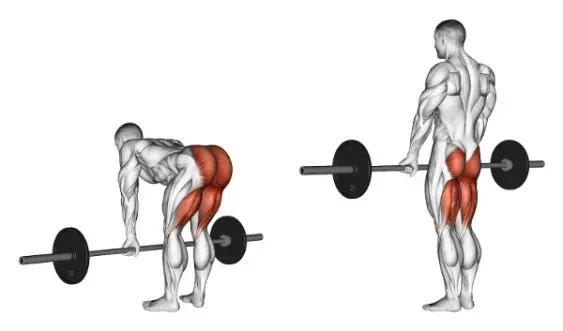
Deadlifts steps:
- These will isolate your glutes and hamstrings.
- Place your feet shoulder-width apart, bend your knees slightly, and divide your weight equally between your foot’s ball and heel. Dumbbells, kettlebells, or barbells should be placed on the ground just in front of your feet.
- Imagine that someone is going to strike you in the stomach and contract your core. As your head and chest extend forward, hinge your hips back as though you were tapping a wall behind you with your butt. To maintain your head in line with your spine, your eyes should follow this motion. Avoid arching your back and keep your ribs packed over your hips.
- Bend your knees and continue lowering your body with your hips back until your hands reach the weights on the floor, when your hamstrings will no longer allow you to hinge.
- To get ready to present the weights or bar, take a breath. Squeeze your shoulders together and drop the weights down your back while holding them in both hands (imagine there’s a pencil between them that you don’t want to fall). Maintain a straight spine.
- As you stand with the weights in your hands and push the ground away from you, exhale and contract your glutes to start the hips pulling up and forward.
- When you reach the top of the stance, your butt should be entirely tucked under, your quadriceps should be tight, your core should be engaged, and the front of your hips should be perfectly positioned. This is an important step that will secure your back.
- As you lower the weights back to the ground, hinge your hips backward and extend your head and chest forward while keeping them close to your body. Repeat.
- Additionally, you might perform deadlift variants using machines, kettlebells, and barbells.
Romanian deadlifts
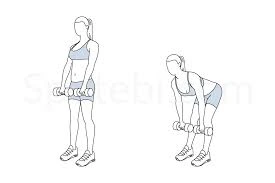
- This is a top-down deadlift that uses half the deadlift’s range of motion to target the glutes.
- Place your feet shoulder-width apart, bend your knees slightly, and divide your weight equally between the ball and heel of each foot.
- Place a barbell, a kettlebell, or two dumbbells in front of your upper thighs.
- Imagine that someone is going to strike you in the stomach and contract your core. As your head and chest extend forward, hinge your hips back as though you were tapping a wall behind you with your butt. To maintain your head in line with your spine, your eyes should follow this motion. Make sure your back doesn’t arch and that your ribs sit over your hips.
- As you descend, keep the weights firmly pressed on the front of your legs to keep your lats active and support your spine. Tighten your shoulder blades.
- Pause when your hamstrings prevent you from descending anymore.
- Squeeze your butt, force your hips forward, and use your feet to push the earth away from you while you exhale. As you return to the beginning posture, your shoulders, hips, and pelvis should all hinge up together.
Glute bridges

- The best exercise for strengthening the lower glute, to help with hip extension, is probably the glute bridges.
- With your feet firmly placed on the ground, your knees bent, and your back on the ground, lie down.
- Using both hands, hold a dumbbell across your hips.
- As you drive your hips up into a bridge and plant your feet firmly on the ground, contract your glutes.
- When a basic weighted glute bridge feels comfortable, you can also perform hip thrust variations and barbell glute bridges on a bench.
Squats/half squat
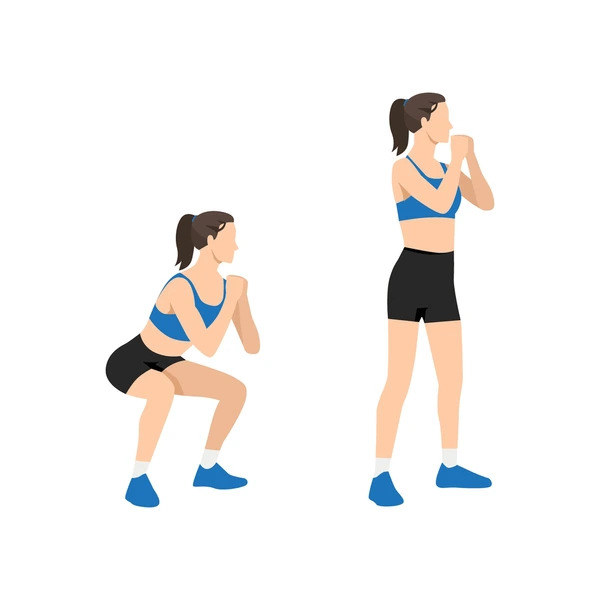
- Squatting is an excellent exercise if you want to increase your general strength. It primarily works the quadriceps, the front of the thighs, and the insides of the thighs, though it also works portions of the glutes.
- Holding weights in each hand along the sides of your body, begin standing.
- Pause, kneel down, and sit your butt back.
- As you stand up, tighten your glutes.
Reverse lunges
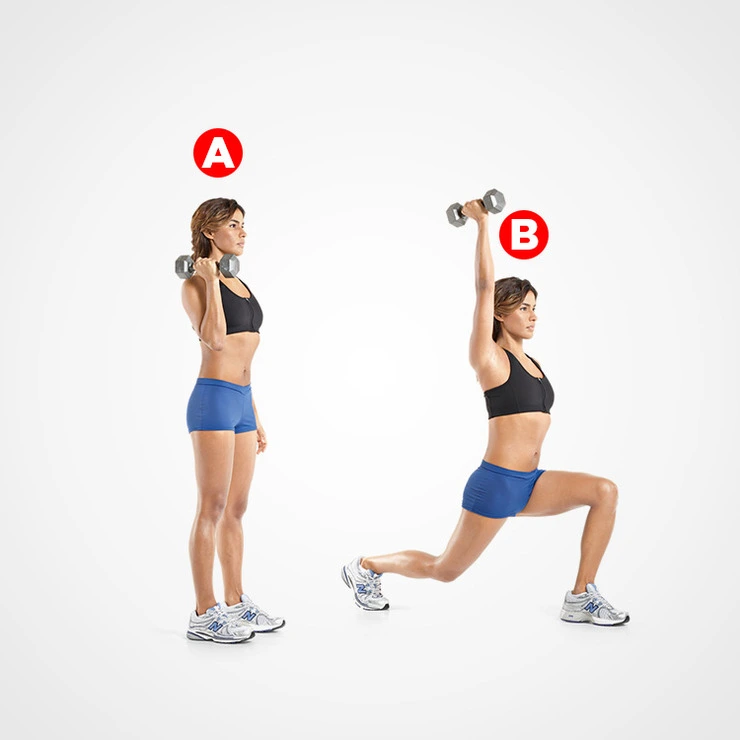
- The gluteus maximus muscles can be strengthened with these lunges.
- To begin, stand with a dumbbell in each hand.
- Step back with one leg and lower yourself into a split squat with both knees at a 90-degree angle.
- To stand up, push off with your back foot. To get out of that stance, your glutes will have to work.
- After completing one set on one side, switch to the other.
Seated hamstring curl

- Most fitness facilities have a machine that allows you to perform knee extensions for your quadriceps and leg curls for your hamstrings by placing your feet over it.
- This exercise is excellent for strengthening your hamstrings.
- Try it at home with a resistance band and a solid chair.
- Attach the ends of a resistance band to something significant, such as a piece of furniture.
- Position yourself on a solid chair in front of the band, one to two feet behind the strong object it is connected to.
- Keep your feet together and wrap the loop around just one of your heels.
- Pull your heels back by bending your knees; stop when you are unable to do so. Throughout, keep your knees together.
- To get back to your starting posture, extend your knees.
- Perform five to ten repetitions. The loop on the other leg should then be repeated.
Calf raises

- For variations, you might perform calf raises while standing, sitting, or using a machine at the gym.
- Seated calf raise:
- With your right knee bent 90 degrees, take a seat.
- Put your right foot on a book, yoga block, or 4-inch box.
- Next, place a dumbbell or kettlebell over your right knee.
- Squeeze your lower calf muscle while you raise your heel as high as you can.
- Controllably lower your heel without allowing it to come into contact with the floor.
- Do 8–10 repetitions on each side.

- Standing calf raise:
- With your right hand gripping something for support, stand straight with your left toes on the edge of a step.
- Use your left hand to hold a weight.
- Squeeze your calf muscle as you raise your heel as high as you can.
- Keep your heel off the ground as you carefully descend.
- For two to three seconds, maintain the stretched position.
- After five to ten repetitions, switch sides.
- Compared to standing straight up and performing calf raises on a machine, which will target your gastrocnemius muscles (the bulbous, rounder region of the calf), knee calves will target your soleus calf muscles (the longer keep part of the calf) slightly more.
FAQs
What are the signs of a weak posterior chain?
The following are indicators of a weak posterior chain:
soreness in the lower back.
bad posture.
knee discomfort while exercising.
hip pain or instability.
poor athletic ability.
How to activate an inactive glute?
Bridge of the Glute
To get your body in a straight line from knee to head, drive your hip up into the air, tense your glutes, and press your feet into the ground. While in this top posture, carefully return your hips to the starting position while keeping your glutes tense.
Can I work my posterior chain at home?
Nordic hamstring curl
With a friend holding your ankles behind you, kneel on the ground with your knees on a pad. Control yourself all the way to the ground and then, as you straighten out on the way up, use your posterior chain muscles.
What are 5 exercises that increase bone density?
Goblet squats, dumbbell deadlifts, walking or jogging, overhead presses, and lunges are five good exercises that can help you build bone density. These are also known as weight-bearing or resistance training. Putting stress on bones through these exercises makes them larger, which makes them stronger.
Here are five important exercises that can help make your bones denser:
Goblet Squats (Weight-Bearing Strength): Holding a dumbbell against your chest while you squat makes your spine and hip bones stronger.
For example, do three sets of 10 to 15 reps, paying attention to standing up straight.
Dumbbell Deadlifts (Resistance Training): These work the hamstrings and glutes in the back of the body and put a lot of stress on the vertebrae.
For instance, when you lower a dumbbell, keep your knees slightly bent and your back straight.
Walking or jogging (high or low impact): Walking, jogging, or running quickly makes the legs and hips carry the body’s weight, which makes the lower body stronger.
For example, it is best to walk quickly at 3–4 mph.
Overhead Presses (Strength Training): This exercise uses dumbbells to make the upper body and spine stronger.
For example, do seated or standing presses to make your shoulders and spine stronger.
Lunges (Weight-Bearing Strength): Lunges that go forward or backward make the bones in your hips and legs denser.
For example, step forward and drop your back knee toward the floor while keeping your front knee in line with your ankle.
How long does it take to build a strong posterior chain?
You only need to strengthen your posterior chain for thirty minutes. When you’re trying to fit in a workout, the posterior chain—the hamstrings, calves, lower back, and glutes—is frequently ignored. However, you may still give these powerful muscles the care they need, even if you just have thirty minutes.
How to tell if one glute is weaker?
Injuries to your knees, hips, or back may result from one side of your glutes being weaker than the other. You can perform split squats, paying attention to whether one side feels easier than the other, to determine whether you have an imbalance.
Does walking strengthen the posterior chain?
Walking on a level surface mostly works the anterior quadriceps instead of the hamstrings and glutes; walking on an elevation alters that. The posterior chain muscles will become more active with each step as the incline increases.
How long should glute activation last?
The purpose of the glutes is to maintain our upright posture throughout the day. This indicates that they should operate for extended periods of time at a low level of activation. Try the single-leg stance test and see how long you can sustain it to gauge your glute endurance. You have to be able to endure for a minimum of one minute without experiencing tiredness.
What is the silent killer of osteoporosis?
Osteoporosis is sometimes referred to as “the silent killer” because it typically shows no signs. Until they have fractures, the patients are not aware that they are losing bone.
Does climbing stairs increase bone density?
Because stair climbing requires your body to go against gravity while strengthening the leg and hip muscles that support your pelvic bones, it enhances bone density, especially in postmenopausal women. When necessary, use a handrail; for additional bone stimulation, think about adding a stomp eow and then.
What causes a weak posterior chain?
Backs, especially lower backs, have weakened due to a lack of strength through the posterior chain as a result of “office”-based posture and excessive sitting.
What is the hardest muscle to grow?
Most people think that calves are the hardest muscle to grow because they have a lot of slow-twitch fibers (which are good for endurance) and are used every day, which makes them very resistant to growth. The forearms, upper chest, rear deltoids, and serratus anterior are also hard muscles to work out. They often need specific, high-frequency training.
Why It’s Hard to Grow These Muscles:
Calves (Soleus and Gastrocnemius): These are often called the “bodybuilding final boss” because they are full of Type I muscle fibers, which are good for endurance but not size. They need a lot of different kinds of stimulation that is very strong in order to break down and grow because they support your body weight all day.
Rear Deltoids: These are often left out of workouts that focus on muscles in the front.
They need specific exercises like face pulls or reverse flies to build strength because they don’t do a lot of compound pressing movements.
Forearms (Flexors and Extensors): Like your calves, they are used in almost everything you do, so they don’t respond well to new things. They need special isolation training to grow a lot.
Upper Chest (Clavicular Head): This area is often not well developed and is missed when doing only flat-bench presses. It needs movements that are specific to the incline.
How to Get Past Growth Plateaus:
Train more often: Muscles like your calves and rear delts can handle and often need to be worked out two to three times a week.
Pay attention to your full range of motion: Make sure you stretch and squeeze all the way through each rep, especially when doing calf raises and rear delt flies.
Is the Stairmaster good for posterior chains?
To engage the posterior chain and maintain stability, drive through the heels. You may move more effectively and preserve your joints by maintaining an upright posture that promotes alignment and endurance.
Do squats work the posterior chain?
Among leg exercises, squats are maybe the best. They light up your entire posterior chain in addition to helping you develop legs the size of mammoths and strengthen your core.
What is the fastest way to increase bone density?
The best way to make bones denser quickly is to do high-impact, weight-bearing exercises like jumping, running, or skipping, along with heavy resistance training like weightlifting. This puts the most stress on the bones. Doing 50 to 100 high-impact moves a week and lifting heavier weights can greatly increase density in 8 to 12 months.
Best Ways to Make Your Bones Denser:
Exercises with a lot of impact: Jumping exercises, like “jump down” hops (which means landing hard from a 10–16 inch step), directly change the structure of bones.
Weight-Bearing Activity: It’s important to do things that put weight on your bones, like running, walking, dancing, and climbing stairs.
Resistance Training: Lifting weights makes muscles stronger and puts stress on bones, which makes them denser and stronger.
Key Nutrients: Make sure you get enough calcium and Vitamin D to help bones grow.
Eat foods high in vitamin K2 (like cabbage, magnesium, and protein to keep your bones healthy.
Lifestyle changes: Stop smoking and drink less alcohol, since both can speed up bone loss.
References
- Braeden. (2019, July 22). Posterior chain exercises: 10 glutetastic moves. TrainHeroic. https://www.trainheroic.com/blog/posterior-chain-exercises-10-glutetastic-moves/
- International Sports Sciences Association. (n.d.). Build a better backside: strengthening your posterior chain | ISSA. https://www.issaonline.com/blog/post/build-a-better-backside-strengthening-your-posterior-chain
- Kassel, G. (2019, December 29). This 5-Move posterior chain workout will demolish your glutes and hammies. Men’s Health. https://www.menshealth.com/fitness/a30299332/posterior-chain-workout/
- Lindberg, S. (2021, February 12). How to strengthen your posterior chain muscles. Healthline. https://www.healthline.com/health/posterior-chain
- Mazzo, L. (1970, January 1). Wake Up Your Glutes with These 10 Glute Activation Moves. https://www.onepeloton.com/blog/glute-activation-exercises
- Ninjas, N. (n.d.). Posterior chain exercises for the older adult to improve mobility. The Note Ninjas. https://thenoteninjas.com/blog/f/posterior-chain-exercises-for-the-older-adult-to-improve-mobility
- Usaw, M. W. M. C. A. (2023, May 30). 8 exercises to strengthen your posterior chain. Hospital for Special Surgery. https://www.hss.edu/health-library/move-better/posterior-chain-strengthening
- Wenger, P., MD. (n.d.). Top exercises to strengthen the posterior chain for runners: Princeton Sports and Family Medicine, P.C.: Sports Medicine. https://www.princetonmedicine.com/blog/top-exercises-to-strengthen-the-posterior-chain-for-runners