15 Best Stretches for Office Workers
Introduction
Your body may suffer greatly if you spend all day in front of a computer. This is particularly true if you spend hours at a time in the same position and don’t have the best ergonomic setup, which most of us don’t. Back pain, headaches, tension, and tightness in your shoulders, neck, and back might be caused by this lack of variation, hunched shoulders, and an uncomfortable chair.
Stretching on a regular basis has several advantages. Not only can stretching assist increase your flexibility, which is a crucial part of fitness, but it may also improve your posture, reduce tightness and body aches, and more.
Stretching is a form of physical exercise in which a specific muscle or tendon (or muscle group) is consciously extended and flexed in order to improve the muscle’s perceived flexibility and achieve comfortable muscle tone. The consequence is a feeling of enhanced muscle control, flexibility, and range of motion. Stretching is also used therapeutically to ease cramps and to improve function in daily tasks by increasing the range of motion.
Best stretches for office workers
Neck stretch

- Position: Sitting position.
- Start by sitting with your shoulders back and your back straight.
- With your right hand, reach down and hold the chair’s side.
- Feel a stretch along the right side of your neck and shoulder as you gently pull while turning your head to the left.
- Repeat on the opposite side after holding for ten to thirty seconds.
- On each side, repeat five to ten times.
Spinal twist

- Position: Sitting or standing position.
- Begin by sitting with your feet flat on the ground.
- Gently turn the torso to the right while contracting the abs.
- To make the stretch deeper, place your hands on the chair’s armrest or seat.
- Keep your hips square and your back straight, and only rotate as much as is comfortable.
- Repeat on the opposite side after holding for ten to thirty seconds.
- On each side, repeat five to ten times.
Shoulder shrug

- Position: Sitting or standing position.
- Keep your shoulders back and your back straight, whether you sit or stand.
- Squeeze your shoulders as tightly as you can as you raise them toward your ears.
- Roll them back as you relax after holding for one to two seconds.
- Do these eight or ten times. Roll your shoulders forward and backwards a few times to finish the exercise.
Shoulder blade squeeze
- Position: Standing or sitting position.
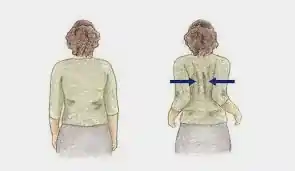
- Start by placing your feet flat on the floor while seated in a chair. To avoid rounding your back, move your weight a little forward. Unwind. Maintain the alignment of your hips, shoulders, and ears.
- With your hands facing ahead and your elbows bent, raise your arms to shoulder height.
- Hold for ten seconds. Go back to where you were. Five times over, repeat.
Chest stretch

- Position: Sitting or standing position.
- Place your feet shoulder-width apart as you stand.
- If you can, link your fingers together while moving your arms behind you.
- To feel a stretch in your chest, straighten your arms and raise your hands a few inches.
- Hold for ten to thirty seconds. Do this five to ten times.
- Another option is to hold a resistance band overhead. Alternatively, place your forearms on either side of a doorway and gradually press forward until your chest begins to extend.
Triceps stretching
- Position: Sitting or standing position.
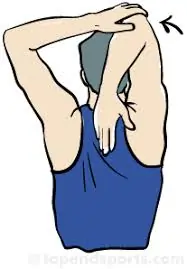
- Draw your shoulders back and down after lifting them toward your ears.
- Raise your right arm to the sky, then bend at the elbow so that your right palm is in the middle of your back, with your middle finger resting on your spine.
- Gently push your elbow down and in toward the centre with your left hand.
- For three to four repetitions on each side, hold this stretch for thirty seconds.
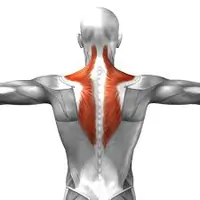
Upper trapezius stretch
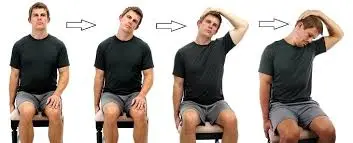
- Position: Sitting or standing position.
- Tilt your head sideways toward your shoulder while maintaining a straight back.
- Drop your shoulder blade toward the floor on the other side for a longer stretch.
- Hold for ten seconds.
- On each side, repeat twice.
Prayer pose

- Position: Sitting or standing position.
- Start by assuming a comfortable position, either sitting or standing, and making sure your alignment and posture are correct.
- With your fingers pointing upward, extend your arms forward and bring your palms together in a prayer position.
- With your palms held together, slowly bring your hands down to your waist so that your wrists may extend.
- Feel a slight tug in your forearms and wrists as you hold the stretch for 15 to 30 seconds.
- After releasing the stretch, perform the exercise more times.
Chin tuck
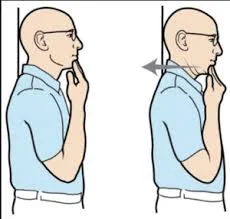
- Position: Sitting position.
- With your ears precisely above your shoulders, sit up straight and look straight ahead.
- Put a finger to the chin.
- Pull the head and chin straight back without moving the finger until the top of the neck and base of the head are well stretched. (The finger and chin should now be somewhat apart.)
- If you can, hold for five seconds. Bring the chin up to the finger once more.
- Ten times in total, or as allowed, repeat.
Wrist circle
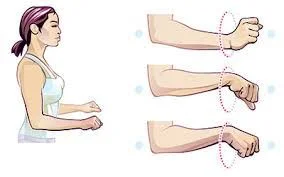
- Position: Sitting or standing position.
- Face forward and maintain a straight posture with your feet hip-width apart.
- Start rotating your wrists while clasping your hands together by loosely locking your fingers.
- Continue rotating until the set is finished.
Pectoralis stretch
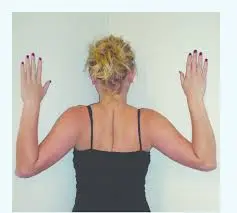
- Bend your elbows and interlock your fingers behind your head, whether you’re sitting or standing.
- Move your elbows back while gently pressing your shoulder blades together.
- To highlight the shoulders and/or chest, adjust the height of your hands (hands behind the head, hands on top of the head, hands a few inches above the head).
Heel raise

- Position: Standing position.
- For balance, place your feet a few inches apart and softly put your hands on a chair or counter in front of you.
- Keeping your knees straight, slowly lift your heels off the ground and roll onto your toes.
- For almost six seconds, keep your heels up.
- After that, carefully bring your heels down to the ground.
- Perform this exercise eight to twelve times, or multiple times throughout the day.
Standing lumbar extension
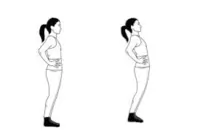
- Position: Standing position.
- This is a low back or lumbar spine mobility exercise that focuses on extension.
- To begin, stand with both hands on the back of your hips.
- As you lengthen your lower back, push your hips forward. The lumbar spine should have a comparatively uniform curvature.
- After ten seconds of holding this position, get back to standing.
Standing hip extension

- Position: Standing position.
- For balance, stand with your hands on a stable surface, such as a table or countertop.
- Keeping your knee relatively straight, extend one leg backwards and toward the sky.
- Maintain this posture while concentrating on contracting your butt muscles.
- Go back to your starting position and relax your leg.
- Because each person is unique, you might need to adjust the standing hip extension to suit your demands.
Stair up and down

- Position: Standing position.
- With your right leg on the floor behind you and your left foot on the second step, face the stairs.
- Quickly return to the starting position after raising your right knee to your chest.
- Lunge with your right knee directly over your ankle after lowering your left leg to the floor and placing it behind your right.
- Return to the starting posture by quickly stepping back up and putting your left knee to your chest. Perform 12 repetitions, followed by another 12 on the opposite side.
Risks of Prolonged Sitting
Your body is designed to move, not to sit still for extended periods of time. One of the many health effects of prolonged sitting is a reduction in life expectancy.
- Sitting for extended periods of time raised your risk of diabetes, cancer, heart disease, and potentially early death, according to a big study involving 8,000 participants. Furthermore, excessive sitting can lead to shoulder, hip, neck, and back problems, according to experts. Additionally, they caution that extended periods of sitting lead to obesity and weight increase.
- Experts advise moving for one to three minutes every 30 to 45 minutes, or at least for an hour, to help break the pattern of extended sitting. In summary, you must figure out how to spend less time sitting. You can take brief walks, perform the stretches below, or just stand at your desk (or use a standing desk) during this break. This exercise helps you stay focused by improving circulation, relaxing your muscles, and giving your mind a small boost.
Types of stretching
Dynamic stretching
- Dynamic stretching is a movement-based stretch that aims to loosen up the muscle fibres and increase blood flow throughout the body. Muscles are usually actively contracted slowly and deliberately during standard dynamic stretches. Lunges are one type of dynamic stretch. Ballistic stretching is another type of dynamic stretching.
- It is an active stretch that uses momentum to push a muscle beyond its normal range of motion by bouncing or swinging back and forth quickly. In order to swiftly warm up the body in between sessions, ballistic stretching can also be done with equipment like resistance bands. Joint injury could result from ballistic stretching.
Static stretching
- Research indicates that static-passive stretches are the most basic static stretches. This causes the joint to reach its maximum range of motion and uses outside forces to keep it there. Proprioceptive neuromuscular facilitation (PNF), which combines passive external forces with active muscle contractions, is one of the more sophisticated types of static stretching.
- In terms of induced strength, PNF stretching may be more effective than standard static stretching since it makes use of a component of neuromuscular reeducation. PNF stretching may include contracting either the antagonist muscles, agonist muscles, or both (CRAC). The efficacy of PNF stretching and its recommendation of use may depend on the stretching-to-performance duration.
Benefits of stretching
- Enhances flexibility: Regular stretching can help strengthen your flexibility, which is vital for your general health. Not only may better flexibility assist you in accomplishing regular activities with relative ease, but it can also help prevent the reduced mobility that might occur with ageing.
- Improves your range of motion: Being able to move a joint over its complete range of motion provides you with additional freedom of movement. Stretching on a regular basis can assist expand your range of motion and lessen the possibility of injury.
- Improves your performance in physical activities: Performing dynamic stretches prior to physical activities has been demonstrated to assist in preparing your muscles for an activity, such as playing a sport. It can even increase your performance in a sports event or workout.
- Improves the blood supply to your muscles: Regularly stretching could help your circulation. Increased blood flow to your muscles from improved circulation will speed up your recovery and lessen DOMS, or delayed onset muscular pain.
- Improves your posture: Muscle imbalances are prevalent and can lead to bad posture. A 2024 study indicated that a combination of strengthening and stretching certain muscle areas can relieve musculoskeletal pain and support appropriate alignment. That, in turn, may assist in improving your posture.
- Helps in the recovery and avoidance of back pain: Your range of motion may be reduced by tense muscles. When this happens, you increase the possibility of straining the muscles in your back. Stretching the muscles may aid in the healing of an existing back issue.
- Helps reduce tension headaches: Tension and tension headaches might interfere with your regular life. Stretching may help ease headache-related stress in addition to a healthy diet, lots of rest, and regular hydration.
Make Your Workplace Fitness-Friendly
It’s possible that your employer didn’t realise how much more productive workers would be with a little exercise. If at all possible, urge them to:
- Collaborate with nearby fitness centres to provide staff members with membership rates.
- Request free body-fat testing or monthly lectures from nearby personal trainers for staff members. Some trainers will even perform this task at no cost.
- Organise walks every day or every week after work or during lunch.
- During the day, take additional breaks to go for short walks.
- Participate in their own activities. Employees will take their own health more seriously if their boss works out.
FAQs
What does stretching mean while working out?
Stretching is a physical activity that increases range of motion, flexibility, and muscular length. To make a muscle more elastic, it is either held in a stretched state or moved through a range of motion. This can lessen muscular soreness, enhance physical performance, improve posture, and lower the chance of injury.
What are some exercises for stretching?
Daily Full-Body Stretches as a Stretching Exercise
The quadriceps, hamstrings, and triceps stretches, as well as some yoga-inspired poses, including Downward Dog, are examples of stretching exercises. Additionally, you can perform doorway chest stretches, spinal twists, and knee-to-chest stretches.
When is the ideal time to stretch?
Static stretches work best after an exercise when muscles are warm and flexible, whereas dynamic stretches are best done before a workout to warm up. Additionally, you can stretch in the evening to relax and get ready for bed or in the morning to ease stiffness. The most crucial element is consistency, so pick a time that suits your schedule.
Which ten exercises are the best?
The top ten exercises vary depending on the fitness objective, but for a full-body workout, push-ups, squats, lunges, burpees, and planks are popular and efficient workouts. Walking or interval training are wonderful for cardiovascular health, while overhead presses, dumbbell rows, and glute bridges are fantastic options for strength.
Can stretching help me lose belly fat?
Stretching and Burning Calories
Your body burns calories as a result of this muscle activity, which sets off a metabolic reaction. Stretching is an active procedure that adds to your total calorie expenditure, even if it might not burn as many calories as a high-intensity workout.
What are the advantages of triceps stretching?
Four Tricep Stretches, Their Advantages, and More
Stretches for the triceps lengthen muscles, increase range of motion, and improve flexibility. Additionally, they can improve circulation, avoid tense muscles, and release connective tissue with little to no equipment.
References
- Lindberg, S. (2025, May 12). 9 Benefits of stretching. Healthline. https://www.healthline.com/health/benefits-of-stretching#benefits
- Wikipedia contributors. (2025b, October 4). Stretching. Wikipedia. https://en.wikipedia.org/wiki/Stretching
- Cpt, P. W. (2023, March 27). 10 best stretches for office workers. Verywell Fit. https://www.verywellfit.com/best-stretches-for-office-workers-1231153
- Evans, R. (2019, August 1). 4 shoulder stretches you can do at work. Healthline. https://www.healthline.com/health/shoulder-pain/stretches-at-work#prevention
- Cronkleton, E. (2019, May 23). 4 Triceps stretches for tight muscles. Healthline. https://www.healthline.com/health/exercise-fitness/tricep-stretches#stretches
- Meyler, Z., DO. (2018, September 10). Easy chin tucks for neck pain. Spine-health. https://www.spine-health.com/wellness/exercise/easy-chin-tucks-neck-pain
- Daisy. (2021, June 8). Wrist Circles | Illustrated Exercise guide. SPOTEBI. https://spotebi.com/exercise-guide/wrist-circles/
- How to do heel raises | NYP. (n.d.). NewYork-Presbyterian. https://www.nyp.org/healthlibrary/multimedia/how-to-do-heel-raises
- Cpt, P. W. (2019, August 22). Office workout moves you can do right at your desk. Verywell Fit. https://www.verywellfit.com/your-office-workout-moves-you-can-do-right-at-your-desk-1231248
- Grip, G. O. (2023, May 16). The prayer stretch: Improved performance and injury prevention. Gods of Grip. https://godsofgrip.com/blogs/grip-strength-rehabilitation/the-prayer-stretch?srsltid=AfmBOooBb4XLypoFELJCU3j6uVAGWT38Igh1OE8NLY8F7HoAVk_sC9rs
- Song, D. (2023, June 21). Standing lumbar extension — Rehab hero. Rehab Hero. https://www.rehabhero.ca/exercise/standing-lumbar-extension
- Standing hip extension. (n.d.). [Video]. Hingehealth. https://www.hingehealth.com/gb/en/resources/articles/standing-hip-extension/
- https://www.saintlukeskc.org/health-library/shoulder-squeeze-exercise
- Matthews, M. (2025, June 30). You can do this stairs workout in 15 minutes at home. Real Simple. https://www.realsimple.com/health/fitness-exercise/stairs-workout