Dynamic Stretching
What is Dynamic Stretching?
When performing dynamic stretches, people move more slowly than they would during regular workouts. People often perform dynamic stretches to warm up their muscles and prepare for exercise.
When to try Dynamic Stretching?
Dynamic stretches can help the body gradually calm down after exercise and warm up the body for a variety of activities.
Exercises that lower body temperature should be prioritised after a workout.
Benefits of Dynamic Stretching
- Better Warm-Up: By increasing blood flow to the muscles and joints, dynamic stretches prime the body for activity.
- Improved Performance: Enhancing muscle strength and coordination has been demonstrated to help with tasks requiring rapid movements or direction changes.
- Injury Prevention: Because they increase range of motion and move muscles, dynamic warm-ups can reduce the risk of injury.
- Better Flexibility: Without the potential drawbacks of static stretching, which has been demonstrated in some studies to weaken muscles, they help you become more flexible and move more freely.
Dynamic vs. static stretching
Extending particular muscles and maintaining the position is known as static stretching. Stretching the triceps by extending an arm behind the back is an example of a static stretch.
Dynamic stretches, on the other hand, need movement as opposed to static posture. An example of a dynamic stretch is a walking lunge.
Examples of Dynamic Stretching:
1. Arm circles

- Maintain a straight posture and place your feet shoulder-width apart.
- Keep the arms at shoulder height while holding them out to the sides.
- The arms should be moved in a circle. Begin with tiny circles and progressively enlarge them.
- After 20 rotations in a clockwise direction, repeat the motions in the opposite direction.
2. Leg pendulum

- Take one leg and begin swinging it back and forth while maintaining your balance with the other. If necessary, you are able to cling to a wall.
- Make five to 10 swings in each direction.
- Five to ten times, swing that leg down, and then do the same with the other leg.
- Then, facing the wall, you can swing your legs side to side if you want.
3. Upper body twist

It’s also important to warm up the spine and torso before working on the upper body.
To rotate the upper body:
- Keep your feet shoulder-width apart and stand erect. Lift the arms until they reach the shoulders.
- Without moving the torso, rotate the body from side to side.
- Five to ten times over, repeat this.
4. Cat-Cow
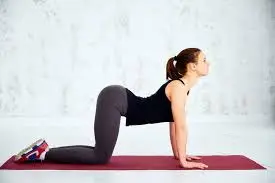
This useful whole-body exercise stretches the shoulders, neck, and spine. It’s a great way to cool down and is also a popular yoga pose.
- Place your hands directly under your shoulders and drop to your knees. Verify that the rear is flat.
- First, lower your head and arch your back like a cat.
- Hold for ten seconds while inhaling and exhaling slowly.
- Next, raise the head and drop the belly to assume the cow stance.
- Wait ten seconds.
- Switch between the cat and cow positions four times.
5. Leg circles

- As you stand on one leg, grasp a wall or counter for stability.
- Swing the opposite leg out to the side in small circles.
- After twenty circles, swap legs.
- Increase the size of your circles as your flexibility increases.
6. Lunge with a twist
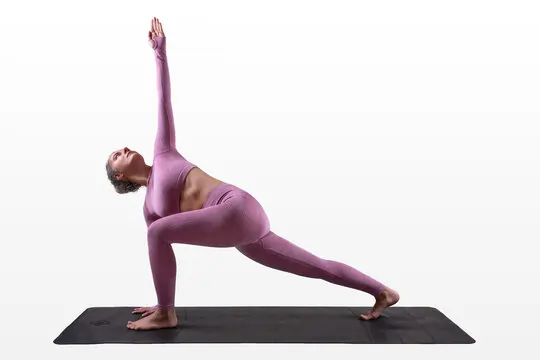
- As you lunge forward with your right leg, make sure your knee is barely over your ankle and not over it.
- As you lean your torso to the right, raise your left arm overhead.
- Pull your right leg back to stand up straight again. Leap forward with your left foot.
- Perform each leg five times.
7. Spinal rotations

- Make sure your feet are shoulder-width apart and your arms are at shoulder height.
- With your torso stationary, slowly start twisting your body from right to left.
- 5–10 times, repeat this.
8. High knees

This aids the body’s preparation for running. It’s a slower, softer kind of running.
For high knees:
- Carefully bring one leg up to your chest while maintaining a straight posture.
- Return to the starting position, then switch to the other knee.
- Keep rotating your knees, and as your body warms up, adjust your pace.
- 20 repetitions per side is the target.
9. Butt Kicks

Because butt kicks replicate the running motion, runners do this dynamic stretch. According to him, it “stretches the quadriceps and activates the hamstrings, preparing the legs for the impact of running.”
- As you jog in place, kick your heels towards your butt.
- Run like this for a minute.
Are dynamic stretches safe?
- Unless prescribed by your physician or physical therapist, avoid performing dynamic stretches if you are injured.
- Additionally, adults over 65 should use caution when doing dynamic stretches. Perhaps static stretches are more helpful.
- Yoga, ballet, gymnastics, and other flexibility-demanding exercises might benefit more from static stretching.
Summary
- Static stretching is the act of extending a group of muscles and maintaining the position, whereas dynamic stretching is performing actions that lengthen the muscles.
- Dynamic stretching might be particularly useful for pre-exercise body warming.
- A person should concentrate on keeping good form and promptly halt any movement that hurts, just like with any other sports exercise.
FAQs
What is Dynamic Stretching?
When performing dynamic stretches, people move more slowly than they would during regular workouts. People often perform dynamic stretches to warm up their muscles and prepare for exercise.
What are the benefits of dynamic stretching?
Better Warm-Up: By increasing blood flow to the muscles and joints, dynamic stretches prime the body for activity.
Improved Performance: Enhancing muscle strength and coordination has been demonstrated to help with tasks requiring rapid movements or direction changes.
Injury Prevention: Because they increase range of motion and move muscles, dynamic warm-ups can reduce the risk of injury.
Better Flexibility: Without the potential drawbacks of static stretching, which has been demonstrated in some studies to weaken muscles, they help you become more flexible and move more freely.
How to perform the Cat Cow exercise?
This useful whole-body exercise stretches the shoulders, neck, and spine. It’s a great way to cool down and is also a popular yoga pose.
To do this stretch:
Place your hands directly under your shoulders and drop to your knees. Verify that the rear is flat.
First, lower your head and arch your back like a cat.
Hold for ten seconds while inhaling and exhaling slowly.
Next, raise the head and drop the belly to assume the cow stance.
Wait ten seconds.
Switch between the cat and cow positions four times.
How to perform the upper body twist?
It’s also important to warm up the spine and torso before working on the upper body.
To rotate the upper body:
Keep your feet shoulder-width apart and stand erect. Lift the arms until they reach the shoulders.
Without moving the torso, rotate the body from side to side.
Five to ten times over, repeat this.
How to perform the butt kick exercise?
Because butt kicks replicate the running motion, runners do this dynamic stretch. According to him, it “stretches the quadriceps and activates the hamstrings, preparing the legs for the impact of running.”
As you jog in place, kick your heels towards your butt.
Run like this for a minute.
Are dynamic stretches safe?
Unless prescribed by your physician or physical therapist, avoid performing dynamic stretches if you are injured.
Additionally, adults over 65 should use caution when doing dynamic stretches. Perhaps static stretches are more helpful.
Yoga, ballet, gymnastics, and other flexibility-demanding exercises might benefit more from static stretching.
References:
- Nunez, K. (2019, July 12). 12 exercises for dynamic flexibility. Healthline. https://www.healthline.com/health/exercise-fitness/dynamic-flexibility
- Cpt, S. C. (2023, September 18). What is dynamic stretching, and how to do it. https://www.medicalnewstoday.com/articles/dynamic-stretching#for-the-upper-body
- Laurence, E. (1970, January 1). How to stretch before a workout to help (Not hinder) performance. https://www.onepeloton.com/blog/dynamic-stretches