
Physiotherapy Exercises For Sarcopenia
What is Sarcopenia?
People with sarcopenia lose strength and muscular mass as they age. This muscle loss can make regular chores, including moving groceries, climbing stairs, getting out of a chair, or walking, more difficult. One can lose 3–8% of muscle mass every ten years after the age of thirty, and this can rise to 15% beyond the age of sixty.
Although losing muscle is a typical aspect of ageing, it might occur more quickly if you don’t exercise or consume a healthy diet. Age-related muscle weakness and shrinkage are known as sarcopenia, and it can affect a person’s independence and quality of life.
Muscle Mass Preservation and Increase:
Resistance training is essential for preserving and growing muscle mass, which directly addresses the sarcopenia-related muscular atrophy. According to studies, regular resistance exercise can help individuals build 1% to 2% more muscle mass every month.
Strength Improvement:
Frequent resistance training increases muscle strength, which facilitates daily tasks and lowers the risk of fractures and falls in senior citizens. After only a few months of resistance training, older adults can see strength gains of up to 30–40%. Sarcopenia can be prevented and reversed by using our sarcopenia exercises.
Enhanced Physical Function and Mobility:
Resistance training enhances mobility and general physical function, assisting senior citizens in preserving their independence. Resistance training has been shown to reduce the risk of functional decline and disability.
Metabolic Health Benefits Of Muscle Strengthening:
Resistance exercise improves metabolic health by building muscle, which improves glucose metabolism and lowers the risk of diabetes and insulin resistance. Resistance exercise can reduce the incidence of metabolic syndrome, which is linked to sarcopenia.
Reduction in Sarcopenia Prevalence:
The incidence and progression of sarcopenia can be considerably decreased with regular resistance training. Sarcopenia affects 10–20% of persons over 60 and more than 50% of those over 80. However, the prevalence of this illness is significantly lower in people who regularly engage in resistance exercise.
Statistics About Sarcopenia
- Ten to twenty per cent of those over sixty have sarcopaenia.
- In persons 80 years of age and older, the frequency rises to more than 50%.
- Muscle strength can be increased by up to 30–40% with resistance training.
- Regular resistance training can build muscle mass by about 1% to 2% every month.
- Frequent resistance training dramatically lowers older people’s chances of functional decline and disability.
Exercises To Prevent & Reverse Sarcopaenia
These sarcopenia prevention and reversal activities are merely suggestions and may not be appropriate for you. To develop your unique sarcopaenia prevention program, please speak with one of our physiotherapists.
Frequency: Do the following exercises three times a week, taking at least one day off in between.
Warm-up: To get the blood flowing, heart rate gradually rising, and muscles ready for exercise, begin with a five-minute warm-up of brisk walking or something similar.
1. Sit to Stand Squats

Target Muscles: Hamstrings, Glutes, and Quadriceps
Instructions:
- With your feet flat on the ground and hip-width apart, take a seat on the edge of a sturdy chair.
- For balance, stretch your arms in front of you or cross them over your chest.
- To stand up, slightly bend forward from your hips, and push through your heels.
- Return to your seat slowly and deliberately.
- Perform ten to fifteen repetitions in two or three sets.
Changes: If you need more support, use a chair with armrests.
2. Push-Ups (Modified)

Target Muscles: Chest, Shoulders, Triceps
Instructions:
- Place your hands slightly wider than shoulder-width apart to begin in the plank posture. Put your knees on the ground for a modified version.
- Bend your elbows to bring your body closer to the floor while maintaining a straight posture from your head to your knees or toes.
- Push through your palms to go back to where you were.
- Do 8–12 repetitions in 2–3 sets.
Modifications: For a simpler variant, perform with your hands up on a bench or against a wall.
3. Dumbbell Rows
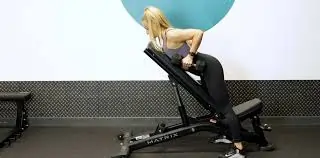
Target muscles: biceps and upper back
instructions:
- Holding a dumbbell in each hand, palms facing the body, stand with your feet hip-width apart.
- Maintaining a straight back and active core, slightly bend at the hips.
- Squeeze your shoulder blades together while pulling the dumbbells toward your hips.
- Return the dumbbells to the beginning position gradually.
- Do 10–12 repetitions in 2–3 sets.
Changes: Perform the exercise while seated with a resistance band or with fewer weights.
4. Standing Calf Raises

Target Muscles: Calf Muscles
Instructions:
- Place your feet hip-width apart and, if necessary, use a chair or wall for support.
- Feel your calves contract as you slowly lift your heels as high off the ground as you can.
- After a few moments of holding, gradually return your heels to the floor.
- Do 12–15 repetitions in 2–3 sets.
Changes: For an extra challenge, perform with one leg at a time.
5. Resistance Band Seated Row
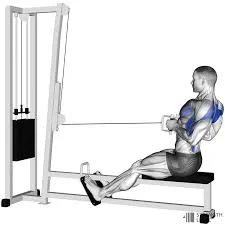
Target Muscles: Upper Back (Rhomboids, Trapezius), Biceps, Rear Shoulders
Why this exercise is important: One of the first indications of sarcopenia is upper back weakness, which immediately leads to bad posture, rounded shoulders, and decreased breathing capacity in older persons. People with hip, knee, or ankle discomfort can do this seated version because it eliminates the need for balance.
What you’ll require: a band of resistance (mild to medium resistance). It works well to loop it around a fixed object at around chest height, such as a door handle, a heavy chair leg, or a stair post.
Instructions:
- In a sturdy chair, sit erect with your feet hip-width apart and flat on the floor.
- With your palms facing one another, hold one end of the resistance band in each hand.
- To begin, extend your arms forward and gently tense your biceps.
- At the conclusion of the exercise, squeeze your shoulder blades together and pull both hands back to your sides, starting with your elbows.
- After two seconds of holding the squeeze, gradually stretch your arms back to the beginning.
- Do two to three sets of ten to twelve repetitions, resting for sixty seconds in between.
changes: If your shoulders hurt, use a lighter band or limit your range of motion. Upgrade to a medium or heavy resistance band as you become more powerful.
Physio Tip: Pay attention to the muscle-building stimulation at the back of the exercise. The most crucial portion of the exercise is often missed by folks who pull too rapidly.
6. Step-Ups

Target Muscles: Quadriceps, Glutes, Hamstrings, Hip Flexors
Why this exercise is important: One important indicator of functional independence is the capacity to get in and out of a car, climb stairs, and step up onto a curb without help. Step-ups are an extremely useful, functional exercise that develops the precise leg strength required for daily living. Step-ups immediately train single-leg strength, which is one of the best indicators of preventing falls in persons over 65, according to research.
What you’ll require: a low platform, a stair, or a robust step that is around 15 to 20 cm high. Until you feel comfortable, use a wall or a bannister as support.
Instructions:
- With your feet together and one hand lightly touching a wall or rail for balance, face the step.
- Place your entire right foot flat on the step as you step up.
- To raise your body, drive through your right heel and raise your left foot to meet your right on the step.
- Take a slow, controlled step back down, starting with the left foot.
- With each repetition, switch up the leading leg.
- With a 60-second break in between sets, perform two to three sets of eight to ten repetitions on each leg.
Changes: Start at the bottom of a staircase or a lower step. Step height can be increased, or the supporting hand can be removed as your strength and confidence grow.
Physio Tip: For developing strength, the downhill phase, that is, lowering yourself back to the floor, is just as crucial. For best results, control your descent carefully and resist the impulse to descend rapidly.
7. Wall Press (Supported Chest Press)

Target Muscles: Chest (Pectorals), Shoulders (Anterior Deltoids), Triceps
Why this exercise is important: Everyday movements like pulling yourself up from a chair, opening heavy doors, and regaining balance after a stumble require upper body pushing strength. For older persons with sarcopenia who have wrist pain, diminished grip strength, or trouble getting up and down from the floor, this wall-based variant of floor press-ups offers a safer and more accessible option.
What you’ll require: a gap in the wall. Equipment is not needed.
Instructions:
- Place your feet shoulder-width apart and face a wall that is about an arm’s length away.
- At shoulder height and shoulder-width apart, place both palms flat on the wall.
- Lower your chest toward the wall by bending your elbows while maintaining a straight line from head to heels.
- To get back to the beginning posture, completely extend your arms without locking your elbows by pushing hard through your hands.
- Inhale as you descend and exhale as you push back.
- Take a 60-second break in between each of two to three sets of ten to fifteen repetitions.
Changes: To make it more difficult, go farther away from the wall and raise your body’s tilt. Over time, you can get closer to a full floor press-up posture by moving from a kitchen worktop to a low bench.
Physio Tip: This is one of the simplest exercises to incorporate into a daily program because it can be performed anywhere there is a wall. While they wait for the kettle to boil, many of our patients perform a set.
Conclusion
Elderly persons can effectively prevent sarcopenia by using these three physiotherapy techniques regularly. While balance exercises promote independence and lower the risk of falls, progressive resistance training increases vital muscle mass.
Joint flexibility and function are preserved by low-impact mobility exercises. These exercises play a major role in maintaining strength, mobility, and quality of life in older people when included in a regular regimen.
FAQs
What are the best exercises for sarcopenia?
Using your knees, hips, shoulders, and arms, raise a weighted sandbag or backpack slightly above your knees (arrow). You should use enough weight to be exhausted after 25 repetitions while keeping your lumbar spine in a neutral position. Do it twice.
What worsens sarcopenia?
Sarcopenia can be brought on by age-related changes in the body as well as environmental and lifestyle changes such as obesity, poor diet, dental and oral issues, prolonged bed rest, inactivity and lack of exercise, and loss of mobility.
What are four symptoms of sarcopenia?
Sarcopenia, or age-related muscle loss, is characterised by four main symptoms: muscle weakness (low grip strength), reduced walking speed, fatigue or exhaustion, and impaired balance, which frequently leads to more falls. These symptoms make daily tasks like climbing stairs and lifting goods challenging. They can also be referred to as functional decline, muscle atrophy, frailty, or decreased mobility.
What are the dangers of sarcopenia?
Falls.
Fractures.
Loss of independence.
Healthcare-associated infections (HAIs)
Higher risk of complications after surgery.
Reference:
- Berkman, S. (2026, February 27). Sarcopenia- Exercises to prevent and reverse. Boost Physio. https://boostphysio.com/sarcopenia-exercises-to-prevent-and-reverse/
- Therapy, A. (2025, July 29). 3 Physiotherapy exercises to prevent elderly sarcopenia. Activ Therapy. https://www.activtherapy.com.au/blog/3-physiotherapy-exercises-to-prevent-elderly-sarcopenia
- Building Stronger Muscles: Exercise Solutions for Preventing Sarcopenia – Articles & Advice | White House Clinic. (n.d.). https://www.whitehouse-clinic.co.uk/articles-and-advice/building-stronger-muscles-exercise-solutions-for-preventing-sarcopenia


